Cold Kongguksu That Actually Works (The Soy Milk Noodle Method)
A chilled Korean noodle dish served in a silky, savory broth made from scratch-blended soybeans. We broke down every failure point — from under-soaked beans to warm serving temperatures — to build the method that delivers a properly smooth, deeply flavored bowl every time.

“Kongguksu is one of those dishes that looks deceptively simple and punishes you for believing it. Two ingredients — soybeans and noodles — and somehow most home attempts produce a gritty, thin, vaguely beige liquid that tastes like watered-down tofu water. The difference between that and the silky, cold, deeply savory broth you get at a good Korean restaurant comes down to one thing: the beans. How long you soak them, how thoroughly you blend them, and how hard you strain them determines everything.”
Why This Recipe Works
Kongguksu is Korean summer in a bowl — cold, pale, and deceptively simple. It is also one of the most technically unforgiving dishes in the cuisine, because when you strip everything else away, there is nowhere to hide. The broth is the dish. And the broth is made from two things: water and soybeans. Get the beans right and the rest assembles itself in minutes. Get them wrong and no amount of garnish rescues the result.
The Soybean Question
Everything starts with the soak. Dried white soybeans are dense, starchy, and protected by cell walls designed by evolution to resist digestion. Eight hours in cold water is not a suggestion — it is the structural requirement. Under-soaked beans blunt the blender blades before they break down, producing a gritty, thin liquid that straining alone cannot fix. Well-soaked beans, by contrast, give up their cell contents cleanly and completely, yielding a broth with the consistency of thin cream.
After soaking comes the blanch, which is the step most home cooks skip because it seems redundant. It is not. Raw soybeans contain lipoxygenase — an enzyme that creates the distinctively bitter, grassy "beany" flavor that makes people claim they don't like soy. Three minutes in boiling water deactivates it entirely. The broth that comes out of blanched beans tastes clean and neutral, with a faint natural sweetness. The broth that comes out of raw beans tastes like an argument.
The Emulsion
A high-powered blender is not optional equipment — it is the mechanism by which soybeans become broth. Running blanched beans and cold water on high for two to three full minutes breaks the beans down past their cell wall structure into a stable emulsion of protein, fat, and water. This is the same principle behind nut milks, but soybeans have more protein and more fat than most nuts, which is why the emulsion is thicker and more stable.
The straining through a fine-mesh strainer lined with cheesecloth is where the broth either becomes silk or stays rough. The solids you press out — called biji — are dense, high-fiber soybean pulp. Pressing firmly and patiently extracts every drop of liquid from them. What remains in the bowl should look like whole milk: pale, smooth, opaque. If you can detect any texture, strain it again.
The Cold Imperative
Kongguksu is not a dish that tolerates compromise on temperature. This is a Korean summer staple that evolved specifically to provide cooling relief from humid July heat — the kind of heat where the thought of turning on a stove is an act of commitment. The broth must be genuinely cold: 2-3 hours in the refrigerator, or a minimum of 30 minutes in the freezer if time is short.
Cold soy broth is light, refreshing, and bright. Room-temperature soy broth is heavy, flat, and oddly unpleasant — the fat content that reads as richness when cold reads as greasiness when warm. This is physics, not personal preference. The dish was designed for one temperature and functions correctly at that temperature only.
The Bowl Architecture
The noodles go in first, twisted into a loose nest that sits slightly above the bottom of the bowl. The broth pours over — generously, but not to drowning depth. Julienned cucumber adds crunch and a clean green contrast. Black sesame seeds add visual weight and a faint roasted note. Pine nuts float on top as quiet texture. Two or three ice cubes finish it, keeping the broth cold through the meal and giving the bowl the visual logic of a dish that knows exactly what it is.
Eat immediately. Kongguksu is not a patient dish. The noodles begin absorbing the broth within minutes, and the carefully calibrated cold-to-warm ratio between broth and garnish closes quickly. This is food designed for a specific moment — a hot afternoon, a cold bowl, undivided attention. Give it all three.
Where Beginners Mess This Up
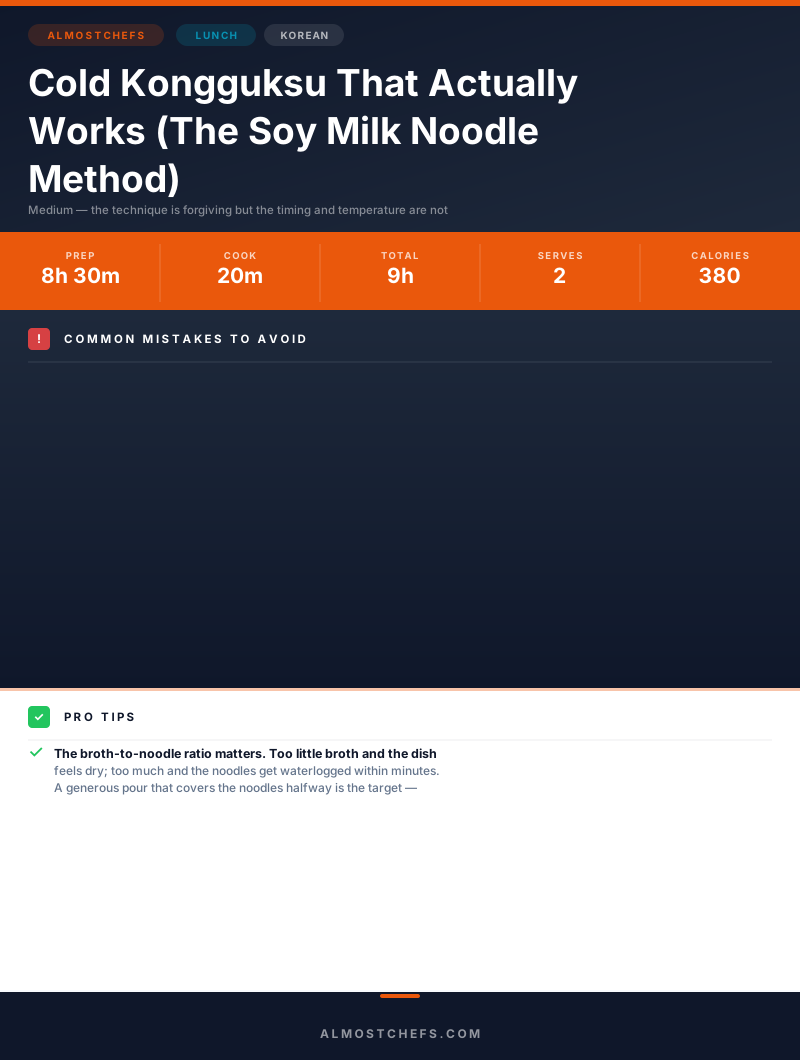
Before we start, read this. These are the 4 reasons your cold kongguksu that actually works (the soy milk noodle method) will fail:
- 1
Under-soaking the soybeans: Soybeans need a full 8 hours minimum — ideally overnight — in cold water before blending. Under-soaked beans do not break down properly in the blender regardless of how long you run it. The result is a gritty, thin broth with visible soybean particulate that no amount of straining can fully rescue. The soak is not optional prep; it is the recipe.
- 2
Skipping or rushing the blanching step: Raw soybeans contain trypsin inhibitors and lipoxygenase — compounds that create a bitter, 'beany' off-flavor and interfere with digestion. A brief 3-minute blanch in boiling water before blending deactivates these enzymes. Skipping it produces a broth that tastes sharp and unpleasant, no matter how much salt you add.
- 3
Not straining the broth through fine mesh: Even with a high-powered blender, soybean skins and fiber fragments remain in the liquid. Pouring the raw blend directly over noodles gives you a gritty texture that distracts from every other element in the bowl. A double pass through fine-mesh cheesecloth is not optional refinement — it is what separates broth from slurry.
- 4
Serving it warm or at room temperature: Kongguksu is a summer dish built entirely around cold contrast. The broth must be well-chilled before serving — ideally 2-3 hours in the refrigerator after blending, or 30 minutes in the freezer if you're in a hurry. Room-temperature soy milk broth tastes flat and heavy. Ice-cold, it tastes clean, refreshing, and complex.
🛠️ Core Equipment
- High-powered blenderA weak blender will not fully break down the soybean cell walls, leaving you with grit no matter how long you run it. A [high-powered blender](/kitchen-gear/review/high-powered-blender) with at least 1,000 watts achieves the smooth emulsion the broth requires.
- Fine-mesh strainer or cheeseclothCritical for removing fiber and skin fragments after blending. Line a [fine-mesh strainer](/kitchen-gear/review/fine-mesh-strainer) with cheesecloth and press the solids firmly with the back of a ladle to extract every drop of broth.
- Large mixing bowlFor soaking the soybeans and for chilling the finished broth. Wide and deep enough to submerge a full cup of dry beans as they expand to nearly double their size overnight.
- Medium saucepanFor blanching the soaked beans. Size matters — you want enough water to fully submerge the beans so they blanch evenly.
Cold Kongguksu That Actually Works (The Soy Milk Noodle Method)
🛒 Ingredients
- ✦1 cup dried white soybeans (백태, about 200g)
- ✦4 cups cold filtered water, for blending
- ✦1 teaspoon fine sea salt, plus more to taste
- ✦1 teaspoon toasted sesame seeds (optional, for blending into broth)
- ✦200g somyeon (thin wheat vermicelli noodles) or buckwheat noodles
- ✦1/2 English cucumber, julienned into thin matchsticks
- ✦1 tablespoon black sesame seeds, for garnish
- ✦1 tablespoon pine nuts, for garnish
- ✦Ice cubes, for serving
- ✦Additional sea salt, to finish
👨🍳 Instructions
01Step 1
Place dried soybeans in a large bowl and cover with cold water by at least 3 inches. Soak for 8 hours or overnight at room temperature.
02Step 2
Drain and rinse the soaked soybeans. Rub them between your palms under running water to loosen and remove the skins. Not every skin needs to come off, but remove as many as float to the surface.
03Step 3
Bring a medium saucepan of water to a boil. Add the soaked soybeans and blanch for exactly 3 minutes. Drain immediately and rinse with cold water to stop cooking.
04Step 4
Add the blanched soybeans to a high-powered blender with 4 cups cold filtered water. Blend on high for 2-3 full minutes until completely smooth.
05Step 5
Line a fine-mesh strainer with two layers of cheesecloth set over a large bowl. Pour the blended mixture in batches, gathering the cheesecloth and pressing the solids firmly with the back of a ladle to extract all the liquid.
06Step 6
Season the strained broth with 1 teaspoon salt. Taste and adjust. Cover the bowl and refrigerate for at least 2 hours until completely cold.
07Step 7
Cook the somyeon noodles according to package instructions, usually 2-3 minutes in boiling water. Drain immediately and rinse thoroughly under cold running water, tossing with your hands to cool completely.
08Step 8
Divide the cold noodles between two bowls, twisting them into neat nests. Ladle the chilled soy broth over the noodles generously — it should come about halfway up the noodle mound.
09Step 9
Top each bowl with julienned cucumber, a pinch of black sesame seeds, a few pine nuts, and two or three ice cubes. Finish with a small pinch of flaky sea salt.
Nutrition Per Serving
Estimates based on standard preparation. Adjustments alter macros.
🔄 Substitutions
Instead of White soybeans (백태)...
Use Canned white beans or edamame
Emergency substitution only. Canned beans skip the soaking and blanching but produce a heavier, starchier broth with less of the characteristic light soy flavor. Edamame blends well but tastes noticeably sweeter and greener. Neither is authentic.
Instead of Somyeon noodles...
Use Buckwheat soba noodles or angel hair pasta
Buckwheat adds a nutty, slightly earthy flavor that works well against the mild broth. Angel hair is a structural substitute only — it behaves similarly but adds no flavor. Both require the same thorough cold rinse after cooking.
Instead of Pine nuts (in broth)...
Use Raw cashews or blanched almonds
Either blends smoothly and adds richness. Cashews produce a slightly creamier, more neutral flavor. Almonds add a faint bitterness that works better with bitter greens than with a clean soy broth.
Instead of Cucumber...
Use Thinly sliced Korean radish (mu) or zucchini ribbons
Radish adds crunch and a peppery bite. Zucchini is milder and works well if cucumber is unavailable. Both should be salted briefly, rinsed, and patted dry to remove excess moisture before serving.
🧊 Storage & Reheating
In the Fridge
Store the broth and noodles separately in airtight containers for up to 2 days. The broth holds well; assembled bowls do not — the noodles absorb the liquid within an hour.
In the Freezer
The strained soy broth freezes well for up to 1 month. Thaw overnight in the refrigerator and whisk before serving. Do not freeze assembled bowls.
Reheating Rules
Kongguksu is a cold dish — do not reheat. Serve straight from the refrigerator. If the broth has separated slightly in storage, whisk it back together before pouring.
❓ Frequently Asked Questions
Why does my kongguksu broth taste bitter?
You either skipped the blanching step or under-blanched the beans. Raw soybeans contain lipoxygenase, an enzyme that creates sharp, bitter off-flavors when blended. Three minutes in boiling water deactivates it. There is no fix after blending — the next batch needs the blanch.
Can I use a regular blender instead of a high-powered one?
You can, but you will need to blend in longer cycles and accept that the broth will be less smooth. Strain extra carefully with cheesecloth and press firmly. A standard blender produces acceptable results but requires more straining patience.
How do I know if the broth is seasoned correctly?
It should taste like slightly savory, clean soy milk with no dominant bean flavor and no bitterness. If it tastes flat, add salt in small increments and taste after each addition. If it tastes beany or grassy, that is a blanching issue — seasoning will not fix it.
Why did my broth turn gray instead of white?
Over-blanching oxidizes the beans and darkens the liquid. Keep the blanch to exactly 3 minutes and rinse immediately with cold water. Blending with ice-cold water also helps preserve the color.
Can I make kongguksu the night before?
Yes — the broth is actually better the next day after a full overnight chill. Make the broth, strain it, season it, and refrigerate. Cook and rinse the noodles just before serving. Never assemble the bowls ahead of time.
Is kongguksu gluten-free?
The broth is naturally gluten-free. Somyeon noodles are made from wheat and are not. Substitute 100% buckwheat soba or rice vermicelli for a fully gluten-free bowl — just verify the buckwheat soba contains no wheat flour, as many commercial brands blend both.
The Science of
Cold Kongguksu That Actually Works (The Soy Milk Noodle Method)
We turned everything on this page into a beautiful, flour-proof PDF cheat sheet. Print it out, stick it to your fridge, and never mess up your cold kongguksu that actually works (the soy milk noodle method) again.
*We'll email you the high-res PDF instantly. No spam, just perfectly cooked meals.
AlmostChefs Editorial Team
We translate the internet's most popular cooking videos into foolproof, beginner-friendly written recipes. We analyze multiple methods, test them in our kitchen, and engineer a single "Master Recipe" that gives you the best possible result with the least possible stress.