Braised Pacific Saury That Fixes Bland Fish Night (Kkongchi Jorim)
A fiery, deeply savory Korean braise of Pacific saury simmered low and slow in a gochugaru-spiked sauce with radish and green onion. The fish collapses into tender, lacquered pieces that soak the rice underneath. Anti-inflammatory omega-3s, blood-sugar-stabilizing fiber from the radish — and it's done in under an hour.

“Most home cooks have never heard of kkongchi, and that's a shame. Pacific saury is one of the most flavorful, affordable, and nutritionally dense fish in Korean cooking — rich in EPA and DHA that actively fight inflammation, and cheap enough to eat twice a week without guilt. Jorim is the braise technique that turns its assertive flavor into something compulsively edible: the fish absorbs a spicy, savory sauce while the liquid reduces to a glaze that coats everything underneath it, including the rice.”
Why This Recipe Works
Kkongchi jorim is proof that the most nutritionally valuable proteins are almost always the ones Western grocery stores ignore. Pacific saury — a sleek, torpedo-shaped fish found in cold North Pacific waters — is loaded with EPA and DHA omega-3 fatty acids at concentrations that rival salmon. It's cheap. It's sustainable. It's eaten weekly in millions of Korean households. And almost nobody outside Korea has heard of it.
The jorim technique is a Korean braise: protein simmered in a seasoned liquid until the liquid reduces to a concentrated, glossy sauce that penetrates the flesh and glazes every surface. Done correctly, the result is fish that has absorbed so much of the spiced braising liquid that each bite delivers a full spectrum of flavor — the heat of gochugaru, the umami of fish sauce, the sweet-savory complexity of gochujang — without any one element dominating.
The Daikon Foundation
The structural logic of this dish starts at the bottom of the pot. Daikon radish forms the base layer not because Koreans like radish (they do, but that's beside the point) but because it solves a physics problem. Fish is delicate. Direct contact between fish and a hot pan bottom, with reducing sugars in the braising liquid, creates localized burning before the interior has cooked through. Daikon acts as an insulating buffer that distributes heat evenly, lifts the fish away from the most intense heat, and — critically — itself becomes one of the best bites in the meal.
A sharp knife matters here. Cut daikon into even 1-centimeter rounds. Uneven pieces cook unevenly, and a piece of daikon that has dissolved while the adjacent piece is still raw is a problem the sauce cannot fix.
Sauce Architecture
The braising liquid does two jobs in sequence. First, it provides the cooking medium — the gently simmering liquid that steams and poaches the fish from below while the covered pan traps steam from above. Second, as the liquid reduces, it transitions from braising medium into glaze: concentrated, thickened, intensely flavored sauce that coats the fish and daikon.
This is why heat control matters so much. High heat collapses the first phase — the liquid evaporates before the fish absorbs it, and you're left with dry protein in a burnt pan. The correct approach is medium-low for the covered phase, then uncovered at medium for the final reduction. A wide shallow pan maximizes surface area for that final reduction, which accelerates the glazing without requiring higher heat.
The Anti-Inflammatory Math
Two tablespoons of gochugaru delivers meaningful capsaicin, which inhibits the COX-2 enzyme pathway involved in inflammatory response. A 4-ounce serving of Pacific saury delivers approximately 1.5 grams of EPA plus DHA — the threshold at which most clinical studies show measurable anti-inflammatory effects. The daikon contributes digestive enzymes (diastase and amylase) that stabilize blood sugar by slowing carbohydrate absorption. None of this requires thinking about nutrition while you eat. The dish just performs.
Why This Fish Specifically
The assertive, oceanic flavor of kkongchi is not a bug — it is the feature that makes jorim work. Mild white fish absorbs the spiced braising liquid superficially; it tastes coated rather than integrated. Oily, flavorful fish like saury interacts with the sauce rather than just absorbing it. The fish fats emulsify into the braising liquid, enriching the sauce as it reduces. The finished glaze carries notes of the fish itself, which gives kkongchi jorim its characteristic depth that lighter fish dishes can never replicate.
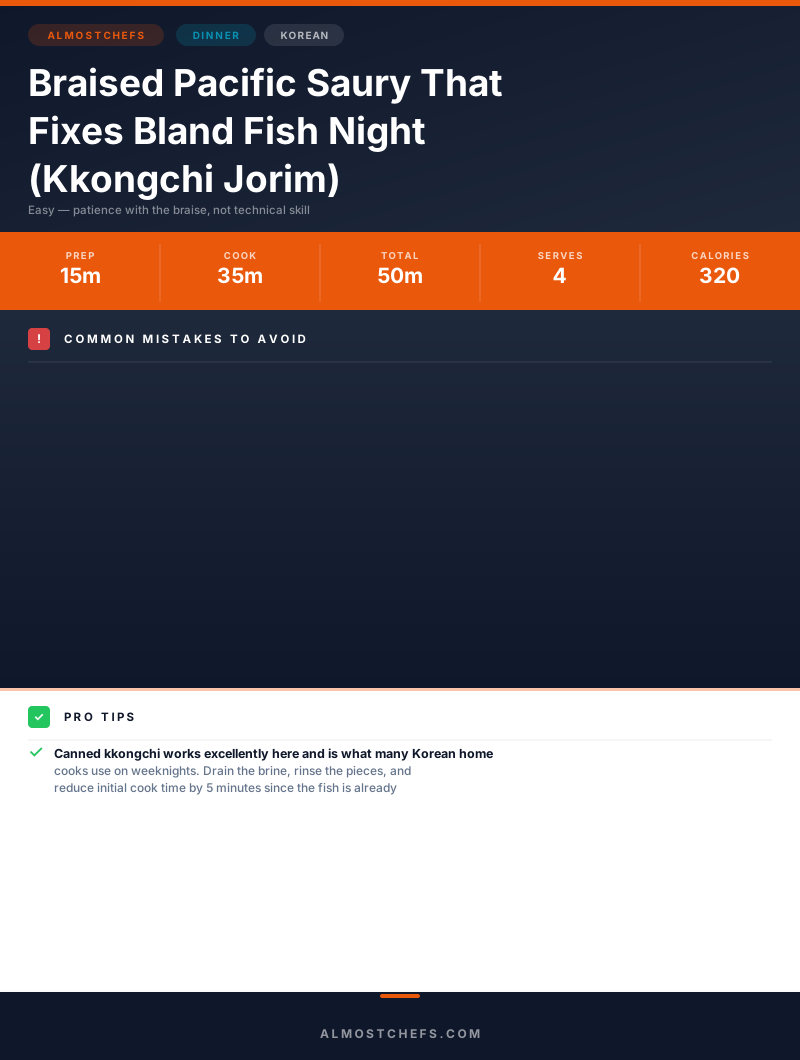
Canned kkongchi — already cooked, bones softened to edibility — is how most Korean home cooks make this on a Tuesday night. Drain the brine. Rinse. Reduce cook time by five minutes. The result is nearly identical to fresh and requires no special fishmonger relationship. This is a weeknight dish that has been feeding families for generations, and its genius is that it asked nothing complicated of anyone.
Where Beginners Mess This Up
Before we start, read this. These are the 4 reasons your braised pacific saury that fixes bland fish night (kkongchi jorim) will fail:
- 1
Skipping the daikon layer: Daikon goes on the bottom of the pot — not as a garnish, not as an afterthought. It insulates the fish from direct heat, preventing the bottom pieces from scorching before the sauce reduces. It also absorbs the cooking liquid and becomes one of the best bites in the dish. Cook without it and you'll burn the fish and miss half the meal.
- 2
Cooking on too high a heat: Jorim is a low-slow braise, not a stir-fry. High heat evaporates the braising liquid too quickly before the fish has time to absorb the sauce, and you end up with dry fish sitting in a burnt residue. Medium-low heat for the full cook time is non-negotiable.
- 3
Not rinsing the fish thoroughly: Pacific saury has a distinct oceanic smell that some find aggressive. A thorough rinse under cold running water — inside the cavity if using whole fish — followed by a 5-minute soak in lightly salted water removes the surface compounds responsible. Skip this and the finished dish reads as 'fishy' rather than savory.
- 4
Under-reducing the sauce: The sauce should reduce to a thick, syrupy glaze by the end of cooking — not a broth, not a light liquid. If it's still watery at the 30-minute mark, remove the lid and let it reduce uncovered for the final 5 minutes. A thin sauce means bland fish.
🛠️ Core Equipment
- Wide, shallow braising pan or skillet with lidYou need enough surface area to lay the fish pieces in a single layer without stacking. Stacked fish steams unevenly — the top pieces stay underdone while the bottom burns. A 12-inch skillet or shallow [Dutch oven](/kitchen-gear/review/dutch-oven) is ideal.
- Sharp knife and cutting boardFor slicing daikon into even rounds. Uneven daikon cooks unevenly — thin pieces dissolve while thick pieces stay raw. Consistent 1-centimeter slabs matter.
- Small mixing bowlFor combining the braising sauce before adding to the pot. Adding ingredients separately causes uneven seasoning distribution — the gochugaru clumps around whatever it hits first.
Braised Pacific Saury That Fixes Bland Fish Night (Kkongchi Jorim)
🛒 Ingredients
- ✦4 Pacific saury (kkongchi), cleaned and cut into 3-inch segments — or 2 cans (about 14 oz each) kkongchi in brine, drained
- ✦1/2 medium daikon radish, sliced into 1-centimeter rounds
- ✦4 green onions, cut into 2-inch pieces
- ✦1/2 medium yellow onion, thinly sliced
- ✦4 garlic cloves, minced
- ✦1 teaspoon fresh ginger, grated
- ✦3 tablespoons gochugaru (Korean red pepper flakes)
- ✦2 tablespoons soy sauce
- ✦1 tablespoon fish sauce
- ✦1 tablespoon gochujang (Korean red pepper paste)
- ✦1 tablespoon mirin
- ✦1 teaspoon sesame oil
- ✦1 teaspoon sugar
- ✦1 cup water or anchovy stock
- ✦1 teaspoon sesame seeds, for garnish
- ✦Salt for the fish soak
👨🍳 Instructions
01Step 1
Rinse the fish pieces under cold running water. Soak in lightly salted cold water for 5 minutes, then drain and pat dry.
02Step 2
In a small bowl, combine gochugaru, soy sauce, fish sauce, gochujang, mirin, sugar, minced garlic, and grated ginger. Stir until fully incorporated.
03Step 3
Arrange the daikon slices in a single layer across the bottom of a wide skillet or braising pan.
04Step 4
Lay the fish pieces on top of the daikon in a single layer. Scatter the sliced yellow onion and half the green onion pieces around and between the fish.
05Step 5
Pour the combined sauce evenly over the fish. Add 1 cup of water or anchovy stock — the liquid should come about halfway up the fish without submerging it.
06Step 6
Bring to a medium simmer over medium heat, then reduce heat to medium-low. Cover and cook for 20 minutes without disturbing.
07Step 7
Carefully tilt the pan and spoon the braising liquid over the fish (basting). Add the remaining green onion pieces. If the liquid looks thin, remove the lid for the final 8-10 minutes to reduce.
08Step 8
Cook uncovered for an additional 10-15 minutes, basting occasionally, until the sauce has reduced to a thick, glossy glaze that clings to the fish and daikon.
09Step 9
Drizzle sesame oil over the top. Garnish with sesame seeds. Serve immediately over steamed rice with the braised daikon alongside.
Nutrition Per Serving
Estimates based on standard preparation. Adjustments alter macros.
🔄 Substitutions
Instead of Pacific saury (kkongchi)...
Use Mackerel (godeungeo) or canned sardines
Mackerel follows the exact same technique and is arguably easier to find fresh. Sardines work well from the can — reduce cook time by 8 minutes and handle gently as they break apart more easily.
Instead of Gochugaru...
Use 1.5 tablespoons sweet paprika + 1 teaspoon cayenne
Not authentic, but functional. Gochugaru has a specific fruity heat that paprika-cayenne blends lack. The color will be correct; the flavor will be slightly flatter.
Instead of Fish sauce...
Use Additional soy sauce (1:1)
Loses some funky umami depth but remains savory. If avoiding fish sauce for dietary reasons, add a small strip of dried kelp to the braising liquid to compensate.
Instead of Mirin...
Use 1 tablespoon dry sherry + 1/2 teaspoon sugar
Mirin provides both sweetness and a subtle fermented character. The sherry-sugar combination approximates the sweetness but lacks the complexity. Acceptable weeknight substitution.
🧊 Storage & Reheating
In the Fridge
Store in an airtight container with the braising liquid for up to 3 days. The sauce deepens in flavor overnight. Bones soften further with each day — by day two the fish is even easier to eat.
In the Freezer
Freeze in portions for up to 1 month. The daikon softens further after freezing, which is not a problem — it becomes even more silky. Thaw overnight in the fridge.
Reheating Rules
Reheat covered in a pan over low heat with 2 tablespoons of water. Do not microwave — it dries out the fish and makes the sauce grainy. Cold leftovers directly over hot rice are also excellent.
❓ Frequently Asked Questions
What does kkongchi taste like?
Pacific saury has a stronger, more pronounced flavor than mild white fish — closer to mackerel than cod. It's rich, slightly oily, and distinctly oceanic. The jorim braise tames that assertiveness and redirects it into deep savory flavor. If you enjoy mackerel, sardines, or any oily fish, you will like kkongchi.
Can I use fresh Pacific saury if I can't find it canned?
Yes, and it's the better option when available. Ask your fishmonger to clean and cut it into segments. Fresh kkongchi has a more delicate texture than canned. Follow the recipe as written — no time adjustments needed.
Why is my sauce not thickening?
Two likely causes: either your heat is too low, or you have too much liquid. Remove the lid and increase heat slightly to medium. If after 10 minutes it's still thin, continue cooking uncovered until it coats the back of a spoon. The sauce reduction is the entire point of the final phase.
Is kkongchi jorim actually good for inflammation?
Pacific saury is one of the richest sources of EPA and DHA omega-3 fatty acids among commonly eaten fish — comparable to salmon, often at a fraction of the cost. EPA and DHA have documented anti-inflammatory effects. The gochugaru contains capsaicin, which also has anti-inflammatory properties. The daikon contributes digestive enzymes. This is a genuinely functional dish, not just labeled that way.
Do I have to eat the bones?
For canned kkongchi, the bones are fully soft and edible — they're actually a significant source of calcium and are meant to be eaten. For fresh fish cut into segments, the larger bones require navigation. Many Koreans eat them anyway after long braising softens them. If bones bother you, use fish fillets instead, though they'll fall apart more during cooking.
What do I serve with kkongchi jorim?
Steamed short-grain rice is mandatory — the dish is designed around it. Beyond that, Korean standard: kimchi, a simple soup (doenjang jjigae or miyeok guk), and a few banchan. The jorim itself is intensely flavored, so accompany it with mild sides that provide contrast rather than competition.
The Science of
Braised Pacific Saury That Fixes Bland Fish Night (Kkongchi Jorim)
We turned everything on this page into a beautiful, flour-proof PDF cheat sheet. Print it out, stick it to your fridge, and never mess up your braised pacific saury that fixes bland fish night (kkongchi jorim) again.
*We'll email you the high-res PDF instantly. No spam, just perfectly cooked meals.
AlmostChefs Editorial Team
We translate the internet's most popular cooking videos into foolproof, beginner-friendly written recipes. We analyze multiple methods, test them in our kitchen, and engineer a single "Master Recipe" that gives you the best possible result with the least possible stress.