Homemade Kimchi Mandu (The Dumpling That Actually Tastes Like Korea)
Handmade Korean dumplings stuffed with fermented kimchi, tofu, and pork — then pan-fried, steamed, or boiled depending on your mood. We broke down the most common filling failures and built a technique that seals in moisture without turning the wrapper soggy.

“Kimchi mandu is one of those dishes that's technically simple and practically difficult. The filling is five ingredients. The wrapper is flour and water. And yet most first attempts produce either exploding dumplings, soggy wrappers, or a filling that tastes like wet cabbage with no depth. The problem is almost always moisture management — kimchi is 70% water by weight, and if you don't extract it before mixing, that water goes straight into your wrapper and destroys it from the inside.”
Why This Recipe Works
Kimchi mandu sits at the intersection of two ancient preservation traditions: fermented vegetables and stuffed dough. Both were designed to extend shelf life and concentrate nutrition. Together, they produce something that is more than the sum of its parts — but only if you understand why each component exists and what it needs from you.
The Moisture Problem Is the Only Problem
Everything that can go wrong with kimchi mandu traces back to water. Kimchi is roughly 70% water by weight. Firm tofu, despite being called "firm," retains significant moisture until you force it out. Ground pork releases its own juices during cooking. Put all three into a dumpling wrapper and you've created a pressurized moisture bomb that will either burst the seal or saturate the dough until it turns gummy.
The solution is mechanical. Chop your kimchi, then wring it out in a clean kitchen towel until your forearm aches. Press your tofu between your palms until the crumbles are nearly dry. If you do only one thing differently from your last attempt, do this. The texture transformation in the finished dumpling is not subtle — it is the difference between a tight, cohesive bite and a wet, collapsing mess.
Why Aged Kimchi Matters
Fresh kimchi is cabbage seasoned with gochugaru paste. Aged kimchi is a fermented organism with genuine complexity — sour, funky, deep, and savory in a way that no amount of added seasoning can replicate. Lactobacillus bacteria convert the cabbage's natural sugars into lactic acid over weeks, building flavor compounds that don't exist in raw ingredients.
For a filling where kimchi is the lead flavor, this distinction is everything. Underfermented kimchi makes mandu taste like a spicy cabbage potsticker. Properly aged kimchi makes mandu taste like a cultural artifact. Buy it aged, or make it yourself and wait. This is not an area for shortcuts.
The Tofu Architecture
Tofu in mandu filling does three things simultaneously. It binds the chopped kimchi and pork into a cohesive mass that stays together when bitten rather than falling out. It moderates the filling's heat and acidity — tofu's neutrality softens kimchi's aggressive fermented edge. And it stretches the filling economically, which is why mandu has always been working-class food: you can feed more people with less meat.
Use firm tofu, not silken. Silken tofu contributes nothing but water. Firm tofu, once pressed, holds its structure and gives the filling texture. Crumble it by hand rather than cutting — hand-crumbled tofu integrates more evenly than cubed pieces.
The Two-Stage Pan-Fry
Gun mandu — the pan-fried version — requires two distinct cooking phases and most home cooks only complete one. Phase one: sear the flat bottom in hot oil until genuinely golden and crispy, about 2-3 minutes in a cast iron skillet without moving the dumplings. Phase two: add water and steam under a lid until the filling cooks through and the wrappers turn translucent.
The mistake is stopping after phase two. When the water evaporates, most cooks immediately plate. What they miss is the 60-second re-crisp window after the lid comes off — the bottom crust, which softened during steaming, firms back up into a lacquered, crackling base. This is the texture that defines restaurant mandu. It costs nothing extra except patience.
The Fold Is Structural
The classic half-moon pleat is not decorative. Each fold compresses the sealed edge under mechanical pressure, creating overlapping layers of bonded dough that reinforce the seal from multiple angles. A simple flat press creates a single bond line that can fail under the expansion of steam pressure inside the dumpling. The pleat distributes that force across multiple bond points.
If pleating frustrates you, don't skip it — simplify it. Even two or three rough folds along the top edge provide dramatically better structural integrity than none. The goal is compression, not beauty.
On Filling Seasoning
The filling should be aggressively seasoned before it goes into the wrapper. Once enclosed, you have no way to adjust. Taste the raw mixture — it should be salty, savory, and slightly sour with a clean heat from the gochugaru. The flavors will mellow during cooking, not intensify. If the raw filling tastes balanced, the cooked mandu will taste flat. Season to 10-15% past where you think it should be.
Kimchi mandu rewards attention. Not skill, not equipment, not expensive ingredients — just attention paid to moisture, fermentation age, and the two-stage cook. Get those three variables right and the rest handles itself.
videoReferences:
- label: "Authentic Kimchi Mandu — Step by Step" videoId: "jWjOdO5eq8E" description: "Clear walkthrough of the full mandu process from filling prep to pan-fry technique. Best resource for understanding the moisture-extraction step and the two-stage gun mandu cook."
- label: "Korean Dumpling Folding Techniques" videoId: "jWjOdO5eq8E" description: "Focused entirely on pleating and sealing methods. Covers the classic half-moon fold, the nurse's cap, and the flat press — useful for first-time folders who need a visual reference."
- label: "Kimchi From Scratch for Mandu Filling" videoId: "jWjOdO5eq8E" description: "Explains why fermentation age changes the flavor profile of kimchi and how to select or prepare aged kimchi specifically for cooked applications like mandu and jjigae."
Where Beginners Mess This Up
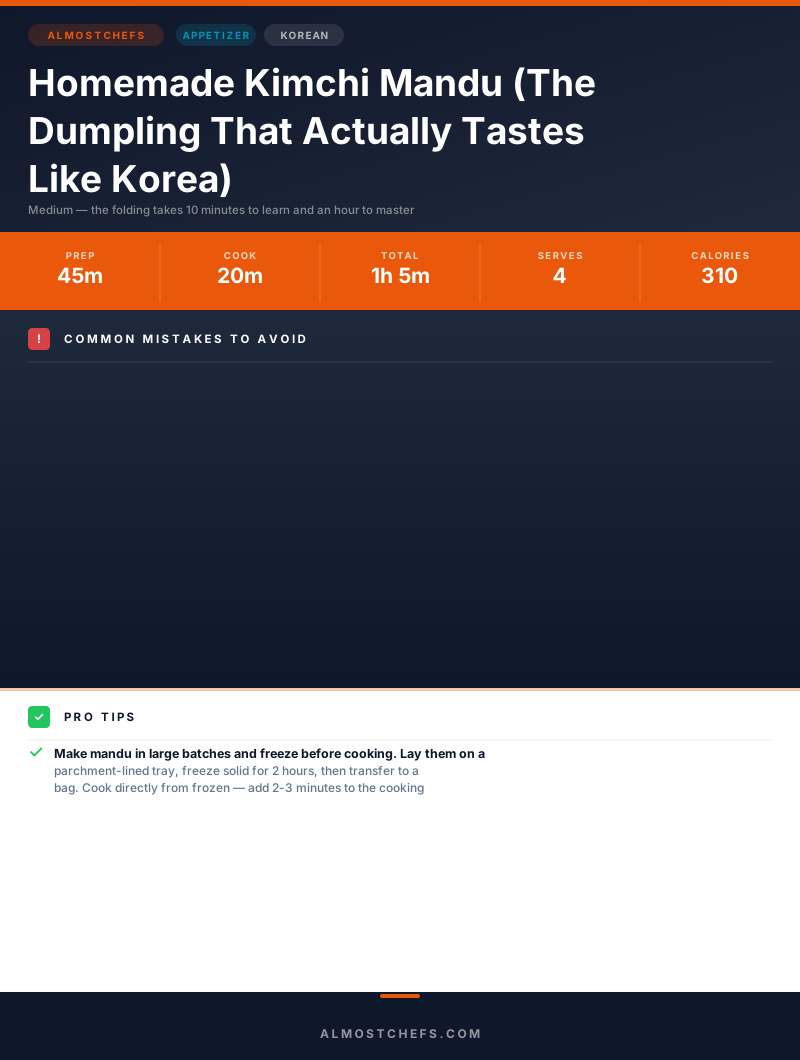
Before we start, read this. These are the 4 reasons your homemade kimchi mandu (the dumpling that actually tastes like korea) will fail:
- 1
Not squeezing the kimchi dry: This is the single most common mandu failure. Fermented kimchi releases enormous amounts of liquid during cooking. If you don't wring it out aggressively before mixing the filling, that liquid saturates the wrapper, causing it to tear during cooking and taste waterlogged when eating. Chop the kimchi, then squeeze it in your fist over the sink until almost no liquid drips out.
- 2
Using fresh kimchi instead of aged: Fresh kimchi lacks the fermented depth that defines this dumpling. You want kimchi that's been fermenting for at least 3-4 weeks — it should be sour, complex, and slightly funky. Freshly made kimchi tastes raw and sharp in a filling, not deep and savory. If your kimchi is under two weeks old, use less of it and compensate with a little doenjang to add fermented depth.
- 3
Overfilling the wrapper: More filling does not mean better mandu. Overfilled dumplings seal poorly, burst during cooking, and lose their structural integrity. One heaping teaspoon of filling per wrapper is the correct amount. The seal edge needs at least 1cm of clean wrapper to bond properly.
- 4
Cooking from cold water instead of boiling: For boiled mandu, always drop into a full rolling boil. Starting in cold or warm water causes the wrappers to become gummy and the dumplings to stick together before the starch sets. Boiling water sets the exterior immediately, locking in the shape.
🛠️ Core Equipment
- Large mixing bowlYou need room to combine the filling without compressing it. Tight quarters lead to overworked filling, which turns dense and rubbery.
- Non-stick or cast iron skilletEssential for the pan-fry method (gun mandu). Cast iron holds heat better for a crispy bottom crust, but a non-stick pan forgives a wandering eye. Either way, you need a lid to steam the tops after browning.
- Fine-mesh strainer or clean kitchen towelFor draining the tofu and squeezing moisture from the kimchi. This step is not optional. It is the entire recipe.
- Small bowl of waterFor sealing the dumpling edges. Dry wrappers won't adhere to each other — wet your finger and run it around the edge before pressing the seal.
Homemade Kimchi Mandu (The Dumpling That Actually Tastes Like Korea)
🛒 Ingredients
- ✦30 round dumpling wrappers (store-bought or homemade)
- ✦1.5 cups fermented kimchi (at least 3-4 weeks old), finely chopped and squeezed dry
- ✦7 oz firm tofu, drained and crumbled
- ✦6 oz ground pork (or beef)
- ✦2 green onions, finely sliced
- ✦2 garlic cloves, minced
- ✦1 teaspoon sesame oil
- ✦1 teaspoon soy sauce
- ✦1/2 teaspoon gochugaru (Korean red pepper flakes)
- ✦1/2 teaspoon sugar
- ✦1/4 teaspoon white pepper
- ✦Salt to taste
- ✦2 tablespoons vegetable oil (for pan-frying)
- ✦1/3 cup water (for steaming, pan-fry method)
👨🍳 Instructions
01Step 1
Drain the tofu thoroughly. Wrap it in a clean kitchen towel and press out as much moisture as possible, then crumble into fine pieces.
02Step 2
Finely chop the kimchi. Transfer to a kitchen towel or clean cloth, gather the edges, and wring out the liquid firmly over the sink. Repeat until almost no liquid drips out.
03Step 3
Combine the squeezed kimchi, crumbled tofu, ground pork, green onions, garlic, sesame oil, soy sauce, gochugaru, sugar, and white pepper in a large bowl. Mix with your hands until evenly combined but not overworked.
04Step 4
Place a dumpling wrapper flat on your palm. Add one heaping teaspoon of filling to the center. Wet your finger and trace it around the entire edge of the wrapper.
05Step 5
Fold the wrapper in half over the filling to form a half-moon. Press the edges firmly to seal, then pleat the top edge by folding small overlapping folds from one end to the other.
06Step 6
For pan-frying (gun mandu): Heat 2 tablespoons vegetable oil in a [non-stick or cast iron skillet](/kitchen-gear/review/cast-iron-skillet) over medium-high heat. Add dumplings flat-side down and cook undisturbed for 2-3 minutes until the bottoms are golden and crisp.
07Step 7
Add 1/3 cup water carefully — it will splatter. Immediately cover with a lid and steam for 5-6 minutes until the water evaporates and the wrappers are translucent.
08Step 8
For boiling (mul mandu): Bring a large pot of water to a rolling boil. Drop in dumplings in batches and stir gently to prevent sticking. Cook for 5-6 minutes until they float and the wrappers are slightly translucent.
09Step 9
Serve immediately with a dipping sauce of soy sauce, rice vinegar, sesame oil, and a pinch of gochugaru.
Nutrition Per Serving
Estimates based on standard preparation. Adjustments alter macros.
🔄 Substitutions
Instead of Ground pork...
Use Ground chicken or firm tofu (doubled)
Chicken is leaner and drier — add 1 teaspoon sesame oil to compensate for fat loss. All-tofu filling is fully vegetarian but needs extra seasoning as tofu has no intrinsic flavor.
Instead of Store-bought dumpling wrappers...
Use Homemade wrappers (flour + hot water)
Homemade wrappers are thicker and more forgiving — they don't tear as easily and hold pleats better. Mix 2 cups all-purpose flour with 3/4 cup hot water, knead until smooth, rest 30 minutes, then roll thin.
Instead of Gochugaru...
Use Red pepper flakes (use half the quantity)
Western red pepper flakes are hotter and less complex than gochugaru. Reduce to 1/4 teaspoon and expect less smoky depth.
Instead of Firm tofu...
Use Glass noodles (dangmyeon), cooked and chopped
Common in certain regional mandu styles. Adds chewy texture and stretches the filling without contributing moisture. Does not bind the same way — the filling will be looser.
🧊 Storage & Reheating
In the Fridge
Store cooked mandu in an airtight container for up to 2 days. They soften overnight — re-crisp in a dry skillet before serving.
In the Freezer
Freeze uncooked mandu on a tray until solid, then bag for up to 3 months. Cook directly from frozen without thawing.
Reheating Rules
Pan-fry in a lightly oiled skillet over medium heat with a splash of water and a lid for 4-5 minutes. Microwaving is acceptable but eliminates any crispiness.
❓ Frequently Asked Questions
Why do my dumplings keep bursting open during cooking?
Two causes: overfilling or an incomplete seal. You need at least 1cm of clean, dry wrapper edge to create a bond. Wet the edge before sealing, press firmly, and pleat the top to lock it. If the wrapper itself is wet from wet filling, the starch won't adhere — your filling moisture extraction is the root problem.
Can I use fresh kimchi?
You can, but the flavor will be noticeably flat. Fresh kimchi hasn't developed its fermented complexity yet — it tastes sharp and acidic without the sour depth that aged kimchi brings. If fresh kimchi is all you have, add a small spoonful of doenjang (fermented soybean paste) to the filling to approximate that depth.
How do I know when boiled mandu are cooked through?
They'll float to the surface, and the wrapper will turn from opaque white to slightly translucent. Give them one more minute after floating to ensure the pork in the center is cooked. If in doubt, cut one open — the filling should be uniform in color with no pink.
What's the difference between mandu and Chinese dumplings (jiaozi)?
The wrappers are similar but the fillings differ significantly. Korean mandu typically includes tofu and kimchi, which don't appear in traditional Chinese dumplings. Korean mandu wrappers also tend to be slightly thicker. The folding technique is nearly identical — the distinction is cultural and ingredient-based, not structural.
Is kimchi mandu actually good for gut health?
Fermented kimchi contains live Lactobacillus cultures — the same probiotic bacteria associated with gut microbiome support. However, pan-frying and boiling kill most of those cultures. The fiber from kimchi cabbage and tofu still supports digestion, but if live cultures are your goal, eat the kimchi raw. The gut health claim survives on fiber, not live bacteria.
Can I make these vegetarian?
Yes. Double the tofu, skip the pork, and add a handful of finely chopped shiitake mushrooms for umami depth. Season more aggressively since tofu has no baseline flavor. The texture will be softer than the pork version — add a small handful of cooked glass noodles to give the filling more body.
The Science of
Homemade Kimchi Mandu (The Dumpling That Actually Tastes Like Korea)
We turned everything on this page into a beautiful, flour-proof PDF cheat sheet. Print it out, stick it to your fridge, and never mess up your homemade kimchi mandu (the dumpling that actually tastes like korea) again.
*We'll email you the high-res PDF instantly. No spam, just perfectly cooked meals.
AlmostChefs Editorial Team
We translate the internet's most popular cooking videos into foolproof, beginner-friendly written recipes. We analyze multiple methods, test them in our kitchen, and engineer a single "Master Recipe" that gives you the best possible result with the least possible stress.