Kimchi Jjigae (Kimchi Stew)
Korea's ultimate comfort stew — sour aged kimchi, pork belly, and tofu simmered in a spicy, deeply savory broth. Better the next day.
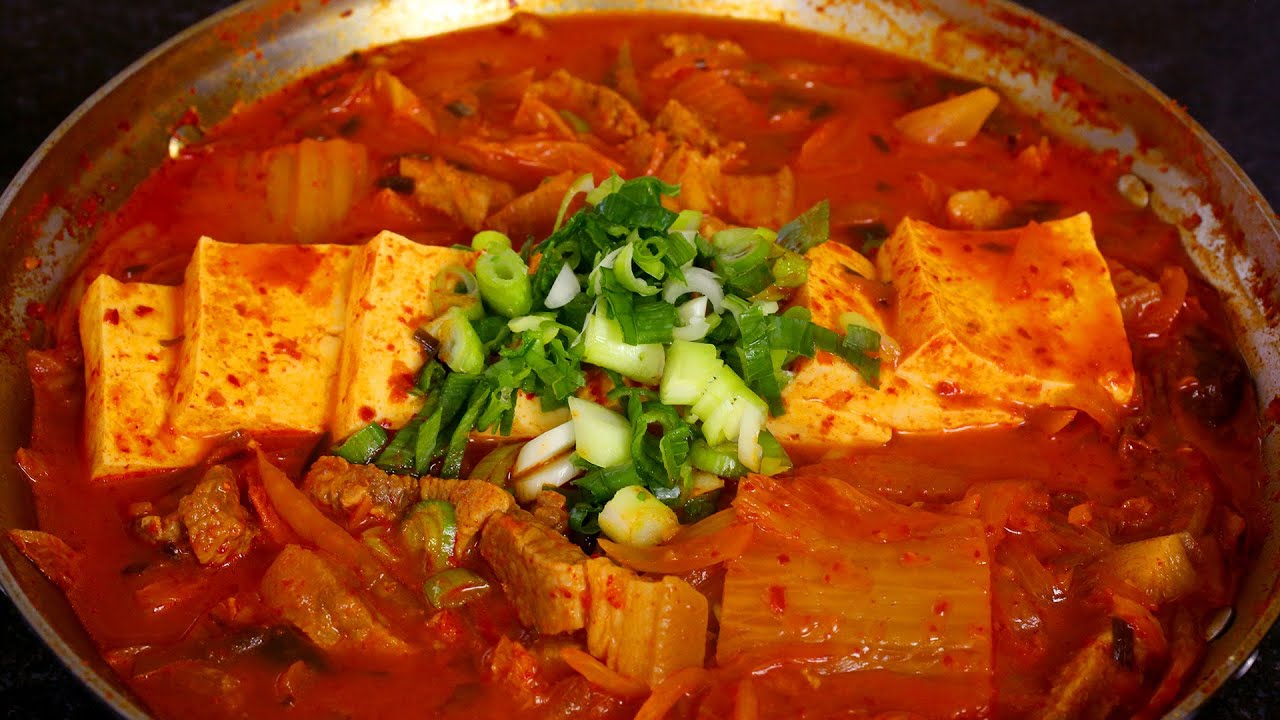
Why This Recipe Works
Let's be direct about something most food blogs will never tell you: the majority of kimchi jjigae recipes on the internet are wrong. Not catastrophically wrong — they'll produce something edible — but structurally wrong in ways that guarantee a flat, one-dimensional stew that tastes like spicy tomato water with a Korean identity crisis. This recipe is not that. Here is a methodical breakdown of why each decision matters, and why cutting corners produces a demonstrably inferior result.
The Fermentation Paradox: Why You're Not Actually Cooking This Dish
The central misunderstanding about kimchi jjigae is that you are cooking it. You are not. You are finishing it. The real cooking — the actual flavor development — happened between two weeks and two months ago, inside a jar, driven entirely by lactobacillus bacteria converting sugars into lactic acid, CO₂, and a cascade of volatile aromatic compounds that no amount of stove time can synthesize from scratch.
Fresh kimchi contains approximately 0.3–0.5% lactic acid. Fully aged kimchi can reach 1.5–2% or higher. That acid concentration is the backbone of the broth. It provides the pH drop that makes the stew bright and punchy, and it acts as a natural tenderizer on the pork belly as the dish simmers. Fresh kimchi skips this entirely. The result is a broth with no skeletal structure — plenty of heat from gochugaru, sure, but nothing underneath it to give that heat context or longevity on the palate.
The kimchi brine added alongside the chopped kimchi is not an afterthought. It carries dissolved free amino acids — glutamates — that function as natural MSG. You are adding umami by the quarter-cup, passively, because someone had the patience to ferment properly. Use every drop.
The Maillard Reaction Comes First
Before any liquid enters the pot, you are building two separate Maillard reactions. First: the pork belly. Fat-side contact with a heavy pot over medium-high heat renders subcutaneous fat while browning the protein surface. This produces hundreds of new flavor compounds — pyrazines, furans, thiophenes — that do not exist in raw pork and cannot be introduced later. Skip the browning step and you surrender a measurable layer of complexity for no reason.
Second: the kimchi itself goes into the hot fat and stir-fries for three to four minutes before any liquid is added. This is not decorative. The residual sugars in the kimchi — fructose, glucose — hit the hot pork fat and begin caramelizing above 160°C. The sourness partially cooks off, concentrating what remains into something rounder and more integrated. The fermented garlic and ginger in the kimchi itself begins releasing aromatic compounds that would otherwise stay locked in the vegetable matrix.
This two-stage Maillard approach is what separates competent jjigae from the version you remember eating at 11pm in Seoul. Do not skip it because you are in a hurry.
The Pot Is Not Incidental
The traditional vessel — a ttukbaegi, the Korean earthenware stone pot — is not a styling choice for Instagram. Earthenware has a heat retention profile that cast iron cannot fully replicate: it absorbs heat slowly and releases it slowly, maintaining a gentle, even simmer that keeps the stew bubbling at the table for the duration of the meal. The thermal mass also means the stew arrives at the table at serving temperature and stays there for 10–15 minutes without a heat source.
If you do not own a ttukbaegi, a Dutch oven is the defensible substitute — heavy walls, enameled interior that won't react with the acidic kimchi broth, excellent heat retention. What you absolutely cannot use is a thin-walled saucepan. Thin walls produce hot spots that scorch the kimchi solids on the bottom while leaving the broth lukewarm at the surface. The stew will taste burnt and uneven simultaneously, which is an impressive failure mode.
Tofu Geometry and the Timing Problem
Tofu enters the stew last — not as a courtesy, but because medium-firm tofu begins structurally degrading above 80°C after extended exposure. It does not dissolve, but the protein matrix weakens and the block loses its ability to hold a clean edge. Five minutes of gentle simmering is sufficient to heat it through and allow it to absorb broth. More than that and you are making tofu porridge.
The cube size is functional, not aesthetic. One-inch cubes offer enough surface area to absorb the spiced broth while maintaining interior softness that contrasts with the chewy pork and yielding kimchi. Smaller pieces disintegrate. Larger pieces stay cold in the center. One inch is not arbitrary.
The Day-After Effect Is Chemistry, Not Mythology
This stew is better the next day. This is not Korean grandmother superstition — it is osmotic equilibration. Overnight, the salt and glutamate concentrations inside the tofu, pork, and kimchi solids diffuse toward equilibrium with the surrounding broth. The broth also has time to reabsorb volatile aromatics that evaporated during cooking, particularly sesame compounds and sulfur-based garlic volatiles that partially dispersed into the air over the stove.
The result is a stew with a more unified, integrated flavor profile — less of a collection of distinct ingredients and more of a single coherent thing. Make a double batch. Refrigerate half. You will understand on day two why this dish has been a Korean household staple for generations without a single recipe card being consulted.
Stock Choice Is Not Neutral
Water works. Anchovy-dashima stock works considerably better. Dried anchovies (myeolchi) simmered with dashima kelp produce a stock rich in inosinate — a nucleotide that synergizes with glutamates to produce a combined umami effect roughly eight times stronger than either compound alone. This is textbook flavor science, not preference. The kimchi contributes glutamates. The anchovy stock contributes inosinate. Together, they produce a broth depth that water-based jjigae cannot approach regardless of how long it simmers.
Fish sauce, added at the end, compounds this effect with additional glutamates and a low-level brine salinity that rounds the finish without pushing the stew toward fishiness when used at one teaspoon. It is a seasoning tool, not a flavor statement. Use it.
Kimchi Jjigae (Kimchi Stew)
🛒 Ingredients
- ✦2 cups well-aged kimchi (at least 2 weeks old), roughly chopped
- ✦1/4 cup kimchi brine from the jar
- ✦8 oz pork belly or pork shoulder, sliced into bite-size pieces
- ✦1 block (14 oz) medium-firm tofu, cut into 1-inch cubes
- ✦1 tablespoon gochugaru (Korean red pepper flakes)
- ✦1 tablespoon gochujang (Korean red pepper paste)
- ✦1 tablespoon soy sauce
- ✦1 teaspoon sugar
- ✦1 tablespoon sesame oil
- ✦4 cloves garlic, minced
- ✦1 small onion, sliced
- ✦2 green onions, sliced
- ✦2 cups water or anchovy-dashima stock
- ✦1 teaspoon fish sauce (optional)
👨🍳 Instructions
01Step 1
Heat sesame oil in a heavy pot or Korean ttukbaegi (stone pot) over medium-high heat. Add pork belly slices and cook until lightly browned on both sides, about 3-4 minutes.
02Step 2
Add garlic and onion to the pork. Sauté until fragrant, about 1 minute.
03Step 3
Add chopped kimchi and kimchi brine. Stir-fry with the pork for 3-4 minutes until the kimchi softens and the edges start to caramelize.
04Step 4
Add gochugaru, gochujang, soy sauce, and sugar. Stir to combine and coat everything evenly.
05Step 5
Pour in water or anchovy-dashima stock. Bring to a boil, then reduce heat to medium-low. Simmer uncovered for 15 minutes.
06Step 6
Gently slide tofu cubes into the stew. Add fish sauce if using. Simmer for another 5 minutes until tofu is heated through.
07Step 7
Scatter green onions on top. Serve bubbling hot with steamed rice.
Nutrition Per Serving
Estimates based on standard preparation. Adjustments alter macros.
🔄 Substitutions
Instead of Pork belly...
Use Canned tuna (chamchi)
Tuna kimchi jjigae (chamchi jjigae) is an equally popular Korean variation — add a whole can with oil
Instead of Pork belly...
Use Spam
Spam kimchi jjigae is a beloved post-war Korean comfort food
Instead of Tofu...
Use Zucchini
Sliced Korean zucchini (hobak) is a common addition or substitute
Instead of Gochugaru...
Use Aleppo pepper
Less spicy, slightly fruitier — use 1.5x the amount
🧊 Storage & Reheating
In the Fridge
Store in an airtight container for up to 5 days. Flavors improve overnight.
In the Freezer
Freeze without tofu for up to 2 months. Add fresh tofu when reheating.
Reheating Rules
Reheat in a pot over medium heat until bubbling. Add a splash of water if too thick.
❓ Frequently Asked Questions
Why does my kimchi jjigae taste bland?
The number one reason is fresh kimchi. You need aged, sour kimchi — at least 2 weeks old, ideally longer. The fermentation creates the complex, tangy depth. If your kimchi isn't sour enough, add extra kimchi brine or a splash of rice vinegar.
Can I make kimchi jjigae vegetarian?
Yes. Skip the pork and use vegetable stock instead of anchovy stock. Add extra mushrooms (shiitake or king oyster) for umami. Keep the aged kimchi — many store-bought kimchi is already vegan, but check for fish sauce or shrimp paste in the ingredients.
What is ttukbaegi?
A ttukbaegi is a Korean earthenware pot that retains heat extremely well. It keeps jjigae bubbling at the table long after it leaves the stove. They're inexpensive at Korean markets ($5-10) and are the traditional serving vessel for all Korean stews.
The Science of
Kimchi Jjigae (Kimchi Stew)
We turned everything on this page into a beautiful, flour-proof PDF cheat sheet. Print it out, stick it to your fridge, and never mess up your kimchi jjigae (kimchi stew) again.
*We'll email you the high-res PDF instantly. No spam, just perfectly cooked meals.
AlmostChefs Editorial Team
We translate the internet's most popular cooking videos into foolproof, beginner-friendly written recipes. We analyze multiple methods, test them in our kitchen, and engineer a single "Master Recipe" that gives you the best possible result with the least possible stress.