Kimchi Fried Rice (Kimchi-bokkeumbap)
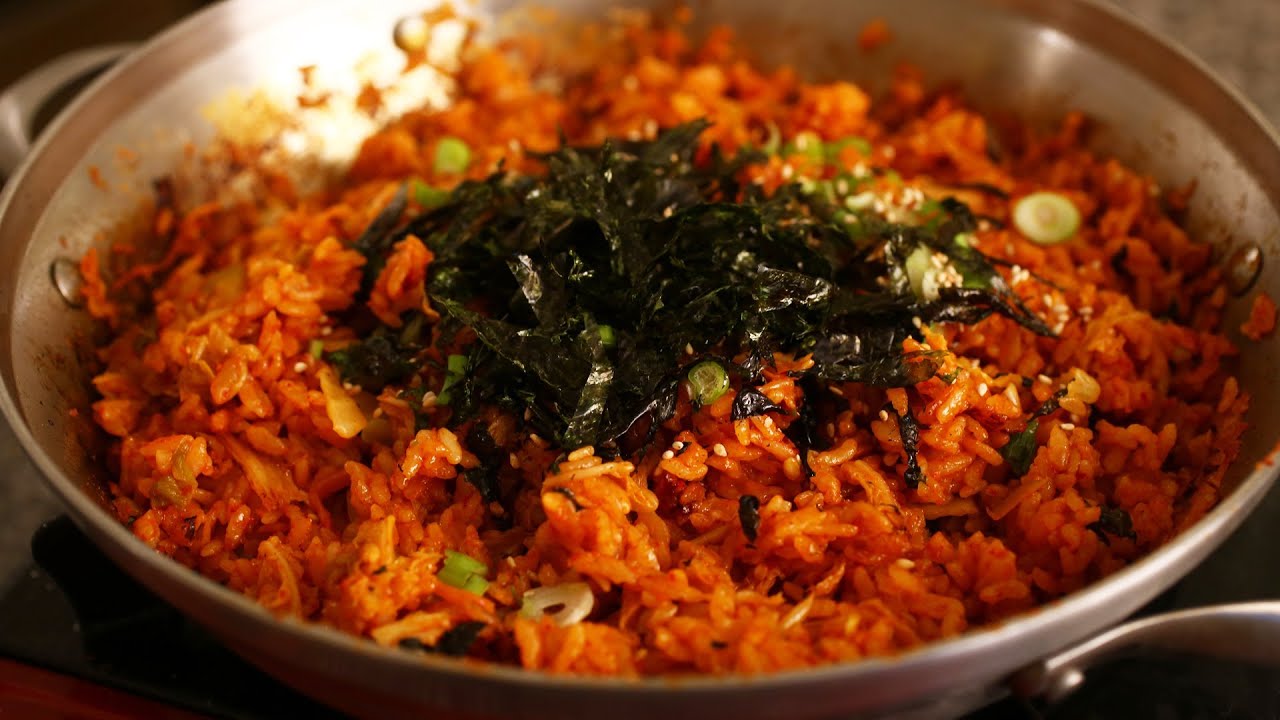
The ultimate Korean leftover meal — day-old rice stir-fried with aged kimchi, pork, and gochujang until smoky and caramelized. Topped with a fried egg and sesame oil.
Why This Recipe Works
Most people make kimchi fried rice wrong. They use fresh rice, underfermened kimchi, and a pan that isn't hot enough, then wonder why the result tastes like sad, stir-fried mush with a red tint. This is not a recipe for that version. This is a breakdown of exactly what separates a bowl of kimchi bokkeumbap that stops a conversation from one that simply fills a plate.
The Rice Problem
Cold, day-old rice is not a suggestion or a stylistic preference. It is a physical requirement governed by moisture chemistry. Freshly cooked short-grain rice contains residual steam and surface moisture that, when introduced to a hot wok, immediately creates a micro-steaming environment. The grains clump. They absorb oil unevenly. The texture turns soft and uniform — the exact opposite of what you want.
Refrigerating cooked rice overnight does two things: it drives off surface moisture through evaporation, and it causes partial retrogradation of the starch molecules. Retrograded starch is structurally firmer. Each grain becomes a discrete unit capable of withstanding high-heat contact without disintegrating. When that grain hits a properly heated skillet or wok, the surface dehydrates rapidly and begins to develop the faint, toasty char that makes great fried rice identifiable within three seconds of smelling it. You cannot manufacture this with fresh rice. You cannot shortcut it by spreading fresh rice on a tray and blasting it with a fan. Make the rice the day before, refrigerate it uncovered, and accept that patience is part of the recipe.
The Kimchi Variable
The older and more sour the kimchi, the better this dish performs. This is counterintuitive to people raised in food cultures where fermented = on the verge of going bad. In Korean cooking, aged kimchi — the jar that's been sitting in the back of the fridge for three or four weeks, the one that smells aggressively sour when you open it — is the correct input here.
Here is the science: fresh kimchi is crisp, bright, and lactic acid content is relatively low. Aged kimchi has undergone extended lacto-fermentation, meaning lactic acid concentration is high, residual sugars have converted, and the cellular structure of the cabbage has softened significantly. In a hot wok, that softened, acid-rich kimchi caramelizes aggressively. The sugars from the gochujang and the natural fermentation byproducts hit the Maillard reaction simultaneously. You get complex, layered browning — smoky, slightly sweet, intensely savory. Fresh kimchi produces none of this. It just wilts and steams and contributes very little beyond color.
The technique here matters as much as the ingredient: let the chopped kimchi sit undisturbed in the hot pan for 30-second intervals. Resist the urge to stir constantly. You are not sautéing. You are applying contact heat long enough to develop caramelized edges on the individual kimchi pieces. That char is the flavor.
Kimchi Brine Is Not a Byproduct
Every recipe that tells you to drain kimchi and discard the brine is a recipe written by someone who doesn't understand what they're cooking. Kimchi brine is a concentrated liquid of lactic acid, capsaicin, garlic fermentation compounds, and fish sauce — or salted shrimp, depending on the batch. Adding three tablespoons of it directly to the rice during stir-frying seasons the dish from the inside out in a way that surface-applied soy sauce alone cannot replicate.
The acidity cuts through the fat from the pork belly. The umami compounds reinforce the savory backbone without pushing the sodium into painful territory. The brine is a seasoning liquid, a flavor amplifier, and an acid-balance tool simultaneously. Do not skip it.
Fat Rendering and Pork Belly Sequencing
Pork belly goes into the wok first, before anything else, in a pan that is already hot. The goal in those first three to four minutes is not to cook the pork — it's to render the fat. Pork belly contains substantial intramuscular fat that, when rendered properly, coats the bottom of the wok in seasoned animal fat before the kimchi ever touches the surface. That fat layer is the cooking medium for every subsequent step. It is why restaurant-made kimchi fried rice tastes different from home versions made with a thin film of neutral vegetable oil. You are building the flavor of the pan itself before the main ingredients arrive.
When the fat renders and the pork edges go crispy and golden, the kimchi goes in. It hits that pork-rendered fat and starts caramelizing immediately. When the cold rice follows, it absorbs that fat layer, which means every grain carries pork and kimchi flavor before the gochujang and soy sauce are even added.
The Egg Is Not Optional
A fried egg on top of kimchi fried rice is frequently described as a "topping." This framing is inadequate and misleading. The egg is a sauce delivery system. A properly fried egg — cooked in a skillet with enough oil to baste the whites while keeping the yolk completely liquid — introduces two functional elements when broken over the finished bowl. First, the warm liquid yolk coats the rice in a fat-rich, mild emulsified layer that smooths the aggressive acidity of the kimchi and balances the heat from the gochujang. Second, the contrast between the crispy rice edges and the silken yolk-coated grains creates a textural complexity that makes the dish feel complete rather than one-dimensional.
Break the yolk. Mix it in. Eat immediately. This is the sequence. Serving kimchi fried rice with a fully cooked egg yolk is a culinary failure of the first order.
Sesame Oil: Last In, Never Before
Sesame oil has a low smoke point and a volatile aromatic compound structure that degrades rapidly under high heat. If you add it to a screaming-hot wok at any point before the final seconds, you are paying for the flavor and cooking it away. Add sesame oil only after removing the pan from heat or as a final drizzle just before serving. The heat of the rice and the residual pan temperature are sufficient to open the aromatics. It should smell like a finishing note, not a cooking medium. Treat it like you'd treat a fine vinegar — it has no place in active heat.
This dish rewards discipline. Get the rice right. Get the kimchi right. Get the heat right. Everything else follows.
Kimchi Fried Rice (Kimchi-bokkeumbap)
🛒 Ingredients
- ✦3 cups cooked rice (day-old, cold rice is best)
- ✦1.5 cups aged kimchi, chopped
- ✦3 tablespoons kimchi brine
- ✦4 oz pork belly or bacon, diced
- ✦1 tablespoon gochujang (Korean red pepper paste)
- ✦1 tablespoon soy sauce
- ✦1 teaspoon sugar
- ✦1 tablespoon sesame oil
- ✦1 tablespoon vegetable oil
- ✦2 green onions, sliced
- ✦2 fried eggs for topping
- ✦Sesame seeds for garnish
- ✦Roasted seaweed (gim) for serving
👨🍳 Instructions
01Step 1
Heat vegetable oil in a large skillet or wok over high heat. Add diced pork belly and cook until crispy and the fat renders, about 3-4 minutes.
02Step 2
Add chopped kimchi to the pan with the pork. Stir-fry for 2-3 minutes until the kimchi caramelizes on the edges and turns a deeper red.
03Step 3
Add cold rice to the pan, breaking up any clumps. Stir-fry vigorously for 2-3 minutes, pressing the rice against the hot pan.
04Step 4
Add gochujang, soy sauce, sugar, and kimchi brine. Stir-fry for another 2 minutes until everything is evenly mixed and the rice has a slight char.
05Step 5
Drizzle sesame oil over the top and toss once more. Add green onions.
06Step 6
Divide into bowls. Top each with a fried egg (runny yolk preferred). Sprinkle with sesame seeds and serve with roasted seaweed.
Nutrition Per Serving
Estimates based on standard preparation. Adjustments alter macros.
🔄 Substitutions
Instead of Pork belly...
Use Spam or bacon
Spam kimchi fried rice is a beloved Korean variation. Dice and crisp it up the same way
Instead of Pork belly...
Use Canned tuna
Tuna kimchi fried rice (chamchi kimchi bokkeumbap) — add the tuna with oil from the can
Instead of Gochujang...
Use Extra kimchi brine
If you don't have gochujang, more kimchi brine adds similar complexity
🧊 Storage & Reheating
In the Fridge
Keeps for 2-3 days. Actually quite good reheated.
In the Freezer
Not recommended — fried rice texture degrades.
Reheating Rules
Reheat in a hot skillet with a drizzle of oil. Stir-fry until hot and slightly crispy again.
❓ Frequently Asked Questions
Can I make kimchi fried rice without meat?
Absolutely. Skip the pork and use extra sesame oil. You can also add diced tofu or extra vegetables. The kimchi and gochujang carry enough flavor on their own.
What kind of rice works best?
Short-grain Korean or Japanese rice, cooked and refrigerated overnight. The cold dries out the surface of each grain, which is what allows it to fry properly instead of turning to mush.
The Science of
Kimchi Fried Rice (Kimchi-bokkeumbap)
We turned everything on this page into a beautiful, flour-proof PDF cheat sheet. Print it out, stick it to your fridge, and never mess up your kimchi fried rice (kimchi-bokkeumbap) again.
*We'll email you the high-res PDF instantly. No spam, just perfectly cooked meals.
AlmostChefs Editorial Team
We translate the internet's most popular cooking videos into foolproof, beginner-friendly written recipes. We analyze multiple methods, test them in our kitchen, and engineer a single "Master Recipe" that gives you the best possible result with the least possible stress.