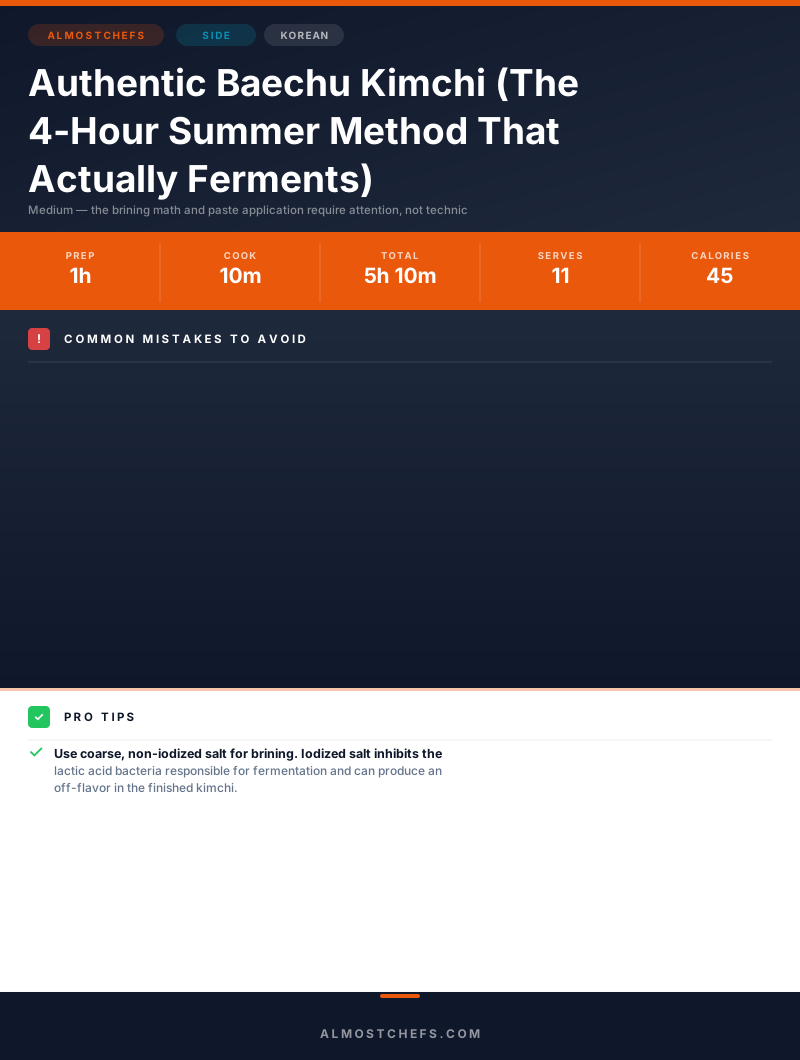
Authentic Baechu Kimchi (The 4-Hour Summer Method That Actually Ferments)
A traditional Korean napa cabbage kimchi built on a precisely timed 4-hour brine, a sweet potato starch paste that feeds the fermentation bacteria, and a deeply seasoned gochugaru paste applied leaf by leaf. We traced this recipe directly from a Korean home cook's transcript to get the real quantities — not the watered-down versions.

“Most kimchi recipes skip the one step that determines whether your jar becomes a living, funky, probiotic powerhouse or just salty cabbage in a tub: the starch paste. Sweet potato starch paste is literal food for the lactobacillus bacteria that make kimchi kimchi. Without it, fermentation is sluggish, depth never develops, and you end up wondering why your homemade version doesn't taste like the real thing. This recipe doesn't skip it.”
Why This Recipe Works
Kimchi is not a recipe. It is a controlled fermentation environment that you build out of salt, vegetables, and bacterial food — and then step back from. The cook's job is to create the right conditions. The bacteria do the rest. Everything in this method exists to serve that fermentation, and understanding why each step matters is what separates kimchi that develops into something complex from kimchi that just tastes like spicy pickled cabbage.
The Brine Is a Precision Instrument
Salt concentration during brining determines the final texture of the kimchi and the speed of fermentation. Too little salt, and the cabbage stays rigid and provides an environment where harmful bacteria can compete with the beneficial lactobacillus. Too much, and the cabbage becomes waterlogged, the texture turns to mush, and the beneficial bacteria are suppressed along with everything else.
Four hours at the salt ratio in this recipe is specifically calibrated for summer napa cabbage — which is younger, more tender, and higher in moisture than the autumn cabbage used for kimjang. The two-hour flip is not optional. Cabbage that sits in brine without turning ends up with the outer layers over-brined and the core still raw. An even brine means an even fermentation.
The Paste Is Bacterial Infrastructure
The sweet potato starch paste gets treated as a textural binder in most Western kimchi recipes, which is exactly backward. Its primary function is as a carbon source for Lactobacillus kimchii and the other lactic acid bacteria that drive fermentation. Without it, the bacteria have to work with the limited sugars in the cabbage alone — fermentation is sluggish, lactic acid production is low, and the kimchi never develops its characteristic sour depth.
Cook the paste to a full boil. Partially cooked starch has an unpleasant raw flavor that persists through fermentation. Let it cool completely before mixing — hot paste will partially cook the raw garlic and ginger, muting the sharp aromatics that give the seasoning its edge.
The Aromatic Blend Is Umami Architecture
The combination of anchovy fish sauce and salted shrimp is not redundancy. Fish sauce provides a deep, clean umami baseline from anchovy fermentation. Salted shrimp adds a distinct sweetness and a different protein breakdown profile — together they create a layered savory foundation that neither achieves alone. The Asian pear softens the heat and adds natural enzymes. The ginger cuts through the richness. All of it goes into the blender because uniform distribution across hundreds of individual cabbage leaves requires a completely smooth paste — not one with chunks of onion that land randomly.
Taste the paste before you apply it. Taste it again. Add fish sauce until it seems aggressive. The cabbage absorbs and dilutes it, and the fermentation process continues to mellow the saltiness over the first week. What feels oversalted at the bowl is correct seasoning at the jar.
The Application Technique Is the Product
A heavy-bottomed pot matters for the starch paste, but the real equipment investment is your hands and your patience. Applying paste to each individual leaf — lifted away from the cabbage, coated on the inner surface from root to tip — is what ensures every part of the kimchi ferments at the same rate. Outer-only application means the inner leaves never pick up the aromatics and never properly ferment. You end up with a jar that tastes intense on the outside and raw in the middle.
Pack the container tightly with no air gaps. Oxygen is the enemy of lactic acid fermentation. Push the kimchi below the brine line, seal it, and press it down again every time you open the jar for the first five days. A fermentation crock or airtight container with a one-way valve makes this easier, but any airtight glass jar with a lid you check daily works fine.
Twelve to twenty-four hours at room temperature, then into the refrigerator. By day three, the transformation has begun. By day seven, you have kimchi.
Where Beginners Mess This Up
Before we start, read this. These are the 4 reasons your authentic baechu kimchi (the 4-hour summer method that actually ferments) will fail:
- 1
Brining too long or too short: Four hours is the exact window for summer napa cabbage — not three, not six. Under-brined cabbage stays rigid and won't absorb the paste. Over-brined cabbage becomes limp, waterlogged, and loses its essential crunch. Flip the cabbage at the two-hour mark so every layer brines evenly. This is non-negotiable.
- 2
Skipping the sweet potato starch paste: The starch paste is not filler. It is the primary carbon source for the lactic acid bacteria that drive fermentation. Kimchi made without it ferments slowly, tastes flat, and lacks the complex tang that develops over days. Cook it to a full boil, stirring constantly, until fully thickened — then let it cool completely before mixing into the paste.
- 3
Under-seasoning the paste and not tasting: The instructor in this recipe added an extra 50g of anchovy fish sauce mid-mixing because the paste tasted flat. You must taste before applying. The paste should be intensely seasoned — almost aggressively so — because the cabbage dilutes it significantly. If the paste tastes right on a spoon, it will be underseasoned on the final kimchi.
- 4
Rushing the leaf-by-leaf application: The paste must reach every leaf, not just the outer layers. Work from the root end upward, lifting each leaf and spreading paste on the thicker white stem sections first. A cabbage that looks fully coated on the outside but has bare inner leaves will ferment unevenly and taste raw in the middle.
The Video Reference Library
Want to see it in action? Here are the exact videos we analyzed and combined to build this foolproof recipe translation:

🛠️ Core Equipment
- Large brining container (at least 10-liter capacity)The cabbage needs to be fully submerged in 6 liters of brine. A container that's too small means some leaves brine in air and some in liquid — uneven results guaranteed.
- Blender or food processorThe aromatic base — onion, peppers, ginger, pear, garlic, salted shrimp, and fish sauce — must be completely smooth before mixing into the paste. Chunky blending leaves raw onion and pepper pockets in the final kimchi.
- Heavy-duty rubber gloves350g of gochugaru will stain your hands orange for days. Beyond aesthetics, capsaicin from 17 chili peppers will absorb through skin and cause prolonged burning. Gloves are not optional.
- Airtight kimchi container or large glass jarFermentation produces CO2. A loosely sealed container will oxidize the top layer and allow mold to form. An airtight container keeps the anaerobic environment intact while allowing gas to escape through a one-way valve or a loosely turned lid you check daily.
Authentic Baechu Kimchi (The 4-Hour Summer Method That Actually Ferments)
🛒 Ingredients
- ✦2 heads napa cabbage (about 3kg total)
- ✦6 liters water, for brining
- ✦2 paper cups (approximately 240g) coarse sea salt, for brining liquid
- ✦Additional coarse salt, for layering between leaves
- ✦3 tablespoons sweet potato starch powder
- ✦300ml water, for starch paste
- ✦300g garlic chives (부추), cut into 4-5cm pieces
- ✦300g scallions, cut into 4-5cm pieces
- ✦600g Korean radish (무), julienned into thin matchsticks
- ✦2 whole onions — 1 for blending, 1 julienned for mixing
- ✦17 red chili peppers (홍고추), including some cheong-hong peppers
- ✦3 knobs fresh ginger
- ✦1 Asian pear
- ✦1.5 generous handfuls of garlic cloves
- ✦4 tablespoons salted shrimp (새우젓), approximately 80g
- ✦1 paper cup anchovy fish sauce (멸치액젓), approximately 195g, plus up to 50g more to taste
- ✦400ml water, for blending
- ✦3 tablespoons plum extract (매실액)
- ✦2 tablespoons sugar
- ✦350g Korean red pepper flakes (고춧가루)
👨🍳 Instructions
01Step 1
Trim the root end of each napa cabbage slightly. Cut halfway to two-thirds up the center lengthwise with a knife, then gently pull the halves apart with your hands to separate without bruising the leaves.
02Step 2
Combine 6 liters of water with approximately 2 paper cups of coarse salt in a large brining container. Submerge the cabbage halves, then sprinkle additional coarse salt between the layers of each half, focusing on the thicker white stem sections.
03Step 3
Weight the cabbage down to keep it submerged and brine for 4 hours total, flipping the cabbage halves at the 2-hour mark for even salting throughout.
04Step 4
While the cabbage brines, make the sweet potato starch paste: dissolve 3 tablespoons of sweet potato starch powder in 300ml cold water, stirring well to prevent lumps. Cook over medium heat, stirring constantly, until the mixture comes to a full rolling boil and turns thick and translucent. Remove from heat and cool completely.
05Step 5
Combine in a blender: 1 whole onion (roughly chopped), all 17 red chili peppers, ginger, Asian pear, garlic, salted shrimp, anchovy fish sauce, and 400ml water. Blend until completely smooth.
06Step 6
In a large bowl, combine the blended mixture with the cooled starch paste. Add 3 tablespoons plum extract, 2 tablespoons sugar, and all 350g of gochugaru. Mix thoroughly until uniform.
07Step 7
Taste the paste. It should be intensely savory, slightly sweet, and aggressively seasoned. If it tastes flat or underseasoned, add more anchovy fish sauce in small increments — up to 50g more — tasting after each addition until the balance is right.
08Step 8
Add the julienned radish (600g), julienned onion (1 whole onion), scallions (300g), and garlic chives (300g) to the paste. Mix with your hands until all the vegetables are evenly coated.
09Step 9
Rinse the brined cabbage thoroughly under cold water 3 times. Drain cut-side down in a colander for at least 10 minutes. Speed matters — the longer brined cabbage sits wet, the more salt leaches back in.
10Step 10
Working with one cabbage half at a time, apply the paste leaf by leaf. Lift each layer and spread paste on the inner surface, starting at the root end and working toward the tip. Use more paste on the thicker white stem sections. Coat every layer thoroughly.
11Step 11
Fold each seasoned cabbage half over itself, cut-end tucking into the outer leaf, and pack tightly into a kimchi container. Gather any remaining paste and spread it over the top layer. Press down firmly to eliminate air pockets.
12Step 12
Leave at room temperature for 12-24 hours to begin fermentation (less in summer heat, more in a cool kitchen), then transfer to the refrigerator. The kimchi is edible immediately but reaches peak flavor after 3-5 days.
Nutrition Per Serving
Estimates based on standard preparation. Adjustments alter macros.
🔄 Substitutions
Instead of Sweet potato starch powder...
Use Glutinous rice flour (찹쌀가루)
The most common substitution and nearly identical in function. Creates the same thick paste that feeds fermentation bacteria. Slightly stickier texture in the finished paste.
Instead of Salted shrimp (새우젓)...
Use Additional anchovy fish sauce
Loses some of the layered umami complexity that salted shrimp provides, but the fermentation proceeds normally. For a fully vegetarian version, substitute with soy sauce or miso — the flavor profile shifts significantly but the technique works.
Instead of Plum extract (매실액)...
Use Honey or corn syrup
Plum extract adds a subtle fruity tang that balances the heat and salt. Honey or corn syrup replace the sweetness only. The slight acidity of the plum is lost — acceptable compromise if the specialty item is unavailable.
Instead of Anchovy fish sauce...
Use Soy sauce (for vegetarian kimchi)
Changes the flavor profile meaningfully — less umami depth, more straightforward saltiness. Compensate with a small amount of dried shiitake powder to approximate the savory baseline.
🧊 Storage & Reheating
In the Fridge
Store in an airtight container for up to 3 months. Flavor peaks at 3-5 days (fresh/geotjeori style) and again at 3-4 weeks (fully fermented). Both stages are correct — they are just different products.
In the Freezer
Freeze in portioned containers for up to 6 months. Freezing halts fermentation permanently. Thaw in the refrigerator overnight. Texture softens slightly after freezing but flavor holds well.
Reheating Rules
Kimchi is served cold as banchan. If using in cooked dishes (kimchi jjigae, kimchi bokkeumbap), add directly to the pan from cold — no reheating needed.
❓ Frequently Asked Questions
Why does my kimchi taste salty but not flavorful?
The paste was underseasoned or the starch paste was skipped. Salt provides salinity; the aromatics, fish sauce, salted shrimp, and fermentation develop flavor. If it tastes flat at the 3-day mark, the paste needed more fish sauce at the mixing stage. There's no fixing it after the fact — season aggressively before packing.
How do I know when fermentation has started?
Tiny bubbles will appear in the brine when you press down on the kimchi. The smell will shift from raw and sharp to slightly sour and yeasty. This typically happens within 12-24 hours at room temperature. If you see no activity after 48 hours, your kitchen may be too cold — leave it at room temperature for another day.
Why use sweet potato starch paste instead of glutinous rice paste?
The original recipe uses sweet potato starch (고구마 전분), which produces a slightly thinner, more neutral-tasting paste. Glutinous rice paste (찹쌀풀) is the more common substitute and works equally well for feeding fermentation bacteria. Either is correct — the key is that some form of cooked starch paste is included.
Can I use regular cabbage instead of napa cabbage?
No. Napa cabbage (배추) has a specific water content, leaf structure, and sugar profile that makes it ideal for kimchi fermentation. Regular green or savoy cabbage doesn't brine and ferment the same way. Kkakdugi (radish kimchi) or oi sobagi (cucumber kimchi) are better options if napa cabbage is unavailable.
Why is my kimchi fizzy?
That's correct. Fermentation produces CO2 as lactic acid bacteria consume the sugars in the cabbage and paste. A fizzy, slightly effervescent quality is a sign of healthy, active fermentation — not spoilage. If the smell is strongly putrid (rather than sour and funky), that is a different problem.
What's the difference between summer kimchi and kimjang kimchi?
Kimjang (winter) kimchi is made in large batches with older, denser autumn cabbage and designed to ferment slowly over months in cold storage. Summer kimchi uses younger, more tender cabbage and a slightly different paste ratio — it should be eaten within weeks, not stored for a season. The texture is softer and the fermentation faster. This recipe is specifically calibrated for summer cabbage.
The Science of
Authentic Baechu Kimchi (The 4-Hour Summer Method That Actually Ferments)
We turned everything on this page into a beautiful, flour-proof PDF cheat sheet. Print it out, stick it to your fridge, and never mess up your authentic baechu kimchi (the 4-hour summer method that actually ferments) again.
*We'll email you the high-res PDF instantly. No spam, just perfectly cooked meals.
AlmostChefs Editorial Team
We translate the internet's most popular cooking videos into foolproof, beginner-friendly written recipes. We analyze multiple methods, test them in our kitchen, and engineer a single "Master Recipe" that gives you the best possible result with the least possible stress.