Homemade KFC Fried Chicken (The Eleven Spices, Reverse-Engineered)
Buttermilk-marinated fried chicken with a seasoned flour crust built from pantry staples that replicates the texture, flavor, and that specific savory-herbaceous depth that made Colonel Sanders a billionaire. We broke down the spice logic so you never need to guess again.

“KFC's actual edge was never a secret formula. It was operational consistency — frying at the exact same temperature, for the exact same time, every single shift. Home cooks fail at fried chicken not because they lack the recipe but because they crowd the pot, skip the thermometer, and drain onto paper towels that trap steam. This recipe fixes all three and gives you a spice blend that's close enough to cause déjà vu.”
Why This Recipe Works
KFC's actual competitive advantage was never a locked vault in Louisville. It was the pressure fryer, the 325°F hold temperature, and thirty years of operational consistency hammered into every franchise kitchen on the planet. The spice blend is real, but it's the technique that makes the chicken taste the way it does.
The Buttermilk Equation
Buttermilk does two things that water or egg wash cannot. First, its lactic acid partially denatures the surface proteins of the chicken, creating a softened outer layer that stays tender under high heat without drying out. Second, its thick viscosity clings to the meat surface and acts as glue for the seasoned flour coating. A thin liquid wash produces a thin crust. Buttermilk produces structure.
Four hours is not arbitrary. Below that threshold, the acid hasn't had enough contact time to work through the muscle fiber at the surface. The chicken will taste seasoned but not tender in the way that makes you reach for a second piece before finishing your first. Overnight sits at the ideal intersection of maximum tenderizing without crossing into the texture breakdown that happens past the 12-hour mark.
The Spice Architecture
Eleven herbs and spices sounds theatrical, but the logic is straightforward. The blend operates on three flavor layers: savory foundation (salt, garlic powder, onion powder, poultry seasoning), heat profile (black pepper, white pepper, cayenne), and herbal background (paprika, thyme, oregano). Each layer has a job. The herbal layer is what most home versions skip — and it's precisely what creates that slightly complex, not-quite-placeable flavor that makes people say "this tastes like KFC."
White pepper and black pepper are not interchangeable. White pepper has an earthier, more pungent heat that sits differently on the palate than the bright sharpness of black pepper. Using both in the same blend creates a layered heat that neither could produce alone.
The Frying Temperature
325°F is counterintuitive. Most frying happens at 350°F or above. But bone-in chicken pieces — which range from thin wing sections to thick bone-in breasts — require 12-18 minutes of frying time. At 350°F, the exterior reaches deep golden brown around minute 10. The interior at that point is still below 165°F. You've now got a choice between a burnt crust and raw chicken, and neither is acceptable.
325°F solves this by slowing the exterior browning rate to match the interior cooking rate. The crust reaches its target color at roughly the same moment the internal temperature hits 165°F. A heavy-bottomed pot or deep cast iron skillet is essential for maintaining this temperature through the cold-chicken shock that happens every time you add a new batch.
The Wire Rack Rule
Steam is the enemy of crispy fried chicken, and every piece of fried chicken produces it. The interior is 165°F and full of moisture. The moment you pull it from the oil, that moisture begins migrating outward through the crust. You cannot stop this. You can only control the rate.
Paper towels trap the escaping steam directly against the crust surface, which turns the exterior from crispy to soft in under two minutes. A wire rack allows the steam to escape downward and sideways, slowing the softening process significantly. It's a simple change that extends the window between "perfectly crispy" and "acceptable" from two minutes to ten.
That window is the difference between serving fried chicken and serving great fried chicken.
Where Beginners Mess This Up
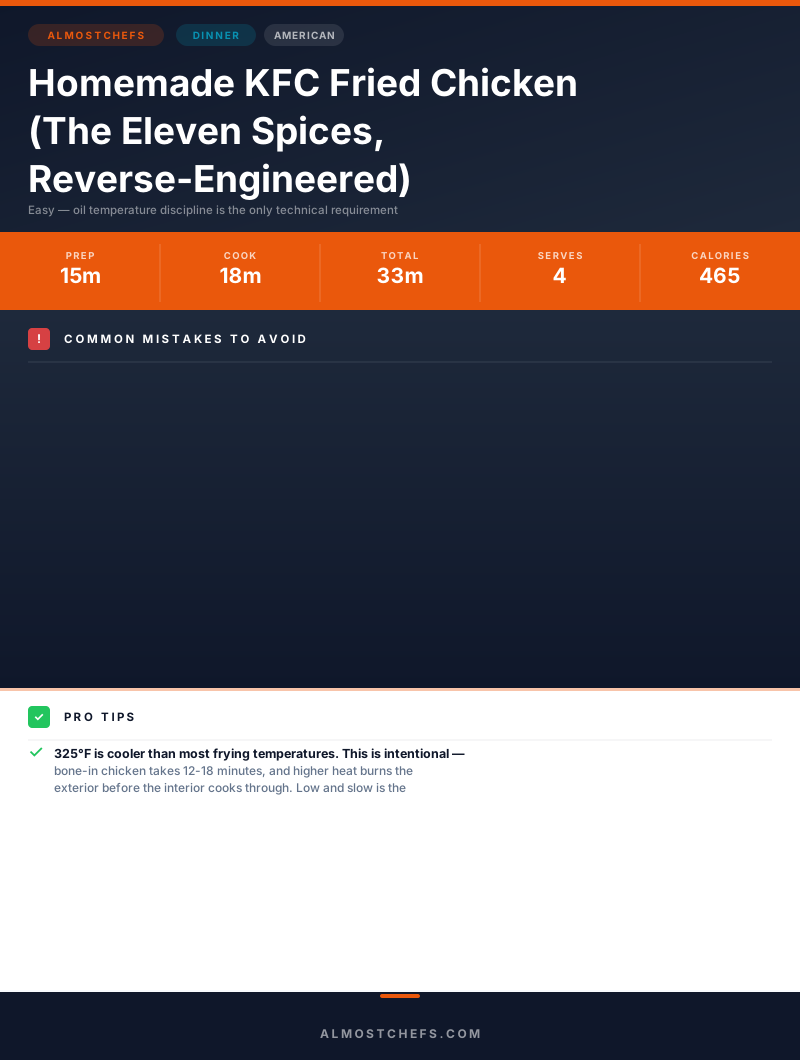
Before we start, read this. These are the 4 reasons your homemade kfc fried chicken (the eleven spices, reverse-engineered) will fail:
- 1
Crowding the pot: Adding too many pieces at once drops the oil temperature dramatically — from 325°F to under 280°F in seconds. At that temperature, the crust doesn't set fast enough and the chicken absorbs oil instead of repelling it. You get greasy, heavy chicken with a soft exterior. Fry in batches. Give each piece room.
- 2
Skipping the buttermilk rest: Four hours is the minimum. The lactic acid in buttermilk doesn't just flavor the chicken — it breaks down muscle fibers at the surface, creating a tenderized layer that stays juicy under high heat. One hour gives you seasoned chicken. Four hours gives you KFC chicken.
- 3
Draining on paper towels: Paper towels trap steam directly against the crust, which softens it from the inside out. The crust you spent 18 minutes building collapses in 90 seconds. Always drain on a wire rack set over a sheet pan. Air circulates underneath. The crust stays.
- 4
Not resting the floured chicken before frying: After coating in seasoned flour, resting the pieces on a rack for 5 minutes lets the coating hydrate and adhere. Skip this step and the flour slips off in patches during frying, leaving you with bare spots and an uneven crust.
The Video Reference Library
Want to see it in action? Here are the exact videos we analyzed and combined to build this foolproof recipe translation:

🛠️ Core Equipment
- Heavy-bottomed pot or Dutch ovenMaintains oil temperature through the temperature drop that happens when cold chicken hits hot oil. Thin pots recover slowly, keeping the chicken in the danger zone where it absorbs oil instead of crisping.
- Instant-read or clip-on deep fry thermometer325°F is not a suggestion. Ten degrees too low and the crust is greasy. Ten degrees too high and the exterior burns before the interior reaches 165°F. You cannot eyeball this.
- Wire rack with sheet panFor resting coated chicken before frying and draining after. Non-negotiable — paper towels are the enemy of crispy crust.
Homemade KFC Fried Chicken (The Eleven Spices, Reverse-Engineered)
🛒 Ingredients
- ✦3.5 pounds chicken pieces (breasts, thighs, drumsticks, wings)
- ✦2 cups whole buttermilk
- ✦2 cups all-purpose flour
- ✦1.5 tablespoons kosher salt
- ✦1.5 teaspoons freshly ground black pepper
- ✦1.5 teaspoons sweet paprika
- ✦1 teaspoon garlic powder
- ✦1 teaspoon onion powder
- ✦1 teaspoon poultry seasoning
- ✦0.5 teaspoon cayenne pepper
- ✦0.5 teaspoon dried thyme
- ✦0.5 teaspoon white pepper
- ✦0.25 teaspoon dried oregano
- ✦3 quarts vegetable oil for frying
👨🍳 Instructions
01Step 1
Pat each chicken piece completely dry with paper towels. Remove every trace of surface moisture.
02Step 2
Combine the buttermilk with 0.5 teaspoon of salt in a large bowl. Submerge all chicken pieces completely, pressing them down so nothing is exposed.
03Step 3
Cover tightly with plastic wrap and refrigerate for at least 4 hours, preferably overnight.
04Step 4
Combine flour, remaining salt, black pepper, paprika, garlic powder, onion powder, poultry seasoning, cayenne, thyme, white pepper, and oregano in a wide shallow dish. Mix thoroughly until evenly distributed.
05Step 5
Remove chicken from buttermilk, letting excess drip off but not shaking aggressively. Dredge each piece in the seasoned flour, pressing firmly to coat all surfaces and crevices.
06Step 6
Place coated chicken on a wire rack and rest for 5 minutes. Do not skip this.
07Step 7
Pour vegetable oil into a large heavy-bottomed pot. Heat to exactly 325°F over medium-high heat, monitoring with a thermometer throughout.
08Step 8
Working in batches of 3-4 pieces maximum, carefully lower chicken into the oil. Do not crowd the pot.
09Step 9
Fry for 12-18 minutes depending on piece size, until the exterior is deep golden brown and internal temperature reads 165°F at the thickest point.
10Step 10
Transfer finished pieces to a wire rack set over a sheet pan. Never drain on paper towels.
11Step 11
Serve immediately while the crust is at peak crispiness.
Nutrition Per Serving
Estimates based on standard preparation. Adjustments alter macros.
🔄 Substitutions
Instead of Vegetable oil...
Use Peanut oil
Higher smoke point and more stable at frying temperatures with less oxidative breakdown. Slightly milder flavor. The better choice if available.
Instead of All-purpose flour...
Use Half all-purpose flour, half cornstarch (1:1 blend)
Cornstarch produces a lighter, crunchier crust. The tradeoff is slightly less structural integrity — it shatters rather than bites. Some prefer this, some don't.
Instead of Whole buttermilk...
Use Greek yogurt thinned with low-fat milk (1:1 ratio)
Maintains the tenderizing acid and enzyme action with less saturated fat. Marginally tangier flavor in the finished crust. Effective substitute.
Instead of Kosher salt...
Use Sea salt (reduce quantity by 0.25 teaspoon)
Sea salt has a finer grain and higher sodium density per volume. Reduce slightly to avoid over-salting the crust.
🧊 Storage & Reheating
In the Fridge
Store in an airtight container for up to 3 days. The crust softens in the fridge — this is unavoidable.
In the Freezer
Freeze fully cooked chicken for up to 2 months. Freeze pieces individually on a sheet pan before bagging to prevent sticking.
Reheating Rules
Reheat on a wire rack in a 375°F oven for 12-15 minutes. This is the only method that partially restores crust crispiness. Microwave is not recommended.
❓ Frequently Asked Questions
Why does my fried chicken come out greasy?
Oil temperature dropped too low — most likely from crowding the pot. When the oil temperature falls below 300°F, the crust doesn't set fast enough and the chicken absorbs oil instead of repelling it. Fry in smaller batches and let the oil return to 325°F between each one.
Can I use an air fryer instead of deep frying?
You can, but it's a different result. Air fryer chicken gets crispy but lacks the deep golden color and the specific texture that comes from submersion frying. If using an air fryer, coat as directed, spray generously with oil, and cook at 380°F for 20-25 minutes, flipping halfway.
Why is my crust falling off during frying?
Either you didn't dry the chicken before the buttermilk soak, or you skipped the 5-minute rest after flouring. Both steps are adhesion steps. Wet chicken repels flour. Unhydrated flour coating slides off in the oil. Follow both steps.
Do I need all eleven spices?
The thyme, oregano, white pepper, and poultry seasoning are the ones people skip — and they're the ones that create the herbaceous background note that distinguishes this from generic fried chicken. Skipping any of the four changes the flavor profile noticeably.
How do I know the oil is at 325°F without a thermometer?
You don't. A wooden spoon inserted into the oil should show a steady stream of small bubbles if the temperature is roughly right, but this is imprecise. A thermometer costs less than ten dollars and is the single most effective tool for consistent fried chicken. Buy one.
Why does the crust turn soft after a few minutes?
Steam from the hot chicken interior migrates outward and softens the crust from within — this is unavoidable and happens to all fried chicken. Draining on a wire rack slows this significantly. Draining on paper towels accelerates it by trapping steam directly against the crust. Serve as quickly as possible after frying.
The Science of
Homemade KFC Fried Chicken (The Eleven Spices, Reverse-Engineered)
We turned everything on this page into a beautiful, flour-proof PDF cheat sheet. Print it out, stick it to your fridge, and never mess up your homemade kfc fried chicken (the eleven spices, reverse-engineered) again.
*We'll email you the high-res PDF instantly. No spam, just perfectly cooked meals.
AlmostChefs Editorial Team
We translate the internet's most popular cooking videos into foolproof, beginner-friendly written recipes. We analyze multiple methods, test them in our kitchen, and engineer a single "Master Recipe" that gives you the best possible result with the least possible stress.