Crispy Katsu Curry (The Weeknight Japanese Comfort Fix)
A Japanese-fusion classic featuring golden panko-crusted chicken or pork cutlets ladled with a rich, mildly spiced curry sauce over steamed rice. We broke down the technique to make this a legitimate weeknight dinner without sacrificing the crunch or depth that makes katsu curry worth making at home.
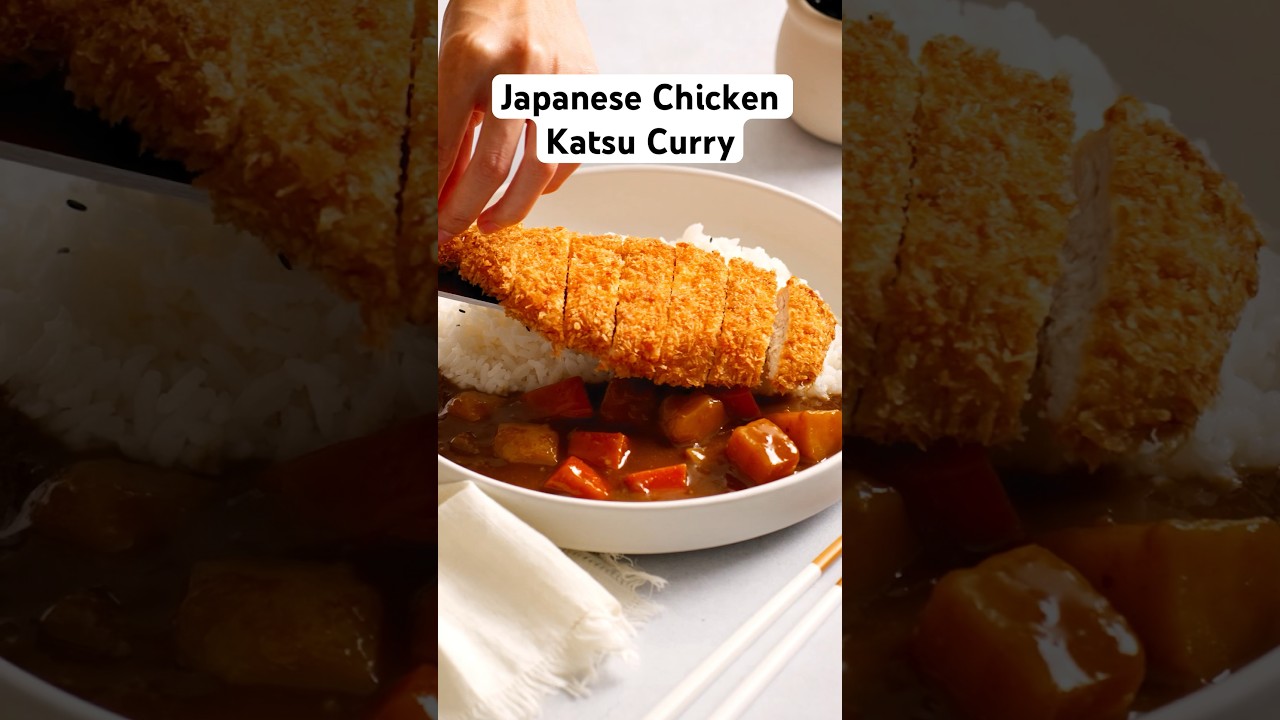
“Most katsu curry failures come from two places: a soggy crust and a flat curry sauce. The crust problem is a moisture problem — if you don't dry the cutlets completely before breading, the steam trapped inside turns that panko shell soft within minutes. The sauce problem is a bloom problem — curry powder thrown into liquid without hitting hot fat first tastes like dust. This recipe solves both. Fifty-five minutes, one pan, restaurant results.”
Why This Recipe Works
Katsu curry is a dish that gets undersold. It sounds simple — breaded cutlet, curry sauce, rice — and the ingredient list doesn't suggest anything technically demanding. But most homemade versions arrive at the table with a soggy crust, a flat sauce, and the vague feeling that something is missing. That something is usually technique applied at two specific moments: before the cutlet hits the oil, and before the curry powder hits the liquid.
The Crust Problem Is a Moisture Problem
Panko breadcrumbs are exceptional at creating a light, airy crust because they're larger and more irregular than standard breadcrumbs — they shatter when you bite them rather than compressing into paste. But that structure is fragile. The moment surface moisture enters the equation, the crust loses its architecture.
The flour dredge is your moisture barrier, not a flavor component. It creates a dry surface for the egg wash to adhere to, and the egg wash creates a sticky matrix for the panko to grip. If there's any liquid on the cutlet surface before the flour goes on, the flour absorbs it and becomes a wet paste. The egg layer slides. The panko falls off in the oil.
Drying the cutlets completely is non-negotiable. Then pound them to a uniform half-inch thickness. This isn't about tenderness — it's about cooking time. An uneven cutlet forces you to choose between an overcooked thin end and an undercooked thick end. Uniform thickness means every part of the crust turns golden at the same moment, and the interior reaches 165°F simultaneously.
Use a cast iron skillet or heavy stainless pan with enough oil to shallow-fry. Not deep-fry, not sauté — the oil should come about a quarter-inch up the side of the cutlet. This ensures even browning on the bottom and sides without requiring full submersion.
The Sauce Problem Is a Bloom Problem
Japanese curry roux from scratch is built on a simple principle: fat carries aromatic compounds. Curry powder contains dozens of fat-soluble volatile molecules — the ones responsible for aroma and flavor complexity. These molecules don't dissolve in water. They dissolve in fat, and they only release from the spice particles when heated.
When you add curry powder directly to broth, you get yellow broth. When you bloom curry powder in hot oil — two full minutes of active stirring against a hot pan surface — you get a sauce with actual backbone. The same quantity of spice produces a radically different result depending on whether fat was involved in the extraction.
The tomato paste blooms alongside the curry powder and serves a secondary function: its natural sugars caramelize against the hot pan, adding color and a mild acidity that balances the sweetness of the carrots and potatoes. Don't rush this step. The paste should darken slightly before the broth goes in.
The Texture Equation
The entire reason to make katsu curry instead of just curry is the contrast between the shattered panko exterior and the silky sauce. This contrast has a lifespan measured in minutes once the cutlet touches liquid. Two minutes in the sauce is enough to heat through. Any longer and you've made a very expensive soggy chicken.
The fix is simple: plate first, sauce second. Or return the cutlets to the pan only at the final moment, serve immediately, and never cover the plated dish. A wire rack between the frying stage and service keeps the bottom crust from steaming against the plate surface while you finish the sauce.
Why This Works on a Weeknight
The genius of this dish is that the curry sauce is completely forgiving and actually improves with time. Make it ahead. Reheat it while you bread and fry the cutlets. The cutlets take twelve minutes from flour station to plated. The sauce is waiting. That's the workflow that makes katsu curry a realistic weeknight answer rather than a weekend project.
Where Beginners Mess This Up
Before we start, read this. These are the 4 reasons your crispy katsu curry (the weeknight japanese comfort fix) will fail:
- 1
Wet cutlets before breading: Any surface moisture on the chicken or pork turns into steam the moment it hits the oil. That steam pushes outward through the crust, waterlogging the panko before it can set. Pat every surface completely dry with paper towels before your first flour dredge — this is not optional.
- 2
Skipping the bloom on the curry powder: Raw curry powder added directly to liquid tastes harsh and one-dimensional. The spices need two minutes of direct contact with hot fat before liquid is added. This activates the fat-soluble aromatic compounds — the difference between flat yellow water and a sauce with actual depth.
- 3
Crowding the pan during frying: Overcrowding drops the oil temperature dramatically, turning a shallow fry into a braise. Each cutlet needs space or the crust steams instead of crisps. Cook in batches. The second batch will be just as good as the first.
- 4
Returning cutlets too early to the sauce: Nestle the cutlets into the curry sauce for exactly two minutes — just long enough to heat through. Any longer and the crust absorbs liquid and collapses. The whole point is the textural contrast. Protect it.
The Video Reference Library
Want to see it in action? Here are the exact videos we analyzed and combined to build this foolproof recipe translation:
The primary reference for this recipe — clear technique on the breading sequence and curry sauce construction, with good detail on what the sauce should look like before and after the spice bloom.
🛠️ Core Equipment
- Large heavy-bottomed skilletYou're using the same pan for the cutlets and the curry sauce, so it needs to handle high heat for the fry and steady medium-low for the simmer. A [cast iron skillet](/kitchen-gear/review/cast-iron-skillet) or thick stainless is ideal — thin pans create hot spots that burn the onions and undercook the center.
- Meat mallet or rolling pinEven thickness is the entire logic behind pounding the cutlets. Uneven pieces cook unevenly — by the time the thick end is done, the thin end is dry. A half-inch uniform thickness means every bite finishes at the same moment.
- Three shallow bowls for breading stationThe flour-egg-panko sequence only works efficiently if each component has its own wide, flat vessel. Deep bowls trap air pockets and cause uneven coating. Shallow bowls let you press and coat with control.
- Paper towels and a wire rackResting the fried cutlets on a [wire rack](/kitchen-gear/review/wire-rack) over paper towels lets steam escape from the bottom. Resting directly on paper traps that steam and softens the crust within minutes.
Crispy Katsu Curry (The Weeknight Japanese Comfort Fix)
🛒 Ingredients
- ✦4 boneless, skinless chicken breasts or pork cutlets, about 6 ounces each
- ✦1 cup all-purpose flour
- ✦2 large eggs
- ✦1 cup panko breadcrumbs
- ✦1 teaspoon sea salt, divided
- ✦1 teaspoon black pepper
- ✦3 tablespoons vegetable oil or light olive oil
- ✦1 large yellow onion, thinly sliced
- ✦3 medium carrots, cut into 1-inch chunks
- ✦8 ounces baby potatoes, halved
- ✦2 cloves garlic, minced
- ✦1 tablespoon fresh ginger, grated
- ✦2 tablespoons curry powder
- ✦1 tablespoon tomato paste
- ✦2 cups low-sodium chicken or vegetable broth
- ✦1 tablespoon honey or maple syrup
- ✦1 tablespoon soy sauce or tamari
- ✦2 green onions, sliced thin for garnish
- ✦1 cup cooked white or brown rice, for serving
👨🍳 Instructions
01Step 1
Pat the chicken breasts or pork cutlets completely dry with paper towels. Place each between two sheets of plastic wrap and pound to an even half-inch thickness.
02Step 2
Set up three shallow bowls: flour mixed with half a teaspoon salt and the black pepper in the first, whisked eggs in the second, panko breadcrumbs in the third.
03Step 3
Coat each cutlet in flour, shaking off excess. Dip in egg wash, covering both sides. Press firmly into panko until fully coated on all surfaces.
04Step 4
Heat oil in a large skillet over medium-high heat until shimmering, about 2 minutes. Add cutlets without crowding and cook 4-5 minutes per side until deep golden brown and firm when pressed. Work in batches.
05Step 5
Transfer cooked cutlets to a wire rack set over paper towels. Do not stack them.
06Step 6
Reduce heat to medium. In the same skillet, add the sliced onion and cook 4 minutes, stirring occasionally, until translucent.
07Step 7
Add minced garlic and grated ginger. Cook 1 minute until fragrant. Add curry powder and tomato paste. Stir continuously for 2 minutes to bloom the spices in the residual fat.
08Step 8
Pour in the broth slowly while stirring, scraping up any browned bits from the pan bottom. Add carrots and potatoes.
09Step 9
Bring to a gentle simmer over medium heat, then reduce to medium-low and cook uncovered 12-15 minutes until vegetables are fork-tender.
10Step 10
Whisk together honey and soy sauce, then stir into the curry. Taste and adjust salt.
11Step 11
Nestle the cutlets into the curry sauce and simmer 2 minutes to heat through. No longer.
12Step 12
Serve over rice. Ladle curry and vegetables over the cutlets. Garnish with sliced green onions and serve immediately.
Nutrition Per Serving
Estimates based on standard preparation. Adjustments alter macros.
🔄 Substitutions
Instead of Boneless chicken or pork...
Use Firm tofu, seitan, or cauliflower steaks
Press tofu thoroughly before breading to remove moisture — wet tofu is the enemy of a good crust. Cauliflower works well at half-inch slices roasted at 425°F for 20 minutes before breading and frying.
Instead of Panko breadcrumbs...
Use Panko mixed with ground almonds or oat flour (75/25 ratio)
Adds complexity and crunch. The almond mixture browns slightly faster, so reduce heat by one notch and watch closely. Do not substitute entirely — pure almond crumb burns before the crust sets.
Instead of Soy sauce...
Use Tamari or coconut aminos
Tamari is the cleaner swap — same depth, naturally gluten-free, lower sodium. Coconut aminos is lighter and slightly sweet, which plays well with the honey in this sauce.
Instead of Honey or maple syrup...
Use Mirin
Mirin is the more traditionally correct choice — it adds umami alongside sweetness and integrates more smoothly into the sauce. Use the same quantity. If using mirin, reduce the soy sauce by about a teaspoon to balance salt.
🧊 Storage & Reheating
In the Fridge
Store the curry sauce and vegetables separately from the cutlets in airtight containers for up to 3 days. Combined storage turns the crust to mush within hours.
In the Freezer
The curry sauce freezes well for up to 2 months. The cutlets do not — the panko crust turns grainy after thawing. Make fresh cutlets when reheating frozen sauce.
Reheating Rules
Reheat the curry sauce gently in a saucepan over medium-low heat with a splash of broth if it has thickened too much. Re-crisp leftover cutlets in a 375°F oven on a wire rack for 8-10 minutes. Microwave turns them soft — avoid it.
❓ Frequently Asked Questions
Why is my panko crust falling off during frying?
Two likely causes: the cutlet surface was still damp before breading, or you skipped pressing the panko firmly into the meat. Surface moisture prevents the flour from adhering, which means the egg and panko layers have nothing to grip. Dry the cutlet completely, then press hard at each breading stage.
Can I bake the cutlets instead of pan-frying?
You can, but the result is different. Baked panko at 425°F for 20-22 minutes produces a lighter, less even crust. Spray generously with oil and flip once at the halfway mark. It's a reasonable health trade-off, but the textural contrast that defines katsu curry is diminished.
My curry sauce tastes one-dimensional. What went wrong?
The spices didn't bloom. Curry powder needs direct contact with hot fat for at least two minutes before liquid is added. If you rushed that step or added the broth too quickly, the volatile aromatic compounds never activated. You can rescue it: push the sauce to one side, add a small knob of butter or oil to the exposed pan surface, add another teaspoon of curry powder, let it sizzle for 90 seconds, then stir everything together.
How do I stop the vegetables from getting mushy?
Cut the carrots and potatoes larger than feels intuitive — one-inch chunks for carrots, halved baby potatoes. Small pieces overcook in 15 minutes of simmering. Larger pieces hold their texture while still absorbing the curry flavor.
What's the difference between Japanese curry and Indian curry?
Japanese curry is milder, sweeter, and thicker — more like a gravy than a sauce. It uses curry powder (a British colonial introduction via India) rather than individual fresh-ground spices, and it typically includes root vegetables as a base component rather than an afterthought. The result is a rounder, more umami-forward profile compared to the bright, complex heat of Indian curries.
Can I make the curry sauce ahead of time?
Yes — and it's better the next day. The sauce improves overnight as the spices meld. Make the sauce completely, refrigerate, and reheat gently before serving. Make the cutlets fresh. This split approach makes katsu curry genuinely practical for a weeknight dinner.
The Science of
Crispy Katsu Curry (The Weeknight Japanese Comfort Fix)
We turned everything on this page into a beautiful, flour-proof PDF cheat sheet. Print it out, stick it to your fridge, and never mess up your crispy katsu curry (the weeknight japanese comfort fix) again.
*We'll email you the high-res PDF instantly. No spam, just perfectly cooked meals.
AlmostChefs Editorial Team
We translate the internet's most popular cooking videos into foolproof, beginner-friendly written recipes. We analyze multiple methods, test them in our kitchen, and engineer a single "Master Recipe" that gives you the best possible result with the least possible stress.