Fresh Kani Salad Spring Rolls (The 30-Minute Lunch That Tastes Like a Sushi Bar)
Crisp rice paper wrapped around a creamy, spicy kani salad filling with avocado, cucumber, and masago — no cooking required. We broke down every YouTube technique to nail the wrapper texture and a filling that doesn't turn watery in the first five minutes.
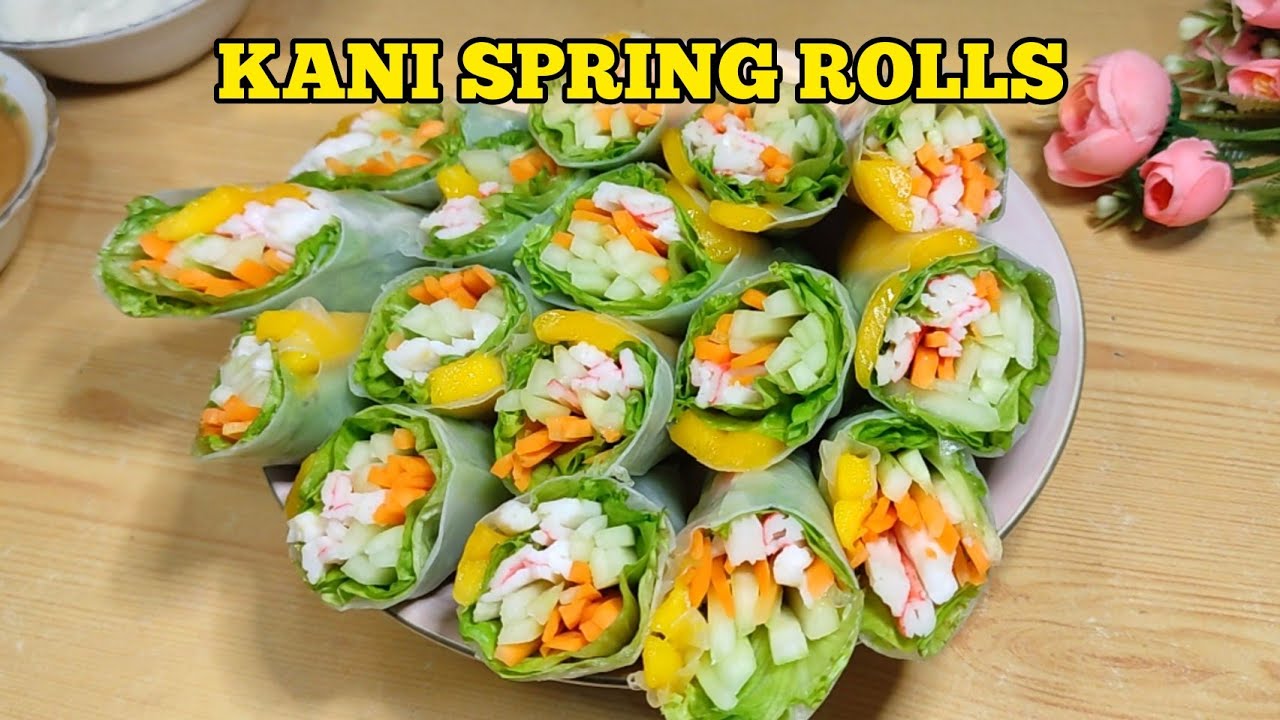
“Kani salad in a bowl is fine. Kani salad inside a rice paper wrapper, rolled tight, sliced clean, and served with a spicy dipping sauce is a completely different experience. The problem is that most people either tear the wrapper because they overfill it, or end up with a soggy roll because the cucumber and avocado release moisture into the filling. Both failures are preventable with two small adjustments that nobody in the recipe videos bothers to explain.”
Why This Recipe Works
A spring roll is not a dumpling, not a burrito, and not a sandwich. It is a tension structure. The rice paper wrapper holds its shape entirely through the compression of the filling against itself — and the moment that tension fails, either because the wrapper is too soft, the filling is too wet, or there's simply too much of it, the whole thing collapses into something that tastes fine but looks like a mistake. Understanding that this is a structural problem, not just a recipe problem, is how you go from torn wrappers and soggy assembly to clean, tight rolls that hold their shape from cutting board to plate.
The Moisture Problem
Kani salad has one structural enemy: water. Cucumber is roughly 96% water by weight. Avocado releases moisture as it oxidizes. Even the masago contributes liquid once it's stirred into the mayo. Left unaddressed, these components turn a tight, creamy filling into a wet paste within minutes of assembly — and wet fillings tear rice paper from the inside out as the moisture migrates into the wrapper.
The fix is aggressive prep. Salt the cucumber matchsticks, let them drain in a fine-mesh sieve for five full minutes, and then press the remaining moisture out with the back of a spoon. This single step removes the majority of the problem. The avocado gets a thin coat of rice vinegar immediately after slicing — this isn't just about preventing browning, it's about creating a light acid barrier that slows moisture release. Prep these two components first, before you touch anything else, and the rest of the assembly becomes straightforward.
Rice Paper Is Not Forgiving
The rice paper wrapper is the most deceptively technical part of this recipe. It looks passive — a translucent disc that you soak in water and then handle — but it's working against you from the moment it hits liquid. Soaked too short, it tears on the first fold because it hasn't softened evenly at the edges. Soaked too long, it becomes sticky and inelastic, and no amount of technique saves it once it reaches that stage.
The correct approach: submerge the wrapper in a shallow wide bowl for no more than 10 seconds, pull it out when it still has slight resistance — like pasta that's two minutes away from al dente — and lay it flat on a damp cutting board. It will finish softening during the 30-45 seconds it takes you to line up your filling. This is the counterintuitive part of the technique that most people ignore because it feels wrong to work with a wrapper that isn't fully soft yet. Trust the process.
The Kewpie Factor
Japanese mayonnaise is not a preference — it's a flavor system. Kewpie is made with egg yolks only (no whites), a higher yolk-to-oil ratio than American mayo, and a small amount of MSG that rounds out the umami. The result is a richer, more acidic, more deeply savory binder that coats the shredded kani without overwhelming the delicate sweetness of the surimi. American mayo produces a flatter, slightly grainy filling by comparison. If Kewpie isn't available, the closest functional substitute is regular mayo doctored with rice vinegar and a pinch of MSG — but the gap is real and worth closing.
The Assembly Architecture
Rice paper rolls are assembled in layers, and the order of those layers determines both structural integrity and the flavor hit on the first bite. Butter lettuce goes down first as a moisture barrier between the filling and the lower wrapper surface. Vermicelli noodles — if using — create a structural pad that gives the kani filling something to compress against. Then the kani mix, then avocado slices, then cucumber. The heaviest, most structurally stable elements sit at the bottom of the roll; the delicate ones on top.
The roll itself requires a sharp chef's knife to execute cleanly at the end. A dull blade compresses the roll as it drags, squeezing filling toward the cut ends and deforming the cylinder. A sharp knife pressed straight down — not sawed — goes through rice paper in one clean motion. The difference between a roll that looks professional and one that looks assembled by someone who gave up halfway through is almost entirely the quality of that final cut.
Why This Combination Works
Kani salad in its original form is a textural single note: creamy, mild, slightly sweet. What the spring roll format adds is contrast. The rice paper wrapper provides a soft chew that disappears into the filling. The cucumber delivers crunch and freshness against the richness of the mayo. The avocado adds fat and buttery softness that makes the whole thing feel substantial. The masago — those tiny orange spheres of capelin roe — provides small, sharp pops of salinity that reset your palate between bites. None of these components is particularly interesting on its own. Together, in the right proportions and the right order, they produce something that consistently surprises people who weren't expecting much from an imitation crab roll.
Where Beginners Mess This Up
Before we start, read this. These are the 4 reasons your fresh kani salad spring rolls (the 30-minute lunch that tastes like a sushi bar) will fail:
- 1
Over-soaking the rice paper: Rice paper continues to soften after you pull it from the water. If you soak it until it's fully pliable, it will be limp and sticky by the time you finish assembling — and it will tear the moment you apply tension. Pull it out when it's still slightly stiff, like al dente pasta. It finishes softening on the cutting board.
- 2
Watery filling from undrained cucumber: Cucumber holds enormous amounts of water. If you skip salting and draining the sliced cucumber before adding it to the kani mix, the moisture migrates into the mayo within minutes and turns everything into a wet, sloppy mess. Salt, rest, squeeze. This step takes four minutes and saves the entire roll.
- 3
Overfilling the wrapper: The single most common rice paper failure. The wrapper can only handle about 3 tablespoons of filling. More than that and the seams split on the first fold. Tight rolls require restraint — lay the filling in a compact log shape, no wider than a marker pen, positioned in the lower third of the wrapper.
- 4
Skipping the avocado prep: Avocado that isn't tossed in a small amount of rice vinegar or lemon juice begins oxidizing within minutes, turning brown and bitter in the roll. It also needs to be sliced — not mashed — so it contributes texture alongside the creamy kani mayo rather than blending into it.
The Video Reference Library
Want to see it in action? Here are the exact videos we analyzed and combined to build this foolproof recipe translation:
The source video for this recipe. Excellent demonstration of the filling ratio and how to achieve clean cuts on the finished roll.
A focused technique breakdown on soaking time, fold sequence, and the amount of tension to apply without splitting the wrapper. Essential watching before your first batch.
Covers the broader principles of fresh rice paper roll assembly — including how to line ingredients for even distribution and why the fold order determines roll stability.
🛠️ Core Equipment
- Shallow wide bowl or pie dishFor soaking the rice paper. The wrapper needs to lie flat without folding on itself during the soak. A standard bowl forces the edges to curve and you get uneven softening. A pie dish or wide pasta bowl solves this immediately.
- Sharp chef's knifeA dull blade drags and compresses the roll as you cut, which collapses the shape and squeezes filling out the sides. The knife needs to glide through the rice paper in one clean pass. Serrated knives are worse — they tear.
- Fine-mesh sieve or colanderFor salting and draining the cucumber. You need to press the moisture out actively, not just let it sit. A sieve over a bowl with a small plate weighted on top does the job in under five minutes.
- Small mixing bowlThe kani filling needs to be mixed and tasted before it goes anywhere near the wrappers. Mixing directly on the assembly surface leads to uneven seasoning and wasted prep time.
Fresh Kani Salad Spring Rolls (The 30-Minute Lunch That Tastes Like a Sushi Bar)
🛒 Ingredients
- ✦8 rice paper wrappers (22cm diameter)
- ✦8 imitation crab sticks (kani), shredded lengthwise
- ✦3 tablespoons Japanese mayonnaise (Kewpie)
- ✦1.5 teaspoons sriracha
- ✦2 tablespoons masago (capelin fish roe)
- ✦1 medium avocado, peeled and sliced thin
- ✦1 medium English cucumber, cut into thin matchsticks
- ✦1 teaspoon sea salt (for draining cucumber)
- ✦1 teaspoon rice vinegar
- ✦1 teaspoon sesame oil
- ✦1 tablespoon toasted sesame seeds
- ✦4 leaves butter lettuce, halved lengthwise
- ✦1/2 cup rice vermicelli noodles, cooked and cooled (optional)
- ✦2 tablespoons soy sauce (for dipping sauce)
- ✦1 tablespoon rice vinegar (for dipping sauce)
- ✦1 teaspoon sriracha (for dipping sauce)
- ✦1/2 teaspoon sesame oil (for dipping sauce)
- ✦1 teaspoon honey
👨🍳 Instructions
01Step 1
Toss cucumber matchsticks with 1 teaspoon sea salt in a fine-mesh sieve set over a bowl. Let rest for 5 minutes, then press firmly to expel moisture. Pat dry with paper towels.
02Step 2
In a small mixing bowl, combine the shredded kani, Kewpie mayo, sriracha, and masago. Stir to coat evenly. Taste and adjust sriracha. Set aside.
03Step 3
Toss avocado slices with 1 teaspoon rice vinegar and a pinch of salt. This prevents browning and seasons the avocado simultaneously.
04Step 4
Whisk together all dipping sauce ingredients in a small bowl. Set aside.
05Step 5
Fill a shallow wide bowl or pie dish with warm (not hot) water. Submerge one rice paper wrapper for 8-10 seconds until just slightly pliable but still holding its shape. Lay flat on a clean damp cutting board.
06Step 6
Lay one piece of butter lettuce in the lower third of the wrapper. Top with a small amount of vermicelli noodles if using, then 2-3 tablespoons of kani filling, 2-3 slices of avocado, and a small bundle of drained cucumber.
07Step 7
Fold the bottom edge of the wrapper up and over the filling, pressing firmly to compress it. Fold in the left and right sides like an envelope. Roll forward tightly in one continuous motion.
08Step 8
Repeat with remaining wrappers and filling. Keep finished rolls on a lightly oiled plate, not touching each other.
09Step 9
Using a sharp chef's knife, cut each roll in half on a diagonal with a single downward press — no sawing. Arrange cut-side up on the serving plate.
10Step 10
Drizzle rolls with sesame oil, sprinkle toasted sesame seeds, and serve immediately with dipping sauce.
Nutrition Per Serving
Estimates based on standard preparation. Adjustments alter macros.
🔄 Substitutions
Instead of Imitation crab (kani)...
Use Real Dungeness or blue crab meat
Dramatically better flavor with a cleaner sweetness. Use the same quantity. Pat dry before mixing to prevent excess moisture in the filling.
Instead of Kewpie mayonnaise...
Use Regular mayo plus 1/2 teaspoon rice vinegar and a pinch of MSG
Approximate — Kewpie uses only egg yolks (no whole egg) giving it a richer, silkier texture. The substitution works but produces a slightly flatter flavor.
Instead of Rice paper wrappers...
Use Butter lettuce leaves (cup-style)
Turns this into a lettuce wrap instead of a roll. Lower carb and completely different texture, but the kani filling works just as well. No soaking required.
Instead of Masago...
Use Tobiko or diced mango
Tobiko is a direct substitute with slightly larger roe. Diced mango is a non-traditional swap that adds sweetness instead of brininess — works well in a tropical version alongside sriracha.
🧊 Storage & Reheating
In the Fridge
Assembled rolls do not store well — the rice paper hardens and cracks within a few hours. Store the kani filling separately in an airtight container for up to 2 days. Roll to order.
In the Freezer
Do not freeze. Rice paper and avocado both lose structural integrity when frozen and thawed.
Reheating Rules
These are served cold. No reheating required. If the filling has been refrigerated, let it sit at room temperature for 10 minutes before rolling for the best texture.
❓ Frequently Asked Questions
Why does my rice paper keep tearing?
Two causes: over-soaking or overfilling. Pull the wrapper out when it's still slightly stiff — it finishes softening on the board. And limit your filling to 3 tablespoons maximum. Rice paper has no stretch tolerance once it's fully softened.
Can I make these ahead of time?
You can prep all the filling components up to 24 hours ahead and refrigerate them separately. Roll no more than 30 minutes before serving. Pre-rolled spring rolls stored in the fridge crack and dry out as the wrapper tightens around the cold filling.
What is kani, exactly?
Kani is the Japanese word for crab, but in this context it refers to surimi — processed fish paste (usually pollock) shaped and flavored to mimic crab meat. It's the same product used in California rolls. It's cheaper than real crab, has a mild sweet flavor, and shreds into the filling cleanly.
Can I use warm or hot water to soak the rice paper faster?
Hot water makes the wrapper collapse too quickly and turns it gummy. Warm water — around 100°F — is optimal. Room temperature water also works but takes 15-20 seconds instead of 8-10. Do not rush the soak with boiling water.
How do I stop avocado from browning inside the roll?
Toss the sliced avocado in rice vinegar immediately after cutting. The acidity slows the enzymatic oxidation reaction. This buys you 30-40 minutes before browning becomes visible.
What's the difference between this and a Vietnamese fresh spring roll?
The wrapper and assembly technique are identical. The filling is the distinction. Vietnamese gỏi cuốn typically uses shrimp, rice noodles, herbs, and a peanut or hoisin dipping sauce. Kani spring rolls swap in the Japanese mayo-based crab salad and masago, giving them a richer, creamier flavor profile closer to a deconstructed sushi roll than a Vietnamese appetizer.

The Science of
Fresh Kani Salad Spring Rolls (The 30-Minute Lunch That Tastes Like a Sushi Bar)
We turned everything on this page into a beautiful, flour-proof PDF cheat sheet. Print it out, stick it to your fridge, and never mess up your fresh kani salad spring rolls (the 30-minute lunch that tastes like a sushi bar) again.
*We'll email you the high-res PDF instantly. No spam, just perfectly cooked meals.
AlmostChefs Editorial Team
We translate the internet's most popular cooking videos into foolproof, beginner-friendly written recipes. We analyze multiple methods, test them in our kitchen, and engineer a single "Master Recipe" that gives you the best possible result with the least possible stress.