Jeyuk Bokkeum (Spicy Pork Stir-Fry)
Thinly sliced pork stir-fried in a fiery gochujang-gochugaru sauce with onions and scallions. Korea's favorite spicy pork dish — fast, bold, and addictive.
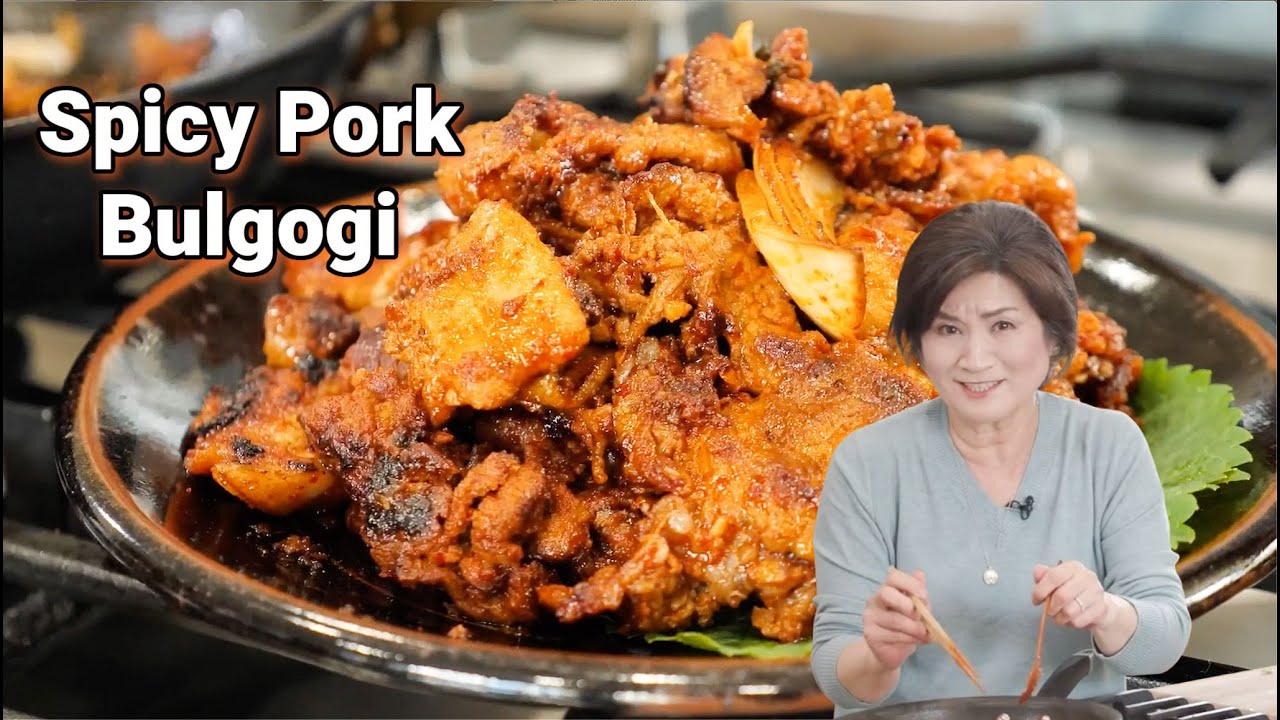
Why This Recipe Works
Most people treat jeyuk bokkeum as a pantry dump — throw some gochujang at pork, crank the heat, call it dinner. They're not wrong, exactly, but they're leaving serious quality on the table. The difference between mediocre spicy pork and genuinely addictive jeyuk bokkeum comes down to a handful of physical and chemical processes that most home cooks either ignore or actively undermine. This section is for people who want to understand why, not just follow orders.
The Dual-Chili Architecture
The recipe uses two forms of Korean chili: gochujang and gochugaru. These are not interchangeable. They are not "double the spice for drama." They perform categorically different jobs.
Gochujang is a fermented paste — chilies, glutinous rice, fermented soybeans, salt — aged until the sugars convert and the proteins break down into savory glutamates. What you get is heat bundled with umami, sweetness, and a deep funk that took months to develop. You cannot fake this with sriracha. You cannot fake this with anything.
Gochugaru is the raw opposite: coarsely ground dried Korean red pepper, unfermented, with a clean fruity heat and a color so vivid it looks illegal. It delivers immediate, front-of-mouth burn — the kind gochujang, with all its complexity, physically cannot produce on its own.
Together they construct a layered heat profile: gochujang hits mid-palate and lingers; gochugaru fires upfront and fades. Two different spicy sensations, timed apart, from a single sauce. That is the architecture. Collapse it to one ingredient and the dish flattens.
The Caramelization Problem (And Why You're Probably Causing It)
Gochujang contains significant sugar — both residual from the rice starch and added during production. Sugar caramelizes at roughly 160°C (320°F) and undergoes Maillard browning with proteins at temperatures above 140°C. When you introduce marinated pork to a properly preheated large skillet or wok over high heat, those sugars hit the hot metal and caramelize within seconds, creating the sticky, glossy, slightly charred crust that defines this dish.
Now here is where most home cooks destroy their own food: they crowd the pan.
When too much pork is added at once, the pan temperature drops sharply. The meat, which contains roughly 70% water by weight, begins releasing liquid faster than it evaporates. The result is a shallow pool of steam. Your pork is now braising in diluted gochujang water. The sugars never reach caramelization temperature. The protein never browns. You get grey, soft, waterlogged pork in a thin red puddle, and you wonder why the dish at the Korean restaurant down the street tastes completely different.
The fix is trivial and non-negotiable: work in batches. Use a large skillet or wok — wide surface area, screaming hot — and give every piece of pork actual contact with the metal. The sauce should sizzle violently, smoke slightly, and adhere. If it's pooling, your pan is too cold or too crowded. Both are your fault.
Marinade Chemistry and Why Time Matters (But Not Infinitely)
The marinade isn't just flavor delivery — it's a mild tenderizing system. Gochujang's acidity (pH typically around 4.5–5.0) begins denaturing surface proteins on the pork within minutes, slightly relaxing the muscle fibers. Garlic and ginger both contain proteolytic enzymes — alliinase and zingibain respectively — that contribute additional tenderizing activity, though these are most effective in the first 30–60 minutes before heat degrades the enzymes.
Marinating in a large bowl for 15 minutes is the functional minimum. Two hours in the refrigerator is the practical optimum. Beyond that, extended acid exposure begins to work against you — pork shoulder can start developing a mushy, unpleasant surface texture after several hours in an acidic marinade. This is not intuitive, which is why so many people assume "longer is always better." It is not.
Fat Selection Is Not Optional
Pork shoulder runs roughly 20–25% fat by weight, distributed in striations through the muscle. During high-heat stir-frying, that intramuscular fat renders rapidly, basting the meat from within while simultaneously contributing richness to the sauce as it mingles with the gochujang and sesame oil. The dish self-bastes.
Pork loin — leaner, tighter, more "respectable" to the Western eye — has almost no intramuscular fat. It goes dry at high heat. It chews like rubber. It is a waste of gochujang.
Pork belly, at the opposite extreme, is roughly 50% fat. It produces a richer, more indulgent result, but the fat-to-sauce ratio can tip the dish from bold into cloying. It works. It's just different.
Shoulder is the correct answer. The cut exists precisely for applications like this.
The Role of Sesame Oil
Sesame oil is added to the marinade — not to the pan for cooking. This distinction is important. Sesame oil has a smoke point of approximately 175°C (350°F), which sounds adequate until you realize that a proper stir-fry pan hits 230–260°C (450–500°F). Added to a screaming-hot large skillet or wok, sesame oil would burn, turn bitter, and produce the precise opposite of the nutty aromatic note you're after.
By incorporating it into the marinade, you get the aroma delivered with the protein rather than seared away in the pan. The sesame note survives. It's a small detail that cooks who add sesame oil "to finish" or "to the pan" consistently get wrong.
The Onion and Scallion Timing Is Precise for a Reason
Onions go in after the pork is mostly cooked — two minutes, partial softening, retained crunch. Scallions go in last, thirty seconds before heat off. This is not aesthetic. Both alliums contain volatile sulfur compounds that degrade with prolonged heat exposure. Cook onions too long and they turn sweet and soft but lose the sharp bite that counterbalances the pork's richness. Cook scallions for more than sixty seconds and you have limp green sticks contributing nothing.
The vegetable timing in this recipe is calibrated, not arbitrary. Follow it.
Why This Is Korea's Everyday Workhorse
Jeyuk bokkeum survives the week because it performs across contexts: hot over rice at dinner, cold in a lunch box the next morning, wrapped in butter lettuce with raw garlic and a dab of ssamjang for the full ssam experience. The gochujang base, being fermented, stabilizes the dish's flavor profile over time — unlike many stir-fries that taste diminished the next day, jeyuk bokkeum holds its depth. In fact, reheated in a hot pan to restore the sear, leftovers are arguably better than the original.
This is not nostalgia. This is practical fermentation chemistry working in your favor. Make the recipe. Understand what you're doing. Eat it four days in a row and feel no shame about it.
Jeyuk Bokkeum (Spicy Pork Stir-Fry)
🛒 Ingredients
- ✦1 lb pork shoulder or belly, thinly sliced
- ✦2 tablespoons gochujang (Korean red pepper paste)
- ✦1 tablespoon gochugaru (Korean red pepper flakes)
- ✦2 tablespoons soy sauce
- ✦1 tablespoon sugar
- ✦1 tablespoon sesame oil
- ✦1 tablespoon mirin
- ✦3 cloves garlic, minced
- ✦1 tablespoon fresh ginger, grated
- ✦1 medium onion, sliced
- ✦3 green onions, cut into 2-inch pieces
- ✦1 tablespoon vegetable oil
- ✦Toasted sesame seeds for garnish
- ✦Steamed rice for serving
- ✦Butter lettuce leaves for wraps
👨🍳 Instructions
01Step 1
Combine gochujang, gochugaru, soy sauce, sugar, sesame oil, mirin, garlic, and ginger in a large bowl. Mix into a smooth paste.
02Step 2
Add sliced pork to the marinade. Toss to coat every piece. Marinate for at least 15 minutes, up to 2 hours in the fridge.
03Step 3
Heat vegetable oil in a large skillet or wok over high heat until smoking.
04Step 4
Add the marinated pork in a single layer — work in batches if needed. Cook for 2-3 minutes per side until caramelized and slightly charred.
05Step 5
Add sliced onion and cook for 2 more minutes until slightly softened but still with crunch.
06Step 6
Toss in green onions and cook for 30 seconds. Remove from heat.
07Step 7
Garnish with sesame seeds. Serve immediately with steamed rice and lettuce leaves for wrapping.
Nutrition Per Serving
Estimates based on standard preparation. Adjustments alter macros.
🔄 Substitutions
Instead of Pork shoulder...
Use Chicken thighs
Dakgalbi-style — marinate the same way, cook slightly longer
Instead of Gochujang...
Use Sriracha + miso (2:1 ratio)
Not authentic but approximates the fermented-spicy profile
Instead of Mirin...
Use Rice vinegar + sugar (1:1)
Mimics mirin's sweet acidity
🧊 Storage & Reheating
In the Fridge
Store for up to 3 days. Great for meal prep and lunch boxes.
In the Freezer
Freeze marinated raw pork for up to 2 months. Thaw and cook fresh.
Reheating Rules
Reheat in a hot skillet to restore the caramelized crust. Microwave works but loses the sear.
❓ Frequently Asked Questions
What is the difference between jeyuk bokkeum and daeji bulgogi?
They're essentially the same dish — spicy pork stir-fry. Jeyuk bokkeum (제육볶음) is the more common name in Seoul, while daeji bulgogi (돼지불고기) is used more in other regions. Some argue daeji bulgogi is grilled while jeyuk bokkeum is stir-fried, but in practice they're interchangeable.
How spicy is jeyuk bokkeum?
It's meant to be spicy — spicier than most Korean dishes. The combination of gochujang AND gochugaru delivers both fermented depth and raw chili heat. To tone it down, reduce the gochugaru by half and add an extra teaspoon of sugar.

The Science of
Jeyuk Bokkeum (Spicy Pork Stir-Fry)
We turned everything on this page into a beautiful, flour-proof PDF cheat sheet. Print it out, stick it to your fridge, and never mess up your jeyuk bokkeum (spicy pork stir-fry) again.
*We'll email you the high-res PDF instantly. No spam, just perfectly cooked meals.
AlmostChefs Editorial Team
We translate the internet's most popular cooking videos into foolproof, beginner-friendly written recipes. We analyze multiple methods, test them in our kitchen, and engineer a single "Master Recipe" that gives you the best possible result with the least possible stress.