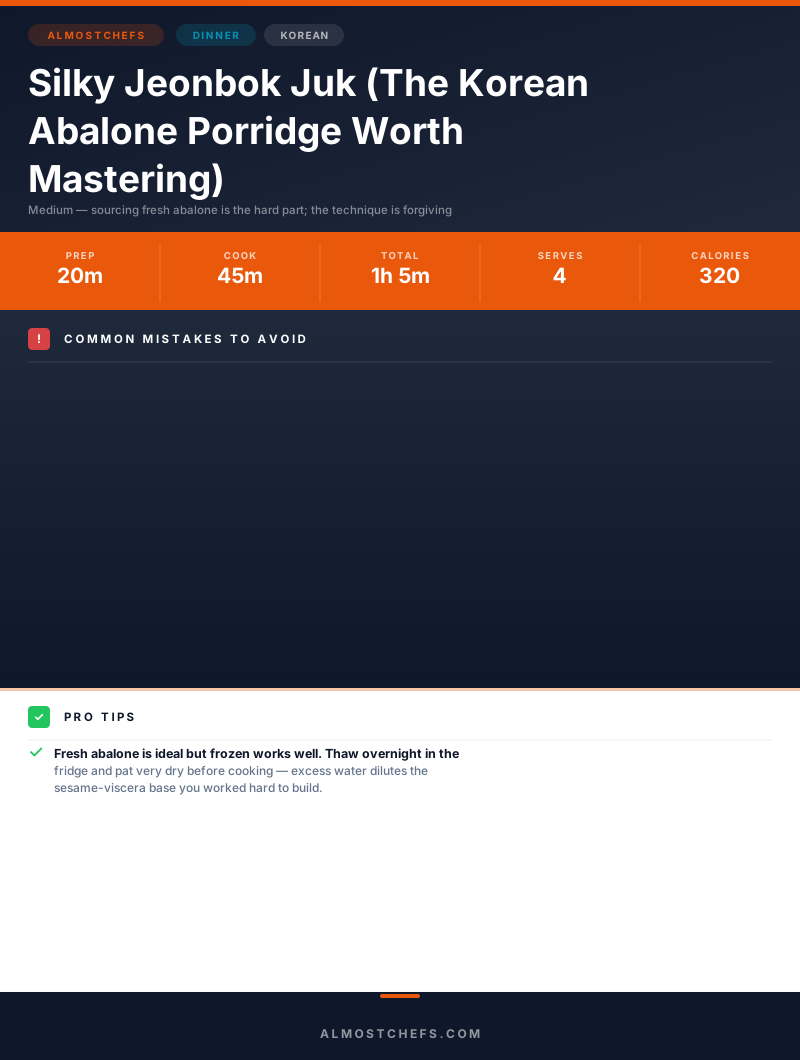
Silky Jeonbok Juk (The Korean Abalone Porridge Worth Mastering)
A luxurious Korean abalone porridge where short-grain rice is slowly coaxed into a silky, nutty base with sesame oil-sautéed abalone viscera. This is the dish Korean grandmothers make when someone needs healing — and the one high-end Seoul restaurants charge $40 a bowl for. We break down why it's easier than you think, and exactly where most home cooks go wrong.

“Jeonbok juk is served at the most expensive Korean restaurants in Seoul and in the humblest home kitchens when someone is sick or recovering. That range tells you something: this dish is simultaneously one of Korea's most prestigious foods and one of its most nourishing. The secret that connects both worlds is the viscera — the dark green internal organs of the abalone, sautéed in sesame oil, which turn what would be plain rice porridge into something deeply savory, slightly briny, and completely irreplaceable.”
Why This Recipe Works
There is a specific bowl of porridge that Korean families make when someone is sick, recovering from surgery, or simply needs to feel cared for. It is not easy to find, and it is not cheap to make. The fact that jeonbok juk — abalone porridge — occupies this role in Korean food culture tells you everything about what kind of dish it is: something that costs effort and money, offered as an act of deliberate generosity.
Understanding why it works means understanding two things: the viscera, and the starch.
The Viscera Problem
Every recipe that calls for discarding the abalone's dark green internal organs is wrong. Not misguided — wrong. The viscera, sautéed in sesame oil over medium heat for two to three minutes, dissolve almost completely into the fat and create a flavor base so distinctly oceanic and savory that nothing else in the Korean pantry can replicate it. The sesame oil turns from pale gold to deep green-gold. The smell shifts from nutty to something like the sea floor after rain. This is the entire dish.
Without the viscera, you have rice porridge with expensive seafood in it. With them, you have jeonbok juk. The distinction is not subtle.
The Starch Architecture
Short-grain rice contains significantly more amylopectin starch than long-grain varieties. When heated slowly with gradual liquid addition, the amylopectin molecules swell, break, and release into the liquid as a natural thickener — creating that silky, almost cream-like consistency that defines good Korean juk. This is why water must be added in stages. One large addition dilutes the starch concentration before it has time to gelatinize properly, and you get watery porridge that never thickens correctly regardless of how long you cook it.
The rice soak matters for the same reason. Pre-hydrated grains break down more uniformly during cooking. Dry grains have a hard outer layer that resists initial hydration, meaning some grains cook faster than others — producing a lumpy, inconsistent texture instead of the smooth porridge you want.
A heavy-bottomed pot or traditional clay dolsot is not optional equipment for this dish. The entire 40-minute cook happens at low heat, and uneven heat distribution means a scorched bottom long before the center is done. Once the bottom scorches, the bitter flavor travels upward through every stir. There is no recovery.
The Abalone Timing
Abalone muscle is collagen-dense protein that behaves like squid: it is tender when barely cooked, and rubbery when cooked too long. The window is narrow — three to four minutes of gentle heat is all it needs to lose its translucency and firm just slightly. Add it any earlier and forty minutes of sustained heat turns it into something you could resole a shoe with.
The final sesame oil drizzle serves a purpose beyond richness. The aromatic volatile compounds in sesame oil that produce its characteristic nutty fragrance cook off quickly at heat — the oil you sautéed the viscera in has lost most of its aromatic top note by the time the dish is done. The finishing drizzle restores it. Skip this step and the dish tastes flat and heavy without knowing why.
Why It Heals
Korean medicine recommended jeonbok juk for recovery long before food science caught up with why. Short-grain rice cooked to full gelatinization is among the most digestible carbohydrate forms available — the starch is pre-broken into forms the gut processes with minimal effort. Abalone is measurably high in omega-3 fatty acids and contains bioactive polysaccharides with documented anti-inflammatory properties. Sesame oil contributes sesamin and sesamolin, lignans with antioxidant activity.
The folk medicine was tracking something real. A bowl of jeonbok juk is calorically modest, digestively effortless, and nutritionally dense. It is what you eat when your body needs support rather than stimulation.
That combination — restraint, precision, generosity — is what makes it worth mastering.
Where Beginners Mess This Up
Before we start, read this. These are the 4 reasons your silky jeonbok juk (the korean abalone porridge worth mastering) will fail:
- 1
Skipping the abalone viscera: The dark green internal organs of the abalone are what make jeonbok juk taste like jeonbok juk. Many Western recipes omit them because they look unappealing. This is a catastrophic mistake. The viscera dissolve into the sesame oil during the initial sauté and create the deeply savory, oceanic base note that the entire dish is built on. Without them, you have sesame rice porridge with abalone pieces — not jeonbok juk.
- 2
Adding water all at once: Rice porridge requires gradual liquid addition. Adding all the water at the start creates two problems: the rice expands too fast before the starch has time to break down properly, and the flavor compounds from the abalone get diluted before they can bond with the rice. Add water in stages, stirring constantly, letting each addition absorb before the next.
- 3
Cooking on high heat: High heat causes the bottom to scorch before the center finishes. Juk requires low, patient heat — the kind where the surface barely bubbles. Scorched bottom ruins the entire pot because the burnt flavor infuses upward through the porridge as you stir.
- 4
Under-seasoning at the end: Sea salt and sesame oil are added at the end, not the beginning. Salt added early toughens the rice and slows gelatinization. The final seasoning is where you dial in the dish — taste carefully, the abalone provides a lot of natural brine and the balance point is subtle.
🛠️ Core Equipment
- Heavy-bottomed pot or clay pot (dolsot)Even, sustained low heat is the entire technique. Thin pots create hot spots that scorch the rice. A [clay pot](/kitchen-gear/review/dolsot) produces the most authentic flavor, but a [Dutch oven](/kitchen-gear/review/dutch-oven) works excellently for consistent heat distribution.
- Wooden spoon or silicone spatulaYou will be stirring this porridge almost constantly for 40 minutes. A wooden spoon is gentle enough not to break the rice grains prematurely while still scraping the bottom to prevent sticking.
- Sharp paring knifeFor cleaning the abalone and separating the viscera from the muscle cleanly. Abalone muscle is firm and requires a confident cut; a dull knife tears rather than slices.
- Fine-mesh sieveFor rinsing the rice until the water runs clear. Removing excess surface starch gives you control over the final porridge consistency — thick and creamy rather than gluey.
Silky Jeonbok Juk (The Korean Abalone Porridge Worth Mastering)
🛒 Ingredients
- ✦1.5 cups short-grain white rice, soaked in cold water for 30 minutes
- ✦4 fresh abalones (or 8 oz cleaned frozen abalone, thawed)
- ✦Abalone viscera (internal organs from the fresh abalones — do not discard)
- ✦2 tablespoons roasted sesame oil, divided
- ✦6 cups water or light seafood stock, added gradually
- ✦1 tablespoon soy sauce
- ✦1 teaspoon sea salt, to taste
- ✦1 tablespoon toasted sesame seeds
- ✦2 green onions, thinly sliced
- ✦1 sheet roasted gim (Korean dried seaweed), crumbled, for serving
👨🍳 Instructions
01Step 1
Soak the short-grain rice in cold water for 30 minutes. Drain and rinse through a fine-mesh sieve until the water runs mostly clear.
02Step 2
If using fresh abalone, scrub the shells with a stiff brush. Slide a spoon between the shell and muscle to detach the abalone. Carefully separate the dark green viscera from the muscle and set aside in a small bowl. Slice the muscle thinly.
03Step 3
Heat 1 tablespoon sesame oil in a heavy-bottomed pot over medium heat. Add the abalone viscera and sauté for 2-3 minutes, mashing gently with the back of a spoon, until the oil turns deep green-gold and fragrant.
04Step 4
Add the drained rice to the viscera-oil mixture and stir to coat every grain. Sauté for 2 minutes until the rice turns slightly translucent at the edges.
05Step 5
Add 1 cup of water or stock and stir continuously over medium-low heat until absorbed. Continue adding water 1 cup at a time, stirring and waiting for absorption between additions, for approximately 30-35 minutes total.
06Step 6
When the porridge reaches a thick, silky consistency and the rice grains have softened and partially broken down, add the sliced abalone muscle. Stir gently and cook for 3-4 minutes until just cooked through.
07Step 7
Season with soy sauce and sea salt. Taste carefully — the abalone and sesame oil carry significant salt and umami. You may need less than you expect.
08Step 8
Ladle into bowls. Drizzle with remaining sesame oil, scatter sesame seeds, green onions, and crumbled gim over the top. Serve immediately.
Nutrition Per Serving
Estimates based on standard preparation. Adjustments alter macros.
🔄 Substitutions
Instead of Fresh abalone...
Use Frozen abalone or canned abalone
Frozen abalone loses some of the delicate texture but is far more accessible. Canned abalone works in a pinch — rinse thoroughly and add in the final 2 minutes only. Canned abalone is pre-cooked and will turn rubbery if added earlier.
Instead of Abalone viscera...
Use 1 tablespoon oyster sauce mixed into the sesame oil
A very imperfect substitute for when viscera isn't available (frozen abalone often comes pre-cleaned). The oyster sauce approximates the briny umami depth but misses the oceanic complexity. The porridge will still be good — just not authentic.
Instead of Short-grain white rice...
Use Sushi rice or medium-grain rice
Both work acceptably. Long-grain rice does not — it lacks the starch structure needed to produce the silky, creamy consistency. Jasmine or basmati will give you a thin, soup-like result instead of proper juk.
Instead of Roasted sesame oil...
Use Toasted sesame oil (lighter variety)
Lighter sesame oil produces a more subtle base. The roasted variety's nuttiness is preferable here because it holds up against the strong abalone flavor. Do not substitute regular cooking oil — it will taste like nothing.
🧊 Storage & Reheating
In the Fridge
Store in an airtight container for up to 2 days. The porridge will thicken considerably as it cools — this is normal.
In the Freezer
Not recommended. The rice texture breaks down on freezing and thawing produces a grainy, separated porridge.
Reheating Rules
Add 2-3 tablespoons of water per cup of porridge and reheat over low heat, stirring constantly. Do not microwave — it heats unevenly and makes the abalone pieces rubbery.
❓ Frequently Asked Questions
Why does my jeonbok juk taste bland?
Almost always one of two causes: you discarded the viscera, or you seasoned too early. The viscera sautéed in sesame oil is the entire flavor base. Without it, the dish is rice porridge with abalone pieces — not the same thing. If you used viscera and it's still flat, add more roasted sesame oil at the end and a pinch of sea salt.
Can I use dried abalone?
Dried abalone is used in Chinese cuisine but is unusual in Korean jeonbok juk. If you use it, rehydrate overnight in cold water for at least 12 hours. The flavor will be more concentrated but the texture will be chewier than fresh. The dried viscera cannot be used the same way — you'll need an alternative base.
How do I know when the porridge is done?
The rice grains should be visibly swollen and some should have partially broken open, releasing starch into the liquid. The porridge should coat the back of a spoon and hold a trail when you drag your finger through it. It should look like very thick cream soup, not watery congee.
Is this recipe actually anti-inflammatory?
Abalone is genuinely high in omega-3 fatty acids and contains polysaccharides with documented anti-inflammatory properties in clinical research. The sesame oil contributes lignans with antioxidant activity. Korean medicine has recommended jeonbok juk for gut health and recovery for centuries — it turns out the folk medicine was tracking something real.
Why is my abalone rubbery?
You added it too early or cooked it too long. Abalone muscle proteins contract sharply with sustained heat — like squid, it becomes tender when barely cooked or very long-cooked, and rubbery in between. For juk, add it in the final 3-4 minutes and remove from heat as soon as it's opaque.
Can I make this without seafood?
You can make a vegetarian juk using the same technique with mushrooms — dried shiitake rehydrated and sliced, with their soaking liquid used as part of the water volume. It will be a different dish entirely, but the slow-cooked rice base technique is identical. Do not call it jeonbok juk without the abalone.
The Science of
Silky Jeonbok Juk (The Korean Abalone Porridge Worth Mastering)
We turned everything on this page into a beautiful, flour-proof PDF cheat sheet. Print it out, stick it to your fridge, and never mess up your silky jeonbok juk (the korean abalone porridge worth mastering) again.
*We'll email you the high-res PDF instantly. No spam, just perfectly cooked meals.
AlmostChefs Editorial Team
We translate the internet's most popular cooking videos into foolproof, beginner-friendly written recipes. We analyze multiple methods, test them in our kitchen, and engineer a single "Master Recipe" that gives you the best possible result with the least possible stress.