Hawaiian Kalua Pork Rice Bowl (The Comfort Food Jason Momoa Lives On)
Tender braised pork shoulder shredded into a rich, savory gravy served over brown rice with scallions and sesame — a weeknight-friendly take on Hawaiian kalua pork that captures the soul of island comfort food without a six-hour smoke.

“Hawaiian comfort food is not complicated. It's a philosophy: cook something humble until it becomes extraordinary. Pork shoulder braised low and slow until it collapses into velvet, a gravy built from the fond left in the pan, rice underneath to catch every drop. The dish is honest and deeply satisfying. Getting it wrong comes down to one thing almost every time — impatience. You pulled the pork too early, or you skipped the sear, or you rushed the gravy. This recipe fixes all three.”
Why This Recipe Works
The Hawaiian plate lunch is one of the most quietly influential meals in American food culture — and almost nobody outside the islands talks about it. A scoop of rice, a scoop of macaroni salad, a protein braised or grilled until deeply tender. It's not fancy. It was invented by plantation workers who needed dense, satisfying calories and built a cuisine from Portuguese, Japanese, Chinese, Korean, and native Hawaiian ingredients all jammed together on one plate. The result is something that defies clean categorization and rewards anyone patient enough to cook it right.
This dish is fundamentally a braise. And every braise lives or dies on one moment: the sear.
The Sear Is Not Optional
Pork shoulder is roughly 30% connective tissue and intermuscular fat. Raw, it's tough and bland. Braised without a sear, it becomes tender but tastes like protein-flavored water. But when you drop dry, room-temperature pork chunks into a screaming-hot Dutch oven oiled with extra virgin olive oil, something irreversible happens. The surface proteins denature and brown through the Maillard reaction, creating a crust of hundreds of new flavor compounds — the same ones responsible for the appeal of seared steak, roasted coffee, and toasted bread. Those compounds dissolve into the braising liquid over the next two hours and become your gravy.
Work in batches. An overcrowded pan drops the surface temperature below the Maillard threshold and produces steam instead of caramelization. One layer of meat, enough space between pieces to breathe, high heat, no stirring. Let the crust form.
The Fond Is the Gravy
After the pork comes out and the onions go in, the pot is covered in a dark, sticky film. That's the fond — concentrated, caramelized meat solids — and it is the single most flavor-dense thing in the entire recipe. The onion releases just enough moisture over 5 minutes to lift it completely off the bottom. Scrape constantly. Every bit that you leave behind is flavor that doesn't make it into your bowl.
The garlic and ginger go in next, and they need 90 full seconds in the hot fat before anything else happens. This is blooming — fat-soluble aromatics release their volatile compounds into the oil and distribute evenly through the entire braise. Add them too early and they scorch. Add them too late, straight into the broth, and they taste raw and sharp.
Two Hours Is the Beginning
Pork shoulder contains two types of muscle fiber. The lean fibers cook through relatively quickly. The collagen — the connective tissue that makes the cut tough when young — requires sustained temperature above 160°F for extended time to convert to gelatin. It's a slow, irreversible chemical process. You cannot rush it. At 90 minutes, the pork seems cooked but resists shredding. At two hours, it starts to yield. At two and a half hours, it surrenders completely, pulling apart into long, irregular fibers that collapse into the gravy.
The partial cover is intentional. You want controlled evaporation — enough to concentrate the braising liquid by 20-30% over the cook, deepening the flavor and beginning the natural reduction that makes the gravy rich without relying entirely on starch.
The Finishing Layer
Sesame oil is not a cooking fat. It's a finishing condiment. Its primary aromatic compounds — the ones that smell like roasted sesame and carry that unmistakable nuttiness — are highly volatile and burn off within seconds of hitting a hot surface. Add it at the pot and it tastes like nothing. Add it at the bowl, right before serving, and it's the most expressive thing on the plate.
Same principle applies to the cilantro. Fresh herbs added to a finished dish bring brightness and contrast that cut through the richness of long-braised meat. Cooked cilantro tastes muddy. Fresh cilantro tastes alive. The distinction matters.
This is Hawaiian comfort food done with precision. Which is, ironically, the most Hawaiian approach of all — take the humble thing, respect every step, and make it extraordinary.
Where Beginners Mess This Up
Before we start, read this. These are the 4 reasons your hawaiian kalua pork rice bowl (the comfort food jason momoa lives on) will fail:
- 1
Skipping the sear: Browning the pork in batches before braising is not optional. The Maillard reaction on those exterior surfaces creates hundreds of flavor compounds that the braise then dissolves into the liquid. Skip this step and your gravy tastes like boiled meat water. Work in batches — crowding the pan drops the temperature and steams instead of sears.
- 2
Pulling the pork too early: Pork shoulder needs to hit an internal temperature above 200°F before it shreds properly. At 185°F it seems cooked but fights the fork. At 205°F it falls apart with zero resistance. This is a collagen problem — connective tissue converts to gelatin only above a sustained high temperature. Two hours at a gentle simmer is the minimum. Two and a half is better.
- 3
Rushing the gravy: The cornstarch slurry needs to be fully whisked smooth before it hits the hot liquid. Lumpy slurry produces lumpy gravy — and once the starch granules cook in clumps, there's no fixing it. Add the slurry slowly while stirring constantly, and give it two full minutes of simmering to activate the thickening properly.
- 4
Under-seasoning the rice: Brown rice cooked in plain water is a neutral canvas — which means the pork and gravy have to carry all the flavor. That works if the gravy is properly seasoned, but if you taste it and it's flat, the whole bowl falls apart. Season aggressively at the end and finish with sesame oil and fresh cilantro. Those two elements do more work than people expect.
The Video Reference Library
Want to see it in action? Here are the exact videos we analyzed and combined to build this foolproof recipe translation:
The source inspiration — Momoa's take on the Hawaiian plate lunch tradition, demonstrating the braising technique and the philosophy behind island comfort cooking.
🛠️ Core Equipment
- Dutch oven or heavy-bottomed potEven heat distribution is essential for a two-plus-hour braise. A thin pot creates hot spots that scorch the bottom while the center stays undercooked. A [Dutch oven](/kitchen-gear/review/dutch-oven) is the single best tool for this job.
- Large slotted spoon or tongsFor removing browned pork batches without dragging the fond off the bottom. You want that caramelized residue to stay in the pot — it's the foundation of the gravy.
- Small whiskFor the cornstarch slurry. A fork leaves lumps. A proper whisk emulsifies the starch into the water completely before it meets the hot liquid.
- Rice cooker or medium saucepan with tight lidBrown rice requires a precise water ratio and undisturbed steam to cook evenly. A [rice cooker](/kitchen-gear/review/rice-cooker) eliminates all the guesswork.
Hawaiian Kalua Pork Rice Bowl (The Comfort Food Jason Momoa Lives On)
🛒 Ingredients
- ✦3 pounds pork shoulder, cut into 3-inch chunks
- ✦3 tablespoons extra virgin olive oil
- ✦1 large yellow onion, coarsely chopped
- ✦6 cloves garlic, minced
- ✦2 tablespoons fresh ginger, grated
- ✦1 tablespoon low-sodium soy sauce
- ✦1 teaspoon sea salt
- ✦1 teaspoon black pepper
- ✦2 cups low-sodium chicken broth
- ✦1 cup water
- ✦2 bay leaves
- ✦1 tablespoon cornstarch
- ✦3 tablespoons water (for slurry)
- ✦2 cups cooked brown rice
- ✦4 scallions, thinly sliced
- ✦1 teaspoon sesame oil
- ✦2 tablespoons fresh cilantro, chopped
👨🍳 Instructions
01Step 1
Pat the pork shoulder chunks completely dry with paper towels.
02Step 2
Heat olive oil in a [Dutch oven](/kitchen-gear/review/dutch-oven) over medium-high heat until shimmering, about 2 minutes.
03Step 3
Working in batches, brown the pork chunks on all sides until deeply caramelized, 10-12 minutes total. Transfer browned pieces to a plate. Do not crowd the pan.
04Step 4
Sauté the chopped onion in the same pot over medium heat for 5 minutes, scraping up all the browned bits from the bottom as you go.
05Step 5
Stir in the minced garlic and grated ginger. Cook until fragrant and just golden, about 90 seconds.
06Step 6
Pour in the soy sauce and stir to coat the aromatics. Let it cook for 30 seconds to caramelize slightly.
07Step 7
Return all browned pork to the pot. Add chicken broth, water, bay leaves, sea salt, and black pepper. Bring to a gentle boil.
08Step 8
Reduce heat to low, cover partially, and simmer until the pork shreds easily with two forks, 2 to 2.5 hours.
09Step 9
Whisk cornstarch and 3 tablespoons water in a small bowl until completely smooth with no lumps.
10Step 10
Slowly drizzle the slurry into the simmering pork while stirring constantly. Cook for 2 minutes until the gravy coats the back of a spoon.
11Step 11
Taste and adjust salt and pepper. Remove bay leaves.
12Step 12
Use two forks to shred the pork directly in the pot, pulling it apart into rough, irregular pieces.
13Step 13
Divide cooked brown rice among bowls. Top generously with shredded pork and gravy. Finish with sliced scallions, a drizzle of sesame oil, and fresh cilantro.
Nutrition Per Serving
Estimates based on standard preparation. Adjustments alter macros.
🔄 Substitutions
Instead of Pork shoulder...
Use Chicken thighs (bone-in)
Reduces fat and calories by roughly 30%. Reduce braise time to 45-60 minutes — chicken thighs overcook quickly beyond that. Keep bone-in for flavor.
Instead of Soy sauce...
Use Coconut aminos
Cuts sodium by 40-50% with a slightly sweeter, milder flavor profile. Works well here because the pork provides enough savory depth. One-to-one swap.
Instead of Cornstarch slurry...
Use Arrowroot powder slurry
Same ratio, same technique. Arrowroot produces a slightly clearer, glossier gravy. Don't boil arrowroot-thickened sauces — they break and turn slimy. Keep at a simmer.
Instead of Brown rice...
Use White rice or cauliflower rice
White rice cooks faster and has a softer texture that absorbs gravy differently — more like a sponge. Cauliflower rice is a low-carb option that works surprisingly well under the rich gravy.
🧊 Storage & Reheating
In the Fridge
Store pork and gravy separately from the rice in airtight containers for up to 4 days. The flavors improve significantly after 24 hours.
In the Freezer
Freeze pork and gravy together for up to 3 months. Rice freezes poorly — make it fresh. Thaw overnight in the refrigerator.
Reheating Rules
Reheat pork in a covered saucepan over low heat with a splash of broth to loosen the gravy, about 10 minutes. Microwave works but dries the meat — cover with a damp paper towel and use 50% power.
❓ Frequently Asked Questions
Why is my pork tough after two hours?
Pork shoulder becomes tender only after its collagen fully converts to gelatin, which requires sustained heat above 190°F for long enough. If it's still tough at two hours, your simmer temperature was too low. Partially cover and increase the heat slightly — it needs an active, low simmer, not just warm liquid.
Can I make this in a slow cooker?
Yes, but don't skip the stovetop sear. Brown the pork in a skillet first, then transfer everything to the slow cooker. Cook on low for 8 hours or high for 4-5. The gravy won't thicken on its own — transfer the liquid to a saucepan at the end and add the cornstarch slurry there.
Is this actually kalua pork?
It's inspired by kalua pork but not traditional. True kalua pork is cooked in an imu — an underground oven — for 6-8 hours with koa wood and ti leaves. This is a stovetop braise that captures the spirit: fall-apart pork with deep savory flavor. Different technique, same soul.
My gravy is too thin. How do I fix it?
Make another slurry — 1 teaspoon cornstarch whisked into 1 tablespoon cold water — and add it while the gravy is at a simmer. Stir constantly for 2 minutes. Repeat if needed. Never add dry starch directly to hot liquid.
Can I use pork tenderloin instead of shoulder?
You can, but the result will be completely different. Pork tenderloin has almost no collagen or fat, so it doesn't braise — it just dries out. It needs a 25-minute cook at most and produces no gravy. Stick with shoulder, butt, or bone-in country ribs for a braise.
What do I serve alongside this?
Classic Hawaiian plate lunch sides work perfectly: macaroni salad, pickled cucumber (sunomono), steamed green beans, or a simple cabbage slaw. The richness of the pork and gravy benefits from something acidic and crunchy alongside it.
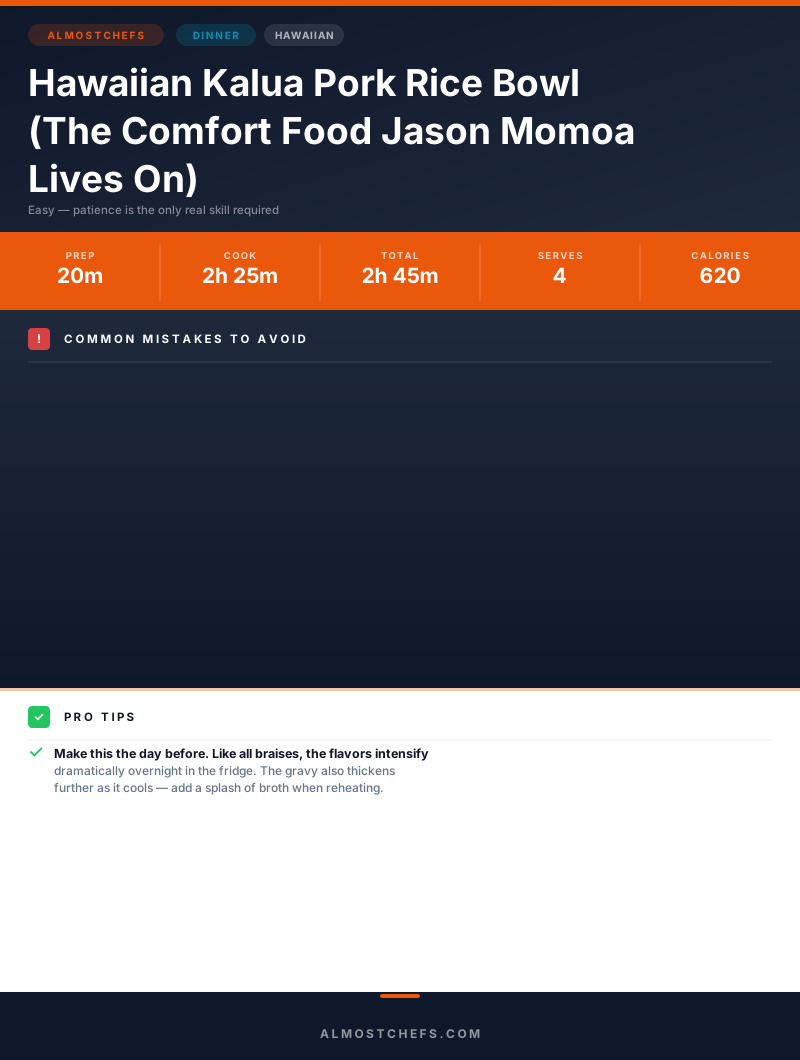
The Science of
Hawaiian Kalua Pork Rice Bowl (The Comfort Food Jason Momoa Lives On)
We turned everything on this page into a beautiful, flour-proof PDF cheat sheet. Print it out, stick it to your fridge, and never mess up your hawaiian kalua pork rice bowl (the comfort food jason momoa lives on) again.
*We'll email you the high-res PDF instantly. No spam, just perfectly cooked meals.
AlmostChefs Editorial Team
We translate the internet's most popular cooking videos into foolproof, beginner-friendly written recipes. We analyze multiple methods, test them in our kitchen, and engineer a single "Master Recipe" that gives you the best possible result with the least possible stress.