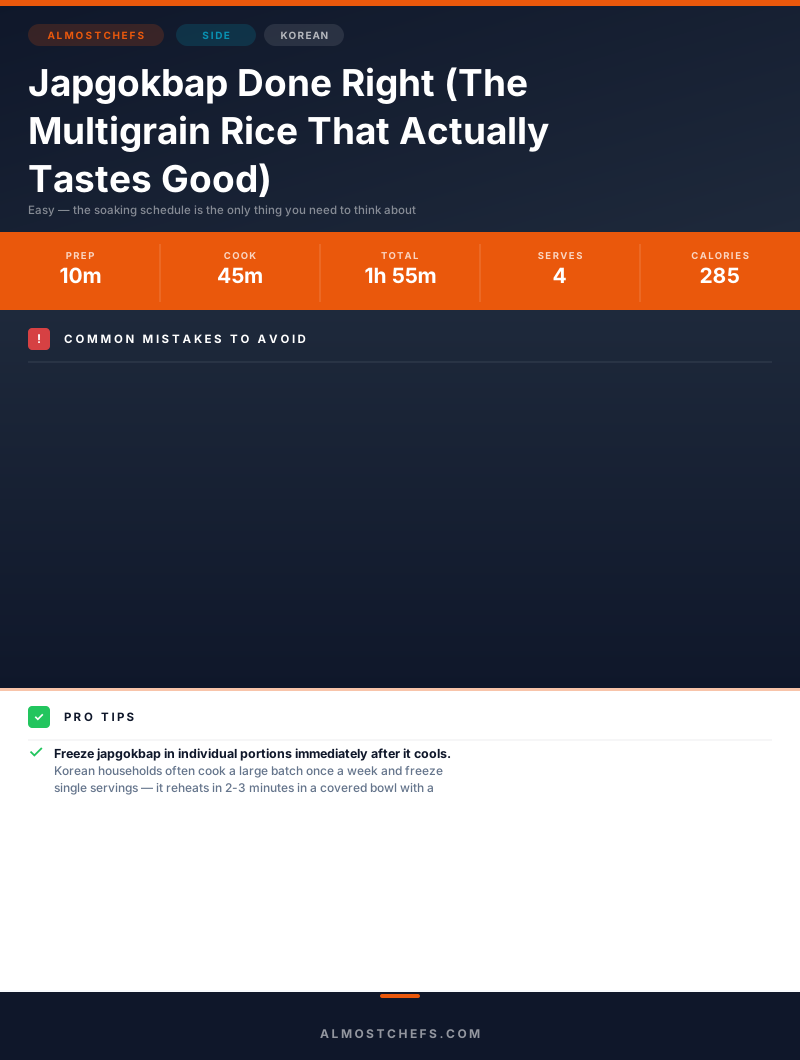
Japgokbap Done Right (The Multigrain Rice That Actually Tastes Good)
Korean multigrain rice — short-grain white rice cooked with black rice, barley, millet, and sorghum into a nutty, chewy, visually striking bowl. The grain that stabilizes blood sugar, feeds your gut microbiome, and makes plain white rice taste like a punishment. We break down exactly how to soak, ratio, and cook each grain so nothing comes out crunchy or mushy.

“White rice is a blank slate. That's its selling point and its limitation. Japgokbap — Korean multigrain rice — is what happens when you decide a blank slate isn't good enough. Black rice turns the whole pot a deep burgundy-purple. Barley adds chew. Millet adds sweetness. Sorghum adds earthiness. The result is a bowl that looks expensive, tastes complex, and costs almost nothing. The catch is that every grain in the mix has a different soaking requirement, and if you ignore that, you get one perfectly cooked grain surrounded by three broken ones.”
Why This Recipe Works
Japgokbap is a corrective document. At some point in the twentieth century, as industrial milling got cheaper, white rice became the default — and the nutritional case for eating whole grains got quietly shelved alongside inconvenient things like walking to work and sleeping eight hours. Korean households never fully made that trade. Japgokbap, mixed grain rice, has been a fixture on Korean tables for generations precisely because the flavor case and the health case point in the same direction: whole grains taste better.
Why Each Grain Earns Its Place
This is not random. Every grain in the mix contributes something specific.
Black rice — heukmi — does the heavy aesthetic and antioxidant lifting. It stains the entire pot a deep burgundy-purple through anthocyanin pigments, the same compounds that make blueberries worth eating. It has a slightly earthy, almost floral flavor that white rice can't produce. At 15-20% of total volume it's unmissable. Beyond that, it's overpowering.
Barley is the gut health grain. It contains beta-glucan, a soluble fiber that forms a viscous gel in the digestive tract, slowing glucose absorption and selectively feeding beneficial gut bacteria. It also adds the most noticeable chew in the bowl — a pleasantly resistant bite that makes japgokbap feel more substantial than white rice without being heavy.
Millet is the quiet contributor. Mild, slightly sweet, smaller than the other grains, it fills the textural gaps between the chewier grains and blends into the background. It also softens faster than everything else in the mix, which is why it soaks only briefly.
Sorghum rounds out the earthiness and adds structural chew similar to barley. It's also gluten-free and high in antioxidants — relevant if anyone at the table is avoiding gluten, since barley is not an option for that group.
The Soaking Problem Nobody Talks About
Every recipe for mixed grain rice tells you to soak. Almost none of them tell you that different grains need different soaking durations, which is why you keep ending up with perfectly cooked white rice surrounding under-hydrated barley that could double as pea gravel.
The practical fix: two bowls, not one. Hard grains (barley, sorghum) go in one bowl the night before. The remaining grains (white rice, black rice, millet) soak together for 30 minutes while you're making the rest of dinner. They all come together in the pot fully hydrated at the same baseline moisture level, and they cook through at the same rate.
This is not fussiness. It's the difference between a dish that works and one that doesn't.
The Water Ratio
Standard short-grain white rice runs at a 1:1.1 to 1:1.2 water-to-rice ratio in a sealed pot. Whole grains absorb significantly more water because there's more surface area and a bran layer that resists initial hydration. The 1:1.4 ratio used here accounts for that added absorption. If you use the standard white rice ratio, you'll get dry, separated grains with no cohesion.
A tight-fitting lid is not optional. The steam that builds inside the pot is doing approximately 40% of the cooking in the final 15 minutes. A loose lid bleeds that steam, drops the internal temperature, and stalls the upper layers of grain while the bottom overcooks.
What You're Actually Getting
Per serving, japgokbap delivers roughly four grams of dietary fiber — twice what the same serving of white rice provides. The glycemic load is meaningfully lower because the intact grain structure forces slower digestion. The anthocyanins in the black rice are bioavailable and have been linked in multiple studies to reduced oxidative stress markers.
But the best argument for japgokbap isn't any of that. It's that the bowl is visually striking, texturally interesting, and more complex-tasting than white rice in ways that make every dish you eat alongside it taste more complete. The health story is real, but it's secondary. Cook it because it tastes better.
Where Beginners Mess This Up
Before we start, read this. These are the 4 reasons your japgokbap done right (the multigrain rice that actually tastes good) will fail:
- 1
Not soaking the harder grains separately: Barley and sorghum are significantly denser than white rice. If everything soaks together for the same duration, you end up with soft white rice and grain-hard barley in the same pot. The fix is simple: soak barley and sorghum for at least 4-6 hours, or overnight. Short-grain rice and millet need only 30 minutes. Treat each grain as its own variable.
- 2
Using too much black rice: Black rice (heukmi) is potent. More than 20% of your total grain volume and the entire pot turns gummy and overpoweringly earthy. The sweet spot is 15-20%, enough to stain the rice a beautiful purple and contribute its antioxidant flavor without dominating. It's a seasoning grain, not a base grain.
- 3
Adding too much water for a mixed grain cook: The standard rice-to-water ratio for white rice doesn't work here. Whole grains absorb significantly more water. Under-water japgokbap is dry and crunchy in the center. The correct ratio is 1:1.4 (grains to water) by volume when using a pot on the stovetop, slightly less in a rice cooker. The mixed grains will absorb the extra moisture completely.
- 4
Opening the lid before the rest period ends: Like all steamed rice, japgokbap needs 10 minutes of off-heat rest inside the covered pot. This redistributes moisture from the bottom up through the grains. Open early and the top layer is dry while the bottom is wet. Set a timer and respect it.
🛠️ Core Equipment
- Heavy-bottomed saucepan with tight lidEven heat prevents the bottom layer of grains from scorching while the top layer is still absorbing water. Thin-bottomed pots create hot spots that burn the mixed grains faster than white rice because whole grains take longer to reach temperature equilibrium.
- Fine-mesh sieveEssential for rinsing the grains multiple times before soaking. Black rice bleeds aggressively — rinse until the water runs clear-ish, or the excess starch turns the final pot gummy and the color muddy rather than vivid purple.
- Rice cooker (optional but recommended)A basic [rice cooker](/kitchen-gear/review/rice-cooker) handles the variable cook times in japgokbap better than most stovetop methods because it adjusts heat based on steam rather than a fixed timer. Use the brown rice or multigrain setting if available.
- Digital kitchen scaleVolume measurements lie with mixed grains because different grains pack differently into a cup. Weighing ensures consistent ratios every time.
Japgokbap Done Right (The Multigrain Rice That Actually Tastes Good)
🛒 Ingredients
- ✦1 cup short-grain white rice
- ✦3 tablespoons black rice (heukmi)
- ✦3 tablespoons hulled barley
- ✦2 tablespoons millet
- ✦2 tablespoons sorghum
- ✦1 tablespoon glutinous millet (optional, for extra chew)
- ✦1.75 cups water (plus more for soaking and rinsing)
- ✦1/4 teaspoon fine sea salt
👨🍳 Instructions
01Step 1
Rinse all grains together in a fine-mesh sieve under cold running water, rubbing gently with your hands, until the water runs mostly clear. This takes 3-4 rounds of rinsing.
02Step 2
Separate the barley and sorghum into one bowl and the white rice, black rice, and millet into another. Cover the barley and sorghum with cold water and soak for a minimum of 4 hours, or overnight. Cover the remaining grains and soak for 30 minutes.
03Step 3
Drain all grains through a fine-mesh sieve. Combine everything in a heavy-bottomed saucepan.
04Step 4
Add 1.75 cups cold water and the sea salt. Stir once to distribute the grains evenly across the pot bottom.
05Step 5
Bring to a boil over medium-high heat, uncovered, watching closely. As soon as the water reaches a full rolling boil — approximately 5-6 minutes — reduce the heat to the lowest possible setting and cover immediately.
06Step 6
Cook on the lowest heat, covered, for 35 minutes. Do not lift the lid.
07Step 7
Turn off the heat and leave the pot, still covered and undisturbed, for 10 minutes. This rest period is mandatory.
08Step 8
Remove the lid and gently fold the rice from the bottom up using a wooden spoon or rice paddle, redistributing the grains throughout. The rice should be fluffy, slightly sticky, and an even deep purple-red color.
Nutrition Per Serving
Estimates based on standard preparation. Adjustments alter macros.
🔄 Substitutions
Instead of Hulled barley...
Use Pearl barley
Pearl barley cooks faster and is softer. Reduce soaking time to 2 hours and reduce final cook time by 5 minutes. You lose some fiber since the bran has been removed, but the texture is more consistent for beginners.
Instead of Sorghum...
Use Farro or wheat berries
Similar density and earthy flavor profile. Farro is more widely available in Western grocery stores. Soak time and cook time remain the same.
Instead of Short-grain white rice...
Use Short-grain brown rice
Increases fiber significantly but requires the entire grain mix to soak overnight and extends cook time to 50 minutes. Use 2 cups of water instead of 1.75. The result is nuttier and more filling but less sticky.
Instead of Millet...
Use Quinoa
Quinoa's neutral flavor blends in reasonably well and adds complete protein. Rinse quinoa extremely well before adding — its natural saponin coating tastes bitter if not rinsed off.
🧊 Storage & Reheating
In the Fridge
Store in an airtight container for up to 4 days. Press plastic wrap directly onto the surface before sealing to prevent the top layer from drying out.
In the Freezer
Freeze in individual portions for up to 2 months. Use freezer-safe containers or wrap tightly in plastic, then foil. Freeze while still slightly warm for best texture after reheating.
Reheating Rules
Add 1-2 tablespoons of water to the portion, cover tightly, and microwave for 2-2.5 minutes. Alternatively reheat in a small covered pot over low heat for 5 minutes. Never reheat uncovered — the grains dry out and the texture becomes crumbly.
❓ Frequently Asked Questions
Why is my barley still crunchy after cooking?
It wasn't soaked long enough. Barley is the densest grain in this mix and needs 4-6 hours minimum to fully hydrate before cooking. If you're consistently getting crunchy barley with a longer soak, try pearl barley instead of hulled — the removed bran layer allows water to penetrate much faster.
Can I cook japgokbap in a rice cooker?
Yes, and it's arguably better that way. Use the multigrain or brown rice setting if your rice cooker has one. Use the same grain ratios but reduce water slightly to 1.6 cups — rice cookers trap steam more efficiently than stovetop pots. The extended cycle handles the variable grain densities better than manual stovetop timing.
Why did my rice turn out gummy?
Two likely causes: too much black rice, or insufficient rinsing before soaking. Black rice releases a lot of starch if not rinsed thoroughly. Stay at or below 3 tablespoons of black rice per cup of white rice, and rinse until the water shifts from opaque to translucent.
Is japgokbap actually healthier than white rice?
Meaningfully, yes — particularly for blood sugar and gut health. Barley contains beta-glucan, a soluble fiber that slows glucose absorption and feeds Lactobacillus bacteria in the gut. Black rice provides anthocyanins with documented anti-inflammatory effects. The whole grain mix roughly doubles the fiber content of white rice and lowers the glycemic load of the meal.
Can I add beans to japgokbap?
Yes — small adzuki beans (pat) and black beans are traditional additions in Korean households. Soak dried beans overnight separately, par-cook them until just tender (about 20 minutes at a simmer), then add to the grain mix before the final cook. Canned beans turn to mush. Pre-cook from dried or skip them.
What do I serve japgokbap with?
Any Korean banchan. The nutty bitterness of the mixed grains is particularly complementary with doenjang jjigae (fermented soybean paste stew), kimchi, and braised greens like sigeumchi namul. Avoid paring with very delicate-flavored dishes where the earthy grain flavor would compete.
The Science of
Japgokbap Done Right (The Multigrain Rice That Actually Tastes Good)
We turned everything on this page into a beautiful, flour-proof PDF cheat sheet. Print it out, stick it to your fridge, and never mess up your japgokbap done right (the multigrain rice that actually tastes good) again.
*We'll email you the high-res PDF instantly. No spam, just perfectly cooked meals.
AlmostChefs Editorial Team
We translate the internet's most popular cooking videos into foolproof, beginner-friendly written recipes. We analyze multiple methods, test them in our kitchen, and engineer a single "Master Recipe" that gives you the best possible result with the least possible stress.