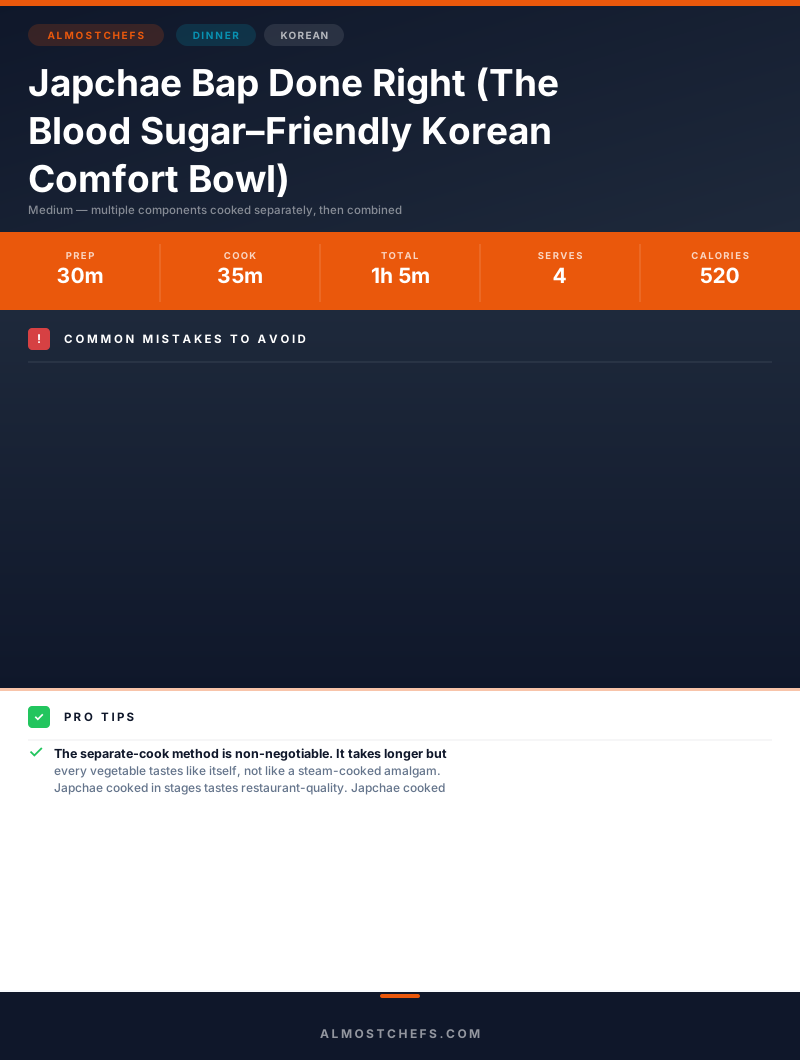
Japchae Bap Done Right (The Blood Sugar–Friendly Korean Comfort Bowl)
Glass noodles, sautéed vegetables, and marinated beef stacked over steamed rice — the Korean comfort dish that somehow tastes better than the sum of its parts. We broke down the technique behind every component so nothing goes rubbery, bland, or grey.

“Japchae bap looks like a dish you assemble casually on a weeknight. It is not. The glass noodles are temperamental. The vegetables go grey if you rush them. The sauce ratio decides everything. But when you get it right — each component seasoned individually, the noodles glossy and elastic, the beef tender and dark — you understand why Koreans have been serving this at every celebration table for four hundred years.”
Why This Recipe Works
Japchae bap is a dish that shouldn't work on paper. Glass noodles — translucent, flavor-neutral, made from sweet potato starch — have no business being the star of anything. Pile them on rice and you have carbohydrates on carbohydrates. And yet every Korean knows what this dish means: a generous bowl, something to look forward to, the food that shows up at every birthday table and holiday spread because someone in the kitchen spent the time to make it properly.
The time is the thing. Japchae is not difficult to cook. It is difficult to rush.
One Pan, Many Fires
The foundational rule of japchae is that nothing shares a pan at the same time. Every vegetable — carrot, onion, bell pepper, spinach, shiitake — gets stir-fried individually, seasoned individually, and set aside before the next one enters the wok. This is not fussiness. This is physics.
Each vegetable contains a different ratio of water, sugar, and cell wall density. Throw them all in together and the weakest link — usually the spinach — cooks in seconds while the carrots need two more minutes. In that two-minute gap, the spinach has released all its moisture and begun to grey. You end up with a steamed vegetable mush that tastes like compromise.
Separate cooking means separate control. The carrots get a quick sear that caramelizes their natural sugars. The onions go translucent and sweet. The bell pepper stays slightly crisp. The shiitake, dried and rehydrated, concentrate into something intensely savory. Each tastes like itself. That's the entire point.
The Noodle Window
Dangmyeon noodles are cooked in about a seven-minute window — and the exit ramp is narrow. Underdone, they're chalky and brittle and won't absorb sauce properly. Overdone by two minutes, they turn into a sticky, gummy rope that clumps into a single mass the moment you stop stirring. The target is the brief sweet spot in the middle: translucent, springy, with just enough resistance to hold their shape when tossed.
Pull them early. Drain them fast. Rinse them briefly under cold water to stop the cooking, then get them into a hot pan with sauce immediately. The noodles must be hot to absorb the soy-sesame marinade — cold noodles have already closed up, and no amount of tossing will make them take on flavor. This is the most skipped step in every shortcut japchae recipe, and it's why those recipes produce flat, underseasoned noodles that taste like nothing next to aggressively seasoned vegetables.
The Blood Sugar Calculation
Sweet potato starch — the base material of dangmyeon — has a glycemic index of roughly 30 to 35. That's less than half of white rice and well below wheat pasta. This matters structurally: the starch in dangmyeon is digested more slowly, producing a gradual glucose release rather than a spike. In a bowl that already includes fibrous vegetables and protein from the beef — both of which slow gastric emptying further — japchae bap provides real, sustained energy rather than the post-meal crash that follows a pure rice bowl.
This isn't a therapeutic diet recipe. It's a good dish that happens to be sensible. The fact that it's been a Korean celebration food for four centuries before anyone thought to measure its glycemic index suggests that culinary tradition occasionally arrives at nutritional intelligence on its own terms.
The Rice Below
The rice is not a neutral base. Short-grain Korean rice, cooked until each grain is fully hydrated and slightly sticky, acts as structural ballast for the japchae above. The stickiness means the noodle topping anchors into the rice rather than sliding off. Each spoonful picks up noodle, vegetable, beef, and rice simultaneously — the bowl functions as a unified eating experience rather than two separate dishes sharing a container.
Long-grain rice defeats this. The grains stay too separate, the japchae sits on top like a hat, and the eating experience fragments. Use short-grain. A rice cooker removes the variable entirely — set it before you start the vegetable prep and the rice will be perfect and warm by the time everything else is ready.
The jidan egg strips on top are the finishing move — thin, pale yellow, slightly sweet, a textural contrast to the chewy noodles and tender beef. They're worth the extra pan.
Where Beginners Mess This Up
Before we start, read this. These are the 4 reasons your japchae bap done right (the blood sugar–friendly korean comfort bowl) will fail:
- 1
Boiling the noodles too long: Dangmyeon glass noodles go from perfectly elastic to a rubbery, gummy mass in under two minutes. They should be cooked until just barely tender — still with a slight chew — because they continue softening when tossed in the hot pan with the sauce. Pull them early, not late.
- 2
Cooking all the vegetables together: Every vegetable in japchae has a different water content and cook time. Throwing them all in the pan at once means your spinach is overcooked mush before your carrots are done. Each component must be stir-fried separately, salted individually, and combined only at the end.
- 3
Underseasoning at the noodle stage: Glass noodles are completely flavor-neutral. They do not absorb seasoning passively the way pasta does. You must toss the cooked noodles directly in the soy-sesame sauce while still hot so they soak up the marinade before they cool and firm up. Seasoning after the fact never penetrates.
- 4
Using the wrong noodle: Japchae requires dangmyeon — sweet potato starch noodles, not mung bean vermicelli, not rice noodles. The sweet potato starch is what gives japchae its signature translucent appearance and springy texture. Substitutes produce a fundamentally different dish.
🛠️ Core Equipment
- Large wok or wide skilletHigh surface area is essential for stir-frying vegetables without steaming them. A crowded pan drops temperature and forces water out of the vegetables, making them soggy. The [wok](/kitchen-gear/review/carbon-steel-wok) gives you the heat and space to keep each component dry and slightly caramelized.
- TongsGlass noodles need to be tossed constantly while absorbing the sauce. Chopsticks work if you're practiced, but tongs give you more control over the long, tangling strands without breaking them.
- Colander or fine-mesh sieveDraining the noodles quickly is critical. They keep cooking in residual heat. A [fine-mesh colander](/kitchen-gear/review/colander) stops the cooking immediately and lets you rinse with cold water before the noodles go to the pan.
- Rice cooker or heavy-bottomed pot with lidThe rice beneath is not an afterthought. Properly steamed short-grain rice — slightly sticky, fully hydrated — is what makes this a bowl rather than a side dish. A [rice cooker](/kitchen-gear/review/rice-cooker) removes the variable entirely.
Japchae Bap Done Right (The Blood Sugar–Friendly Korean Comfort Bowl)
🛒 Ingredients
- ✦200g dangmyeon (Korean sweet potato glass noodles)
- ✦2 cups short-grain white rice, cooked
- ✦250g beef sirloin or ribeye, thinly sliced against the grain
- ✦2 cups fresh spinach, blanched and squeezed dry
- ✦2 medium carrots, julienned
- ✦1 medium yellow onion, thinly sliced
- ✦6 dried shiitake mushrooms, rehydrated and thinly sliced
- ✦1 red bell pepper, julienned
- ✦3 tablespoons soy sauce, divided
- ✦2 tablespoons sesame oil, divided
- ✦1.5 tablespoons sugar or honey
- ✦4 cloves garlic, minced
- ✦2 tablespoons neutral oil, divided
- ✦2 teaspoons toasted sesame seeds
- ✦2 eggs, beaten and cooked into thin strips (jidan) for garnish
- ✦Salt and freshly ground black pepper to taste
- ✦1 teaspoon gochugaru (optional, for heat)
👨🍳 Instructions
01Step 1
Cook the rice and keep warm. Soak the dried shiitake mushrooms in hot water for 20 minutes, then drain, squeeze dry, and slice thinly.
02Step 2
Make the marinade: combine 2 tablespoons soy sauce, 1 tablespoon sesame oil, sugar, and half the minced garlic in a bowl. Divide evenly — half for the beef, half for the noodles.
03Step 3
Marinate the beef slices in half the sauce for at least 15 minutes while you prep the vegetables.
04Step 4
Cook the jidan egg garnish: beat 2 eggs, season lightly, and cook in a lightly oiled pan over low heat in a thin sheet. Cool and slice into thin strips. Set aside.
05Step 5
Cook each vegetable separately: heat a little neutral oil in a wok over high heat. Stir-fry carrots 2 minutes, season with a pinch of salt, set aside. Repeat with onion (3 minutes), bell pepper (2 minutes), mushrooms (3 minutes), and blanched spinach (30 seconds — just to warm through). Season each lightly.
06Step 6
Stir-fry the marinated beef in the hot wok over high heat for 3-4 minutes until cooked through and slightly caramelized. Set aside.
07Step 7
Boil a large pot of water. Cook the dangmyeon noodles for 6-7 minutes until just tender with a slight chew. Drain immediately, rinse briefly under cold water, and use scissors to cut into 6-inch lengths.
08Step 8
Add a little oil to the wok over medium-high heat. Add the noodles and immediately pour the remaining sauce over them. Toss constantly for 2-3 minutes until the noodles are glossy, evenly coated, and have absorbed most of the sauce.
09Step 9
Combine everything: add all the vegetables and beef to the wok with the noodles. Drizzle remaining sesame oil and toss gently to combine. Taste and adjust seasoning.
10Step 10
Serve over steamed short-grain rice. Garnish with toasted sesame seeds and jidan egg strips. Add gochugaru if using.
Nutrition Per Serving
Estimates based on standard preparation. Adjustments alter macros.
🔄 Substitutions
Instead of Beef sirloin...
Use Portobello mushrooms or extra shiitake
Full vegetarian version. Slice portobello into strips and marinate the same way. The texture difference is noticeable but the flavor profile holds.
Instead of Dangmyeon (sweet potato noodles)...
Use No direct substitute recommended
This is the one ingredient with no real stand-in. Mung bean vermicelli are too thin and fragile. Rice noodles absorb sauce differently. If you cannot find dangmyeon, this dish becomes something else.
Instead of Soy sauce...
Use Tamari (for gluten-free)
One-to-one swap. Tamari is slightly richer and less sharp. The dish is otherwise naturally gluten-free since dangmyeon contains no wheat.
Instead of Sugar...
Use Honey or coconut sugar
Honey adds a floral note that works well. Coconut sugar has a subtle caramel undertone and a lower glycemic index, which aligns with the blood_sugar health focus of this recipe.
🧊 Storage & Reheating
In the Fridge
Store japchae topping and rice separately in airtight containers for up to 3 days. Combined, they store for 2 days but the rice absorbs moisture from the noodles.
In the Freezer
Freeze the japchae topping (without rice) for up to 1 month. Thaw overnight in the refrigerator. The noodle texture softens slightly but remains acceptable.
Reheating Rules
Reheat japchae in a hot skillet with a splash of water and a few drops of sesame oil, tossing constantly for 2-3 minutes. Microwave turns the noodles gummy — avoid it.
❓ Frequently Asked Questions
What is japchae bap versus regular japchae?
Japchae is the glass noodle stir-fry served as a side dish (banchan) at Korean celebrations. Japchae bap is the same preparation served as a rice bowl — a full meal rather than a side. The noodle-to-vegetable ratio is typically higher in bap versions, and the seasoning is adjusted slightly bolder to stand up to the rice.
Why are my glass noodles clumping?
Two causes: you either overcooked them (making them sticky) or you let them sit without any fat after draining. Coat drained noodles in a thin film of sesame oil immediately after rinsing if you're not tossing them in sauce right away. This prevents the starch on the surface from bonding the strands together.
Is japchae bap actually good for blood sugar?
Compared to a plain rice bowl, yes. Sweet potato starch noodles have a glycemic index around 30-35, meaningfully lower than white rice (GI ~70) or wheat pasta (GI ~50). Combined with fiber from the vegetables and protein from the beef slowing digestion further, this bowl produces a more gradual glucose response. It's not a therapeutic food, but it's a reasonable choice for people monitoring blood sugar.
Can I make japchae bap without beef?
Absolutely. The dish is traditionally made with beef but works well with portobello mushrooms, firm tofu, or no protein at all. The umami load from the shiitake mushrooms and soy sauce is sufficient to make a fully satisfying vegetarian version.
My vegetables turned grey-green. What happened?
The spinach was overcooked or sat in residual heat too long. Blanch spinach for 30 seconds maximum, shock immediately in ice water, and squeeze out all moisture before it goes anywhere near a hot pan. Grey spinach is dead spinach — the chlorophyll has broken down. It still tastes fine but looks unappetizing.
Do I have to use short-grain rice?
For the bowl experience, short-grain Korean or Japanese rice is strongly preferred. Its stickier texture means the japchae topping doesn't slide off the top and each bite captures both noodle and rice. Long-grain rice stays too separate and the bowl loses its cohesion.
The Science of
Japchae Bap Done Right (The Blood Sugar–Friendly Korean Comfort Bowl)
We turned everything on this page into a beautiful, flour-proof PDF cheat sheet. Print it out, stick it to your fridge, and never mess up your japchae bap done right (the blood sugar–friendly korean comfort bowl) again.
*We'll email you the high-res PDF instantly. No spam, just perfectly cooked meals.
AlmostChefs Editorial Team
We translate the internet's most popular cooking videos into foolproof, beginner-friendly written recipes. We analyze multiple methods, test them in our kitchen, and engineer a single "Master Recipe" that gives you the best possible result with the least possible stress.