Jangjorim (Soy Braised Beef)
Tender beef brisket simmered in a sweet soy sauce with whole garlic, shishito peppers, and hard-boiled eggs. Korea's ultimate banchan — savory, sweet, and meant to last all week.
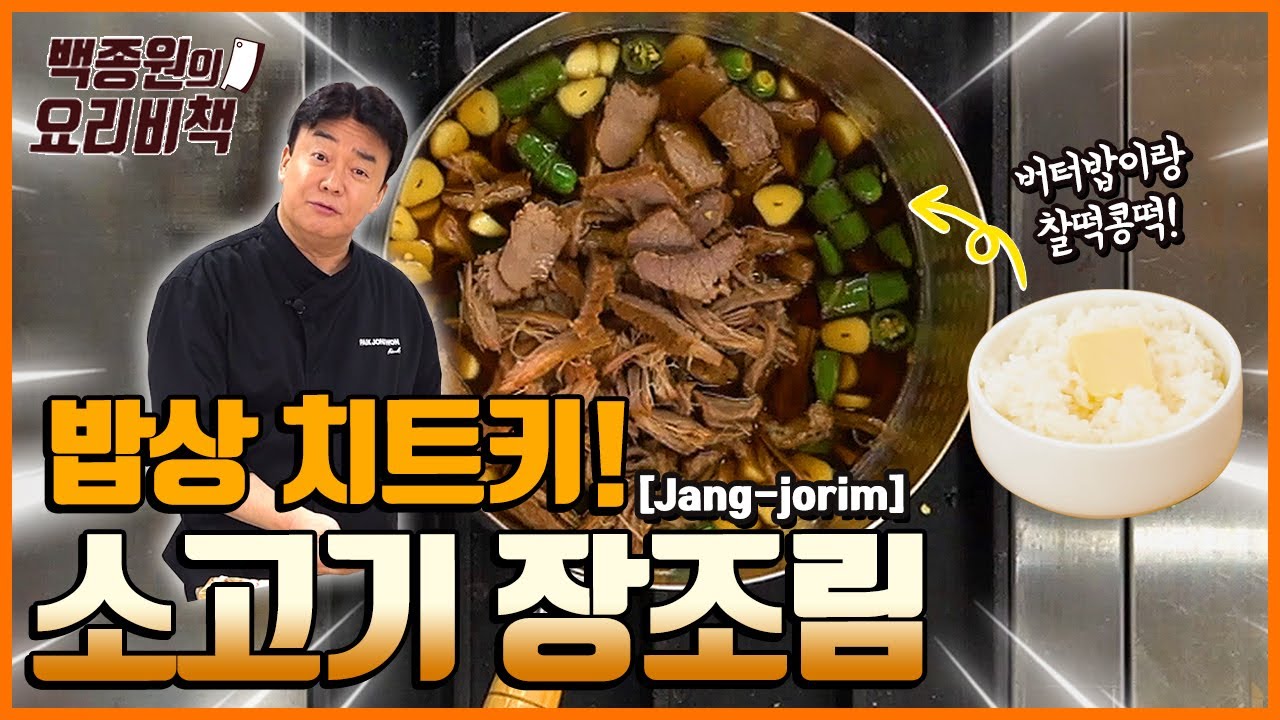
Why This Recipe Works
Most people treat banchan as an afterthought — a scattering of small dishes that appear at the table without ceremony or explanation. Jangjorim is the rebuttal to that attitude. It is not garnish. It is not filler. It is a precisely engineered preservation system that the Korean kitchen has been running for centuries, and it operates on a set of chemical and physical principles that most modern meal-prep influencers would struggle to articulate even after six episodes of their own podcast.
Let's be methodical about this.
The First Cook: Protein Denaturation and Broth Extraction
You begin by submerging raw brisket or eye of round in cold water and bringing it to a boil. This is not laziness — starting in cold water is deliberate. A hot-water start causes the surface proteins to seize immediately, forming a tight exterior barrier that traps interior impurities and produces a murky, bitter broth. Cold-water submersion allows myoglobin and soluble proteins to leach out gradually before coagulation, which means the broth you collect is cleaner, more nuanced, and worth using. A stockpot with a heavy base is the correct tool here — thin pots spike temperature unevenly and rush the simmer into a boil you did not ask for.
After 30 to 40 minutes, you pull the beef and strain the liquid through a fine mesh strainer. That strained broth is the backbone of the entire recipe. It is beef stock that you built incidentally while cooking your protein. Reserve two cups. Do not discard it. The person who discards braising broth has given up on flavor.
The Shred: Grain Direction Is Not a Suggestion
Brisket is a working muscle — dense, fibrous, built for endurance. That structure, which makes it tough when cooked incorrectly, becomes its greatest asset in jangjorim. The instruction to shred along the grain rather than against it is not a stylistic preference. Long fibers present more surface area per strand when laid flat in braising liquid. More surface area means more soy sauce absorbed per gram of beef. The texture goal is chewy-tender, not pulled-pork soft — you want resistance, the kind that makes each bite feel earned.
The Braise: Maillard Chemistry in a Liquid Medium
The second cook is where jangjorim separates itself from simple boiled beef. In a clean stockpot, you combine the reserved broth with soy sauce, brown sugar, mirin, and whole black peppercorns. Bringing this to a boil before adding the solids allows the sugar and soy to begin a low-grade Maillard reaction — the same browning chemistry responsible for seared crust and roasted coffee, happening here in solution rather than on a dry surface. The result is a braising liquid with depth and slight bitterness that counterbalances the sweetness.
Whole garlic cloves go in at this stage. They are not there for sharpness. Whole, uncut garlic in a long braise converts its harsh allicin compounds into soft, sweet, sulfur-free sugars. After 20 minutes at low heat, each clove is as good as the beef — slightly caramelized, yielding under light pressure, and deeply savory. This is the garlic that converts people who claim they don't like garlic.
The Eggs: A Lesson in Osmotic Exchange
Hard-boiled eggs submerged in soy braising liquid are not decorative. They are undergoing osmotic exchange — the high-sodium, high-sugar liquid draws moisture from the egg's surface proteins and replaces it with soy compounds. The result over 20 minutes is a mahogany-colored exterior that is not merely stained but fundamentally flavored through the first few millimeters of the white. The yolk remains firm, faintly sweet, and acts as a textural counterpoint to the shredded beef. Pull these eggs out and slice them — they look like something a professional kitchen produced, and they cost you almost nothing.
The Peppers: Timing Is Structural
Shishito peppers enter the pot in the final five minutes for a reason that has nothing to do with convenience and everything to do with chlorophyll stability. Extended heat in an acidic environment destroys chlorophyll irreversibly — the bright green turns army brown and tastes faintly sulfurous. Five minutes at low heat softens the peppers, draws a gentle bitterness from their skin, and preserves the visual contrast that makes jangjorim look as intentional as it tastes.
The Cold Rest: Why You Do Not Reheat This Dish
As the pot cools, something happens that heat cannot replicate: the braising liquid thickens. Gelatin released from the brisket's connective tissue during the first cook re-enters solution during the braise and sets as the temperature drops. This is not grease — it is collagen that has been converted to gelatin, the same substance that gives a properly made stock a jiggly, almost solid structure when refrigerated. Cold jangjorim served straight from the fridge sits in a semi-concentrated soy glaze. Reheating it would liquefy that glaze, thin the sauce, and dissolve the textural architecture the entire recipe was designed to build.
Serve it cold over hot steamed rice. The temperature contrast between cold banchan and hot grain is not an accident of Korean kitchen logistics — it is the intended experience. The fat in the cold beef hits the palate differently than warm fat does. It coats. It lingers. It makes you take another bite.
Korea's Most Practical Banchan
Jangjorim is what the Korean kitchen reaches for when it needs to demonstrate that efficiency and quality are not in conflict. One hour of active cooking produces eight servings of banchan that improve over the course of a week. The high salt and sugar content of the braising liquid acts as a natural preservative — this is not incidental, it is why the dish was designed this way long before anyone had a refrigerator. Keep the beef submerged in braising liquid at all times during storage. The liquid is the flavor delivery system, the preservation medium, and the sauce all at once. A batch made on Sunday is better on Thursday. That is not a coincidence. That is engineering.
Jangjorim (Soy Braised Beef)
🛒 Ingredients
- ✦1 lb beef brisket or eye of round
- ✦4 cups water
- ✦1/3 cup soy sauce
- ✦2 tablespoons brown sugar
- ✦1 tablespoon mirin
- ✦10 cloves garlic, whole
- ✦6 shishito peppers (or Korean green chili peppers)
- ✦4 hard-boiled eggs, peeled
- ✦1 tablespoon whole black peppercorns
- ✦1 dried red chili (optional)
👨🍳 Instructions
01Step 1
Place beef brisket in a pot with 4 cups cold water. Bring to a boil, then reduce to medium. Simmer for 30-40 minutes until fork-tender.
02Step 2
Remove beef. Strain the broth through a fine sieve — reserve 2 cups. Let the beef cool slightly, then shred into thin strips along the grain.
03Step 3
In a clean pot, combine reserved broth, soy sauce, brown sugar, mirin, and peppercorns. Bring to a boil.
04Step 4
Add shredded beef, whole garlic cloves, dried chili, and peeled hard-boiled eggs. Reduce to low heat.
05Step 5
Simmer uncovered for 20 minutes, stirring occasionally, until the liquid reduces by about one-third.
06Step 6
Add shishito peppers in the last 5 minutes — they should soften but keep their green color.
07Step 7
Let cool completely in the pot. The flavors deepen as it cools. Transfer to a container with enough braising liquid to cover.
Nutrition Per Serving
Estimates based on standard preparation. Adjustments alter macros.
🔄 Substitutions
Instead of Beef brisket...
Use Beef eye of round or top round
Leaner cuts work well — the braising liquid adds all the richness needed
Instead of Shishito peppers...
Use Korean green chili peppers (cheongyang)
Spicier — use half the amount if heat-sensitive
Instead of Hard-boiled eggs...
Use Quail eggs (12-15)
Classic variation — smaller, prettier, cook faster
🧊 Storage & Reheating
In the Fridge
Store submerged in braising liquid for up to 2 weeks. This is designed to be long-lasting banchan.
In the Freezer
Freeze for up to 2 months. Thaw in fridge overnight.
Reheating Rules
Serve cold or room temperature — do not reheat.
❓ Frequently Asked Questions
Why is jangjorim served cold?
The braising liquid becomes a concentrated soy glaze when cold — it clings to each strand of beef. Heating it would thin out the sauce and change the texture. Cold jangjorim over hot rice is the intended experience — the temperature contrast is part of the dish.
How long does jangjorim last?
Up to 2 weeks in the fridge if kept submerged in braising liquid. The high salt and sugar content acts as a natural preservative. This is why jangjorim is Korea's most practical banchan — one batch feeds a family for days.

The Science of
Jangjorim (Soy Braised Beef)
We turned everything on this page into a beautiful, flour-proof PDF cheat sheet. Print it out, stick it to your fridge, and never mess up your jangjorim (soy braised beef) again.
*We'll email you the high-res PDF instantly. No spam, just perfectly cooked meals.
AlmostChefs Editorial Team
We translate the internet's most popular cooking videos into foolproof, beginner-friendly written recipes. We analyze multiple methods, test them in our kitchen, and engineer a single "Master Recipe" that gives you the best possible result with the least possible stress.