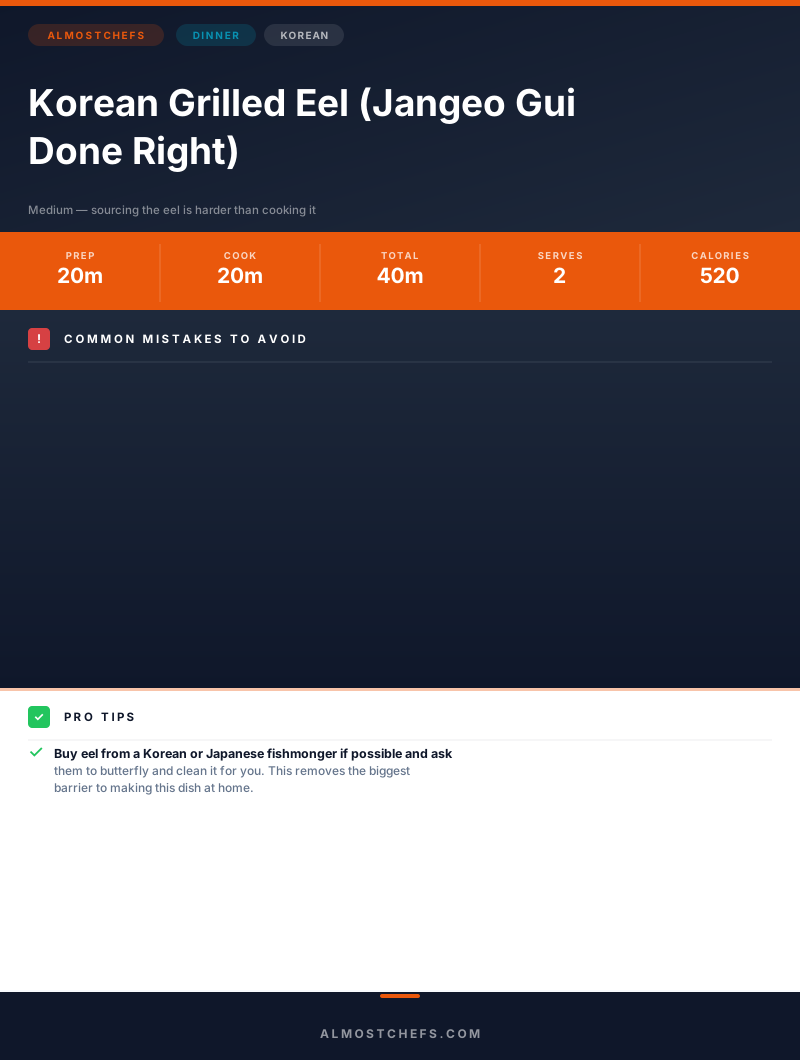
Korean Grilled Eel (Jangeo Gui Done Right)
Jangeo Gui is Korea's answer to the question of what to do with one of the most nutritionally dense fish in any market. Butterflied freshwater eel glazed with a soy-gochujang-honey sauce, grilled over high heat until the skin blisters and the flesh turns silky. We broke down the traditional technique so you can replicate it at home without a charcoal grill.

“Jangeo Gui is what Korean grandmothers ate after giving birth and what Korean men eat in summer heat when they believe the world is conspiring to exhaust them. That's not folklore — eel is one of the most omega-3-dense proteins you can put on a grill. The problem is most home cooks are terrified of it. The fish looks unfamiliar, the skin requires technique, and the sauce needs to be applied at exactly the right moment. None of it is actually difficult. It just requires knowing what you're doing.”
Why This Recipe Works
Jangeo Gui is one of those dishes where the cultural weight far exceeds the technical difficulty. Koreans have been grilling eel for centuries — along the rivers of Gyeonggi and North Jeolla provinces where freshwater eels were abundant — and the dish carries the specific meaning of restorative food, eaten when the body is depleted. The fat content isn't incidental. It's the whole point.
The Eel Problem
Most home cooks who avoid eel cite two reasons: they don't know where to buy it, and they're afraid of cooking it. The buying problem is overstated — any Korean or Japanese grocer will have it, often already butterflied, which removes the one genuinely difficult step. The cooking problem is entirely a technique issue, and it comes down to three variables: heat, timing, and glaze application.
Eel skin is loaded with collagen. It's dense, slightly rubbery raw, and extraordinarily delicious when cooked correctly — blistered and chewy on the outside, silky on the inside. That transformation requires sustained high heat and uninterrupted contact. The mistake most home cooks make is treating eel like a delicate white fish: medium heat, constant monitoring, frequent flipping. The result is gray, steamed flesh with sad, pale skin. Eel needs aggression.
The Two-Phase Glaze Strategy
The gochujang-honey glaze cannot go on early. Gochujang contains fermented sugars that behave like rocket fuel at high temperatures — they caramelize beautifully at the end of cooking, but applied at the start, they torch before the eel has time to cook through. The protocol here is deliberate: cook the eel almost entirely through on both sides with nothing but heat and oil, then introduce the glaze in the final 3-4 minutes for a lacquered finish.
This two-phase approach also protects the glaze's complexity. The soy, gochujang, honey, and mirin each contribute distinct flavor compounds that you want to taste separately as a layered whole — not as a single burnt note. Applying the glaze at the end means those compounds barely have time to Maillardize, leaving them vibrant and distinct against the richness of the eel fat.
The Surface Science
The scoring step earns its place in the recipe through physics. Eel skin contracts at roughly twice the rate of the flesh underneath it when exposed to high heat. Without scoring, the skin pulls the fillet into a tight curl, breaking contact with the cooking surface and creating uneven heat zones. Three shallow diagonal cuts distribute the tension across multiple release points, allowing the fillet to stay flat and in full contact with the cast iron skillet throughout cooking.
The same principle is why you press the eel down firmly for the first ten seconds after it hits the pan. You're ensuring every square millimeter of skin makes contact simultaneously, so the Maillard reaction starts uniformly. A fish spatula is the tool for this — rigid enough to apply pressure, thin enough to slide under cleanly when the time comes.
Why This Is Anti-Inflammatory
The health framing here is not marketing language. Freshwater eel contains roughly 1,200mg of EPA and DHA per 100g serving — comparable to wild salmon and superior to most other commonly eaten fish. It's also one of the few non-fortified food sources of vitamin D in meaningful quantities. The Korean tradition of eating jangeo during the hottest summer days reflects centuries of practical nutrition: a calorie-dense, omega-rich food eaten when physical exertion peaks and body reserves are lowest.
The gochujang adds capsaicin, which has its own modest anti-inflammatory literature. The garlic and ginger in the glaze bring allicin and gingerols. None of this makes Jangeo Gui medicine. It makes it a dish that tastes exceptional and happens to be built from ingredients that do your body a favor — which is the entire foundation of Korean food culture at its best.
Where Beginners Mess This Up
Before we start, read this. These are the 4 reasons your korean grilled eel (jangeo gui done right) will fail:
- 1
Starting with cold fish on a cold pan: Eel skin is dense and collagen-rich. If you place cold eel onto a pan that hasn't reached full heat, the skin sticks catastrophically and you lose the entire outer layer. The grill or pan must be screaming hot before the eel touches it — and the eel itself should be at room temperature before cooking.
- 2
Applying the glaze too early: The gochujang-honey glaze contains high sugar content that burns at temperatures below what you need to cook the eel through. Apply the glaze only in the final 3-4 minutes of cooking. Any earlier and you get a carbonized crust over raw flesh.
- 3
Flipping too often: Eel is not a burger. Each side needs uninterrupted contact with heat to develop that blistered, slightly crispy skin. Flip once. Set a timer. Trust it. Every extra flip tears the flesh and releases moisture you cannot get back.
- 4
Skipping the scoring on skin side: Eel skin contracts aggressively during cooking, which causes the fillet to curl into a tube. Three shallow diagonal cuts across the skin before cooking release the tension and keep the eel flat, ensuring even contact and even cooking throughout.
🛠️ Core Equipment
- Cast iron grill pan or carbon steel skilletYou need a surface that holds extreme heat without flinching. Nonstick pans cannot reach the temperatures required to properly blister eel skin, and thin stainless steel creates hot spots. A [cast iron skillet](/kitchen-gear/review/cast-iron-skillet) is the closest thing to a charcoal grill available on a home range.
- Pastry brushFor controlled, even glaze application in the final minutes. Spooning glaze over the eel floods the surface and causes uneven caramelization. A brush gives you precision.
- Fish spatulaStandard spatulas are too rigid and thick — they'll tear the eel when you flip. A thin, flexible [fish spatula](/kitchen-gear/review/fish-spatula) gets underneath the skin without disturbing it.
- Kitchen shearsFor trimming the eel and cleaning any remaining fin edges. More precise than a knife for this task.
Korean Grilled Eel (Jangeo Gui Done Right)
🛒 Ingredients
- ✦2 whole freshwater eels (about 1.5 pounds total), butterflied and cleaned
- ✦3 tablespoons soy sauce
- ✦1.5 tablespoons gochujang (Korean red chili paste)
- ✦1.5 tablespoons honey
- ✦1 tablespoon mirin
- ✦1 tablespoon sesame oil
- ✦1 tablespoon neutral oil (grapeseed or avocado)
- ✦3 cloves garlic, finely grated
- ✦1 teaspoon fresh ginger, finely grated
- ✦1 teaspoon toasted sesame seeds
- ✦2 stalks green onion, thinly sliced on the bias
- ✦Steamed short-grain rice, to serve
- ✦Perilla leaves or butter lettuce, to serve
👨🍳 Instructions
01Step 1
Remove the eel from the refrigerator 20 minutes before cooking and pat completely dry with paper towels.
02Step 2
Score the skin side of each eel fillet with three shallow diagonal cuts, about 1/4 inch deep and spaced 2 inches apart.
03Step 3
Whisk together soy sauce, gochujang, honey, mirin, sesame oil, garlic, and ginger in a small bowl. Set aside.
04Step 4
Heat a cast iron grill pan or heavy skillet over high heat for 3-4 minutes until very hot. Add neutral oil and swirl to coat.
05Step 5
Place the eel skin-side down onto the pan. Press lightly with the fish spatula for the first 10 seconds to ensure full contact. Cook undisturbed for 5-6 minutes.
06Step 6
Flip the eel flesh-side down and cook for 3 minutes.
07Step 7
Flip back to skin-side down. Brush a generous layer of the gochujang glaze over the flesh side. Cook for 2 minutes.
08Step 8
Flip once more, brush the skin side with glaze, and cook for 1-2 minutes until the glaze lacquers and caramelizes.
09Step 9
Transfer to a serving plate. Scatter sesame seeds and green onion over the top. Serve immediately with steamed rice and perilla leaves.
Nutrition Per Serving
Estimates based on standard preparation. Adjustments alter macros.
🔄 Substitutions
Instead of Freshwater eel...
Use Unagi (Japanese freshwater eel, often sold pre-grilled and vacuum-sealed)
Pre-grilled unagi reduces cooking time to 2-3 minutes per side — you're just reheating and glazing. Quality varies by brand. Look for Japanese imports.
Instead of Gochujang...
Use Doenjang (Korean fermented soybean paste) mixed with a pinch of gochugaru
Produces a earthier, less sweet glaze with more fermented depth. The color will be darker and less red.
Instead of Mirin...
Use Dry sake with a pinch of sugar, or rice wine vinegar
Mirin's sweetness is important to the glaze balance. If substituting with rice wine vinegar, increase the honey by half a teaspoon to compensate.
Instead of Honey...
Use Corn syrup or cheong (Korean fruit syrup)
Corn syrup produces a cleaner, less floral sweetness and caramelizes slightly more predictably. Cheong adds fruit complexity depending on the variety.
🧊 Storage & Reheating
In the Fridge
Store in an airtight container for up to 2 days. The glaze will set and thicken as it cools, which actually improves the flavor concentration.
In the Freezer
Not recommended. Eel flesh degrades significantly in texture after freezing and thawing.
Reheating Rules
Reheat in a dry skillet over medium heat for 2-3 minutes per side. Do not microwave — it makes the skin rubbery and destroys the caramelized glaze.
❓ Frequently Asked Questions
Where do I buy fresh eel?
Korean grocery stores (H Mart, Zion Market), Japanese fish markets, and some specialty seafood counters carry it. If unavailable fresh, pre-grilled Japanese unagi (found in the freezer section of Asian grocery stores) is an acceptable starting point, though the texture differs slightly.
Is jangeo gui healthy?
Eel is one of the highest natural sources of EPA and DHA omega-3 fatty acids, vitamin B12, and vitamin D. The anti-inflammatory profile is exceptional. The sodium load from soy sauce is real — if you're monitoring sodium intake, reduce the soy sauce by a tablespoon and compensate with a splash of rice wine vinegar.
Why does my eel curl during cooking?
You either skipped scoring the skin, or your scores weren't deep enough. The skin contracts faster than the flesh under heat, creating a tube. Score again (carefully) while it's in the pan, or press it flat with the spatula and hold it there.
Can I cook this on an outdoor grill?
Yes, and it will be better. Use a grill basket or a piece of foil with holes punched through it. Charcoal adds a smoky dimension that no gas range can replicate. Cook skin-side down over high heat for 5-6 minutes before flipping.
How do I know when the eel is fully cooked?
The flesh should be completely opaque with no translucent sections when viewed from the side, and it should flake easily when pressed gently with a fork. Internal temperature of 145°F (63°C) is the food-safe target.
What does jangeo taste like?
Richer and fattier than most fish, with a firm but silky texture. The flavor is mild and slightly sweet — nothing like the oceanic sharpness people fear. Under the gochujang glaze, it reads closer to lacquered duck than anything you'd associate with fish.
The Science of
Korean Grilled Eel (Jangeo Gui Done Right)
We turned everything on this page into a beautiful, flour-proof PDF cheat sheet. Print it out, stick it to your fridge, and never mess up your korean grilled eel (jangeo gui done right) again.
*We'll email you the high-res PDF instantly. No spam, just perfectly cooked meals.
AlmostChefs Editorial Team
We translate the internet's most popular cooking videos into foolproof, beginner-friendly written recipes. We analyze multiple methods, test them in our kitchen, and engineer a single "Master Recipe" that gives you the best possible result with the least possible stress.