Jajangmyeon (Black Bean Noodles)
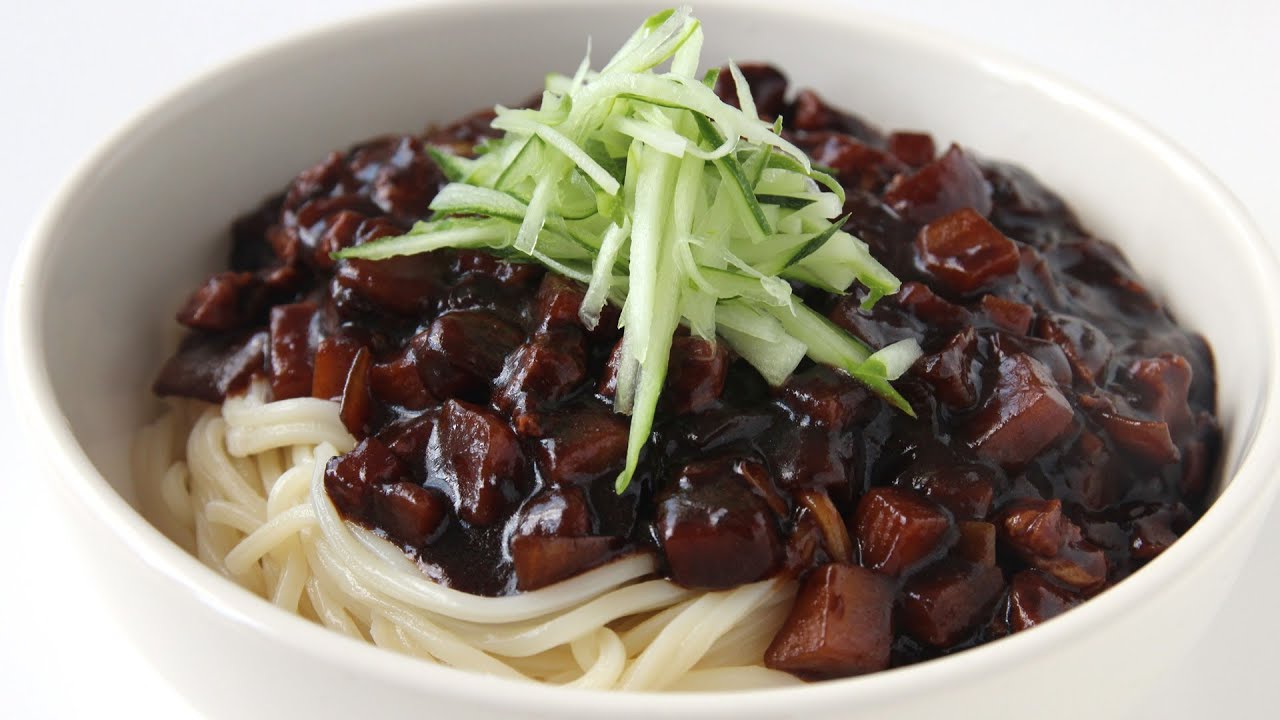
Korea's most popular delivery food — thick wheat noodles smothered in a savory, slightly sweet black bean sauce loaded with pork and diced vegetables.
Why This Recipe Works
Jajangmyeon is deceptively simple. Four components — noodles, sauce, pork, vegetables — and yet the average first attempt produces something muddy, bitter, and texturally wrong. The difference between a bowl that tastes like the real thing and one that tastes like regret comes down to a handful of chemical realities that most recipes skip past because they assume you already know, or because explaining them is inconvenient. This one won't do that.
The Chunjang Problem
Raw chunjang is not food. Technically it is, but in the same way that raw flour is technically food. Korean black bean paste, fermented from roasted soybeans, carries an aggressive bitterness straight out of the container — the kind that coats the back of your throat and announces itself before any other flavor can get a word in. The fix is fat and heat, applied deliberately.
Frying chunjang in oil in a pan over medium heat for two to three minutes triggers Maillard reactions in the paste's amino acid and sugar compounds. The harsh, fermented edge softens. Roasted, deeply savory notes emerge. The paste goes from punishing to complex. Skipping this step is the single most common reason jajangmyeon fails at home. Do not skip it. Do not rush it. Two minutes minimum, stirring constantly so it doesn't burn, which would take you back to bitter but worse.
The Wok Is Not Optional Atmosphere
Every step after the chunjang fry happens in a wok or a wide, heavy pan over high heat, and the reason is surface area combined with thermal mass. Pork belly or shoulder — diced into half-inch cubes — needs to brown, not steam. Crowded into a small pan with insufficient heat, the meat releases moisture faster than the pan can evaporate it, and you end up braising your pork in its own liquid. The result is grey, flavorless protein sitting in a watery sauce.
High heat in a wide vessel keeps each cube in contact with a hot surface long enough to develop color. Color means flavor. Flavor means the sauce has something to anchor to besides the chunjang. This is not optional.
The Geometry of the Vegetables
The half-inch uniform dice on the onion, zucchini, potato, and radish is not aesthetic fussiness. It is a practical calibration of cooking time. These four vegetables have meaningfully different densities — potato is the slowest, zucchini the fastest — and cutting them to the same size creates a window where they all approach tenderness at roughly the same moment. Cut the potato too large and the zucchini turns to mush waiting for it. Cut the zucchini too large and you're chewing through raw-tasting vegetable chunks while the sauce is otherwise ready.
Uniform cuts also determine sauce coverage. Small, even cubes create more surface area in contact with the sauce. The sauce clings to every exposed face. You get vegetable in every bite, distributed evenly, instead of the occasional encounter with a large lone cube that throws off the ratio.
The Cornstarch Reckoning
Jajangmyeon sauce is not a braise or a stew. It is a glossy, lacquer-like coating designed to adhere to thick noodles and stay there through the entire eating experience. That texture comes from a cornstarch slurry added at the end — one tablespoon cornstarch dissolved in two tablespoons cold water, stirred in while the sauce is at a full simmer.
Cornstarch gelatinizes between 144°F and 162°F, creating a network of starch molecules that trap water and produce the characteristic transparent, glossy thickness. Add the slurry too early and the starch breaks down under prolonged heat, leaving you with a thin, slightly starchy sauce. Add it at the end, in a hot but not furiously boiling sauce, and it thickens evenly within sixty to ninety seconds. The target consistency: thick enough to mound slightly when spooned, thin enough to cascade over noodles when poured. If you press your finger into the sauce and it holds the impression for half a second before collapsing, you're there.
The Noodle Brief
Fresh jajangmyeon noodles are wheat-based, thick, and made with a higher gluten content than Italian pasta. Their chew is structural — it resists the heavy sauce rather than capitulating to it, which means you're eating noodles and sauce in parallel rather than noodles that have dissolved into the sauce. Cook them in aggressively boiling water until just past al dente, then rinse briefly under cold water. The rinse stops cooking, removes surface starch that would make the noodles tacky, and cools them enough that they don't continue cooking in their own residual heat while you finish the sauce.
Dried udon is the acceptable substitute. It is not the same thing. If you're within range of a Korean grocery, buy the fresh noodles. The difference in texture justifies the trip.
Korea's Unofficial National Comfort Dish
There is a cultural weight to jajangmyeon that no other Korean noodle dish carries in quite the same way. This is the food ordered on moving day — the universal Korean shorthand for "I don't have time to cook, and I deserve something that feels like a reward." It is eaten on April 14th, Black Day, when single Koreans who received nothing on Valentine's Day or White Day gather to eat black food and acknowledge the situation without sentimentality. The glistening black sauce over pale noodles is one of the most immediately recognizable images in Korean pop culture, appearing in films, dramas, and advertisements as visual shorthand for comfort, nostalgia, or the particular loneliness of eating alone.
The dish itself is Korean-Chinese (한중 요리) — descended from Chinese zhajiangmian brought by immigrant workers in the late nineteenth century, then systematically transformed over decades: sweeter sauce, different fermentation profile in the chunjang, Korean vegetables, Korean noodles. The result shares a name and a lineage with its ancestor but tastes like nothing else. It is quintessentially Korean in the same way that American pizza is quintessentially American — a transplant that became native.
Serve immediately. The sauce thickens as it cools. Garnish with julienned cucumber, which provides crunch and a clean freshness against the heavy sauce. Set out danmuji — yellow pickled radish — on the side. Its sweet-tart sharpness resets the palate between bites. Then mix the whole bowl completely before eating, which is the only correct way to eat it.
Jajangmyeon (Black Bean Noodles)
🛒 Ingredients
- ✦1 lb fresh jajangmyeon noodles (thick wheat noodles)
- ✦1/2 cup chunjang (Korean black bean paste)
- ✦1/2 lb pork belly or shoulder, diced into 1/2-inch cubes
- ✦1 medium onion, diced into 1/2-inch cubes
- ✦1 medium zucchini, diced into 1/2-inch cubes
- ✦2 medium potatoes, diced into 1/2-inch cubes
- ✦1/2 cup Korean radish (mu), diced (optional)
- ✦3 cloves garlic, minced
- ✦2 tablespoons vegetable oil
- ✦1 tablespoon sugar
- ✦1 cup water
- ✦1 tablespoon cornstarch mixed with 2 tablespoons water
- ✦Cucumber, julienned, for garnish
👨🍳 Instructions
01Step 1
Fry the chunjang: heat 1 tablespoon oil in a pan over medium heat. Add chunjang and stir-fry for 2-3 minutes to mellow the raw taste. Set aside.
02Step 2
Heat remaining oil in a large pan or wok over high heat. Add pork and stir-fry until browned, about 3-4 minutes.
03Step 3
Add onion, zucchini, potato, and radish. Stir-fry for 3-4 minutes until the vegetables start to soften.
04Step 4
Add garlic, the fried chunjang, sugar, and water. Stir well to combine. Bring to a boil, then reduce to medium heat and simmer for 10 minutes until potatoes are tender.
05Step 5
Add cornstarch slurry to the sauce. Stir for 1-2 minutes until the sauce thickens to a glossy, coating consistency.
06Step 6
Meanwhile, cook noodles in boiling water according to package directions. Rinse briefly under cold water to remove excess starch, then drain.
07Step 7
Divide noodles into bowls. Ladle the black bean sauce generously over the top. Garnish with julienned cucumber. Mix everything together before eating.
Nutrition Per Serving
Estimates based on standard preparation. Adjustments alter macros.
🔄 Substitutions
Instead of Chunjang (Korean black bean paste)...
Use Chinese zhajiangmian sauce
Similar but saltier and less sweet. Adjust sugar accordingly
Instead of Pork belly...
Use Diced chicken thigh or seafood
Seafood jajangmyeon (haemul jajangmyeon) with shrimp and squid is a popular variation
Instead of Fresh jajangmyeon noodles...
Use Thick udon noodles
Not identical but provides a similar chewy bite
🧊 Storage & Reheating
In the Fridge
Store sauce and noodles separately for up to 3 days. Noodles will clump — rinse with water before reheating.
In the Freezer
Freeze sauce only for up to 2 months. Noodles should be cooked fresh.
Reheating Rules
Heat sauce in a pan, add a splash of water, and pour over freshly cooked noodles.
❓ Frequently Asked Questions
What is chunjang?
Chunjang is a Korean-style fermented black bean paste made from roasted soybeans. It's different from Chinese doubanjiang or tianmianjiang — chunjang is sweeter and less salty. Look for it in Korean grocery stores (it comes in a container, not a tube).
Why is jajangmyeon eaten on Black Day?
In Korea, April 14th is 'Black Day' — single people who didn't receive gifts on Valentine's Day or White Day eat black-colored food (jajangmyeon) to commiserate. It started as a joke but became a real cultural tradition.
Is jajangmyeon Korean or Chinese?
It's Korean-Chinese (한중 요리). Zhajiangmian was brought to Korea by Chinese immigrants in the late 1800s, but Koreans transformed it into something entirely different — sweeter sauce, different noodles, Korean vegetables. It's now considered quintessentially Korean.

The Science of
Jajangmyeon (Black Bean Noodles)
We turned everything on this page into a beautiful, flour-proof PDF cheat sheet. Print it out, stick it to your fridge, and never mess up your jajangmyeon (black bean noodles) again.
*We'll email you the high-res PDF instantly. No spam, just perfectly cooked meals.
AlmostChefs Editorial Team
We translate the internet's most popular cooking videos into foolproof, beginner-friendly written recipes. We analyze multiple methods, test them in our kitchen, and engineer a single "Master Recipe" that gives you the best possible result with the least possible stress.