The Perfect Italian Sub (Build It Like a Real Deli)
A loaded Italian cold cut sandwich with cured meats, provolone, roasted peppers, and a tangy vinaigrette that soaks into crusty whole grain bread. We broke down the assembly logic so every bite hits the same way — no sad, soggy, or underdressed subs.
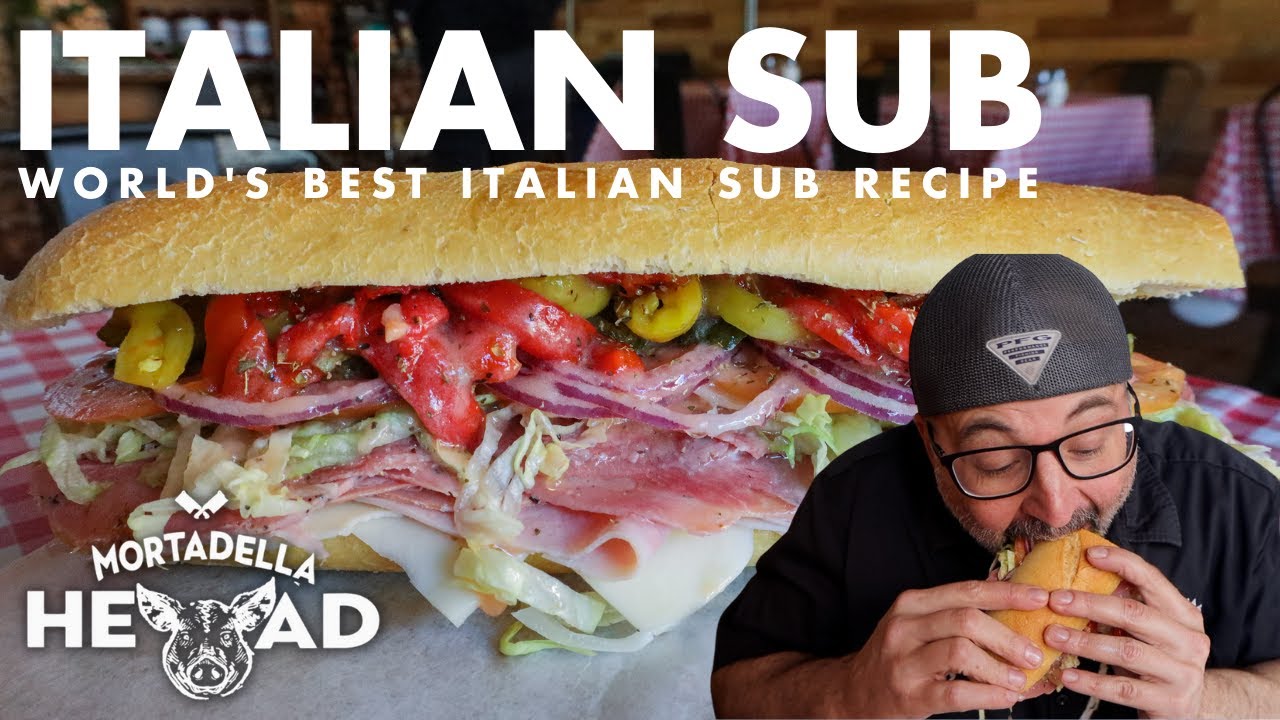
“Most homemade Italian subs taste like grocery store deli disappointment — wrong layering order, bread that goes soggy in ten minutes, vinaigrette that pools at the bottom instead of flavoring the meat. The difference between a sub you eat over a sink and one you wrap and look forward to all morning comes down to three things: how you prep the bread, what order you stack, and how long you let the vinaigrette sit before closing the sandwich.”
Why This Recipe Works
The Italian sub is the most abused sandwich in American food culture. It is made poorly in three-quarters of the delis that sell it and made worse in three-quarters of the homes that attempt it. The failure is almost never the ingredients. It is always the architecture.
The Bread Problem
A sub roll is not a neutral delivery vehicle. It is a structural component, and if you treat it like a plate, you will end up with a plate — flat, wet, and disappointing. The hollowing step is the first act of engineering. By removing roughly a third of the soft interior crumb, you create a channel that holds the filling stack in compression rather than letting it shift and migrate. The bread walls stay intact. The fillings stay centered. The cross-section, when you cut diagonally, looks like a sub instead of an accident.
The vinaigrette application is the second act. Most people add dressing to a finished sandwich. This is wrong in a specific, consequential way: oil and vinegar applied to assembled greens bead up on the waxy surface of the leaves and slide to the bottom of the roll. Applied directly to the raw cut face of the bread, the same dressing is absorbed into the crumb, seasoning the bread itself rather than drowning the bottom layer. You end up with flavor distributed through every bite rather than concentrated in a wet puddle at the end.
The Stacking Logic
Every layer in a properly built Italian sub exists to protect the layer below it from the layer above it. Cured meat goes directly on the dressed bread because it is dense, flat, and dry enough to resist soaking. Cheese goes on meat because the fat in provolone creates a physical barrier between the meat and the wet vegetables above. Roasted peppers and artichoke hearts go on cheese because they are the heaviest wet ingredients and need a stable platform. Greens go last because they are the most vulnerable — any heat or moisture from below wilts them immediately, and any pressure from above crushes them into invisibility.
Reverse this order and you get a textural disaster. Put greens on the bread and they wilt within minutes. Put vegetables under the cheese and the moisture seeps through into the meat. The sequence is not a preference. It is physics.
The Meat Selection
Capicola versus salami is a real decision, not a casual substitution. Capicola is cured pork shoulder — fattier, more marbled, with a spicier and more complex cure. It has a silkier texture that integrates with the other ingredients rather than asserting dominance over them. Standard salami is leaner, firmer, and has a more pronounced garlic-fennel signature. Both work. Capicola pairs better with this particular build — the artichoke hearts and sun-dried tomatoes have strong flavors that benefit from a richer, fattier meat counterpart. Salami is better in simpler builds where the meat is the primary flavor event.
Italian ham (cotto or crudo depending on availability) provides the third dimension: a mild, lightly salty background that keeps the other meats from competing with each other. Think of it as the neutral base that makes capicola and salami sound louder by contrast.
The Garlic and Caper Question
Fresh minced garlic and capers are the two ingredients most likely to be dismissed as optional. They are not. Garlic minced very fine — not chopped, minced — distributes through the sandwich as a flavor accent rather than a mouthful of raw allium. Capers add a briny, slightly bitter punctuation that cuts through the fat of the cheese and cured meat. Without them, the sub is rich but one-dimensional. With them, it has the pop that makes deli Italian subs taste like something you'd pay too much for in a good neighborhood.
A serrated bread knife for the final cut is the last detail that separates a sandwich from a pile. Sawing motion only — the moment you apply downward pressure, you compress the entire stack and force the filling out the far end. Cut diagonal, not straight across. The angled face gives you more surface area per bite and makes every cross-section look like someone who knew what they were doing built it.
Where Beginners Mess This Up
Before we start, read this. These are the 4 reasons your the perfect italian sub (build it like a real deli) will fail:
- 1
Skipping the bread hollow: A sub roll is mostly air. Without removing some of that soft interior, the fillings compress the bread into a dense, gummy mess when you close it. A shallow scoop creates a channel that holds the layers in place and gives every ingredient room to exist without squeezing out the sides.
- 2
Vinaigrette added at the end: The dressing needs to soak into the bread for at least 30 seconds before layering. Added on top of assembled ingredients, it slides off the greens and puddles at the bottom. Applied directly to the cut face of the bread first, it seasons from the inside out.
- 3
Wrong stacking order: Meat goes directly on dressed bread. Cheese goes on meat. Vegetables go on cheese. Greens go last, just before closing. This order exists so the cheese acts as a moisture barrier between the wet vegetables and the meat, and the greens stay crisp instead of wilting under warm protein.
- 4
Cutting straight down instead of sawing: Pressing a knife down on a built sub destroys it. A serrated knife used with a gentle sawing motion — no downward pressure — cuts through the bread without collapsing the stack or forcing ingredients out the far end.
The Video Reference Library
Want to see it in action? Here are the exact videos we analyzed and combined to build this foolproof recipe translation:
The foundational assembly video. Covers layering order, vinaigrette application, and the diagonal cut technique that keeps the sandwich intact.
🛠️ Core Equipment
- Serrated bread knifeNon-negotiable for slicing the roll without crushing it and for the final diagonal cut. A standard chef's knife compresses the bread.
- Small whisk and mixing bowlThe vinaigrette needs to be fully emulsified before brushing — if the oil and vinegar are still separated, the bread gets oily patches and sour patches instead of even seasoning.
- Pastry brush or spoonFor applying the vinaigrette evenly across the bread surface. Pouring it in causes pooling at the lowest point of the roll.
- Sharp chef's knifeFor mincing the garlic very fine. Rough garlic chunks create uneven heat pockets and overpower individual bites.
The Perfect Italian Sub (Build It Like a Real Deli)
🛒 Ingredients
- ✦1 loaf (12 inches) whole grain sub roll, crusty Italian style
- ✦4 ounces thinly sliced Italian ham
- ✦4 ounces sliced Italian salami or capicola
- ✦4 ounces sliced provolone cheese
- ✦2 large roasted red bell peppers, sliced into strips
- ✦1 cup fresh mixed garden greens or arugula
- ✦1 medium red onion, thinly sliced
- ✦1/2 cup roasted artichoke hearts, chopped
- ✦1/4 cup fresh basil leaves
- ✦2 tablespoons extra virgin olive oil
- ✦1 tablespoon red wine vinegar
- ✦1 teaspoon Italian seasoning blend
- ✦1/2 teaspoon garlic powder
- ✦1/4 teaspoon crushed red pepper flakes
- ✦Salt and black pepper to taste
- ✦2 tablespoons sun-dried tomatoes, finely chopped
- ✦1 tablespoon capers, drained and roughly chopped
- ✦2 cloves fresh garlic, minced very fine
👨🍳 Instructions
01Step 1
Slice the sub roll lengthwise with a serrated knife, creating two even halves without cutting completely through the back crust.
02Step 2
Gently open the bread and use your fingers or a spoon to scrape out some of the soft interior, creating a shallow channel in both halves.
03Step 3
Whisk together olive oil, red wine vinegar, Italian seasoning, garlic powder, crushed red pepper flakes, salt, and black pepper in a small bowl until fully emulsified.
04Step 4
Brush the vinaigrette evenly across both interior faces of the bread. Let it sit and absorb for 30 seconds before adding any ingredients.
05Step 5
Layer the sliced Italian ham across the bottom half in a slightly overlapping pattern, covering the entire surface.
06Step 6
Add salami or capicola on top of the ham, arranging the slices flat.
07Step 7
Place provolone slices over the cured meats, covering as much surface area as possible.
08Step 8
Distribute roasted red pepper strips evenly across the cheese layer.
09Step 9
Add the mixed greens or arugula across the peppers.
10Step 10
Scatter sliced red onion, chopped artichoke hearts, and sun-dried tomatoes across the greens.
11Step 11
Distribute minced fresh garlic and capers throughout the top layer.
12Step 12
Tear basil leaves by hand and scatter across the top.
13Step 13
Close the sandwich by pressing the top half gently onto the filled bottom, applying even pressure without squeezing.
14Step 14
Cut diagonally into two halves using a serrated knife with a sawing motion — no downward pressure.
15Step 15
Serve immediately, or wrap tightly in parchment paper and consume within a few hours.
Nutrition Per Serving
Estimates based on standard preparation. Adjustments alter macros.
🔄 Substitutions
Instead of Whole grain sub roll...
Use Sprouted grain or sourdough bread
Sprouted grain has higher nutrient bioavailability. Sourdough fermentation improves digestibility. Either choice provides a slightly nuttier flavor and better blood sugar response than standard white sub rolls.
Instead of Italian ham and salami...
Use Roasted turkey breast and grilled chicken breast
Significantly lower sodium and saturated fat. The texture and savory satisfaction are similar, though you lose the cured-meat funk that defines the classic version. Use good-quality sliced poultry, not pre-packaged deli food.
Instead of Provolone cheese...
Use Fresh mozzarella or aged goat cheese
Fresh mozzarella is lower in sodium and easier to digest. Goat cheese adds a tangy brightness and contains beneficial probiotics. Both melt slightly against warm meats and behave well in the sandwich architecture.
Instead of Regular red onion...
Use Thinly sliced sweet Vidalia onion
Milder, sweeter flavor with less sulfur bite. Better for people who find raw red onion overpowering. Vidalia onions also contain higher quercetin levels, an anti-inflammatory flavonoid.
🧊 Storage & Reheating
In the Fridge
Store components separately for best results. An assembled sub with vinaigrette will keep for up to 4 hours wrapped in parchment paper before the bread softens. Do not refrigerate a fully assembled sub — the bread hardens and the greens wilt.
In the Freezer
Not recommended. The vegetables and bread both degrade significantly when frozen and thawed.
Reheating Rules
This is a cold sandwich. No reheating required or recommended. If you prefer a warm version, remove the greens and basil, wrap the meat-and-cheese-loaded bread in foil, and warm in a 350°F oven for 8-10 minutes.
❓ Frequently Asked Questions
Why does my Italian sub get soggy so fast?
Two causes: vinaigrette applied directly on top of ingredients (rather than absorbed into the bread first), and wet vegetables placed directly against the bread without a cheese barrier. Fix the order — dress the bread, layer meat, then cheese, then vegetables — and the sub holds for hours instead of minutes.
Can I make this ahead for lunch?
Yes, with conditions. Dress and hollow the bread in the morning. Pack the vinaigrette, greens, and basil separately. Assemble the meat and cheese layers up to 4 hours ahead. Add greens and dress immediately before eating.
What's the difference between capicola and salami in this recipe?
Capicola is cured pork shoulder — fattier, spicier, and more intensely flavored than standard salami. Salami has a firmer texture and a more straightforward garlic-and-fennel flavor profile. Either works. Capicola pairs better with the artichoke hearts and sun-dried tomatoes. Salami pairs better with simpler builds.
Do I need to hollow out the bread?
If you're eating it immediately, you can skip it. If you're wrapping it for transport, it's essential. The hollow creates a channel that keeps ingredients centered and prevents the filling from compressing the bread into a gummy mass when pressure is applied during transport.
Can I toast the bread?
You can, but it changes the sandwich's character. Toasted bread stays crisp longer and holds up to heavy fillings, but it also tears the roof of your mouth and makes the vinaigrette soak less effectively. Classic Italian subs use untoasted rolls. Toast if you prefer crunch over the traditional soft-chewy texture.
How much meat is the right amount?
Four ounces per meat variety for a 12-inch sub feeding two people. Under-loading creates a bread-heavy bite. Over-loading makes it impossible to close cleanly. The 4-4-4 ratio (ham, salami, cheese in ounces) is the standard deli formula for a reason.
The Science of
The Perfect Italian Sub (Build It Like a Real Deli)
We turned everything on this page into a beautiful, flour-proof PDF cheat sheet. Print it out, stick it to your fridge, and never mess up your the perfect italian sub (build it like a real deli) again.
*We'll email you the high-res PDF instantly. No spam, just perfectly cooked meals.
AlmostChefs Editorial Team
We translate the internet's most popular cooking videos into foolproof, beginner-friendly written recipes. We analyze multiple methods, test them in our kitchen, and engineer a single "Master Recipe" that gives you the best possible result with the least possible stress.