The Only Italian Beef Stew (Braised Low and Slow the Right Way)
A deeply flavored, wine-braised Italian stew built on seared chuck roast, soffritto, crushed tomatoes, and herbs that collapse into a rich, glossy sauce after nearly three hours on the stove. We broke down the most-watched YouTube versions to extract the technique that actually delivers fall-apart beef every time.
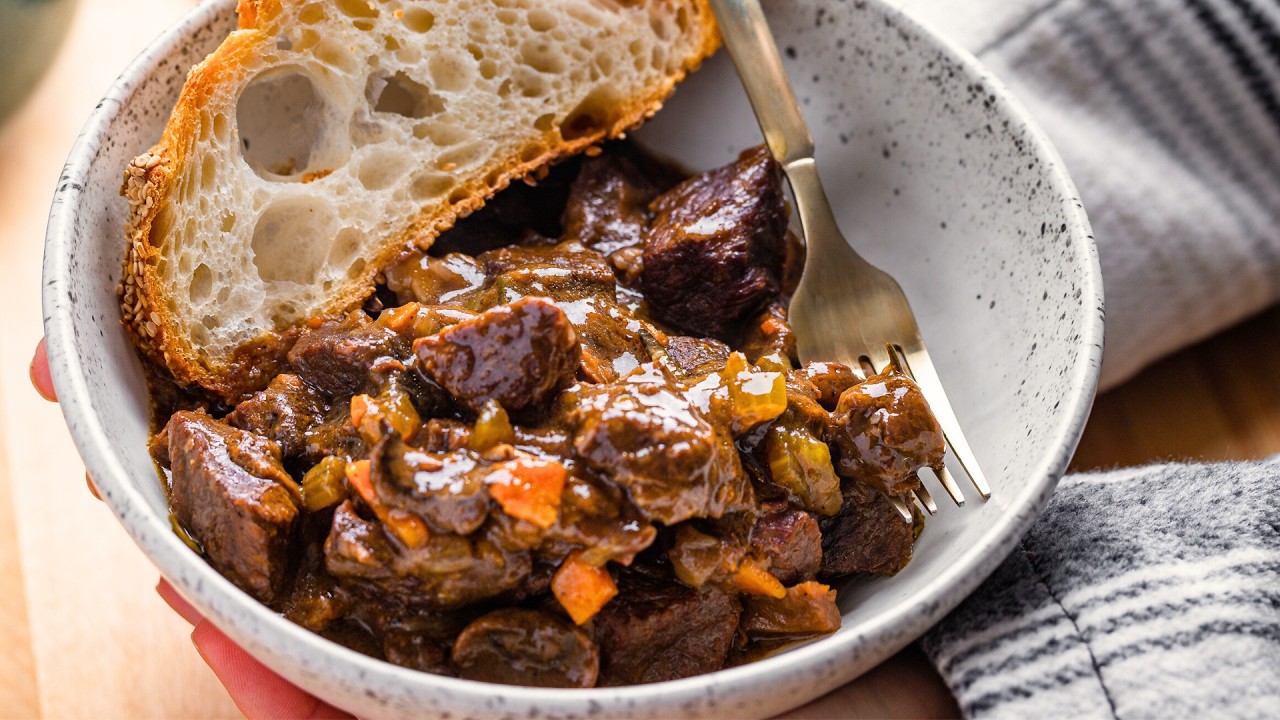
“Most beef stew recipes tell you to brown the meat and then essentially boil it in liquid for two hours. That produces beef that is soft but flavorless, floating in a thin, watery sauce that tastes like canned tomatoes with a headache. Italian beef stew done correctly is something else entirely — a braise, not a boil, where every technique decision serves a specific purpose and the payoff is a sauce so silky and concentrated you want to drink it straight from the pot.”
Why This Recipe Works
Italian beef stew is not complicated. It is, however, precise — and the precision sits in a handful of decisions that most recipes gloss over in the interest of brevity. Understanding why each step exists is the difference between a stew that tastes vaguely like "beef and tomatoes" and one that tastes like someone's grandmother spent all Sunday in a Florentine kitchen.
The Sear Is Not Optional
Every article about braised meat tells you to sear first. Very few of them explain why it actually matters. The Maillard reaction — the same chemistry behind a good crust on bread and the char on a grilled steak — creates hundreds of new flavor compounds on the surface of the beef that do not exist in the raw meat. These compounds are fat-soluble, which means they dissolve into the braising liquid over three hours and distribute their complexity throughout every bite of the final stew.
The flour coating on the beef serves a second purpose beyond browning: the starches gelatinize as they hit the hot oil, contributing early body to the sauce before the long simmer has a chance to do its work. It's a subtle effect, but the stew starts slightly richer because of it. Use a Dutch oven for this step — the high, even heat retention of cast iron or thick enameled steel is what makes the difference between a proper sear and frustrated steaming.
The Soffritto Foundation
Soffritto — onion, carrot, and celery cooked down in olive oil — is the aromatic base of essentially all Italian braised dishes. In this context, it does something more specific: the residual fat from the beef sear coats the vegetable pieces and helps them brown rather than simply steam, which concentrates their natural sugars and builds the sweet, savory backbone that the tomatoes and wine sit on top of. Six to eight minutes sounds long for vegetables, but it is not. Pull them at four minutes and you get a flat, watery sauce. Wait until they soften and slightly caramelize and you get the kind of depth that makes people ask for the recipe.
Tomato paste, cooked directly on the hot bottom of the pot until it turns brick red, contributes another layer of concentrated umami that connects the soffritto to the braising liquid. This step is frequently shown in recipes but rarely explained — most home cooks stir it in immediately and move on. Two minutes of direct contact with the hot surface drives off the raw, tinny notes and creates a slightly roasted sweetness that raw paste cannot replicate.
Why the Wine Is Non-Negotiable
When you pour wine into the pot after the soffritto, two things happen simultaneously. The liquid deglazes the fond — the dark, caramelized bits stuck to the bottom from the sear — dissolving them into the sauce where they become pure concentrated flavor. At the same time, the alcohol in the wine extracts aromatic compounds from the herbs that are fat-soluble and not water-soluble. This is why braised dishes made with wine taste categorically different from those made with broth alone: the wine is acting as a solvent, not just as a flavor ingredient.
The wine also contributes acidity, which keeps the sauce bright and prevents it from tasting flat despite the long cooking time. Use something you'd drink. Cooking wine contains added salt and stabilizers that interfere with the reduction and leave a harsh aftertaste.
The Physics of Low Heat
Beef chuck roast is roughly 30% connective tissue — primarily collagen — and the goal of a braise is to convert that collagen to gelatin, which is what makes the meat tender and the sauce silky. This conversion happens between 180°F and 200°F, over a sustained period of at least two hours. Above 212°F — a rolling boil — the muscle fibers contract and expel moisture rapidly, producing tough, stringy beef regardless of how long you cook it. The difference between a gentle simmer and an aggressive boil is literally the difference between tender and tough meat, which is why temperature management during the braise is the single most important variable in the entire recipe. A reliable instant-read thermometer lets you verify the internal braising temperature without guessing.
The final reduction step is where the sauce earns its texture. After three hours of covered cooking, the liquid is fully flavored but often too thin to coat the meat properly. Ten to fifteen minutes of uncovered simmering at medium heat concentrates the solids and allows surface evaporation to thicken the liquid into something that clings to the beef, pools glossily in the bowl, and rewards every bite of good crusty bread you drag through it.
Where Beginners Mess This Up
Before we start, read this. These are the 4 reasons your the only italian beef stew (braised low and slow the right way) will fail:
- 1
Crowding the pan during the sear: When beef pieces touch each other in the pan, they steam instead of sear. You get gray, flabby meat with no Maillard crust — and that crust is where 30% of your stew's final flavor lives. Sear in batches with space between pieces and don't move the meat until it releases naturally.
- 2
Using low-quality wine or skipping it entirely: The red wine does two jobs: it deglazes the fond from the bottom of the pot (which is pure concentrated flavor), and its acidity breaks down the connective tissue in the chuck roast during the long braise. Cooking wine is salted, acidified garbage. Use something you'd actually drink — a Chianti or Montepulciano for under $15 does the job perfectly.
- 3
Cooking at too high a temperature: A stew that bubbles aggressively on the stovetop is a stew that is tightening the muscle fibers in your beef rather than breaking them down. The liquid should barely simmer — a few lazy bubbles every few seconds. Too hot and you end up with tough, stringy chunks no matter how long you cook them.
- 4
Not reducing the sauce at the end: After the braise, you typically have excess liquid that needs 10-15 minutes of uncovered simmering to concentrate down into a glossy, coating sauce. Serving it without this step produces a thin, watery bowl that reads as undercooked even when the beef is perfect.
The Video Reference Library
Want to see it in action? Here are the exact videos we analyzed and combined to build this foolproof recipe translation:
The primary reference for this recipe. Strong emphasis on the soffritto base and the importance of low, sustained heat during the braise. Excellent close-ups of what a proper sear looks like versus a steam.
Broad braising fundamentals applicable to any beef stew — covers liquid ratios, temperature management, and the final sauce reduction step in clear, practical terms.
Useful contrast video that clarifies why Italian-style stews use tomato and whole herbs while French versions rely on aromatics and butter. Helps you understand the flavor architecture before you cook.
🛠️ Core Equipment
- Dutch oven or heavy braising potRetains and distributes heat evenly, which is everything during a multi-hour braise. Thin pots create hot spots that tighten the beef on one side and undercook it on the other. A [Dutch oven](/kitchen-gear/review/dutch-oven) is the single most important piece of equipment in this recipe.
- Wooden spoon or flat-edged spatulaFor scraping the fond — the dark, caramelized residue stuck to the pot after searing the beef. This layer dissolves into the wine and becomes the flavor backbone of the entire sauce.
- Sharp chef's knifeChuck roast needs to be cut into uniform 1.5 to 2-inch cubes. Inconsistent sizing means some pieces are overcooked and falling apart while others are still tough. A [sharp chef's knife](/kitchen-gear/review/chefs-knife) makes clean cuts that preserve the structure of each piece through the long braise.
- LadleFor skimming excess fat from the surface during the final 30 minutes of cooking. Chuck roast is marbled and releases significant fat. Skimming keeps the sauce clean and glossy rather than oily.
The Only Italian Beef Stew (Braised Low and Slow the Right Way)
🛒 Ingredients
- ✦3 pounds beef chuck roast, cut into 1.5-inch cubes
- ✦3 tablespoons extra-virgin olive oil, divided
- ✦1 large yellow onion, diced
- ✦3 medium carrots, cut into 1-inch pieces
- ✦3 celery stalks, cut into 1-inch pieces
- ✦6 garlic cloves, minced
- ✦3 tablespoons tomato paste
- ✦1 cup dry red wine (Chianti or Montepulciano)
- ✦1 can (28 ounces) whole peeled San Marzano tomatoes, crushed by hand
- ✦2 cups beef broth, low sodium
- ✦1 pound Yukon Gold potatoes, cut into 1.5-inch chunks
- ✦2 sprigs fresh rosemary
- ✦4 sprigs fresh thyme
- ✦2 bay leaves
- ✦1 teaspoon dried oregano
- ✦1/2 teaspoon red pepper flakes
- ✦2 tablespoons all-purpose flour
- ✦Sea salt and freshly ground black pepper to taste
- ✦Fresh flat-leaf parsley, chopped, for garnish
- ✦Crusty Italian bread or polenta, for serving
👨🍳 Instructions
01Step 1
Pat the beef cubes completely dry with paper towels. Season generously on all sides with salt and black pepper. Dust lightly with flour and toss to coat.
02Step 2
Heat 2 tablespoons olive oil in a Dutch oven over medium-high heat until shimmering. Sear the beef in two or three batches, leaving space between pieces. Cook undisturbed for 3-4 minutes per side until deeply browned. Transfer to a plate.
03Step 3
Reduce heat to medium. Add remaining tablespoon of olive oil to the same pot. Add the onion, carrots, and celery (the soffritto) and sauté for 6-8 minutes until softened and beginning to caramelize. Add the garlic and cook for another 90 seconds.
04Step 4
Push the soffritto to the sides and add the tomato paste to the center of the pot. Cook the paste directly on the bottom for 2 minutes, stirring occasionally, until it darkens from bright red to deep brick red.
05Step 5
Pour in the red wine and scrape every browned bit from the bottom of the pot with a wooden spoon. Let the wine reduce by half, about 3-4 minutes.
06Step 6
Add the crushed tomatoes, beef broth, rosemary, thyme, bay leaves, oregano, and red pepper flakes. Stir to combine. Return the seared beef and any accumulated juices from the plate to the pot.
07Step 7
Bring the liquid to a gentle simmer, then immediately reduce heat to low. The surface should show only a few lazy bubbles. Cover with a lid slightly ajar and cook for 1 hour 45 minutes.
08Step 8
Add the potato chunks, pressing them gently into the liquid. Re-cover and continue cooking for another 35-40 minutes until potatoes are fork-tender and beef pulls apart easily.
09Step 9
Discard the rosemary stems, thyme stems, and bay leaves. Skim visible fat from the surface with a ladle.
10Step 10
If the sauce looks thin, increase heat to medium and simmer uncovered for 10-15 minutes, stirring occasionally, until it reduces to a glossy, coating consistency.
11Step 11
Taste and adjust salt and pepper. Serve in wide bowls garnished with fresh parsley, alongside crusty bread or creamy polenta.
Nutrition Per Serving
Estimates based on standard preparation. Adjustments alter macros.
🔄 Substitutions
Instead of Beef chuck roast...
Use Bone-in short ribs
Richer and more deeply flavored due to the marrow. Requires 30-45 extra minutes of braising time. Remove the bones before serving or leave them in — both are acceptable presentations.
Instead of Red wine...
Use Beef broth with 1 tablespoon red wine vinegar
Adequate alcohol-free alternative. The vinegar provides the acidity that wine delivers, though the depth of flavor is shallower. Increase broth quantity by 1/4 cup to compensate for the reduction in liquid.
Instead of Yukon Gold potatoes...
Use Parsnips or turnips
Lower-carb alternative with a slightly bitter, earthy flavor that works well with the rich tomato base. Cut to the same size as the potatoes and add at the same point in the recipe.
Instead of Fresh rosemary and thyme...
Use 1 teaspoon dried rosemary and 1/2 teaspoon dried thyme
Dried herbs are more concentrated. Add them with the other dried spices rather than at the soffritto stage. Remove the bay leaves but don't worry about straining out dried herbs.
🧊 Storage & Reheating
In the Fridge
Store in an airtight container for up to 4 days. The fat that solidifies on the surface after refrigeration is a natural preservative — skim it off when reheating if desired, or stir it back in for richer flavor.
In the Freezer
Freeze in individual portions for up to 3 months. The sauce and beef freeze exceptionally well. Potatoes soften slightly after freezing but remain palatable.
Reheating Rules
Reheat gently in a covered pot over low heat with a splash of beef broth or water to loosen the sauce. Stir every few minutes. Avoid the microwave if possible — it heats unevenly and can dry out the beef.
❓ Frequently Asked Questions
Why is my beef still tough after two hours?
Either the heat was too high (boiling instead of barely simmering), the beef cut was too lean, or it simply needs more time. Chuck roast collagen breaks down between 180-200°F over a sustained period. Add 30 more minutes and check again. Some cuts take up to 3 hours.
Can I make this in a slow cooker?
Yes, but still sear the beef and build the soffritto on the stovetop first — do not skip these steps. Transfer everything to the slow cooker and cook on LOW for 7-8 hours. The sauce will be thinner; reduce it in a saucepan after transferring out the solids.
Do I have to use wine?
No, but you lose the deglazing step that lifts the fond and adds complexity. Substitute with extra beef broth plus a tablespoon of red wine vinegar for acidity. The dish is still good, just less layered.
My sauce is too thin. What do I do?
Simmer uncovered on medium heat for 10-20 minutes, stirring occasionally. Alternatively, mix 1 tablespoon of cornstarch with 2 tablespoons of cold water and stir it in during the last 10 minutes of cooking. The starch thickens immediately.
What cut of beef should I use if I can't find chuck roast?
Look for any cut labeled 'braising beef,' 'stewing beef,' or 'beef shoulder.' Short ribs, beef brisket, and oxtail all work with extended cooking times. Avoid anything labeled 'lean' — intramuscular fat is what transforms during the braise.
Can I add other vegetables?
Mushrooms (add in the last 45 minutes), frozen peas (stir in off heat at the very end), and fennel (add with the soffritto) all work well. Zucchini turns to mush — skip it. Root vegetables like parsnips and turnips are excellent additions.

The Science of
The Only Italian Beef Stew (Braised Low and Slow the Right Way)
We turned everything on this page into a beautiful, flour-proof PDF cheat sheet. Print it out, stick it to your fridge, and never mess up your the only italian beef stew (braised low and slow the right way) again.
*We'll email you the high-res PDF instantly. No spam, just perfectly cooked meals.
AlmostChefs Editorial Team
We translate the internet's most popular cooking videos into foolproof, beginner-friendly written recipes. We analyze multiple methods, test them in our kitchen, and engineer a single "Master Recipe" that gives you the best possible result with the least possible stress.