Kerala Egg Mastani (The Coconut Curry That Earns Its Reputation)
A beloved Kerala-style savory egg curry with golden-fried boiled eggs swimming in a rich coconut milk gravy, built on caramelized onions, whole spices, and fresh curry leaves. We analyzed the technique behind authentic Iftar-table Mastani to build a foolproof method that delivers creamy texture and deep flavor every time.

“Most egg curries are an afterthought — hard-boiled eggs dropped into jarred sauce and called dinner. Egg Mastani is the opposite of that. It's a dish with architecture: spiced coconut gravy built in deliberate stages, golden eggs that have absorbed every layer of flavor, and a finish of curry leaves and kasuri methi that smells like a Kerala kitchen on a Friday evening. Get the onion base right and the rest takes care of itself.”
Why This Recipe Works
Egg Mastani is not a recipe that rewards impatience. It's a dish of deliberate stages — each one building something the next step depends on — and the shortcuts that tempt busy cooks are exactly the ones that produce flat, greasy, or broken results. Understand why each step exists and you'll never make it wrong.
The Onion Foundation
Every Kerala curry starts the same way, and Mastani is no exception: onions, cooked past the point most Western recipes consider "done." Six to seven minutes over medium-high heat until the edges are genuinely golden brown. Not softened. Not translucent. Brown, with visible caramelization at the tips of each slice. This is where the gravy gets its body, its sweetness, and its depth. Pull the onions early and no amount of spice will compensate for what you lost.
The whole spice bloom that precedes the onions — cumin and fenugreek seeds in hot coconut oil — is not decorative. Whole spices release their volatile aromatic compounds into fat far more efficiently than into water. Those compounds infuse the oil, which then carries them into every subsequent ingredient. Skip the bloom and you get a curry that tastes of spice powder rather than spice. The difference is the same as the difference between a fresh herb and a dried one.
The Two-Coconut-Milk Logic
This is where most home cooks make the mistake that defines bad Mastani. Coconut milk comes in two forms for a reason, and each has a specific job.
Thin coconut milk — lower fat, higher water content — goes into the pan first, alongside the cooked tomato-onion base, and simmers openly for several minutes. During this time it absorbs the spice compounds from the base, reduces slightly, and builds the structural body of the gravy. It can handle sustained heat without breaking.
Thick coconut milk is an emulsion of coconut cream and water held together by natural proteins. Applied to high heat, that emulsion breaks — the fat separates, the water evaporates, and you're left with an oily, grainy mess that no amount of stirring will fix. So the thick milk goes in last, over the eggs, and the curry stays at a gentle simmer — never a boil — for just 5-6 minutes. That's enough time to thicken and turn creamy without destroying the emulsion.
The Eight-Minute Egg
Hard-boiling an egg sounds like the simplest step in the recipe. It is also the step most frequently done wrong. Eight minutes from boiling, immediately into ice water. That exact timing produces a fully set white with a yolk that's just cooked through — still slightly dense and orange at the center, not chalky, not gray. The ice bath isn't optional. Eggs continue cooking from residual heat for 2-3 minutes after leaving the water. Without the bath, your 8-minute egg becomes a 10-minute egg on the counter while you finish the curry.
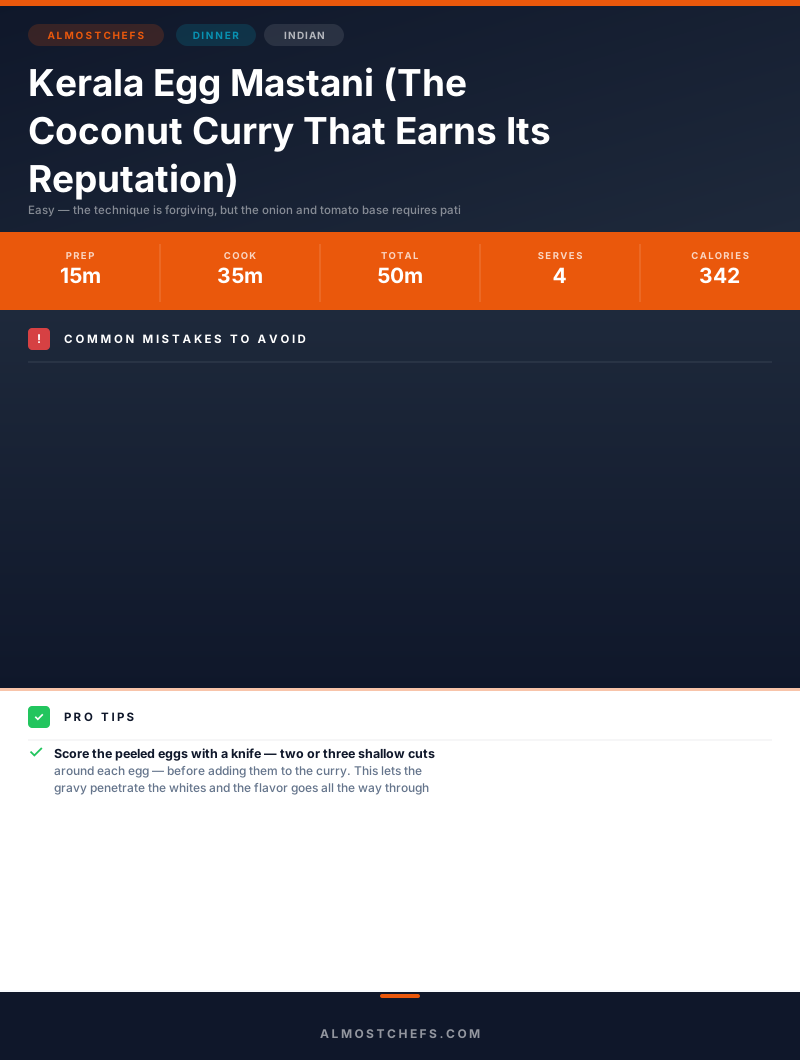
Scoring the peeled eggs with shallow cuts before adding them to the gravy is a technique worth adopting. The coconut milk penetrates the whites through the score marks, and the result is an egg that tastes of the curry from surface to core rather than a bland white surrounding a flavorful exterior.
The Kasuri Methi Finish
Dried fenugreek leaves added at the end of cooking read like a garnish. They are not. Kasuri methi contributes a specific bitterness — not harsh, but clean — that cuts through the richness of coconut milk the way a squeeze of lemon cuts through cream sauce. Without it, the gravy reads as heavy. With it, it reads as balanced. This is the step that separates Mastani that tastes complete from Mastani that tastes like it's missing something you can't name.
Why This Dish Works for Iftar
The architecture of Egg Mastani makes particular sense in the context of breaking a fast. Protein-dense eggs paired with the slow-releasing carbohydrates of flatbread or rice provide sustained energy rather than a spike and crash. The anti-inflammatory properties of turmeric and the digestive support of cumin and curry leaves are not incidental — Kerala cuisine built these ingredients into its dishes for exactly these reasons, centuries before anyone used the word "bioavailability." The dish is nourishing in a specific way, and the recipe structure reflects that.
Where Beginners Mess This Up
Before we start, read this. These are the 4 reasons your kerala egg mastani (the coconut curry that earns its reputation) will fail:
- 1
Undercooking the onion base: The onions need 6-7 full minutes of active sautéing until golden brown at the edges — not just softened and translucent. Raw or undercooked onions produce a sharp, acrid gravy that no amount of coconut milk can fix. The caramelized sugars in properly cooked onions are the flavor foundation everything else is built on.
- 2
Adding both coconut milks at the same time: Thin and thick coconut milk behave differently under heat. The thin milk goes in first to build the gravy body and simmer with the spices. The thick milk goes in last, over the eggs, with just 5-6 minutes on medium heat. Adding thick coconut milk too early — or boiling it hard — causes it to split and turn greasy instead of creamy.
- 3
Overcooking the eggs before they hit the curry: Eight minutes in salted water, straight into an ice bath. That's the window. Go to ten minutes and the yolks turn chalky gray-green and dry. Undercook them and the whites are too soft to hold their shape in the simmering gravy. The ice bath stops carryover cooking instantly — skip it and the eggs keep cooking on the counter.
- 4
Skipping the kasuri methi finish: Dried fenugreek leaves look like an optional garnish. They are not. Added at the end, they contribute a subtle bitterness that cuts through the richness of the coconut milk and brings the whole dish into balance. Without it, the curry tastes flat and one-dimensional despite the correct technique everywhere else.
The Video Reference Library
Want to see it in action? Here are the exact videos we analyzed and combined to build this foolproof recipe translation:

The source video for this recipe. Clear demonstration of the two-stage coconut milk technique and the correct color for the onion base before the tomatoes go in.
2. Authentic Kerala Egg Curry Technique
Deep dive into the whole spice tempering method that forms the aromatic base of Kerala-style coconut curries. Useful reference for understanding cumin and fenugreek seed timing.
3. Coconut Milk Curry FundamentalsCovers the science of cooking with thin versus thick coconut milk and why the order of addition determines whether your curry is creamy or broken.
🛠️ Core Equipment
- Heavy-bottomed pan or kadai ↗Even heat distribution is essential for caramelizing onions without burning. A thin pan creates hot spots that scorch the base before the onions have finished cooking. Cast iron or thick stainless steel is ideal.
- Slotted spoon ↗For lowering the peeled eggs into the simmering curry without breaking them. Dropping eggs directly from hand height cracks the whites and releases yolk into the gravy, ruining the texture.
- Saucepan and ice bath setup ↗A separate saucepan for boiling the eggs, plus a bowl of ice water ready to go. The ice bath is not optional — it's the only way to halt carryover cooking at exactly the right moment and make the eggs easy to peel cleanly.
Kerala Egg Mastani (The Coconut Curry That Earns Its Reputation)
🛒 Ingredients
- ✦6 large eggs
- ✦2 tablespoons coconut oil or ghee
- ✦2 medium yellow onions, finely sliced
- ✦3 large tomatoes, roughly chopped
- ✦1 tablespoon ginger-garlic paste
- ✦1 cup thin coconut milk
- ✦1/2 cup thick coconut milk
- ✦2 green chilies, slit lengthwise
- ✦1 teaspoon cumin seeds
- ✦1/2 teaspoon fenugreek seeds
- ✦6-8 fresh curry leaves
- ✦1/2 teaspoon ground turmeric
- ✦1 teaspoon red chili powder
- ✦1/2 teaspoon ground coriander
- ✦1/4 teaspoon ground black pepper
- ✦3/4 teaspoon sea salt
- ✦1/2 teaspoon kasuri methi (dried fenugreek leaves)
- ✦2 tablespoons fresh cilantro, chopped
👨🍳 Instructions
01Step 1
Boil the eggs in salted water for exactly 8 minutes, then immediately transfer to an ice bath. Once cooled, peel carefully.
02Step 2
Warm 2 tablespoons coconut oil in a heavy-bottomed pan over medium-high heat until shimmering.
03Step 3
Add the cumin seeds and fenugreek seeds. Let them crackle and bloom for about 30 seconds until fragrant.
04Step 4
Add the sliced onions and sauté for 6-7 minutes, stirring frequently, until golden brown and caramelized at the edges.
05Step 5
Stir in the ginger-garlic paste and green chilies. Cook for 1-2 minutes until the raw garlic smell disappears.
06Step 6
Add the chopped tomatoes and ground turmeric. Cook over medium heat for 4-5 minutes, stirring frequently, until the tomatoes break down into a soft paste.
07Step 7
Pour in the thin coconut milk gradually, stirring constantly to combine with the tomato-onion base. Simmer for 3 minutes.
08Step 8
Using a slotted spoon, gently lower the peeled boiled eggs into the simmering curry.
09Step 9
Pour the thick coconut milk over the eggs, swirling gently to distribute evenly through the pan.
10Step 10
Season with red chili powder, ground coriander, black pepper, and sea salt. Simmer on medium heat for 5-6 minutes until the gravy thickens slightly and turns creamy.
11Step 11
Add the kasuri methi and curry leaves, stirring gently to incorporate. Taste and adjust seasoning.
12Step 12
Remove from heat and garnish with fresh cilantro. Serve hot with flatbread, steamed rice, or alongside hot tea.
Nutrition Per Serving
Estimates based on standard preparation. Adjustments alter macros.
🔄 Substitutions
Instead of Coconut oil or ghee...
Use Extra virgin olive oil or avocado oil
Lighter taste with less richness. Loses the subtle sweetness of coconut oil and the nuttiness of ghee, but adds anti-inflammatory monounsaturated fats. Viable for everyday cooking outside of Iftar.
Instead of Thick coconut milk (full-fat)...
Use Light coconut milk or cashew cream
Fewer calories and less saturated fat. Light coconut milk produces a thinner gravy — compensate by simmering an extra 2-3 minutes to reduce. Cashew cream (soaked cashews blended with water) delivers a similar richness with a slightly sweeter finish.
Instead of Red chili powder...
Use Kashmiri chili powder or Aleppo pepper
Gentler heat with more nuanced, fruity flavor. Better for digestive sensitivity during fasting periods. Aleppo in particular adds a mild, earthy warmth that works well with the fenugreek.
Instead of 6 whole eggs...
Use 4 whole eggs plus 4 egg whites
Reduces cholesterol and calories while maintaining protein content. The extra egg whites can be hard-boiled separately and added alongside the whole eggs. Slightly less rich, but structurally identical.
🧊 Storage & Reheating
In the Fridge
Store in an airtight container for up to 3 days. The eggs continue absorbing the gravy and the flavors deepen — day two is often better than day one.
In the Freezer
Not recommended. Coconut milk-based gravies separate when frozen and thawed, turning grainy and oily. Hard-boiled egg whites also become rubbery after freezing.
Reheating Rules
Reheat gently on the stovetop over low heat with a splash of thin coconut milk or water to loosen the gravy. Stir slowly and do not boil. Microwave reheating works but can make the egg whites tough — cover loosely and use 50% power.
❓ Frequently Asked Questions
Why does my coconut curry look oily and broken instead of creamy?
You either boiled it too hard after adding the thick coconut milk, or you added the thick milk too early. Thick coconut milk is an emulsion — aggressive heat breaks it. Always add it last, simmer gently, and never let it reach a rolling boil.
Can I use canned coconut milk instead of fresh?
Yes. Use the liquid at the top of the can (thicker) and the separated liquid at the bottom (thinner) as your two components. Shake the can before opening if you want uniform thin milk. Most Kerala home cooks use canned without issue.
What's the difference between Egg Mastani and regular egg curry?
Mastani specifically refers to Kerala's coconut milk-based style — the two-stage milk addition and the whole spice tempering set it apart from North Indian egg curries, which typically use cream or tomato-onion gravy without coconut. The name and technique are distinctly Malayali.
Do the eggs need to be fried before adding to the curry?
Traditional Mastani sometimes calls for briefly shallow-frying the peeled boiled eggs in oil until golden before adding them to the gravy. This creates a slightly firm exterior that holds up better in the curry and adds a layer of textural contrast. This recipe skips that step for simplicity, but adding it produces a more restaurant-style result.
Can I make this ahead for Iftar?
Yes — it's actually ideal for make-ahead. Prepare the curry up to the point of adding the thick coconut milk, then refrigerate. Thirty minutes before Iftar, bring the base back to a simmer, add the thick milk and eggs, and finish as directed. The gravy base holds for up to 24 hours.
What do I serve Egg Mastani with?
Traditionally served with Kerala porotta (layered flatbread) or appam. Steamed white rice or pathiri (rice flatbread) also work. For Iftar specifically, it pairs well alongside hot tea and dates as part of a broader spread.
The Science of
Kerala Egg Mastani (The Coconut Curry That Earns Its Reputation)
We turned everything on this page into a beautiful, flour-proof PDF cheat sheet. Print it out, stick it to your fridge, and never mess up your kerala egg mastani (the coconut curry that earns its reputation) again.
*We'll email you the high-res PDF instantly. No spam, just perfectly cooked meals.
AlmostChefs Editorial Team
We translate the internet's most popular cooking videos into foolproof, beginner-friendly written recipes. We analyze multiple methods, test them in our kitchen, and engineer a single "Master Recipe" that gives you the best possible result with the least possible stress.