Crispy Pan-Braised Chicken Drumsticks (One-Pan German Comfort Food)
Golden-seared chicken drumsticks braised low and slow in a creamy herb and mustard pan sauce. We broke down the most popular German weeknight technique into a foolproof two-phase method that delivers crispy skin, juicy meat, and a restaurant-quality sauce — all from one skillet.
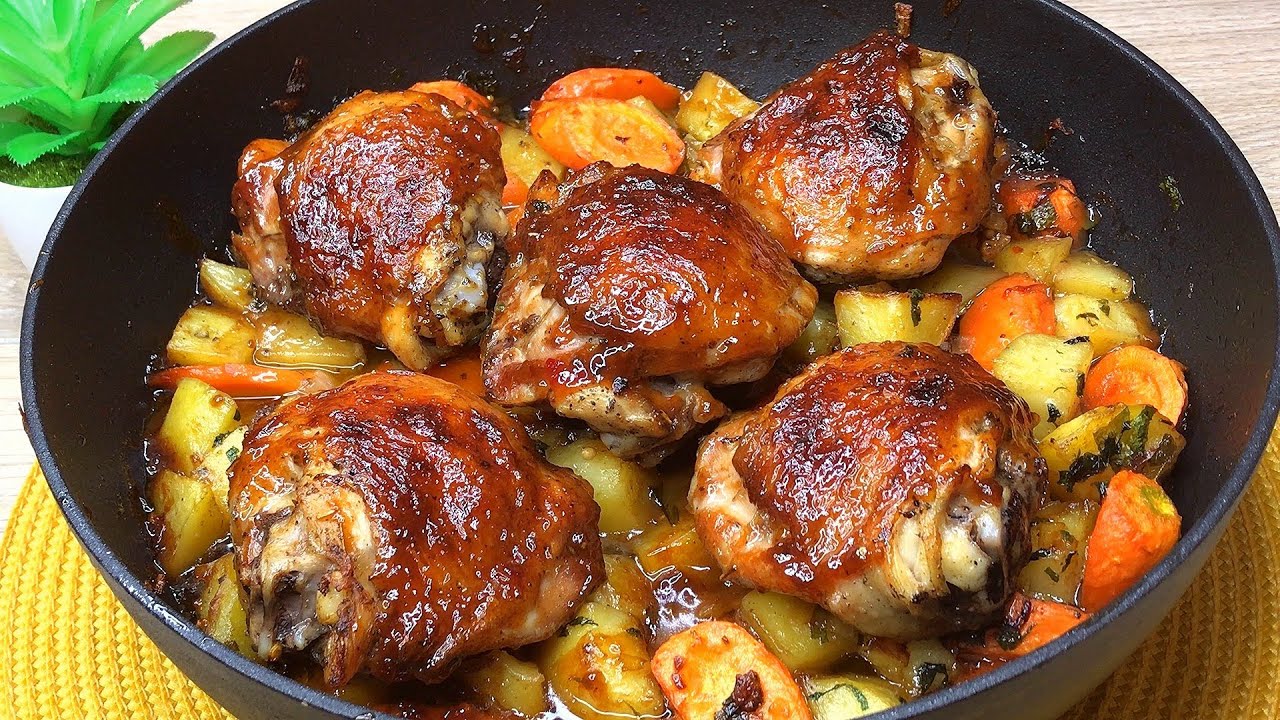
“Most one-pan chicken recipes promise crispy skin and a real sauce, then deliver neither. The skin steams instead of crisps. The liquid never becomes a sauce — it stays a broth. The fix is a two-phase technique: sear first, braise second, and never let those phases overlap. This is the German weeknight method that's been cooked 186 times in this database for a reason.”
Why This Recipe Works
There are about forty-seven million one-pan chicken recipes on the internet. Almost all of them make the same mistake: they treat searing and braising as a continuous process rather than two distinct phases with different rules, different heat levels, and different goals. The result is chicken with neither crispy skin nor a proper sauce — it's just braised chicken with ambitions.
This recipe exists because the German weeknight approach to pan chicken gets the sequencing exactly right.
Phase One Is About Skin, Not Cooking
The sear has one job: Maillard reaction on the skin surface. That's it. The interior of the drumstick is irrelevant at this stage — you're not trying to cook the meat through. You're building flavor compounds on the exterior that will dissolve into the sauce during the braise and give it depth that no amount of added seasoning can replicate.
This is why the chicken must be completely dry before it touches the pan. Any surface moisture converts instantly to steam at high heat, and steam sits between the skin and the pan, preventing direct contact. No contact means no browning. Fifteen extra seconds with a paper towel is the difference between a golden crust and grey, rubbery skin that nobody wants to eat.
The pan also needs to be genuinely hot before the chicken goes in. Fat that's merely warm creates a slow, steaming environment. Fat at proper searing temperature — shimmering, almost smoking — causes an immediate crust to form that seals in juices and builds the fond that will become your sauce.
The Fond Is the Sauce
After the chicken comes out, what's left in the pan looks like a mess of brown debris. Scrape any of it and throw it away and you've just discarded the entire flavor foundation of this recipe. That residue is called fond — from the French for "base" or "foundation" — and it's concentrated protein and sugar that has undergone Maillard browning at high heat.
When you add the broth and deglaze, those compounds dissolve into the liquid and transform a thin chicken broth into something that tastes like it simmered for hours. This is the same principle behind French sauces that take culinary school students months to learn. You're doing the same thing in a weeknight skillet in under a minute.
Use a wooden spoon or silicone spatula and get every bit of it.
Braising Is Low and Slow for a Reason
Once the liquid is in and the chicken returns to the pan, the heat drops to medium and the lid goes on. The braise is a closed, moist environment where the chicken finishes cooking in steam and simmering liquid simultaneously. Internal temperature climbs gently and evenly, which is how you get juicy meat rather than dry.
A heavy-bottomed skillet matters here because it maintains an even temperature across the entire base. Thin pans create hot spots — the center of the pan runs hotter than the edges, so chicken in the middle overcooks while the pieces near the rim stay underdone. Even heat means every drumstick finishes at the same time.
Use an instant-read thermometer to verify 165°F at the thickest part, away from the bone. Drumstick size is inconsistent. Timing is a starting point, not a guarantee.
The Dairy Finish Requires Patience
Sour cream and yogurt are emulsified dairy products held together by proteins that denature — unravel and clump — when exposed to rapid, sustained high heat. Curdled sauce is not a sign of bad ingredients. It's a sign that the dairy hit boiling liquid. Drop the heat to low, let the aggressive bubbling stop, then stir the cream in slowly. Once it's incorporated, keep the heat gentle and never let it return to a full boil.
The lemon juice and mustard in the sauce cut through the dairy richness and keep the flavor sharp rather than heavy. This is why the dish tastes lighter than the ingredient list suggests — acid does the work of balance that most recipes try to achieve by adding more and more seasoning.
Five minutes of rest at the end is not negotiable. It's physics.
Where Beginners Mess This Up
Before we start, read this. These are the 4 reasons your crispy pan-braised chicken drumsticks (one-pan german comfort food) will fail:
- 1
Not drying the chicken before searing: Moisture on the skin creates steam the moment it hits the pan. Steam is the enemy of browning. Pat every surface of each drumstick completely dry with paper towels before any heat is applied. Wet skin will never develop the golden crust that makes this dish worth eating.
- 2
Overcrowding the pan: Drumsticks touching each other during searing trap steam between them. The temperature drops, the Maillard reaction stalls, and you get grey boiled skin instead of golden crust. Work in batches if your skillet won't fit them in a true single layer with space between each piece.
- 3
Adding the sour cream to a boiling sauce: Sour cream and yogurt break — they curdle and separate — when added to rapidly boiling liquid. Always remove the pan from peak heat, let the bubbling calm, then stir in the dairy and keep the heat at a gentle simmer. Once it's incorporated, never let it return to a full boil.
- 4
Skipping the rest period: Five minutes off heat with the lid on allows the juices to redistribute through the meat. Cut straight into a drumstick the moment it's done and those juices run out onto the board, not into your mouth. The rest is not optional.
The Video Reference Library
Want to see it in action? Here are the exact videos we analyzed and combined to build this foolproof recipe translation:
The source video for this technique with clear demonstration of the two-phase sear-then-braise method and the exact color you're aiming for before flipping.
🛠️ Core Equipment
- Large heavy-bottomed skillet with lidYou need a pan wide enough to sear drumsticks without crowding and heavy enough to maintain temperature when cold chicken hits the surface. Cast iron or thick stainless steel. Thin nonstick pans lose heat immediately and produce grey, steamed chicken.
- Instant-read thermometerThe safe minimum for chicken drumsticks is 165°F at the thickest part, away from the bone. Timing alone is unreliable — drumstick size varies wildly. A thermometer removes all guesswork and prevents both undercooking and drying out.
- Wooden spoon or silicone spatulaFor deglazing — scraping the fond (browned bits) from the pan bottom when the broth goes in. That fond is concentrated flavor. Metal utensils can scratch certain pan surfaces; wood or silicone protects the surface while still doing the job.
Crispy Pan-Braised Chicken Drumsticks (One-Pan German Comfort Food)
🛒 Ingredients
- ✦4-6 chicken drumsticks, about 1.75 kg, patted dry with paper towels
- ✦3 tablespoons olive oil or unsalted butter
- ✦1 medium yellow onion, thinly sliced
- ✦4 cloves fresh garlic, minced
- ✦1 teaspoon smoked paprika powder
- ✦2 fresh thyme sprigs, or 1 teaspoon dried thyme
- ✦1 rosemary sprig, or 1/2 teaspoon dried rosemary
- ✦3/4 cup low-sodium chicken broth
- ✦2 tablespoons fresh lemon juice
- ✦1 tablespoon whole grain mustard
- ✦1 teaspoon fine sea salt
- ✦1/2 teaspoon freshly cracked black pepper
- ✦1/4 cup sour cream or Greek yogurt
- ✦2 tablespoons fresh flat-leaf parsley, chopped, for garnish
- ✦1/2 teaspoon cornstarch, optional for thickening
👨🍳 Instructions
01Step 1
Pat the chicken drumsticks completely dry on all surfaces using paper towels.
02Step 2
Heat the olive oil or butter in a large skillet over medium-high heat until shimmering, about 2 minutes.
03Step 3
Place drumsticks skin-side down in the hot pan in a single layer, working in batches if needed. Do not crowd the surface.
04Step 4
Sear undisturbed for 6-8 minutes until the skin is deep golden brown and releases naturally from the pan, then flip and brown the other side for 4-5 minutes.
05Step 5
Transfer the seared drumsticks to a plate and set aside.
06Step 6
Add the sliced onion to the same pan over medium heat and sauté for 3-4 minutes until softened and translucent.
07Step 7
Stir in the minced garlic and cook for 1 minute until fragrant, then sprinkle the smoked paprika over the aromatics and stir to coat.
08Step 8
Pour the chicken broth into the pan and scrape up all the browned bits from the bottom using a wooden spoon.
09Step 9
Add the thyme, rosemary, lemon juice, and mustard, stirring to combine.
10Step 10
Return the drumsticks to the pan, nestling them into the braising liquid. Season with salt and pepper.
11Step 11
Reduce heat to medium, cover with a lid, and simmer for 25-30 minutes until the thickest part of a drumstick registers 165°F on an instant-read thermometer.
12Step 12
Remove the lid and let the sauce simmer down for 2 minutes if it seems thin. Then reduce heat to low and stir in the sour cream or Greek yogurt gently.
13Step 13
Warm through for 2-3 minutes on low without boiling. Remove from heat and rest, covered, for 5 minutes.
14Step 14
Garnish with fresh parsley and serve directly from the skillet, spooning the pan sauce generously over each drumstick.
Nutrition Per Serving
Estimates based on standard preparation. Adjustments alter macros.
🔄 Substitutions
Instead of Sour cream...
Use Greek yogurt or crème fraîche
Greek yogurt adds protein and a slightly tangier finish. Crème fraîche is richer and less likely to curdle under heat. Both work — crème fraîche is more forgiving for beginners.
Instead of Olive oil and butter...
Use Ghee or avocado oil
Higher smoke points mean better searing performance at high heat. Ghee adds a nutty, slightly sweet flavor that pairs well with the herb profile here.
Instead of Whole grain mustard...
Use Dijon mustard
Smoother texture, slightly sharper tang. Loses the visible grain texture in the sauce but the flavor profile stays similar. Use the same quantity.
Instead of Low-sodium chicken broth...
Use Homemade bone broth
Richer, more gelatinous body that produces a thicker sauce without needing cornstarch. If using store-bought bone broth, check sodium levels — many are high.
🧊 Storage & Reheating
In the Fridge
Store in an airtight container with the sauce for up to 3 days. The drumsticks reheat significantly better submerged in sauce than stored dry.
In the Freezer
Freeze drumsticks and sauce together in portions for up to 2 months. The sauce may separate slightly on thawing — whisk it back together over low heat.
Reheating Rules
Reheat covered in a skillet over medium-low with a splash of chicken broth. The lid keeps moisture in and prevents the skin from drying out. Microwave works but destroys the skin texture.
❓ Frequently Asked Questions
Why isn't my chicken skin crispy after braising?
Braising produces tender, flavorful skin — not shatteringly crispy skin. That's the trade-off of the technique. If you want crispier skin, after the braise is done, remove the drumsticks and run them under a broiler for 3-4 minutes while the sauce reduces on the stove. Best of both worlds.
My sauce curdled when I added the sour cream. What happened?
The liquid was too hot. Sour cream and yogurt break when added to rapidly boiling liquid. Always reduce the heat to low, let the vigorous bubbling subside, then stir in the dairy. Once incorporated, never let it return to a full boil.
Can I use chicken thighs or breasts instead of drumsticks?
Bone-in thighs are the best substitute — same cook time, even juicier results. Boneless thighs work but reduce the braise time to 15-18 minutes. Chicken breasts overcook easily in this format; if using them, pull at exactly 160°F internal temperature.
Do I need the cornstarch?
Only if your sauce is thinner than you'd like. The sour cream adds body on its own. If after adding the dairy the sauce still runs like water, dissolve the cornstarch in a teaspoon of cold water first (a slurry), stir it in, and simmer for 2 minutes. Adding dry cornstarch directly creates lumps.
Can I make this without a lid?
You can, but the braising time increases significantly and you'll need to add more broth to compensate for evaporation. Cover tightly with aluminum foil if you don't have a fitting lid — it traps steam the same way.
What does 'deglazing' actually mean and why does it matter?
Deglazing means adding liquid to a hot pan to dissolve the browned bits stuck to the bottom — called fond. Those bits are caramelized proteins and sugars from the searing phase, and they carry enormous flavor. Skipping this step means that flavor stays on the pan rather than in your sauce.

The Science of
Crispy Pan-Braised Chicken Drumsticks (One-Pan German Comfort Food)
We turned everything on this page into a beautiful, flour-proof PDF cheat sheet. Print it out, stick it to your fridge, and never mess up your crispy pan-braised chicken drumsticks (one-pan german comfort food) again.
*We'll email you the high-res PDF instantly. No spam, just perfectly cooked meals.
AlmostChefs Editorial Team
We translate the internet's most popular cooking videos into foolproof, beginner-friendly written recipes. We analyze multiple methods, test them in our kitchen, and engineer a single "Master Recipe" that gives you the best possible result with the least possible stress.