Perfect Homemade Iced Tea (Finally Worth Skipping the Store)
A crisp, refreshing homemade iced tea built on properly steeped black tea, natural sweeteners, and a few flavor additions that make store-bought taste like an apology. We broke down the steeping science and sweetener chemistry so you get a clean, bright glass every single time.

“Most homemade iced tea tastes like a watered-down memory of something better. That's a steeping problem, not an ingredient problem. The difference between flat, bitter tea and something genuinely crisp and refreshing comes down to three things: water temperature, steep time, and when you add the sweetener. Get those right and you'll never touch a store-bought jug again.”
Why This Recipe Works
Iced tea has a deceptively low skill floor and an equally low ceiling. Most people make it correctly once, decide they've mastered it, and then coast on muscle memory for the next decade — wondering why their tea always tastes vaguely disappointing compared to what they had at that one restaurant. The answer is almost never the tea. It's the technique.
The Steeping Window
Black tea contains a compound called theaflavin — the polyphenol responsible for its characteristic amber color and clean astringency. Steep within the 5-7 minute window and you extract theaflavin at its best: bright, slightly tannic, complex. Go past 7 minutes and you begin extracting the harsher tannin compounds buried deeper in the leaf, which coat your mouth and taste like the inside of a wooden barrel.
Temperature matters here too. Water should be at a full boil when the bags go in, then removed from heat immediately. Keeping the water at a sustained boil while steeping drives more aggressive extraction — same problem as steeping too long, just faster. Off the heat, the water temperature drops naturally to around 190°F within the first two minutes, which is the ideal sustained steeping temperature for black tea.
Sweetener Timing Is Not Optional
Honey and agave are liquid sweeteners with molecular structures that require heat to dissolve uniformly in water. Added to cold or room-temperature tea, they form a viscous layer at the bottom of the pitcher that never fully integrates, no matter how hard you stir. The first glass tastes thin. The last glass tastes like dessert. Neither tastes intentional.
Stir your sweetener into the tea immediately after straining, while it's still hot enough to dissolve on contact. Thirty seconds of stirring while warm does what thirty minutes of stirring cold cannot. If you're using a glass pitcher, the residual heat from the tea is enough — no extra steps required.
Salt as a Flavor Tool
The pinch of sea salt in this recipe is not a typo. Salt suppresses bitterness perception at the neurological level — it literally blocks the bitter taste receptors on your tongue from firing at full strength. This is why a tiny amount of salt in coffee, chocolate, and tea makes them taste more balanced and less harsh, without making them taste salty. You are not seasoning the tea. You are tuning it.
The Chill Phase Is Active Time
Two to three hours in the refrigerator is not just about getting the temperature down. It's the phase where the lemon juice, lime, mint, and vanilla stop being separate additions floating in tea water and start becoming a unified flavor. The acids from the citrus bind with the tea's tannins, softening their edge. The mint oils slowly permeate the liquid. The vanilla rounds out the finish.
Rush the chill and you get tea with things floating in it. Wait it out and you get something that tastes like it was designed.
That's the entire secret: don't rush any of the steps, and don't skip the salt.
Where Beginners Mess This Up
Before we start, read this. These are the 4 reasons your perfect homemade iced tea (finally worth skipping the store) will fail:
- 1
Steeping too long: Black tea becomes aggressively bitter after 7 minutes in near-boiling water. The tannins that give tea its pleasant astringency turn harsh and mouth-coating with over-extraction. Pull the bags at 5-7 minutes maximum, no exceptions.
- 2
Adding sweetener to cold tea: Honey and agave nectar do not dissolve in cold liquid. Stir them into the tea while it's still hot, right after straining. If you wait until the tea is chilled, you get sweetener pooled at the bottom and a glass that tastes inconsistent from first sip to last.
- 3
Skipping the chill time: Hot tea poured over ice does two things: it dilutes the tea as the ice melts rapidly, and it produces a cloudy, flat result. Two to three hours in the refrigerator lets the flavors integrate and keeps your ice doing its job — cooling, not compensating.
- 4
Using unfiltered tap water: Tea is 99% water. Chlorine and mineral content in tap water compete directly with tea's delicate flavor compounds. Filtered water is not a luxury here — it's the foundation of a clean-tasting brew.
The Video Reference Library
Want to see it in action? Here are the exact videos we analyzed and combined to build this foolproof recipe translation:
The foundational walkthrough that covers steeping time, sweetener technique, and the chill phase. Clear, practical, and gets the details right.
🛠️ Core Equipment
- Large saucepanEnough volume to boil 6 cups without risk of overflow. A wide base brings water to boil faster and more evenly.
- Fine-mesh sieveEssential if using loose-leaf tea. Even with bags, a quick strain removes any fine leaf particles that would make the finished tea gritty or murky.
- Large glass pitcherGlass doesn't retain odors or leach flavors the way plastic does. For something as flavor-sensitive as iced tea, a [glass pitcher](/kitchen-gear/review/glass-pitcher) pays for itself immediately.
- Long stirring spoonYou need to reach the bottom of the pitcher to fully dissolve the sweetener while the tea is still hot. A regular spoon won't reach.
Perfect Homemade Iced Tea (Finally Worth Skipping the Store)
🛒 Ingredients
- ✦6 cups filtered water
- ✦4 black tea bags or 2 tablespoons loose-leaf black tea
- ✦3 tablespoons honey or agave nectar
- ✦2 tablespoons fresh lemon juice, squeezed from 1 medium lemon
- ✦1 tablespoon fresh lime juice
- ✦6-8 fresh mint leaves, gently torn
- ✦1/2 teaspoon vanilla extract
- ✦Ice cubes for serving
- ✦1 medium lemon, sliced thin for garnish
- ✦Pinch of sea salt
👨🍳 Instructions
01Step 1
Bring 6 cups of filtered water to a rolling boil in a large saucepan over high heat, about 8-10 minutes.
02Step 2
Remove the saucepan from heat and immediately add the tea bags or loose-leaf tea. Steep undisturbed for 5-7 minutes until the water is deeply colored and fragrant.
03Step 3
Strain the brewed tea through a fine-mesh sieve into a large pitcher, discarding the tea bags or leaves.
04Step 4
Stir in the honey or agave nectar while the tea is still hot, until fully dissolved.
05Step 5
Add the fresh lemon juice, lime juice, torn mint leaves, vanilla extract, and a pinch of sea salt to the pitcher. Stir well to combine.
06Step 6
Refrigerate the pitcher for at least 2-3 hours, or until fully chilled.
07Step 7
Fill serving glasses with ice cubes and pour the chilled tea over the ice until nearly full.
08Step 8
Garnish each glass with thin lemon slices and additional fresh mint if desired. Serve immediately.
Nutrition Per Serving
Estimates based on standard preparation. Adjustments alter macros.
🔄 Substitutions
Instead of Honey or agave nectar...
Use Monk fruit sweetener or stevia
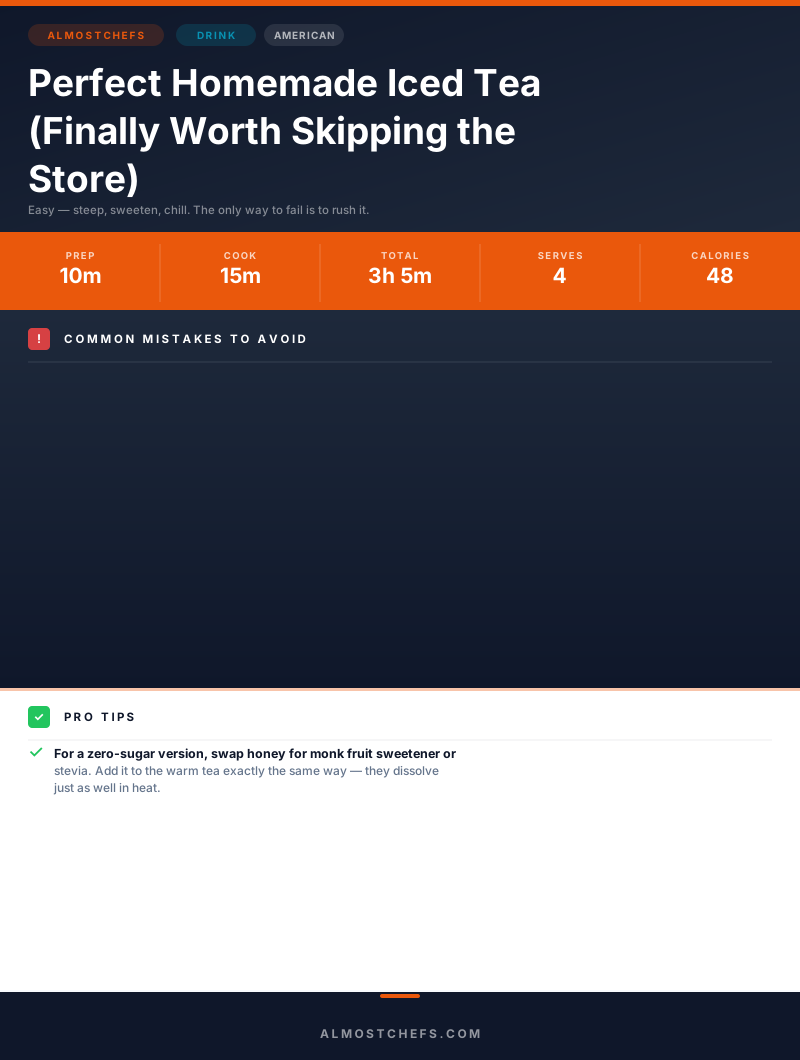
Reduces calories from 48 to under 10 per serving. No blood sugar impact. Dissolve in warm tea exactly as you would honey.
Instead of Black tea...
Use Green tea or white tea
More delicate, floral flavor. Lower caffeine (25-30mg vs 40mg per serving). Higher antioxidant content. Steep at 175°F rather than a full boil to avoid bitterness.
Instead of Fresh lemon and lime juice...
Use Apple cider vinegar plus a splash of lemon
Adds a tangy, complex tartness. Acetic acid in ACV slows glucose absorption. Start with 1 tablespoon ACV and adjust to taste — it's stronger than citrus.
Instead of Vanilla extract...
Use Fresh ginger slices or dried hibiscus flowers
Ginger steeped directly with the tea adds warmth and anti-inflammatory compounds. Hibiscus creates a vivid ruby color and tart cranberry-like flavor. Both reduce the need for added sweetener.
🧊 Storage & Reheating
In the Fridge
Store covered in the pitcher or an airtight container for up to 5 days. Remove mint leaves after 24 hours to prevent over-infusion.
In the Freezer
Freeze in ice cube trays for tea ice cubes that won't dilute the flavor as they melt. Game-changing for summer.
Reheating Rules
Iced tea is not designed to be reheated. Serve cold over fresh ice.
❓ Frequently Asked Questions
Why is my iced tea cloudy?
Cloudiness happens when hot tea is chilled too quickly or when tannins and minerals bind together during rapid temperature change. Always let the tea cool slightly at room temperature for 10-15 minutes before refrigerating. Using filtered water also significantly reduces cloudiness.
Can I cold brew instead of hot brew?
Yes. Use the same quantities but place the tea bags in cold filtered water and refrigerate for 8-12 hours. Cold brewing produces a smoother, less bitter tea with lower caffeine extraction. The trade-off is time — there's no shortcut.
How much caffeine is in homemade iced tea?
A standard serving made with black tea contains roughly 35-50mg of caffeine — about half a cup of coffee. Switching to green tea drops that to 25-30mg. Herbal teas like hibiscus or rooibos are naturally caffeine-free.
Why does my iced tea taste bitter?
Over-steeping is almost always the cause. Black tea becomes bitter when steeped beyond 7 minutes in near-boiling water. The tannins over-extract and no amount of sweetener compensates. Brew a fresh batch and set a timer.
Can I make a large batch for a party?
Easily. Scale proportionally — the ratios hold at any volume. For 24 servings, use 36 cups of water and 24 tea bags. Steep in batches or in a large stockpot. The same sweetening-while-hot rule applies regardless of batch size.
Is homemade iced tea healthier than store-bought?
Substantially. Most commercial iced teas contain 20-40 grams of added sugar per bottle, artificial flavors, and preservatives. This recipe uses 3 tablespoons of honey across 4 servings — roughly 9 grams per glass. The sugar-free version drops that to near zero.
The Science of
Perfect Homemade Iced Tea (Finally Worth Skipping the Store)
We turned everything on this page into a beautiful, flour-proof PDF cheat sheet. Print it out, stick it to your fridge, and never mess up your perfect homemade iced tea (finally worth skipping the store) again.
*We'll email you the high-res PDF instantly. No spam, just perfectly cooked meals.
AlmostChefs Editorial Team
We translate the internet's most popular cooking videos into foolproof, beginner-friendly written recipes. We analyze multiple methods, test them in our kitchen, and engineer a single "Master Recipe" that gives you the best possible result with the least possible stress.