Iced Matcha Latte and Frappuccino (Café Quality at Home)
Two cold matcha drinks — a silky iced latte and a blended frappuccino — built from ceremonial-grade powder, the right milk ratio, and one technique that eliminates every clump. We broke down the most-watched YouTube methods so you never pay $7 for something you can make better in three minutes.
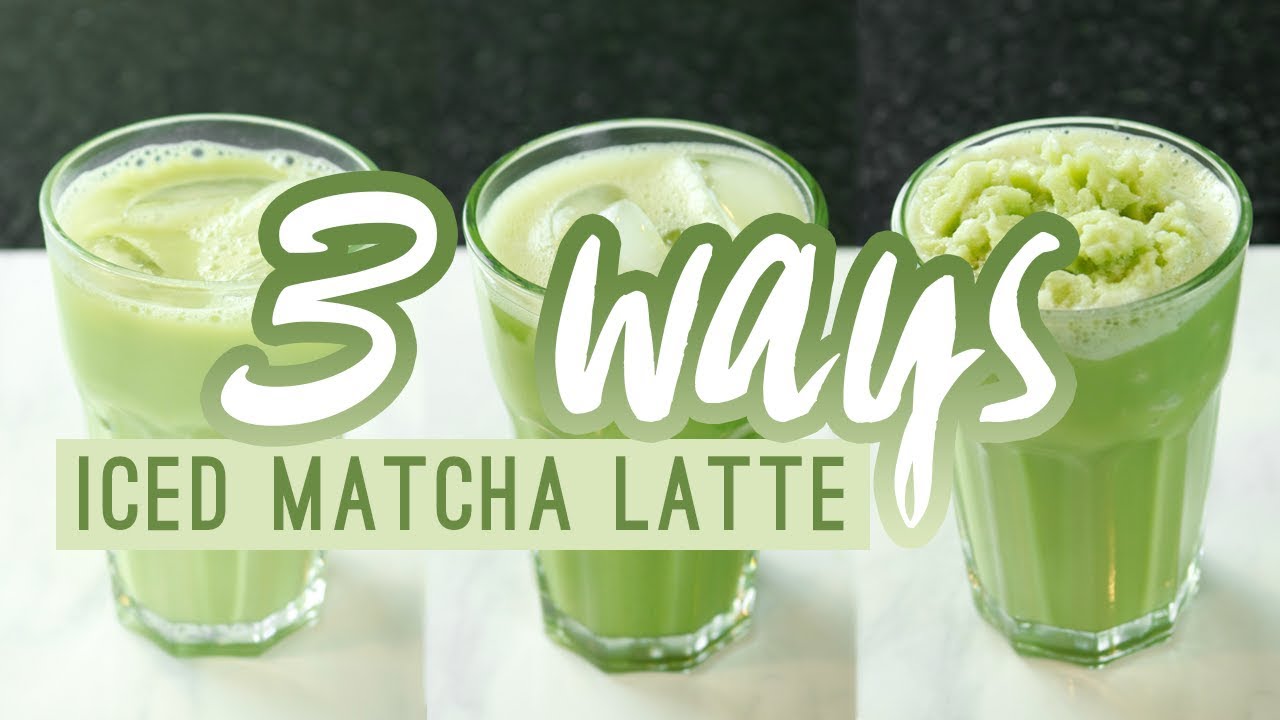
“The gap between a clumpy, bitter matcha drink and one that tastes like it came from a serious café is smaller than you think. It's not the brand, the milk frother, or the expensive oat milk. It's whether you dissolved the powder correctly before you added any cold liquid. That single step separates every good matcha drink from every bad one.”
Why This Recipe Works
Two drinks, one technique, and a mistake so consistent across home kitchens that it deserves its own warning label: you cannot add dry matcha powder to cold liquid. Not to cold milk. Not to cold water. Not to anything cold. The powder will repel the liquid on contact, form bitter green pellets, and no amount of stirring will undo what physics has already decided. Understanding this single constraint is the entire foundation of making a good matcha drink.
The Emulsification Problem
Matcha is ground green tea leaves — roughly 2,000 tea leaves compressed into every gram of powder. At that particle size, the powder becomes hydrophobic when cold, meaning it actively resists dissolving in cold water. The solution is to create a paste first: a small amount of hot water at 175°F, aggressively whisked with a bamboo matcha whisk, breaks the hydrophobic barrier and creates a stable suspension. Once you have that smooth paste, it integrates seamlessly with cold milk without clumping.
This is why temperature matters for the whisking water but not for the final drink. The hot water step is chemistry, not preference. Too hot (above 185°F) and the heat damages the catechin compounds that give ceremonial matcha its natural sweetness and umami backbone, replacing them with astringency. Too cold and the paste never fully forms. The 175°F sweet spot is achievable by letting boiled water sit for two minutes before using.
Grade Is Not a Marketing Gimmick
Ceremonial-grade matcha costs more because it uses the youngest, most shaded leaves from the first spring harvest — the leaves with the highest chlorophyll and L-theanine content, the lowest bitterness, and the most pronounced natural sweetness. When you dissolve that into cold milk, you get a drink with enough intrinsic flavor complexity that you don't need to drown it in sweetener to make it palatable.
Culinary-grade matcha is the opposite: older leaves, more stems, less shading, higher bitterness designed to compete with sugar in baked goods. In a cold drink with no fat and minimal sweetener, that bitterness has nothing to hide behind. It just tastes harsh. For these recipes, the grade difference is the difference between a drink you want to finish and one you feel obligated to.
Latte vs. Frappuccino: The Architecture
The iced latte and the frappuccino share a matcha base but diverge completely in texture and technique. The latte is a layered drink — paste over ice, milk poured gently down the inside wall of the glass — that rewards patient sipping. The milk stays cold, the ice dilutes slowly, and the matcha intensity stays front and center. A fine-mesh sieve before whisking ensures no stray clumps survive to disrupt the clean, glossy finish.
The frappuccino is an exercise in blender physics. Using a high-powered blender, the goal is to obliterate ice into a smooth slush before the mix warms up enough to separate. The frozen milk cube trick is not optional decoration — it solves a real problem. Standard ice melts during blending and dilutes the drink. Frozen milk cubes melt into the recipe, adding creaminess instead of water. The sweetened condensed milk thickens the base and acts as a natural emulsifier, keeping the blended texture stable long enough to drink.
Cold Sweetening Logic
Every sweetener decision in a cold drink needs to account for one fact: cold suppresses sweetness perception. A drink that tastes perfectly balanced at room temperature will taste undersweetened over ice, and one that tastes right over ice will taste cloying if you let it warm up. The practical fix is to sweeten the matcha paste slightly above your target before adding cold milk, then taste and adjust at the end. Adding sweetener to a fully built, ice-filled glass is a losing battle — it sinks and never distributes evenly.
The pinch of flaky sea salt is not a chef affectation. Salt works at the neurological level to suppress bitterness receptors, which is why salted caramel became a permanent fixture on dessert menus. In matcha, even a small amount rounds off the astringent edges without making the drink taste salty. It's a $0.01 ingredient that makes a $7 drink taste complete.
Where Beginners Mess This Up
Before we start, read this. These are the 4 reasons your iced matcha latte and frappuccino (café quality at home) will fail:
- 1
Adding cold liquid directly to dry matcha powder: Matcha is hydrophobic — its fine particles repel cold water and clump immediately into bitter green pellets that no amount of stirring fixes. The powder must be whisked into a small amount of hot water first, fully dissolving it into a smooth paste before any cold milk or ice touches it.
- 2
Using culinary-grade matcha for drinking: Culinary-grade matcha is formulated for baking, where sugar and fat mask its harshness. Dissolved in cold milk, it tastes astringent and flat. Ceremonial-grade matcha has a natural sweetness and umami depth that holds up without needing heavy sweetener.
- 3
Undersweetening and then oversweetening: Matcha bitterness spikes when served cold. A drink that tastes balanced warm will taste intensely bitter over ice. Account for this by adding sweetener to taste before pouring over ice — not after, when dilution makes it impossible to stir in evenly.
- 4
Blending the frappuccino without freezing the milk first: If you blend room-temperature milk with ice, the ice melts too fast and you get a watery slush. For a proper frappuccino texture, use frozen milk cubes or blend with very little added liquid. The ice should be doing the work, not the milk.
The Video Reference Library
Want to see it in action? Here are the exact videos we analyzed and combined to build this foolproof recipe translation:
The source video demonstrating both the latte and blended frappuccino builds side by side, with clear technique for dissolving matcha paste and achieving the right milk-to-ice ratio for each drink.
Detailed breakdown of chasen technique — the W-motion versus circular stirring — and why the distinction matters for achieving a smooth, lump-free matcha base.
Side-by-side taste comparison of grade levels in cold drinks, demonstrating exactly why ceremonial-grade is non-negotiable for matcha lattes and frappuccinos.
🛠️ Core Equipment
- Bamboo matcha whisk (chasen)The 80+ tines of a chasen break apart matcha particles and create a smooth emulsion that a regular spoon or fork cannot achieve. If you only make one investment for matcha drinks, this is it.
- Small bowl or wide cup for whiskingMatcha paste needs lateral space to whisk properly. A narrow glass restricts the wrist movement required to build the emulsion. A wide, shallow vessel lets the whisk move freely.
- High-powered blenderFor the frappuccino, a weak blender struggles to crush ice thoroughly and leaves gritty shards. A blender with at least 700 watts processes ice into smooth slush in seconds.
- Fine-mesh sieveSifting matcha powder before whisking eliminates pre-existing clumps from humidity or packaging. Takes five seconds and makes a measurable difference in final texture.
Iced Matcha Latte and Frappuccino (Café Quality at Home)
🛒 Ingredients
- ✦2 teaspoons ceremonial-grade matcha powder, sifted
- ✦4 tablespoons hot water (175°F, not boiling)
- ✦2 tablespoons simple syrup or honey, plus more to taste
- ✦1.5 cups whole milk or oat milk, divided
- ✦1 cup ice cubes, divided
- ✦2 tablespoons sweetened condensed milk (for frappuccino)
- ✦1/2 cup frozen milk cubes or additional ice (for frappuccino)
- ✦1/4 teaspoon vanilla extract (optional, for frappuccino)
- ✦Whipped cream for topping (optional)
- ✦Pinch of flaky sea salt (optional, cuts bitterness)
👨🍳 Instructions
01Step 1
Sift 1 teaspoon of matcha powder through a fine-mesh sieve into a small wide bowl.
02Step 2
Add 2 tablespoons of hot water at 175°F (not boiling — boiling water scorches matcha and turns it bitter). Using a bamboo chasen, whisk in rapid W-shaped strokes for 30-45 seconds until the mixture is completely smooth with a thin foam layer on top.
03Step 3
Stir 1 tablespoon of simple syrup into the matcha paste. Taste — it should read slightly sweeter than your target, because cold milk and ice will mute the sweetness.
04Step 4
For the Iced Matcha Latte: Fill a tall glass with ice. Pour the matcha paste over the ice, then slowly pour 3/4 cup cold milk down the side of the glass to create a layered effect before stirring.
05Step 5
For the Matcha Frappuccino: Repeat Steps 1-3 with the remaining matcha and sweetener. Add the matcha paste, 3/4 cup milk, sweetened condensed milk, vanilla extract, and frozen milk cubes to a high-powered blender.
06Step 6
Blend the frappuccino on high for 30-45 seconds until smooth and thick. The mixture should pour slowly, not splash. If it's too thin, add 2-3 more ice cubes and blend again.
07Step 7
Pour the frappuccino into a chilled glass. Top with whipped cream and a light dusting of sifted matcha powder if desired.
08Step 8
Serve both drinks immediately. The latte separates slowly — give it a final stir before drinking.
Nutrition Per Serving
Estimates based on standard preparation. Adjustments alter macros.
🔄 Substitutions
Instead of Ceremonial matcha...
Use Premium culinary-grade matcha
One step down — slightly more bitter, less natural sweetness. Increase simple syrup by half a teaspoon to compensate. Never standard culinary-grade for cold drinks.
Instead of Whole milk...
Use Oat milk or almond milk
Oat milk is the best dairy-free option for creaminess and natural sweetness. Almond milk is thinner — works for the latte, produces a less rich frappuccino.
Instead of Simple syrup...
Use Monk fruit syrup or agave nectar
Monk fruit syrup makes it sugar-free without the aftertaste of artificial sweeteners. Agave dissolves better in cold liquid than honey and has a milder flavor.
Instead of Sweetened condensed milk (frappuccino)...
Use Coconut condensed milk
Dairy-free alternative that provides the same thick sweetness. Adds a subtle coconut undertone that works well with matcha.
🧊 Storage & Reheating
In the Fridge
The matcha paste (before adding milk) keeps in an airtight jar for up to 5 days. The fully mixed latte is best consumed immediately — it separates and the ice melts.
In the Freezer
Freeze blended frappuccino mixture in ice cube trays. Re-blend from frozen with a splash of milk for a quick frappuccino anytime.
Reheating Rules
These are cold drinks — no reheating. If the latte gets too watery from ice melt, stir in an extra tablespoon of matcha concentrate to re-intensify the flavor.
❓ Frequently Asked Questions
Why does my matcha always taste bitter?
Three causes: water that's too hot (above 185°F scorches matcha), powder that wasn't fully dissolved before cold liquid was added, or culinary-grade matcha being used in a cold drink. Ceremonial grade, 175°F water, and proper whisking technique fixes all three.
Can I make this without a chasen?
A handheld milk frother is the best substitute — hold it just below the surface of the paste and froth for 20-30 seconds. A regular spoon will leave clumps. A fork, vigorously used, is a workable last resort but won't achieve the same smoothness.
What's the difference between the latte and the frappuccino?
The latte is matcha paste poured over ice and topped with cold milk — clean, layered, with a defined matcha intensity. The frappuccino is blended with milk and frozen milk cubes into a uniform, thicker drink closer to a milkshake in texture. Both use the same matcha base.
Is matcha actually caffeinated?
Yes — a teaspoon of ceremonial matcha contains roughly 70mg of caffeine, comparable to a shot of espresso. But matcha also contains L-theanine, an amino acid that modulates the caffeine effect, producing sustained alertness without the spike-and-crash cycle of coffee.
Why use 175°F water instead of boiling?
Boiling water (212°F) denatures the delicate catechin compounds in matcha that give it its characteristic umami and slightly sweet flavor, replacing them with a harsh, astringent bitterness. 175°F is the optimal temperature for preserving the full flavor profile.
Can I batch-make the frappuccino for a group?
Yes — blend up to 4x the recipe in a high-powered blender and serve immediately. Don't let it sit; the ice melts and the texture degrades within 10 minutes. For parties, prep the matcha paste in advance and blend in batches to order.

The Science of
Iced Matcha Latte and Frappuccino (Café Quality at Home)
We turned everything on this page into a beautiful, flour-proof PDF cheat sheet. Print it out, stick it to your fridge, and never mess up your iced matcha latte and frappuccino (café quality at home) again.
*We'll email you the high-res PDF instantly. No spam, just perfectly cooked meals.
AlmostChefs Editorial Team
We translate the internet's most popular cooking videos into foolproof, beginner-friendly written recipes. We analyze multiple methods, test them in our kitchen, and engineer a single "Master Recipe" that gives you the best possible result with the least possible stress.