The Flourless Bread That Actually Works (No Flour, No Yeast, No Excuses)
A gluten-free, keto-friendly loaf built from eggs, cottage cheese, and psyllium husk that delivers real bread texture without flour, yeast, or any rising time. We broke down the binding science so you get a clean slice every single time.

“The bread aisle is a trap. Most gluten-free loaves are either gummy, crumbly, or taste like cardboard held together with prayers. This recipe skips the flour entirely and builds structure from eggs, cottage cheese, and psyllium husk instead — three ingredients that actually know how to behave in an oven. The result is a dense, sliceable loaf with real crumb that holds together under a knife. No rising time. No mixer. Done in under an hour.”
Why This Recipe Works
Conventional bread is a chemistry experiment that requires flour's gluten network to trap fermentation gases and create structure. When you remove flour, you remove the entire scaffolding. Most gluten-free recipes respond by dumping in xanthan gum, potato starch, and rice flour in proportions that require a chemistry degree to calibrate correctly. This recipe takes a different approach: it builds structure from protein instead of starch, and it uses psyllium husk as a direct gluten substitute.
Protein as Structure
Eggs are the primary structural component here, and six of them isn't excessive — it's load-bearing. When egg proteins denature in the oven, they form a three-dimensional network that holds the loaf's shape. The cottage cheese and Greek yogurt contribute additional protein (casein and whey) that reinforces this network and adds moisture without making the crumb wet. The blending step is critical because it fully emulsifies the dairy into the egg base, distributing the proteins evenly throughout the batter. Unblended curds create pockets where no protein network forms — those spots stay soft and wet no matter how long you bake.
The Psyllium Mechanism
Psyllium husk is the ingredient doing the most work in this recipe, and it's the least understood. When psyllium powder contacts liquid, it swells into a viscous gel by absorbing water up to ten times its own weight. This gel does two things: it binds the batter into a cohesive mass that doesn't flow freely, and it creates the fibrous, slightly chewy texture that conventional bread gets from gluten. The apple cider vinegar lowers the batter's pH, which accelerates the gelation and helps the structure set faster in the oven.
Ground flaxseed reinforces the psyllium network by contributing its own mucilaginous gel (formed from flaxseed's outer hull) and adding a slight nuttiness that rounds out the herb-forward flavor profile. Together, psyllium and flax replace not just the structure of gluten but also the moisture-retention properties that make conventional bread stay fresh longer than two days.
The Heat Logic
Baking at 375°F is a deliberate middle ground. Higher temperatures cook the exterior too fast, forming a hard crust before the protein network in the center has set — you get a firm shell over a raw, eggy interior. Lower temperatures produce a pale crust and extend the bake time so long that the psyllium over-hydrates and makes the crumb dense rather than tender. Thirty-five to forty minutes at 375°F gives the proteins time to fully denature and the psyllium time to set without burning the sesame seeds on top.
The cooling period exists for one reason: psyllium continues to gel below baking temperature. The loaf coming out of the oven is structurally set but not fully gelled. Slicing immediately breaks the crumb before it's finished its job. A wire cooling rack that allows air circulation on all sides speeds this process considerably compared to cooling in the pan.
Why This Beats Almond Flour Alternatives
Almond flour keto breads are dense, oily, and prone to falling apart at the slice. The fat content in almond flour is so high that it competes with the protein network, producing a crumb more like a muffin than a bread. This recipe uses protein-heavy dairy as the base, which creates a leaner, more cohesive crumb that holds its shape under a knife and doesn't leave greasy residue on your fingers. The macros are also considerably better: 13g of protein per slice versus the 5-6g you typically get from almond flour versions at similar calorie counts.
This isn't a compromise loaf. It's a different technology — one that works better for its intended purpose than the flour-based original it's replacing.
Where Beginners Mess This Up
Before we start, read this. These are the 4 reasons your the flourless bread that actually works (no flour, no yeast, no excuses) will fail:
- 1
Skipping the full blend time: Cottage cheese has visible curds that need to be fully emulsified into the egg base. If you pulse instead of blend, those curds stay intact and create wet pockets in the finished loaf — spots where the crumb never sets. Blend until the batter is completely smooth, at least 60 seconds after adding the dairy.
- 2
Pulling the bread before the crumb sets: A clean toothpick isn't enough. Psyllium husk continues to gel as the loaf cools, which means the interior will feel underdone right out of the oven even when it's structurally fine. Slicing hot breaks the crumb before it has finished setting. The 20-minute cool on the rack is load-bearing, not optional.
- 3
Using psyllium husk flakes instead of powder: Flakes absorb water far more slowly than powder and won't hydrate fully during the short bake time. The result is a spongy, wet interior with a crust that separates from the crumb. Powder only — if your bag says 'husk' without specifying 'powder,' grind it yourself in a spice grinder.
- 4
Undermeasuring the psyllium husk: Psyllium is the structural backbone of this loaf. It's doing the job that gluten does in conventional bread — forming a network that holds gas and moisture in place. Short it by even half a tablespoon and the loaf won't hold its shape when sliced. Three tablespoons is the floor, not a suggestion.
The Video Reference Library
Want to see it in action? Here are the exact videos we analyzed and combined to build this foolproof recipe translation:
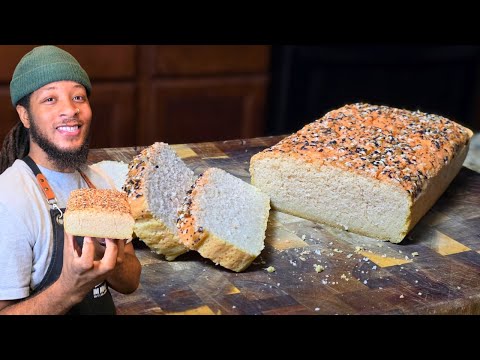
The source video that sparked this recipe trend. Watch the batter consistency before and after blending to understand what fully emulsified dairy looks like — that visual cue is the key to replicating the texture.
2. Flourless Bread Science Explained
A deep dive into how psyllium husk mimics gluten structure and why egg-based loaves behave differently in the oven than conventional bread. Useful context for troubleshooting texture issues.
3. Keto Bread Comparison RoundupSide-by-side comparison of almond flour, coconut flour, and psyllium-based keto breads. Clarifies why this cottage cheese method outperforms most alternatives for slice integrity and macros.
🛠️ Core Equipment
- High-powered blender ↗A standard blender or food processor can leave cottage cheese curds intact. A high-powered blender fully emulsifies the dairy into the egg base, which is what creates a uniform crumb. Underpowered equipment is the leading cause of wet pockets in this loaf.
- Standard loaf pan (9x5 inch) ↗Size matters here. A smaller pan makes a taller loaf that takes longer to cook through; a larger pan produces a flat loaf with over-browned edges. A standard 9x5 gives you the right height-to-width ratio for even baking at 375°F.
- Parchment paper with overhanging edges ↗This loaf is dense and sticks aggressively to bare metal. Parchment with overhang on the long sides gives you handles to lift the loaf cleanly. Grease alone is not enough — always line the pan.
- Wire cooling rack ↗Cooling in the pan traps steam underneath the loaf, softening the bottom crust and slowing the crumb-setting process. The rack allows air circulation on all sides so the psyllium can finish gelling properly.
The Flourless Bread That Actually Works (No Flour, No Yeast, No Excuses)
🛒 Ingredients
- ✦6 large eggs, room temperature
- ✦1 cup full-fat cottage cheese
- ✦1/2 cup plain unsweetened Greek yogurt
- ✦3 tablespoons psyllium husk powder
- ✦2 tablespoons ground flaxseed
- ✦1 tablespoon apple cider vinegar
- ✦1 teaspoon sea salt
- ✦1/2 teaspoon garlic powder
- ✦1/2 teaspoon dried oregano
- ✦1/4 teaspoon freshly cracked black pepper
- ✦1 tablespoon olive oil, for greasing
- ✦2 tablespoons sesame seeds, optional for topping
- ✦1 teaspoon fresh rosemary, finely chopped, optional
👨🍳 Instructions
01Step 1
Preheat your oven to 375°F. Line a standard 9x5 inch loaf pan with parchment paper, allowing the edges to overhang on the long sides for easy removal.
02Step 2
Crack all six eggs into a high-powered blender and blend on high for 45 seconds until fully homogenized.
03Step 3
Add the cottage cheese and Greek yogurt to the blender. Blend on high for 60 seconds until the mixture is completely smooth with no visible curds.
04Step 4
Add the psyllium husk powder, ground flaxseed, and apple cider vinegar. Blend on medium speed for 30 seconds to incorporate the binding agents.
05Step 5
Add the sea salt, garlic powder, dried oregano, and black pepper. Pulse 3-4 times to distribute the seasonings evenly.
06Step 6
Transfer the batter to the prepared loaf pan using a spatula. Smooth the top surface to ensure even distribution across the pan.
07Step 7
If using, scatter sesame seeds and fresh rosemary across the top, pressing them lightly into the batter so they adhere during baking.
08Step 8
Bake for 35 to 40 minutes, until a toothpick inserted into the center emerges clean and the top is deep golden brown.
09Step 9
Remove from the oven and let the loaf rest in the pan for 10 minutes before lifting out by the parchment overhang onto a wire cooling rack.
10Step 10
Cool on the rack for at least 20 minutes before slicing. The psyllium continues to gel as it cools — cutting too early breaks the crumb structure.
Nutrition Per Serving
Estimates based on standard preparation. Adjustments alter macros.
🔄 Substitutions
Instead of Full-fat cottage cheese...
Use Part-skim ricotta cheese
Slightly lighter texture with marginally reduced richness. Ricotta is smoother out of the container, so blend time can be reduced by 20 seconds. The loaf will be a touch less dense.
Instead of Greek yogurt...
Use Skyr or Icelandic yogurt
Higher protein concentration and lower sugar content. Produces a denser crumb with a more pronounced savory flavor. Excellent swap if you have it on hand.
Instead of Psyllium husk powder...
Use Ground chia seeds
Provides similar binding with a slightly nuttier flavor and more omega-3s. Use the same 3-tablespoon measurement. The loaf will have a finer crumb and slightly shorter slice height.
Instead of Apple cider vinegar...
Use Fresh lemon juice
Delivers the same pH-lowering effect that activates the psyllium binding without the vinegar note. Use the same 1-tablespoon measurement. The flavor is cleaner and allows the herbs to come through more clearly.
🧊 Storage & Reheating
In the Fridge
Store tightly wrapped or in an airtight container for up to 5 days. The texture firms slightly after the first day, which most people prefer for slicing.
In the Freezer
Slice before freezing and store slices in a zip-lock bag with parchment between each slice for up to 2 months. Pull individual slices and toast directly from frozen.
Reheating Rules
Toast in a toaster or toaster oven at 375°F for 3-4 minutes. Microwaving makes the crumb gummy — avoid it.
❓ Frequently Asked Questions
Why is my loaf gummy or wet inside?
Two likely causes: you didn't blend long enough to break down the cottage cheese curds, or you sliced before the loaf had cooled fully. Psyllium husk continues to gel as the loaf cools — the 20-minute rest on a wire rack isn't optional. If the texture is consistently wet across multiple attempts, also check that you're using psyllium husk powder, not flakes.
Can I make this without a blender?
Technically yes, but results will be inconsistent. A hand mixer can work if you start with the eggs and beat them until frothy, then add the cottage cheese and beat until no visible curds remain. The risk is that under-emulsified dairy creates wet pockets. A blender is strongly recommended.
Is this actually keto?
Yes. At 3g net carbs per slice (total carbs minus fiber), it fits comfortably within standard keto macros. The carbs come almost entirely from the psyllium husk and flaxseed — both of which are high-fiber, low-glycemic-impact sources.
Why does my loaf have a purple or gray tint?
Psyllium husk can react with egg proteins and certain minerals in the water to produce a slight purple-gray color. It's a known cosmetic quirk of this ingredient — completely harmless and doesn't affect flavor. Some brands are more prone to it than others. If it bothers you visually, a small amount of turmeric in the batter will shift the color toward golden.
Can I add mix-ins like seeds, cheese, or olives?
Yes, but keep additions to 1/4 cup or less. Heavy mix-ins disrupt the psyllium network and can prevent the crumb from setting properly. Seeds and chopped herbs work best. Wet additions like olives or sun-dried tomatoes should be patted dry before folding in.
Does this bread taste like eggs?
There's a faint egg note when eaten plain and warm, but it fades significantly after cooling and almost entirely disappears when toasted. The garlic, oregano, and sesame seed topping do a lot of work here. If you're sensitive to egg flavor, increase the dried herbs slightly and always toast before serving.
The Science of
The Flourless Bread That Actually Works (No Flour, No Yeast, No Excuses)
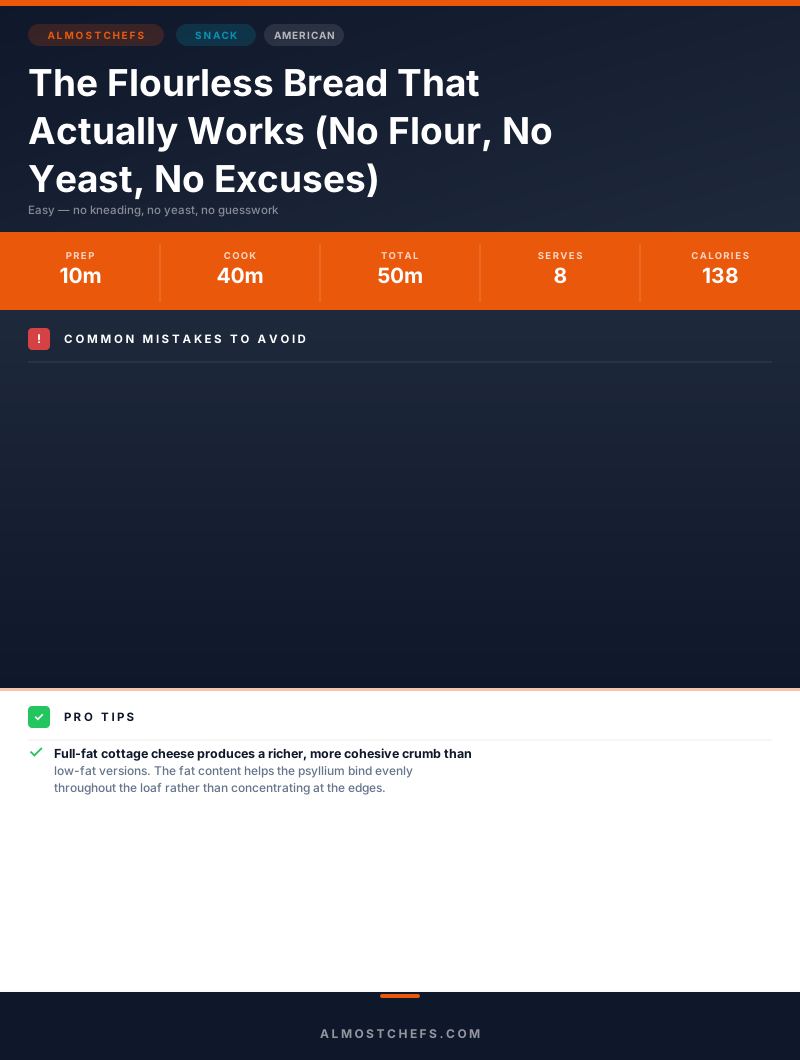
We turned everything on this page into a beautiful, flour-proof PDF cheat sheet. Print it out, stick it to your fridge, and never mess up your the flourless bread that actually works (no flour, no yeast, no excuses) again.
*We'll email you the high-res PDF instantly. No spam, just perfectly cooked meals.
AlmostChefs Editorial Team
We translate the internet's most popular cooking videos into foolproof, beginner-friendly written recipes. We analyze multiple methods, test them in our kitchen, and engineer a single "Master Recipe" that gives you the best possible result with the least possible stress.