Hwangtae-chae Bokkeum (Dried Pollack Stir-Fry)
Shredded dried pollack stir-fried in a sweet gochujang glaze until crispy and chewy. A protein-rich banchan that goes with everything.
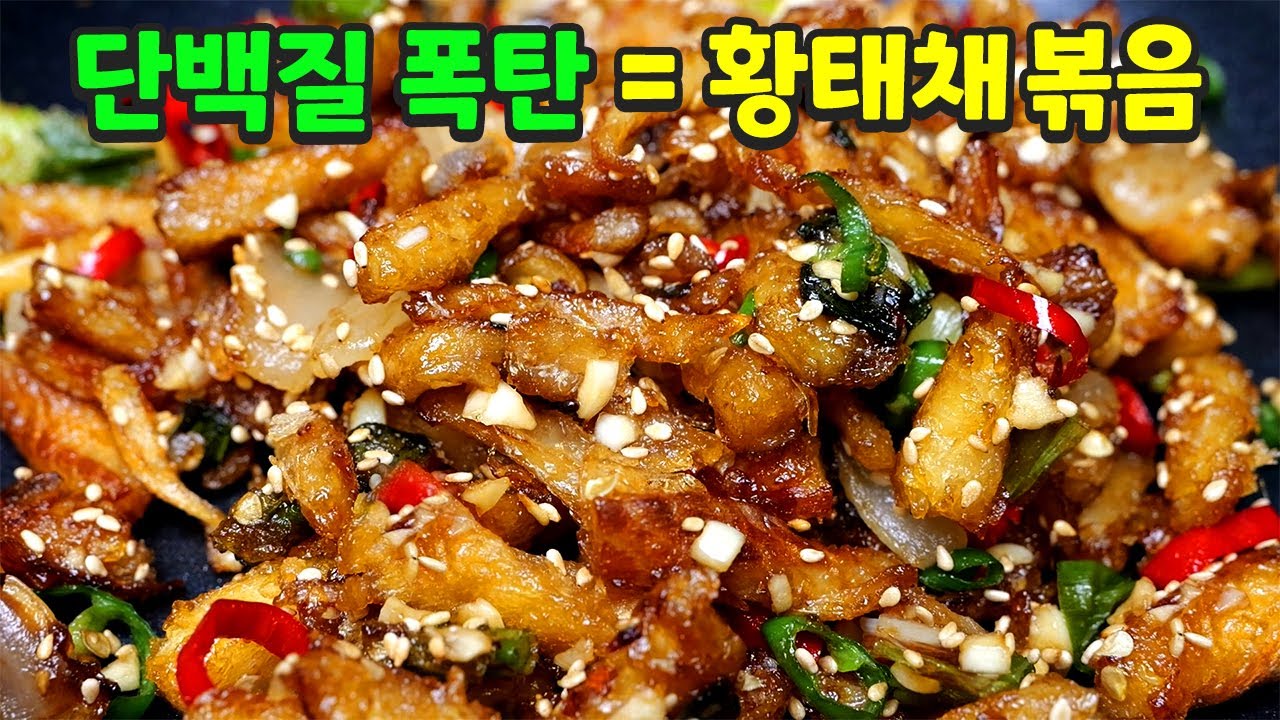
Why This Recipe Works
Most people treat banchan as an afterthought — something scooped from a plastic tub at the Korean grocery, eaten without consideration, forgotten by the time the soup bowl is empty. Hwangtae-chae bokkeum deserves better than that. This is ancient Korean preservation science meeting high-heat caramelization chemistry, and the reason it works so reliably comes down to three interlocking principles that most home cooks stumble through accidentally, if they get it right at all.
The Freeze-Dry Advantage Is Not Incidental
Hwangtae is not simply dried fish. It is fish that has been subjected to repeated freeze-thaw cycles over a Korean mountain winter — a process that physically restructures the protein matrix. Each freeze-thaw cycle ruptures cell walls, then reconsolidates them in a looser, more porous arrangement. The result is a shredded fiber that behaves more like aerogel than fish: light, hollow-cored, and exceptionally responsive to moisture and heat. This is not culinary poetry. This is applied food science that Korean mountain communities in Gangwon province worked out empirically over several centuries before food scientists named the mechanism.
The practical consequence: hwangtae-chae absorbs liquid and fat at a rate that fresh or conventionally dried fish cannot match. When you briefly dampen those pale, fluffy strands before cooking, you are not rehydrating the fish — you are calibrating it. The goal is controlled moisture uptake: enough to keep the outer fibers from flash-charring in the pan, not so much that you collapse the porous structure and end up with a dense, rubbery mess. Two to three tablespoons of water, tossed by hand, five minutes of rest. That is the entire protocol. Do not deviate from it.
Low Heat First, Then Controlled Reduction
The two-phase cooking method in this recipe is not aesthetic preference. It is a response to the thermal fragility of freeze-dried protein. Dried fish has almost no water content to buffer it against direct heat — put it straight into a hot pan with sauce and you will get scorched exteriors and a sticky, burned-sugar mess at the bottom of your large pan before the interior fibers have had time to warm through.
The low-heat puffing phase — two to three minutes in lightly oiled heat — serves two functions simultaneously. It drives out the residual surface moisture you introduced in the dampening step, which resets the strands to a slightly softened but structurally intact state. It also gently warms the protein throughout, making the fibers more pliable and receptive to the sauce coating that follows. You will see the strands visibly swell and lighten further. That is correct. That is what you want.
Only after this phase do you introduce the sauce and raise the heat to medium. From this point, you are running a reduction and coating operation. The gochujang carries complex fermented pepper heat — not raw capsaicin burn, but a deep, layered spice that mellows further as it cooks. The rice syrup provides long-chain carbohydrates that caramelize slowly and evenly, producing a glaze that stays glossy and pliable rather than cracking into a hard candy shell. Sugar alone would crystallize. Corn syrup would work but lacks depth. Rice syrup is the correct choice because its molecular profile produces exactly the texture and sheen this dish requires.
The Sauce Ratio Is Load-Bearing
Every element in the sauce has a structural role. Gochujang provides body, color, and fermented heat. Soy sauce adds sodium and umami depth — without it, the glaze reads as sweet-spicy with no bass note. Rice syrup and sugar together calibrate the viscosity and the rate of caramelization. Mirin contributes both sweetness and a mild acidity from its residual fermentation, which prevents the glaze from tipping into cloying territory. Garlic is textural punctuation. Water controls sauce concentration at the point of application — too thick and it seizes on contact, too thin and it fails to adhere.
The addition of sesame oil at the end, off-heat, is not decoration. Sesame oil's aromatic compounds are heat-volatile — cook them and you lose most of what makes them distinctive. Finished off the heat, they coat the glaze surface and provide a nutty, toasted topnote that registers on the nose before the first bite. This is flavor layering. It is deliberate and it matters.
Cooling Is Part of the Cook
Remove this from heat while it still looks slightly wetter than you want. The residual heat in the pan and in the pollack itself will continue driving moisture evaporation for another three to four minutes as it cools. The glaze firms as it sets. The strands, which felt slightly yielding at the end of the cook, will stiffen into that precise chewy-crispy register that makes hwangtae bokkeum compulsively edible. If you let it cool fully and find the texture is too stiff and brittle, you over-dried it in the pan. If it stays tacky and soft, you pulled it too early. The target texture has perceptible snap when you pinch a strand, followed immediately by a satisfying chew. That is the benchmark.
The shelf stability of the finished dish — two to three weeks in a sealed container, no refrigeration required — is a direct consequence of the sugar and salt concentrations in the glaze combined with the extremely low water activity of the base ingredient. This is not a coincidence. It is the same preservation logic that makes traditional Korean jangajji and jangjorim last for weeks. Hwangtae bokkeum is, at its core, a preserved food that happens to taste extraordinary. Make a large batch. It rewards patience and preparation in equal measure.
Hwangtae-chae Bokkeum (Dried Pollack Stir-Fry)
🛒 Ingredients
- ✦2 oz dried shredded pollack (hwangtae-chae)
- ✦2 tablespoons gochujang (Korean red pepper paste)
- ✦1 tablespoon soy sauce
- ✦2 tablespoons rice syrup or corn syrup
- ✦1 tablespoon sesame oil
- ✦1 tablespoon sugar
- ✦2 cloves garlic, minced
- ✦1 tablespoon mirin
- ✦2 tablespoons water
- ✦1 tablespoon vegetable oil
- ✦Toasted sesame seeds for garnish
👨🍳 Instructions
01Step 1
Prepare the dried pollack: place shredded hwangtae in a large bowl. Sprinkle with 2-3 tablespoons of water and gently toss with your hands to slightly moisten. Let sit for 5 minutes.
02Step 2
Mix the sauce: combine gochujang, soy sauce, rice syrup, sugar, garlic, mirin, and water. Stir until smooth.
03Step 3
Heat vegetable oil in a large pan over medium-low heat. Add the dampened pollack and stir gently for 2-3 minutes until it's slightly puffed and fragrant.
04Step 4
Pour the sauce over the pollack. Increase heat to medium. Toss continuously for 3-4 minutes until every strand is coated and the sauce reduces to a glossy glaze.
05Step 5
Drizzle sesame oil and sprinkle sesame seeds. Toss once more and remove from heat.
06Step 6
Let cool — the pollack crisps further as it cools. Serve as banchan with rice.
Nutrition Per Serving
Estimates based on standard preparation. Adjustments alter macros.
🔄 Substitutions
Instead of Dried shredded pollack...
Use Dried shredded squid (ojingeo-chae)
Similar preparation — stir-fry in gochujang sauce. Chewier texture.
Instead of Gochujang...
Use Soy sauce + sugar (increase both by 1 tablespoon)
For a non-spicy version (ganjang hwangtae bokkeum)
🧊 Storage & Reheating
In the Fridge
Store in airtight container for 2-3 weeks. No refrigeration needed if kept sealed.
In the Freezer
Not needed — dried preparation already preserves it.
Reheating Rules
Eat at room temperature. If needed, quick 30-second toss in a dry pan.
❓ Frequently Asked Questions
What is hwangtae?
Hwangtae is pollack (Alaska pollock) that has been repeatedly frozen and thawed in the cold mountain air of Korea's Gangwon province over winter. This natural freeze-drying process turns the fish golden yellow (hwang = yellow) and creates a unique light, fluffy texture. It's one of Korea's most traditional preserved ingredients.
Is hwangtae the same as bugeopo?
They're related but different. Both come from pollack (bugeo). Hwangtae is freeze-dried multiple times (golden, fluffy). Bugeopo is simply dried (darker, denser). Hwangtae-chae (shredded) is the form used for this stir-fry.

The Science of
Hwangtae-chae Bokkeum (Dried Pollack Stir-Fry)
We turned everything on this page into a beautiful, flour-proof PDF cheat sheet. Print it out, stick it to your fridge, and never mess up your hwangtae-chae bokkeum (dried pollack stir-fry) again.
*We'll email you the high-res PDF instantly. No spam, just perfectly cooked meals.
AlmostChefs Editorial Team
We translate the internet's most popular cooking videos into foolproof, beginner-friendly written recipes. We analyze multiple methods, test them in our kitchen, and engineer a single "Master Recipe" that gives you the best possible result with the least possible stress.