Creamy Homemade Hummus (Tahini-First Emulsion, Aquafaba Secret)
Hummus that achieves restaurant-grade silkiness through two technique departures most recipes omit: emulsifying the tahini and lemon juice alone before the chickpeas enter, and using cold aquafaba instead of water to thin the mixture. Processing time of 4 full minutes is non-negotiable.
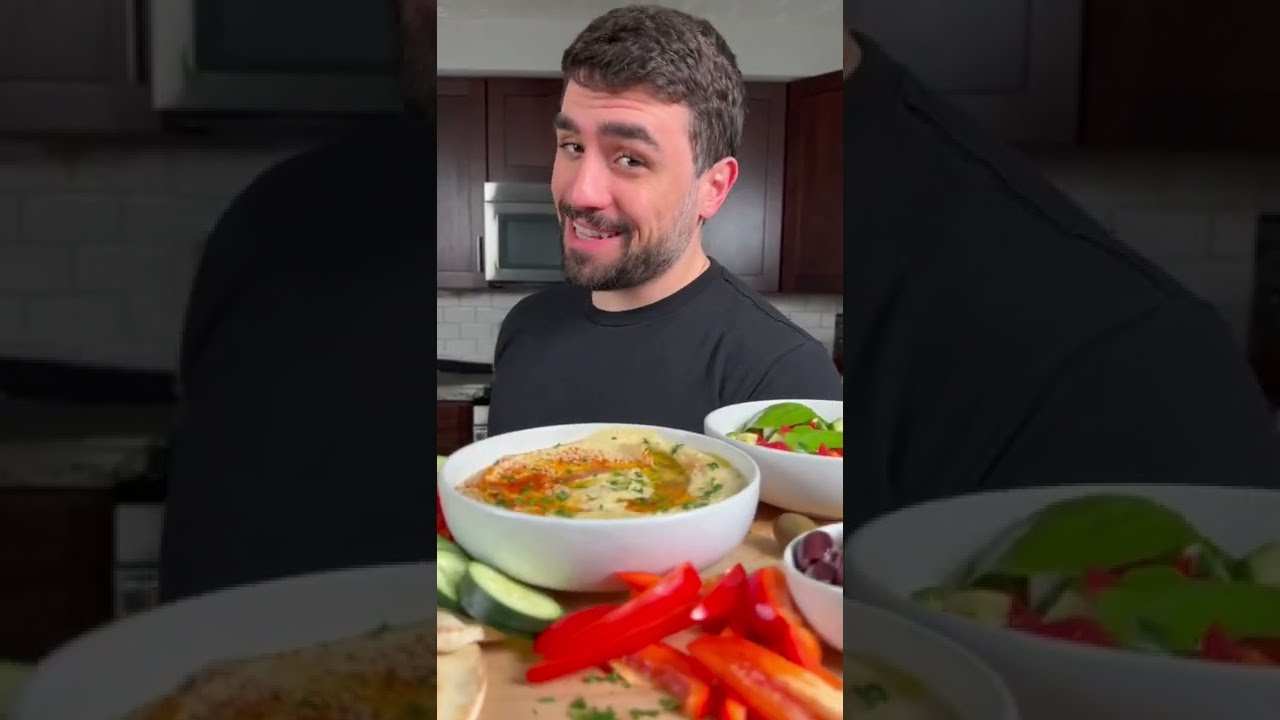
“Most homemade hummus tastes like wet chalk. The same four ingredients that produce something silky at a good Lebanese restaurant produce something grainy and flat at home. The difference is not the recipe — it is the sequence. Specifically whether you let the tahini emulsify with lemon juice alone before any chickpeas enter the processor, and whether you use cold aquafaba instead of water. Both steps take zero extra effort. Neither appears in most recipes.”
Why This Recipe Works
Hummus is a four-ingredient dish that most people cannot make well at home. That is not a criticism — it is a structural problem. The recipe appears deceptively simple, which means the technique gets no respect. The same ingredients that produce something silky at a good Lebanese restaurant produce something grainy and flat at home. The ingredients are not the variable. The sequence is.
The Emulsification Problem
Tahini is an oil-rich paste with a fat content around 55%. Lemon juice is water-based. These two substances do not want to coexist at a molecular level — oil and water phase-separate unless something forces them into a stable suspension. That stable suspension is an emulsion, and creating it is the entire structural job of hummus.
When everything goes into the food processor simultaneously, the tahini never emulsifies. The chickpea starch coats the fat droplets before they can disperse uniformly into the aqueous phase, and you end up with a suspension rather than an emulsion — two things that look similar at a glance but feel completely different on the palate. A suspension is coarse, dense, and separates when it sits. An emulsion is smooth, light, and holds.
The fix is building the emulsion before the chickpeas complicate things. Process the tahini with the lemon juice alone for a full 90 seconds. Watch what happens: the mixture turns pale, airy, and slightly fluffy as the fat disperses into tiny droplets uniformly distributed through the lemon juice. This is the stable foundation everything else joins. Chickpeas added to an existing emulsion integrate smoothly. Chickpeas added alongside the emulsifying agents prevent the emulsion from forming in the first place.
The Aquafaba Advantage
The liquid in a can of chickpeas is not waste. It is a colloidal suspension of starch, soluble protein, and saponins leached from the chickpeas during cooking and canning. This combination behaves as an emulsifying agent — the same role that egg white plays in mayonnaise or hollandaise. Professional hummus operations use fresh chickpea cooking liquid for exactly this reason. Canned aquafaba is the convenient equivalent.
Cold aquafaba works better than room-temperature water because emulsions stabilize more readily at lower temperatures. The fat is less fluid, the droplet interfaces form more tightly, and the resulting texture is lighter and airier than the same hummus made with warm liquid. Add it one tablespoon at a time while the processor runs — each addition should fully incorporate before the next goes in. Rushing this step produces lumpy texture that no additional processing will fix.
The Time Requirement
Five minutes of processing is not excessive — it is the minimum. The first two minutes break down the chickpeas into a rough paste. Minutes three and four smooth the paste as the fat fully incorporates and the starch continues hydrating. Minute five is where the texture crosses from smooth into genuinely silky, as the final protein structures in the chickpea flesh denature fully under the friction heat of the blade.
A rubber spatula is mandatory equipment, not a nice-to-have. The paste that accumulates on the bowl walls receives less friction than the paste circulating at the blade. It processes more slowly, stays coarser, and is the source of every grainy pocket in the finished hummus. Scraping every 60 seconds takes three seconds and eliminates the problem entirely.
The Finishing System
Hummus is completed in the bowl, not the processor. The center well is not decorative — it holds the olive oil so anything dragged through the center receives the full aromatic hit of good oil combined with smoked paprika and heat. Flat hummus covered uniformly in toppings is less interesting than hummus that changes character from the plain edge to the oil-filled center. The spatial differentiation is intentional.
Serve at room temperature. Cold hummus is denser, more muted, and slightly gluey from the chilled chickpea starch. Pull it from the refrigerator at least 15 minutes before serving. The texture opens up as it warms, and the garlic and lemon notes that were muffled by cold become readable again.
Where Beginners Mess This Up
Before we start, read this. These are the 4 reasons your creamy homemade hummus (tahini-first emulsion, aquafaba secret) will fail:
- 1
Adding everything to the processor simultaneously: When chickpeas, tahini, lemon, and oil enter the processor together, the tahini never properly emulsifies. The chickpea starch coats the fat droplets before they can form a stable matrix. Build the emulsion first — tahini plus lemon juice, alone, for 90 seconds — then add the chickpeas. You will get a texture in 5 minutes that 15 minutes of brute-force blending cannot produce the other way.
- 2
Using warm or room-temperature liquid to thin the hummus: Cold aquafaba from the can — refrigerated if possible — is what creates the light, airy texture. Cold fat emulsifies more stably than warm fat. The same principle that makes cold butter produce better pastry applies here. Add the aquafaba one tablespoon at a time, cold, while the processor runs.
- 3
Stopping the processor too early: Hummus requires 4–5 full minutes of processing to fully break down chickpea cell walls and incorporate all the fat. Most people stop at 2 minutes when the mixture looks smooth enough. It is not. The final 2 minutes are where the texture goes from paste to cloud. Set a timer and let it run.
- 4
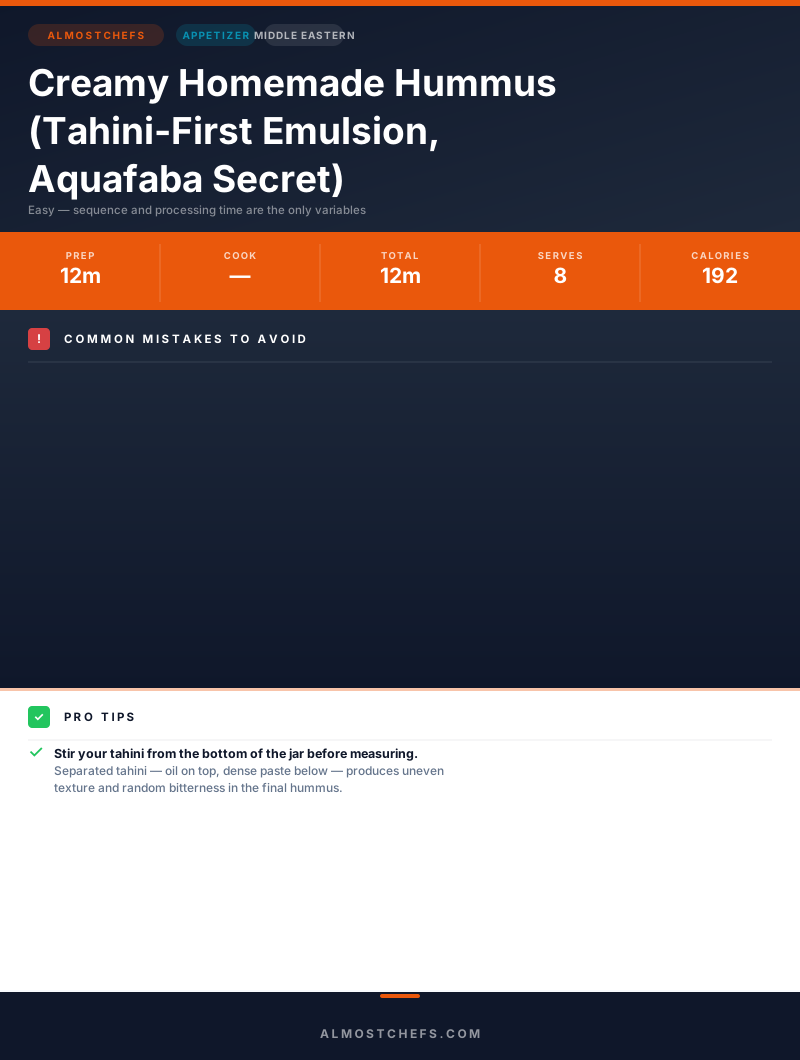
Using old or separated tahini: Tahini that has been sitting separated in your cabinet for months will produce oily, bitter results. Smell it before using — good tahini smells nutty and slightly sweet. Stir from the bottom of the jar until fully uniform before measuring. Separated tahini added unmixed produces inconsistent texture and random bitter pockets.
The Video Reference Library
Want to see it in action? Here are the exact videos we analyzed and combined to build this foolproof recipe translation:
The primary reference for this recipe. Demonstrates the tahini-first emulsification method and shows what the texture should look like at each stage. Clear close-ups of the aquafaba addition sequence.
Covers the food processor timing, bowl-scraping cadence, and why the tahini emulsification step changes the final texture.
Breaks down the cold liquid trick and the emulsification chemistry in plain terms. Good reference for understanding why the sequence matters before starting.
🛠️ Core Equipment
- Full-size food processorGenerates more friction and sustained blending power than a blender, which is what creates the silky emulsion. A blender can work but often produces a denser texture because the blade geometry forces the mixture to move differently.
- Rubber spatulaFor scraping the bowl sides every 60 seconds during processing. The unmixed paste on the walls is where all the grainy texture hides — it receives less friction and stays coarser. Scraping is not optional.
- Fine-mesh sieve (optional)For premium texture, push the finished hummus through a fine-mesh sieve. Takes 90 seconds and removes any remaining cell wall fragments. The difference is immediately visible — the hummus shimmers instead of looking matte.
- Shallow serving bowlA wide, shallow bowl allows the traditional center well for olive oil, gives toppings room to spread, and makes the portion look generous. Hummus served in a deep bowl looks like a cup of paste.
Creamy Homemade Hummus (Tahini-First Emulsion, Aquafaba Secret)
🛒 Ingredients
- ✦1 can (15 oz) chickpeas, drained and rinsed — reserve all liquid
- ✦3 tablespoons tahini, well-stirred from the bottom of the jar
- ✦3 tablespoons fresh lemon juice
- ✦2 cloves garlic, minced
- ✦3 tablespoons extra virgin olive oil, divided
- ✦3 tablespoons reserved chickpea liquid (aquafaba), cold
- ✦1/2 teaspoon sea salt
- ✦1/2 teaspoon ground cumin
- ✦1/4 teaspoon smoked paprika
- ✦Pinch of cayenne
- ✦Fresh parsley, chopped, for garnish
- ✦Extra smoked paprika, for drizzle
👨🍳 Instructions
01Step 1
Drain and rinse the chickpeas under cool water. Reserve all the can liquid — refrigerate it if possible. Pat the chickpeas dry.
02Step 2
Add the tahini and fresh lemon juice to the food processor. Process for 1 full minute until the mixture turns pale, thick, and slightly fluffy.
03Step 3
Add the minced garlic, olive oil (2 tablespoons), salt, cumin, and cayenne. Process for another 30 seconds.
04Step 4
Add all the drained chickpeas. Process on medium-high for 2 minutes. Stop and scrape the bowl sides with a rubber spatula.
05Step 5
With the processor running, add the cold aquafaba one tablespoon at a time, waiting 20 seconds between additions for each to fully incorporate. Scrape the bowl after each addition.
06Step 6
Continue processing for 3–4 more minutes, scraping the bowl every 60 seconds. The hummus is done when it pulls cleanly away from the bowl sides and looks glossy.
07Step 7
Taste and adjust — more salt, more lemon, or a pinch more cumin. Process briefly to incorporate any additions.
08Step 8
Transfer to a shallow serving bowl. Use the back of a spoon to create a wide well in the center. Drizzle the remaining tablespoon of olive oil into the well. Dust with smoked paprika and scatter chopped parsley.
Nutrition Per Serving
Estimates based on standard preparation. Adjustments alter macros.
🔄 Substitutions
Instead of Tahini...
Use Sunflower seed butter or roasted almond butter
Slightly less earthy and nutty but maintains creamy texture. Use for sesame allergies. Almond butter produces a slightly sweeter, milder result.
Instead of Canned chickpeas...
Use Freshly cooked dried chickpeas with skins removed
Noticeably smoother and more luxurious. Requires 8 hours soaking plus 1–2 hours cooking. Save the cooking liquid — it works exactly like aquafaba and is arguably better.
Instead of Fresh lemon juice...
Use Fresh lime juice or white wine vinegar (reduce by 20%)
Lime creates brighter, more tropical notes. Vinegar adds sharp acidity without citrus character. Both work — lime especially if serving alongside grilled meats.
Instead of Ground cumin...
Use Za'atar spice blend (same quantity)
More herbaceous and layered. Za'atar introduces thyme, sumac, and sesame notes that produce a distinctly different but equally good result.
🧊 Storage & Reheating
In the Fridge
Store covered with a thin layer of olive oil on the surface (prevents oxidation and skin formation) for up to 5 days. Stir before serving.
In the Freezer
Freeze in portions for up to 3 months. Texture changes slightly upon thawing — stir vigorously with a splash of cold water to restore creaminess.
Reheating Rules
Hummus is served at room temperature or cold. Pull from the refrigerator 15 minutes before serving. Never microwave — the fat breaks and you get an oily puddle with separated solids.
❓ Frequently Asked Questions
Why is my hummus grainy no matter how long I blend it?
Two likely causes: you did not emulsify the tahini with lemon juice first, or your food processor blade is dull. Try the tahini-first method — process tahini and lemon alone for 90 seconds until fluffy before adding anything else. This builds the emulsion structure that everything else joins. Adding chickpeas before the emulsion is built means the starch interferes with fat dispersion from the start.
Can I use dried chickpeas instead of canned?
Yes, and the result is noticeably better. Soak dried chickpeas overnight, cook until very tender — they should mash between your fingers with almost no resistance — and remove the skins before processing. Save the cooking liquid as your aquafaba.
Why does my hummus taste bitter?
Almost always the tahini. Separated or old tahini turns rancid and bitter. Smell it before using — good tahini smells nutty and slightly sweet, not sharp or acrid. If the tahini is the problem, no amount of lemon or salt will fix the finished hummus.
How do I make it spicier?
Add more cayenne at the end in small pinches, tasting after each. A small roasted jalapeño or a teaspoon of harissa paste added during processing also works. Sriracha works in a pinch but adds garlic and vinegar that shift the flavor profile.
Why does Lebanese restaurant hummus taste so different from mine?
Three differences: they use freshly cooked chickpeas rather than canned, they peel the skins, and they use a much higher tahini-to-chickpea ratio than most recipes call for. Some Lebanese-style hummus is 40% tahini by weight. It tastes rich, nutty, and deeply savory rather than chickpea-forward.
Can I make this without a food processor?
A high-powered blender works with adjustments — add slightly more aquafaba to get the mixture moving and use the tamper. A regular blender or manual mashing produces a serviceable but noticeably chunkier result. The silky emulsion requires sustained high-speed friction that hand tools cannot replicate.
The Science of
Creamy Homemade Hummus (Tahini-First Emulsion, Aquafaba Secret)
We turned everything on this page into a beautiful, flour-proof PDF cheat sheet. Print it out, stick it to your fridge, and never mess up your creamy homemade hummus (tahini-first emulsion, aquafaba secret) again.
*We'll email you the high-res PDF instantly. No spam, just perfectly cooked meals.
AlmostChefs Editorial Team
We translate the internet's most popular cooking videos into foolproof, beginner-friendly written recipes. We analyze multiple methods, test them in our kitchen, and engineer a single "Master Recipe" that gives you the best possible result with the least possible stress.