Classic Huevos Rancheros (The Mexican Breakfast You've Been Getting Wrong)
Crispy-edged eggs nestled in a fire-roasted tomato salsa with black beans, served on warm corn tortillas. We analyzed the most popular methods to build one foolproof technique that delivers set whites, runny yolks, and a sauce that actually tastes like something.
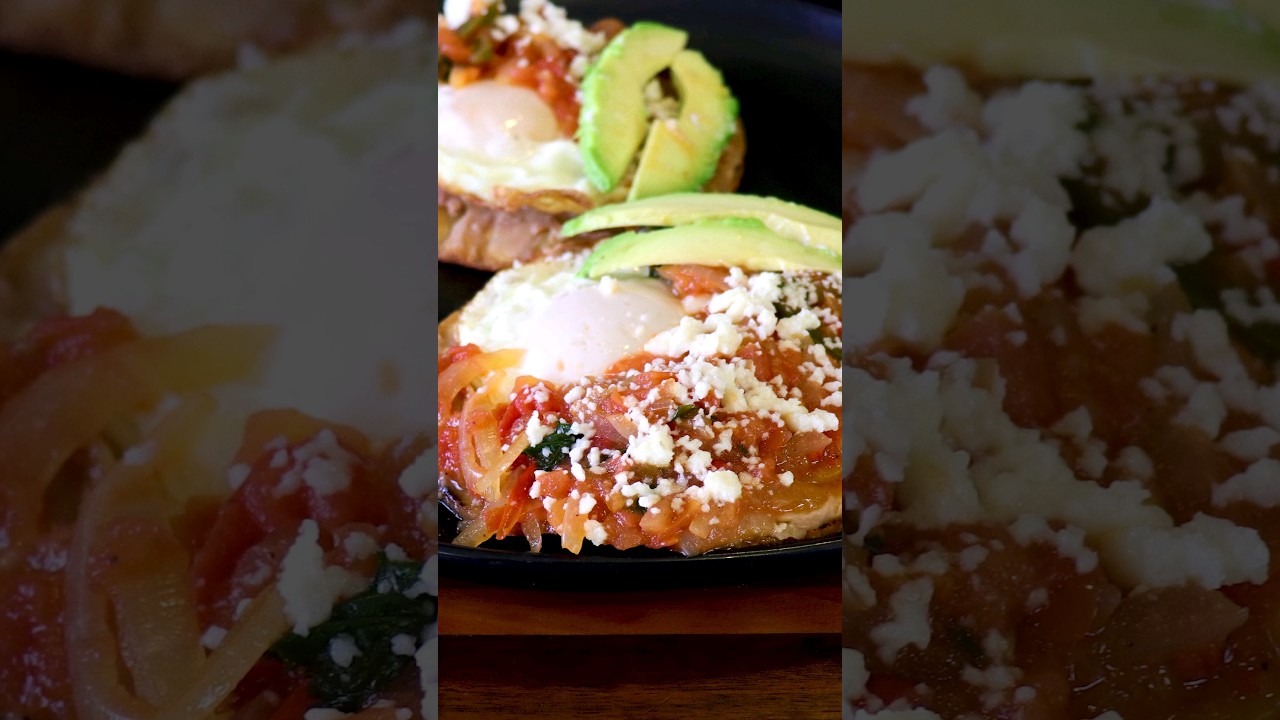
“Huevos rancheros is not eggs in tomato sauce. That's shakshuka with a passport problem. Real huevos rancheros is a precision balancing act: the yolk has to run, the white has to be fully set, the salsa has to be thick enough to hold the eggs without drowning them, and the tortilla has to be warm but not soggy. Most recipes fail on at least two of these. Here's the version that doesn't.”
Why This Recipe Works
Huevos rancheros is not a complex dish. It is a simple dish done correctly, which is much harder. There are four moving parts — tortilla, salsa, beans, eggs — and they all need to arrive at the table at the right temperature in the right condition at the same time. That coordination problem is why most home versions fail.
The Sauce Is the Whole Recipe
The ranchero sauce is not a backdrop. It is the dish. Everything else — the tortilla, the beans, the egg — is infrastructure for delivering the sauce to your mouth in an interesting format. Treat the sauce accordingly.
Fire-roasted canned tomatoes are not a shortcut. They are the correct ingredient. The fire-roasting concentrates the tomato sugars and introduces a subtle char note that fresh tomatoes simply don't have. Fresh tomatoes, sautéed in a pan, release their liquid and produce a watery, flat sauce that soaks through the tortilla in sixty seconds. Canned fire-roasted tomatoes produce a thick, clingy sauce that stays where you put it.
The spice order matters. Cumin and smoked paprika go in with the tomatoes, not with the onion, because fat-soluble spice compounds need liquid to bloom evenly. Blooming them in the tomato liquid rather than the oil distributes their flavor throughout the sauce rather than concentrating it in spots.
The Egg Problem
The enemy of good huevos rancheros is differential cooking speed. Egg whites set at around 145°F. Yolks begin to firm at around 155°F. The ten-degree window between them is the entire game. If you cook eggs uncovered in a hot sauce, the bottom of the white and the entire bottom of the yolk hit 155°F before the top of the white has reached 145°F. You get overcooked yolks and gelatinous whites.
The lid solves this by generating steam, which heats the top surface of the eggs from above at a gentler temperature than direct pan contact. Four to five minutes covered at medium heat gives you whites that are fully opaque and set, yolks that are still liquid, and a sauce that has had time to warm through without scorching.
Use a large skillet with a well-fitting lid — the kind where you can see the eggs through the glass if possible. Check at four minutes. The whites should not jiggle. The yolk should wobble like barely-set gelatin. Pull it then.
The Bean Strategy
Black beans are already cooked before they go into the can. You are not cooking them — you are heating them. Two minutes in the hot sauce is all they need. Any longer and the skins split, the interior turns mealy, and they lose their structural integrity. Fold them in at the very end of the sauce reduction, watch them turn glossy, and pull immediately.
The beans also serve a mechanical function: they elevate the eggs slightly off the pan floor, which slows the cooking of the white's underside and helps the differential cooking problem mentioned above. This is not an accident. It's architecture.
The Tortilla Question
A corn tortilla straight from the package is a liability. It cracks, it absorbs moisture on contact, and it has no flavor beyond raw corn starch. Thirty seconds per side in a dry cast iron skillet over medium heat transforms it: the surface firms slightly, the corn flavor toasts and deepens, and it becomes pliable enough to fold without cracking. Stack them under a kitchen towel while you finish the sauce — they'll stay warm and continue softening from their own steam.
The tortilla should be the last thing that gets cold. If it's cold when it hits the plate, you've already lost.
The Garnish as Function
Every garnish on huevos rancheros does something. The diced red onion adds raw crunch and a sharp bite that cuts through the rich yolk. The cilantro adds brightness and a grassy note that lifts the heavy cumin. The queso fresco adds salt and mild dairy tang. The avocado adds fat and cold temperature contrast. The lime adds acid that ties everything together.
None of these are decorative. Pull any one of them and the dish loses something distinct. The lime in particular is non-negotiable — squeeze it aggressively right before the first bite. The acid wakes up every other flavor on the plate simultaneously.
Where Beginners Mess This Up
Before we start, read this. These are the 4 reasons your classic huevos rancheros (the mexican breakfast you've been getting wrong) will fail:
- 1
Using fresh tomatoes instead of fire-roasted canned: Fresh tomatoes are mostly water. They release liquid during cooking and produce a watery, flat-tasting sauce that slides off the tortilla and soaks it into mush. Fire-roasted canned tomatoes are already concentrated, slightly smoky, and have had the liquid managed for you. This is one case where canned unambiguously wins.
- 2
Cooking the eggs uncovered: Without a lid, the top of the egg whites stay wet while the bottom of the yolk overcooks. You end up with rubbery yolks or gelatinous whites — never both right at the same time. The lid traps steam that sets the whites from above while keeping the yolk liquid. This is the entire technique.
- 3
Adding the beans too early: Black beans are already cooked. They don't need ten minutes in the sauce — they need two. Adding them too early turns them from firm and creamy to grainy and split. Fold them in at the very end of the sauce reduction, just to heat through.
- 4
Serving on cold tortillas: A cold tortilla is a sad tortilla. It cracks when you fold it and absorbs sauce like a sponge. Thirty seconds per side in a dry skillet makes them pliable, slightly toasted, and structurally capable of holding everything you're about to pile on top.
The Video Reference Library
Want to see it in action? Here are the exact videos we analyzed and combined to build this foolproof recipe translation:
The primary reference video demonstrating the full technique from salsa construction through egg timing. Clear close-ups of the correct egg doneness at the 4-minute mark.
🛠️ Core Equipment
- Large skillet with a tight-fitting lidThe lid is non-negotiable for the steam-setting technique that gives you set whites and runny yolks simultaneously. A lid that doesn't fit well lets steam escape and you lose control of the cook.
- Dry cast iron or nonstick skillet for tortillasTortillas need direct dry heat to toast properly. A wet pan or oil steams them instead of toasting, and you lose the slight char that adds flavor.
- Fine-mesh sieve or spiderFor draining the black beans properly. Residual bean liquid is starchy and will thin your sauce and change its texture. Drain and rinse thoroughly.
Classic Huevos Rancheros (The Mexican Breakfast You've Been Getting Wrong)
🛒 Ingredients
- ✦2 tablespoons extra-virgin olive oil
- ✦1 medium yellow onion, finely diced
- ✦3 cloves garlic, minced
- ✦1 jalapeño pepper, seeded and finely chopped
- ✦1 can (14 ounces) diced fire-roasted tomatoes
- ✦1 teaspoon ground cumin
- ✦1 teaspoon smoked paprika
- ✦1/2 teaspoon dried oregano
- ✦1/4 teaspoon cayenne pepper
- ✦1 can (15 ounces) black beans, drained and rinsed
- ✦8 large eggs
- ✦8 corn tortillas, warmed
- ✦1/2 cup fresh cilantro, chopped
- ✦1/4 cup diced red onion
- ✦1 ripe avocado, sliced
- ✦1/4 cup crumbled queso fresco
- ✦Sea salt and freshly ground black pepper to taste
- ✦Lime wedges for serving
👨🍳 Instructions
01Step 1
Warm the corn tortillas in a dry skillet over medium heat for about 30 seconds per side until pliable. Set aside on a clean kitchen towel to keep warm.
02Step 2
Heat the olive oil in a large skillet over medium-high heat until shimmering, about 1 minute.
03Step 3
Add the diced yellow onion and sauté for 3-4 minutes, stirring occasionally, until translucent and fragrant.
04Step 4
Stir in the minced garlic and chopped jalapeño. Cook for another minute until aromatic.
05Step 5
Pour in the fire-roasted tomatoes with all their juices. Add the cumin, smoked paprika, oregano, and cayenne. Stir well to combine.
06Step 6
Reduce heat to medium and simmer for 5-7 minutes until the sauce thickens slightly and the flavors meld. Stir occasionally.
07Step 7
Fold in the drained black beans and cook for 2 minutes, just until heated through.
08Step 8
Create four evenly spaced wells in the sauce using the back of a spoon. Crack 2 eggs into each well.
09Step 9
Cover the skillet with the lid and cook over medium heat for 4-5 minutes, until egg whites are fully set but yolks remain runny.
10Step 10
Season generously with sea salt and freshly ground black pepper.
11Step 11
Remove from heat. Scatter the fresh cilantro, diced red onion, and crumbled queso fresco over the top.
12Step 12
Arrange the warmed tortillas on serving plates. Carefully transfer the eggs with sauce onto each plate.
13Step 13
Top with sliced avocado and serve immediately with lime wedges. Squeeze the lime right before eating.
Nutrition Per Serving
Estimates based on standard preparation. Adjustments alter macros.
🔄 Substitutions
Instead of Corn tortillas...
Use Whole wheat or sprouted grain tortillas
Earthier, nuttier flavor with firmer texture. Increases fiber by 3-4 grams per serving and handles the sauce weight without going soggy as quickly.
Instead of Black beans...
Use Pinto beans or lentils
Pinto beans are more traditional in many regional Mexican versions and have a creamier texture. Lentils add a different earthiness and higher protein density.
Instead of Queso fresco...
Use Feta cheese or nutritional yeast
Feta is saltier and tangier — use less of it. Nutritional yeast is dairy-free, adds B vitamins, and contributes a savory depth that reads as cheesy without the fat.
Instead of Extra-virgin olive oil...
Use Avocado oil
Higher smoke point with a lighter flavor profile. No meaningful taste difference in a dish this boldly spiced. Better choice if your burner runs hot.
🧊 Storage & Reheating
In the Fridge
Store the salsa and beans separately from the eggs. The sauce keeps for up to 4 days in an airtight container. Eggs do not store well once cooked — make fresh each time.
In the Freezer
The ranchero sauce freezes well for up to 2 months. Freeze in single-serving portions so you can pull exactly what you need for a fast weekday breakfast.
Reheating Rules
Reheat the sauce in a skillet over medium heat, add beans, and cook fresh eggs. Do not reheat eggs — the yolks overcook and the whites turn rubbery. The sauce is the make-ahead component; the eggs are always cooked to order.
❓ Frequently Asked Questions
Why does my sauce turn watery?
You're either using fresh tomatoes or not reducing long enough. Fire-roasted canned tomatoes have more concentrated flavor and less free liquid. If using canned and still getting watery sauce, simmer uncovered for 2-3 extra minutes. The sauce should visibly coat the back of a spoon before you add the eggs.
Can I make this without the beans?
Yes, but the beans serve a structural purpose — they give the sauce body and something for the eggs to rest against. Without beans, the eggs sink into thin sauce and cook unevenly. If you skip beans, reduce the tomato sauce longer to compensate for the lost thickness.
How do I get the eggs to cook evenly in the sauce?
Even wells, even spacing, and consistent heat. If one egg is much thicker than the others, it will take longer to set. Make sure your wells are roughly the same depth and that the lid seals properly. Uneven cooking is almost always a lid problem or a well-depth problem.
Is this the same as shakshuka?
The technique is similar — eggs poached in tomato-based sauce — but the flavor architecture is completely different. Shakshuka uses Middle Eastern spice profiles (cumin, paprika, sometimes harissa). Huevos rancheros uses Mexican spices and is served on tortillas rather than eaten from the pan with bread. The eggs-in-sauce method is ancient and spans multiple culinary traditions independently.
Can I add meat?
Chorizo is the traditional addition. Brown crumbled Mexican chorizo in the pan first, drain most of the fat, then build the sauce on top of it. The rendered fat becomes the cooking medium and adds enormous depth. Add it at the onion stage. Do not use Spanish cured chorizo — it behaves completely differently and won't render properly.
Why do my tortillas get soggy?
Either they're going on the plate cold, you're plating too slowly, or you're putting the sauce directly on top of them before serving. Warm tortillas on the plate, serve immediately, and let the diner layer as they eat. The tortilla should be the base, not buried under sauce before it reaches the table.
The Science of
Classic Huevos Rancheros (The Mexican Breakfast You've Been Getting Wrong)
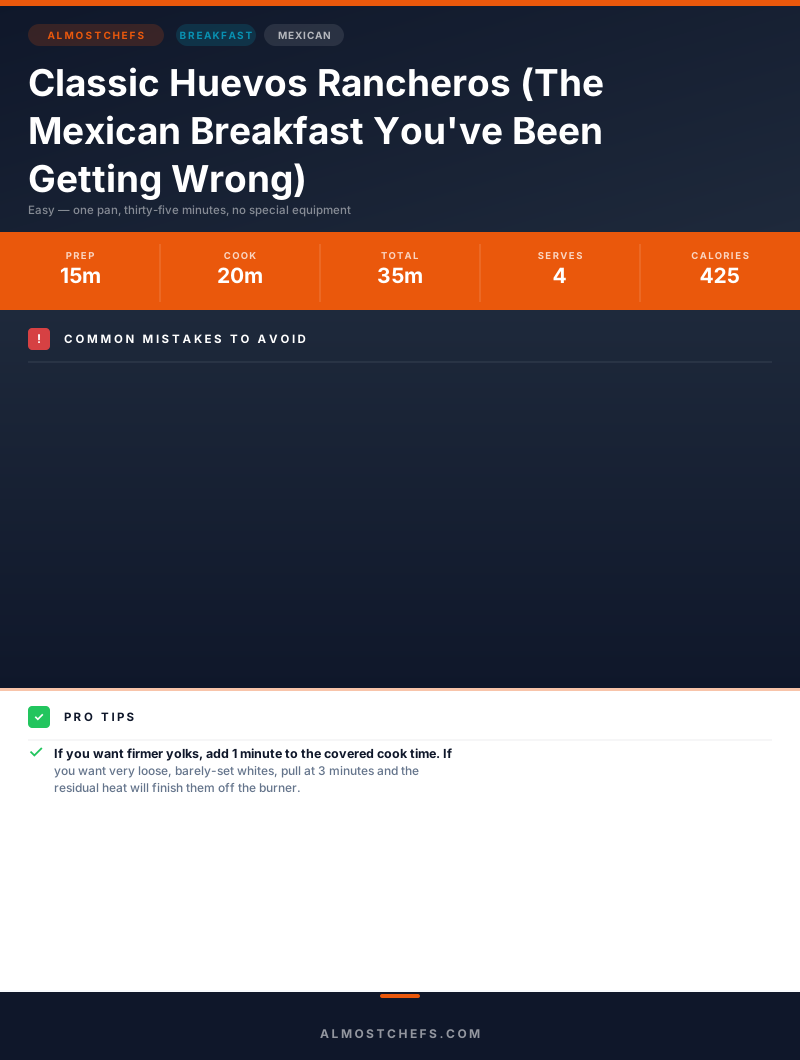
We turned everything on this page into a beautiful, flour-proof PDF cheat sheet. Print it out, stick it to your fridge, and never mess up your classic huevos rancheros (the mexican breakfast you've been getting wrong) again.
*We'll email you the high-res PDF instantly. No spam, just perfectly cooked meals.
AlmostChefs Editorial Team
We translate the internet's most popular cooking videos into foolproof, beginner-friendly written recipes. We analyze multiple methods, test them in our kitchen, and engineer a single "Master Recipe" that gives you the best possible result with the least possible stress.