Homemade Hotteok (The Namdaemun Street Food Secret)
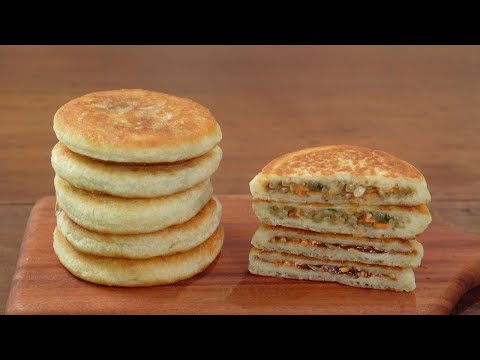
Crispy Korean street food pancakes with two legendary fillings — honey-nut and savory vegetable glass noodle. We reverse-engineered the Namdaemun Market method using a bread flour and sweet rice flour dough that beats every store-bought mix on the market.

“Every Korean street market has a hotteok vendor with a line around the block. The reason people queue in the cold isn't the filling — it's the dough. Store-bought mixes produce stiff, cardboard-adjacent results that have nothing to do with the real thing. The secret is the flour blend: bread flour for structure and rise, sweet rice flour for that soft, slightly chewy interior that collapses into the filling when you bite. We built this recipe from the original Namdaemun method, with both the classic honey-nut filling and the underrated savory glass noodle version.”
Why This Recipe Works
Hotteok is deceptively simple to describe — stuffed dough pancake, pan-fried — and deceptively hard to execute well. The version you make from a store-bought mix is not the same dish as what comes off a Namdaemun Market griddle. The gap is not in the filling. It's in the dough.
The Flour Equation
Most hotteok recipes default to all-purpose flour because it's what's in every Korean kitchen. The Namdaemun vendors use bread flour, and the difference is structural. Bread flour contains 12–14% protein versus the 10–12% in all-purpose. That protein differential means more gluten development, which means more gas trapped during fermentation, which means a dough that puffs dramatically on the griddle before you press it flat. The initial puff is what creates the layered, airy interior underneath the crispy exterior.
The sweet rice flour (찹쌀가루) is the other half of the equation. It contributes a distinctively soft, slightly elastic chew — the same quality that makes Korean rice cakes (tteok) satisfying in a way that plain wheat products never quite achieve. At the 4:1 ratio here (240g bread flour to 60g sweet rice flour), it adds texture without making the dough gluey or difficult to handle. Do not substitute with regular rice flour. The "sweet" in sweet rice flour refers to the glutinous rice variety, not added sugar — the starch structure is fundamentally different and produces completely different results.
Two Fillings, Two Philosophies
The honey hotteok filling exists to become molten. The brown sugar, cinnamon, and crushed peanut mixture is completely solid when you seal the dough, and completely liquid by the time the hotteok comes off the pan. The small amount of flour in the filling acts as a thickener that keeps the sugar from immediately pooling out when you bite — it gives you a few extra seconds of structural integrity between the bite and the flood.
The vegetable filling operates on opposite principles. Where the honey filling is designed to flow, the glass noodle filling is designed to hold its shape. The noodles absorb the soy sauce and sesame oil during stir-frying, concentrating the seasoning rather than releasing it. The result is savory, slightly chewy, and deeply aromatic — the kind of filling that makes people question why they ever ordered the sweet version first.
The Press
Every hotteok recipe tells you to press the pancake flat. Almost none of them tell you how aggressively. The correct amount of pressure is more than feels comfortable. You want the hotteok as thin as the filling will allow — typically 8–10mm. A dedicated hotteok press makes this mechanical and consistent. A wide metal spatula works if you apply your full body weight behind it.
The physics: a thick hotteok traps too much steam inside, which softens the crust from underneath. A thin hotteok lets the steam escape quickly and the exterior makes direct contact with the hot oil, producing the lacquered, crackling crust that defines the street food version. Maximum pressure equals maximum crispiness. There is no nuance here.
The Rest
The most counterintuitive step is the last one: don't eat it immediately. The hotteok looks done when it comes off the pan, but the crust is still completing its transformation. The residual interior heat is pushing moisture outward through the dough. Give it 60–90 seconds on a wire rack and the exterior will audibly crisp up as you watch. Cut into it at the 30-second mark and the texture is merely good. Cut into it at the 90-second mark and it shatters.
Make a large batch. Freeze them. You'll thank yourself at 11pm on a Wednesday.
Where Beginners Mess This Up
Before we start, read this. These are the 4 reasons your homemade hotteok (the namdaemun street food secret) will fail:
- 1
Using only all-purpose flour: All-purpose flour lacks the gluten development that bread flour provides. Without high-gluten flour, the dough doesn't trap gas efficiently during fermentation, resulting in dense pancakes that don't puff. The bread flour gives hotteok its characteristic pillow-like interior before you press it flat.
- 2
Skipping the sweet rice flour: Sweet rice flour (찹쌀가루) is what separates homemade hotteok from the mix. It contributes a soft, slightly sticky chew that plain wheat flour cannot replicate. The 4:1 ratio of bread flour to sweet rice flour is calibrated — too much sweet rice flour and the dough becomes unworkable; too little and you lose the texture.
- 3
Not pressing flat enough: Hotteok should be pressed as flat as possible after placing it seam-side down in the pan. A thick pancake steams instead of crisps. Maximum pressure with a spatula or hotteok press creates the thin, lacquered exterior that shatters when you bite through it.
- 4
Eating immediately off the pan: The exterior reaches peak crispiness about 90 seconds after you remove it from the heat. The residual steam from inside finishes crisping the crust as it escapes. Pull the hotteok before it looks done and let it rest — patience here is the difference between crispy and chewy.
The Video Reference Library
Want to see it in action? Here are the exact videos we analyzed and combined to build this foolproof recipe translation:
🛠️ Core Equipment
- Non-stick or cast iron skilletEven heat distribution prevents hot spots that burn the sugar filling before the dough cooks through. Cast iron retains heat better for a consistent crust across the entire surface.
- Hotteok press or wide metal spatulaYou need to apply firm, even pressure across the entire surface immediately after placing the hotteok in the pan. A dedicated hotteok press has a flat oiled disc that does this cleanly. A wide metal spatula works if you lean into it.
- Large mixing bowl with coverThe dough needs to double in size during fermentation. A cover (plastic wrap or a damp towel) traps the ambient moisture so the dough surface doesn't dry out and crack while rising.
Homemade Hotteok (The Namdaemun Street Food Secret)
🛒 Ingredients
- ✦200ml warm water
- ✦50ml whole milk
- ✦5g active dry yeast
- ✦30g sugar
- ✦5g salt
- ✦3g baking powder (optional)
- ✦20g cooking oil (grapeseed or canola)
- ✦15g melted butter, cooled to warm
- ✦240g bread flour (강력분)
- ✦60g sweet rice flour (찹쌀가루)
- ✦**Honey Hotteok Filling:**
- ✦50g brown sugar
- ✦3g ground cinnamon
- ✦8g all-purpose flour
- ✦30g crushed peanuts
- ✦**Vegetable Hotteok Filling:**
- ✦70g dried glass noodles (당면)
- ✦15g carrot, finely chopped
- ✦15g chives, finely chopped
- ✦20g onion, finely chopped
- ✦2 tablespoons cooking oil
- ✦3 tablespoons soy sauce
- ✦2 tablespoons corn syrup (or unscented honey, sugar, or oligosaccharide)
- ✦1 tablespoon sesame oil
- ✦1 tablespoon sesame seeds
👨🍳 Instructions
01Step 1
Combine 200ml warm water, 50ml milk, 5g yeast, and 30g sugar in a large bowl. Stir until dissolved and let sit 5 minutes until the yeast blooms.
02Step 2
Add 5g salt, 3g baking powder (if using), 20g cooking oil, and 15g melted butter to the yeast mixture. Stir to incorporate.
03Step 3
Add 240g bread flour and 60g sweet rice flour. Mix until a soft, slightly sticky dough forms.
04Step 4
Cover the bowl with plastic wrap or a damp kitchen towel. Let rise in a warm place until doubled in size, approximately 45–60 minutes.
05Step 5
While the dough rises, prepare the honey hotteok filling: mix 50g brown sugar, 3g cinnamon, 8g flour, and 30g crushed peanuts in a small bowl. Set aside.
06Step 6
Prepare the vegetable filling: cook 70g dried glass noodles according to package directions, drain, and cut into 3–4cm lengths with scissors.
07Step 7
Heat 2 tablespoons cooking oil in a skillet over medium heat. Stir-fry 15g carrot, 15g chives, and 20g onion until softened, about 3 minutes.
08Step 8
Add the cooked noodles to the vegetables along with 3 tablespoons soy sauce, 2 tablespoons corn syrup, 1 tablespoon sesame oil, and 1 tablespoon sesame seeds. Toss thoroughly. Allow to cool completely before using as filling.
09Step 9
Lightly oil your hands. Divide the risen dough into 9–10 equal portions. Flatten each portion in your palm into a round disc.
10Step 10
Place a generous spoonful of either filling in the center of each disc. Gather the edges up and around the filling, pinching firmly to seal with no gaps.
11Step 11
Heat a lightly oiled non-stick or cast iron skillet over medium heat. Place filled dough portions seam-side down, leaving space between each.
12Step 12
Immediately press each hotteok down as flat as possible using a spatula or hotteok press. Cook for 2–3 minutes until the bottom is deep golden brown.
13Step 13
Flip and press again. Cook the second side for another 2–3 minutes until equally golden.
14Step 14
Remove from the pan and place on a wire rack or plate. Wait 60–90 seconds before eating — the exterior crisps further as it rests.
Nutrition Per Serving
Estimates based on standard preparation. Adjustments alter macros.
🔄 Substitutions
Instead of Corn syrup (물엿)...
Use Unscented honey, sugar, or oligosaccharide
As specified in the original recipe — all work equally well in the vegetable filling. Honey adds a faint floral note; plain sugar is the most neutral.
Instead of Baking powder...
Use Omit entirely
The recipe explicitly marks it optional. The yeast does the heavy lifting for rise. Baking powder adds a slight additional lift but is not load-bearing.
Instead of Butter...
Use Additional cooking oil (equal weight)
Loses the subtle dairy richness in the dough but the texture remains correct. Use a neutral oil — not olive oil, which competes with the filling flavors.
Instead of Glass noodles...
Use Cooked and chopped sweet potato noodles (dangmyeon)
Dangmyeon is actually the more traditional choice. Slightly chewier and more substantial. If using, soak in hot water rather than boiling to prevent overcooking.
🧊 Storage & Reheating
In the Fridge
Store cooked hotteok in an airtight container for up to 2 days. They soften overnight — reheat in a dry skillet to restore crispiness.
In the Freezer
Freeze cooked hotteok in a single layer, then transfer to a zip-lock bag for up to 2 months. Reheat from frozen in a skillet over medium-low heat, 3–4 minutes per side.
Reheating Rules
Dry skillet only — no microwave. A microwave steams the exterior and produces a uniformly soft result with no crunch. A few minutes in a pan recovers most of the original texture.
❓ Frequently Asked Questions
Why is my hotteok dough too sticky to work with?
This dough is intentionally wetter than bread dough — that's what creates the soft interior. Oil your hands generously before handling each portion. Do not add more flour; it will make the final texture dense and tough.
Can I use all-purpose flour instead of bread flour?
You can, but the result will be noticeably less pillowy. Bread flour has higher protein content (12–14% vs 10–12% for all-purpose), which builds stronger gluten networks that trap more gas during fermentation. The rise will be flatter and the texture denser with all-purpose.
My filling leaked out during cooking — what went wrong?
The seal wasn't tight enough. When you close the dough around the filling, pinch the seam firmly and tuck it underneath so it sits seam-side down in the pan. Any gap becomes a blowout point once the filling liquefies. For honey hotteok especially, the seal is everything.
Can I prepare the dough ahead of time?
Yes. After the first rise, punch the dough down, cover tightly, and refrigerate overnight. The cold slows fermentation to a near-halt. Remove from the fridge 30 minutes before shaping to let it relax. Cold-fermented dough often has more complex flavor.
What's the difference between kkul hotteok and yachae hotteok?
Kkul hotteok (꿀호떡) has a sweet honey-nut filling — brown sugar, cinnamon, and crushed peanuts that melt into a molten filling during cooking. Yachae hotteok (야채호떡) has a savory filling of glass noodles and stir-fried vegetables seasoned with soy sauce and sesame oil. Both use the same dough. Namdaemun Market vendors typically sell both from the same cart.
How do I know when the pan is the right temperature?
A drop of water should sizzle and evaporate in about 2 seconds — not immediately (too hot) and not slowly (too cold). Over medium heat with a lightly oiled pan, the first hotteok will take about 2–3 minutes per side to reach deep golden brown. If it's browning faster than that, reduce the heat.
The Science of
Homemade Hotteok (The Namdaemun Street Food Secret)
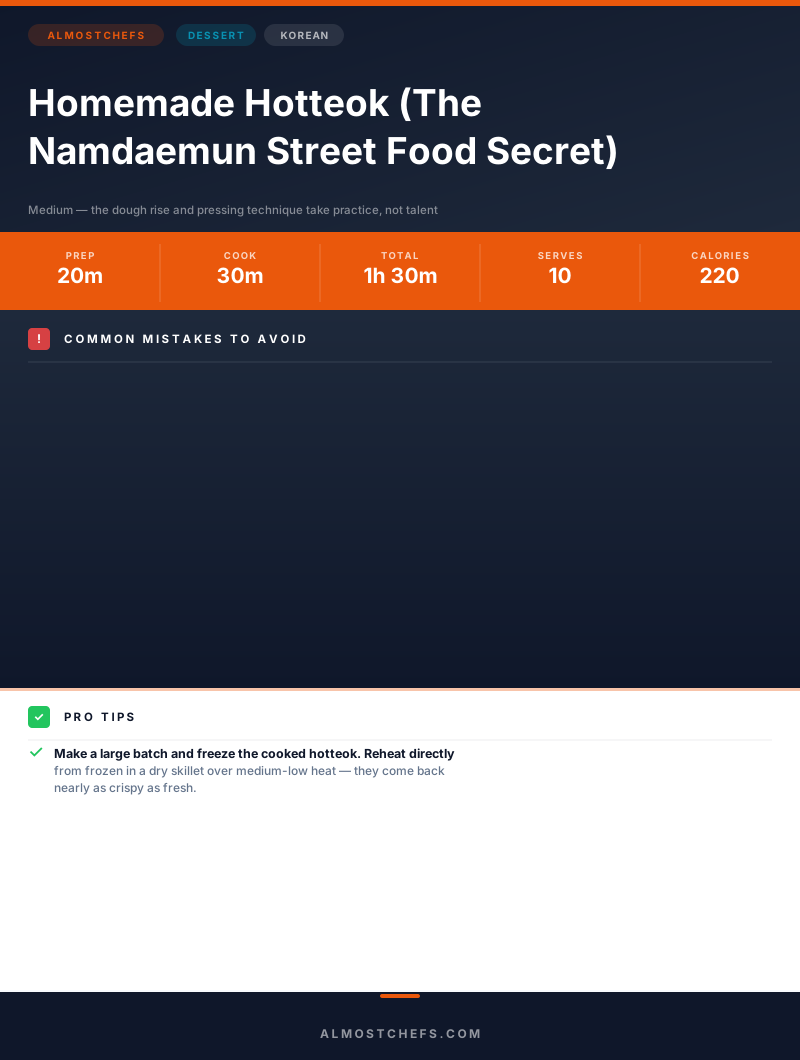
We turned everything on this page into a beautiful, flour-proof PDF cheat sheet. Print it out, stick it to your fridge, and never mess up your homemade hotteok (the namdaemun street food secret) again.
*We'll email you the high-res PDF instantly. No spam, just perfectly cooked meals.
AlmostChefs Editorial Team
We translate the internet's most popular cooking videos into foolproof, beginner-friendly written recipes. We analyze multiple methods, test them in our kitchen, and engineer a single "Master Recipe" that gives you the best possible result with the least possible stress.