Bulletproof Hot and Sour Soup (The Takeout Killer)
A fiery, tangy Chinese classic built on silky egg ribbons, umami-packed mushrooms, and tender tofu suspended in a deeply aromatic broth. We broke down the technique behind the perfect heat-acid balance and the cornstarch timing that most home cooks get wrong.
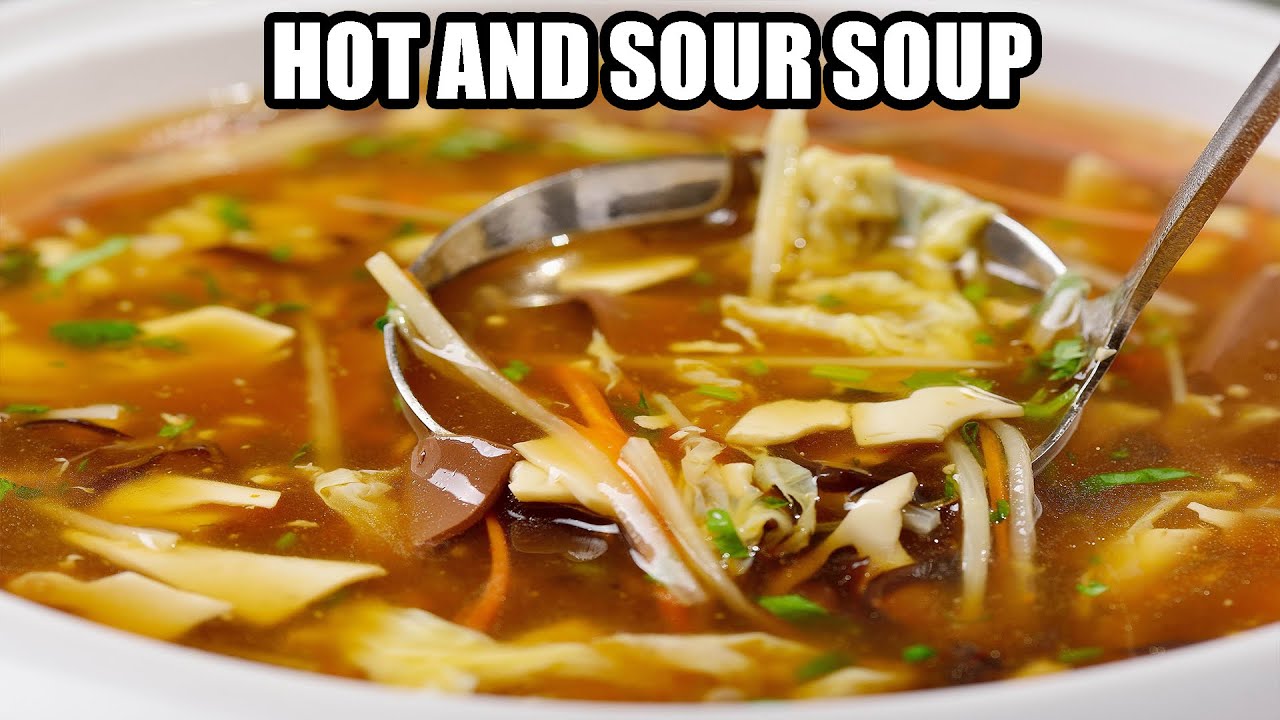
“Most hot and sour soup made at home lands wrong in one of two ways: too thin and flat, or a gluey starch bomb with hard-boiled egg chunks floating in it. The gap between disappointing and restaurant-quality comes down to three things — how sour you go before the thickener, when you pour the egg, and whether you let the soup rest. We dissected the most-watched YouTube methods to nail all three.”
Why This Recipe Works
Hot and sour soup is one of those dishes that sounds simple until you make a bad version and realize how much engineering is hiding underneath. The balance of heat and acid that makes it work is not accidental. It's calibrated — and it falls apart in predictable ways if you don't understand what each step is actually doing.
The Acid Problem
Most home versions of this soup are not sour enough. Restaurants have trained our palates to expect a sharp, almost aggressive tang, and home cooks pull back instinctively because that much vinegar sounds wrong before you add it. It's not wrong. Rice vinegar's acidity is mild compared to white or apple cider vinegar — three tablespoons in six cups of broth is barely a starting point, not an end point.
The critical rule: taste the broth for sour-savory balance before you thicken it. Once the cornstarch slurry goes in, you cannot taste the soup accurately — the starch coats your palate and mutes the sharpness. Your calibration window is the few minutes after the vinegar and soy sauce go in and before the slurry. Get it right there, and everything else follows.
The Thickening Architecture
Cornstarch in hot liquid is a one-way door. You can thin an over-thickened soup, but it takes dilution and that costs flavor. The target consistency here is light and glossy — the broth should coat the back of a spoon without clinging heavily to it. Think light gravy, not cream sauce.
The slurry must be mixed in cold water, never warm. Cornstarch begins gelatinizing above 140°F — if the water is even lukewarm when you mix it, the starch starts clumping before it ever hits the pot. Cold water keeps the starch granules separate until they hit the hot broth, where they hydrate and swell uniformly.
Pour slowly, stir constantly, and stop as soon as you see the broth shift from cloudy to glossy. The transformation is visible. Overshoot it and the egg ribbons won't form properly — they'll just sit in gel.
The Egg Ribbon Physics
The egg pour is the single most Instagrammed step in this recipe and the most misunderstood. The whirlpool isn't performative. When the soup is rotating, the centrifugal current catches each thread of egg as it enters the hot broth and pulls it outward in a long, thin ribbon as it sets. Without the current, the egg drops straight down and cooks into a compact mass before it can spread.
Pour against the direction of the current — not into the center of the vortex. The outer edge is where the current is fastest and where the stretching happens. A fine-mesh sieve held an inch above the surface refines the ribbons further by breaking the egg stream into multiple thin threads before it even hits the soup.
Then stop. Remove the pot from heat. The residual warmth in the broth finishes the egg in 30 seconds. Open the lid on a steamer thirty seconds too early and the dumplings collapse. Same principle.
The White Pepper Argument
White pepper and black pepper come from the same plant at different stages of ripeness. White pepper is the fully ripe berry with the outer skin removed — and that skin contains the pungent piperine compounds that give black pepper its sharp, biting quality. Without the skin, white pepper has a different chemical profile: musty, floral, with a heat that settles deep in the nasal passage rather than on the tongue.
This is not a subtle difference. In hot and sour soup, white pepper provides the "hot" half of the equation. Black pepper tastes wrong here — too sharp, too present, too loud. Pre-ground white pepper tastes like nothing — the volatile compounds oxidize within weeks of grinding. Buy whole white peppercorns and a dedicated spice grinder if you're making this regularly.
Mushroom Selection
Shiitake provides flavor. Wood ear provides texture. They are solving different problems, and neither one substitutes for the other. Shiitake — especially fresh shiitake with the gills intact — releases glutamates into the broth that build savory depth in a way that no other vegetable can replicate quickly. Wood ear has almost no flavor but contributes a slippery, slightly crunchy resistance that plays against the silky egg and soft tofu in every spoonful.
If you can only find one, use shiitake and add an extra half cup. But if you've only ever made this soup with shiitake alone, the first time you add wood ear you'll understand immediately why the texture ratio is different. The contrast is the point.
Where Beginners Mess This Up
Before we start, read this. These are the 4 reasons your bulletproof hot and sour soup (the takeout killer) will fail:
- 1
Adding vinegar after thickening: Rice vinegar must go in before the cornstarch slurry. Once the soup thickens, new liquid doesn't incorporate evenly — it pools and creates uneven bursts of sourness. Add your vinegar to the broth, taste and adjust, then thicken. The heat-acid balance needs to be locked in while the soup is still thin.
- 2
Pouring the egg too fast: The egg ribbon technique only works if you drizzle it in a thin, slow stream into a gently moving soup. Dump it in and you get scrambled eggs. Pour it too fast and the heat cooks it into chunks before it can form ribbons. The whirlpool is not decorative — the circular current stretches each egg thread as it sets.
- 3
Skipping the 30-second rest: After you kill the heat, the residual warmth finishes cooking the egg gently. If you ladle immediately, the egg ribbons are still raw in the center. Thirty seconds is the difference between silky and slimy.
- 4
Using pre-ground white pepper: White pepper is the soul of this soup. Pre-ground white pepper from a jar that's been open for six months tastes like dust. Freshly ground white pepper has a floral, pungent heat that is chemically different from black pepper — earthy and penetrating rather than sharp. It's not interchangeable. Buy whole white peppercorns.
The Video Reference Library
Want to see it in action? Here are the exact videos we analyzed and combined to build this foolproof recipe translation:
The primary reference. Clear technique on egg ribbon formation and cornstarch timing. Watch the section on building the whirlpool before the egg goes in.
🛠️ Core Equipment
- Large heavy-bottomed potEven heat prevents the broth from scorching while you manage the cornstarch and egg timing simultaneously. A thin pot creates hot spots that overcook the tofu and kill the delicate egg ribbons.
- Fine-mesh sieve or strainerOptional but useful — if you want picture-perfect egg ribbons, strain the beaten egg through it into the soup. The mesh breaks the egg into thinner threads than a steady pour alone can achieve.
- Small bowl for cornstarch slurryMix cornstarch and cold water ahead of time. If you try to mix it while the soup is waiting on heat, the starch settles and you dump concentrated paste into the pot instead of a smooth slurry.
- Ladle or long-handled spoonYou need to create a controlled whirlpool before the egg pour. A ladle gives you the reach and angle to do this without knocking the tofu cubes apart.
Bulletproof Hot and Sour Soup (The Takeout Killer)
🛒 Ingredients
- ✦6 cups vegetable broth
- ✦1 cup fresh shiitake mushrooms, thinly sliced
- ✦1 cup wood ear mushrooms, julienned
- ✦14 ounces firm tofu, cut into small cubes
- ✦3 tablespoons rice vinegar
- ✦2 tablespoons low-sodium soy sauce
- ✦1 tablespoon sesame oil
- ✦4 cloves garlic, minced
- ✦1 tablespoon freshly grated ginger
- ✦1 teaspoon white pepper, freshly ground
- ✦2 medium carrots, cut into thin matchsticks
- ✦1 cup bamboo shoots, thinly sliced
- ✦3 green onions, cut into 1-inch pieces
- ✦1 tablespoon cornstarch mixed with 2 tablespoons cold water
- ✦1 large egg, lightly beaten
- ✦1/2 teaspoon chili oil, or to taste
- ✦1 tablespoon fresh cilantro, chopped
- ✦Sea salt to taste
👨🍳 Instructions
01Step 1
Prep everything before you turn on the heat. Slice mushrooms, cube tofu, julienne carrots, mince garlic and ginger. Mix cornstarch with cold water in a small bowl and set aside.
02Step 2
Heat vegetable broth in a large heavy-bottomed pot over medium-high heat until it reaches a gentle boil, about 5 minutes.
03Step 3
Add minced garlic and grated ginger to the boiling broth. Stir constantly for 1 minute until fragrant.
04Step 4
Add shiitake and wood ear mushrooms. Simmer for 3 minutes, stirring occasionally, until softened and the broth begins to deepen in color.
05Step 5
Add carrots and bamboo shoots. Simmer 2 more minutes until just beginning to soften — they should still have bite.
06Step 6
Pour in the rice vinegar and soy sauce. Stir well, taste the broth, and adjust the sour-savory balance now. This is your last clean window before thickening.
07Step 7
Gently add the tofu cubes. Let them warm through for 2 minutes without stirring aggressively — they break apart easily.
08Step 8
Sprinkle freshly ground white pepper over the soup. Add sea salt to taste.
09Step 9
Slowly pour the cornstarch slurry into the simmering soup while stirring constantly. Continue stirring for 1 minute until the broth thickens slightly and turns glossy.
10Step 10
Using a ladle, create a gentle clockwise whirlpool in the soup. Slowly drizzle the beaten egg in a thin, steady stream around the outer edge of the whirlpool. The current will stretch the egg into ribbons as it sets.
11Step 11
Remove the pot from heat immediately after the egg is poured. Let it rest, undisturbed, for 30 seconds.
12Step 12
Drizzle sesame oil over the surface. Add chili oil to taste.
13Step 13
Ladle into bowls and finish each serving with green onions and fresh cilantro.
Nutrition Per Serving
Estimates based on standard preparation. Adjustments alter macros.
🔄 Substitutions
Instead of Vegetable broth...
Use Bone broth or chicken broth
Richer, more savory base with additional collagen. Removes the vegetarian status but adds significant depth. Use low-sodium versions — the soy sauce adds enough salt.
Instead of Rice vinegar...
Use Apple cider vinegar with the mother
Slightly earthier tang with probiotic benefits. The flavor is rounder and less sharp than rice vinegar. Start with 2.5 tablespoons and taste — it's more assertive.
Instead of Cornstarch...
Use Arrowroot powder or tapioca starch
Both produce a clearer, slightly glossier result. Arrowroot breaks down if the soup boils hard after thickening — keep it at a gentle simmer. Use the same 1:2 ratio with cold water.
Instead of Firm tofu...
Use Silken tofu or tempeh
Silken tofu creates a creamier, more delicate texture but falls apart easily — add it last and don't stir. Tempeh adds a nutty, fermented flavor and chewier texture. Cut it smaller than you would firm tofu.
🧊 Storage & Reheating
In the Fridge
Store in an airtight container for up to 3 days. The broth will thicken considerably in the fridge as the cornstarch sets further — this is normal.
In the Freezer
Not recommended. The cornstarch-thickened broth breaks down on freezing and thawing, turning grainy and watery. The egg ribbons also deteriorate. Make fresh.
Reheating Rules
Reheat gently over medium-low heat with 2-3 tablespoons of added water or broth to loosen the thickened base. Stir frequently. Do not boil — it toughens the egg ribbons.
❓ Frequently Asked Questions
Why are my egg ribbons chunky instead of silky?
Two reasons: the soup was too hot when you added the egg, or you poured too fast. The soup should be off full boil — a gentle simmer, or just removed from heat. Pour the beaten egg in a very slow, thin stream while maintaining a whirlpool. The movement stretches the egg as it sets.
Can I make this vegetarian or vegan?
It's already vegetarian as written. For vegan, omit the egg entirely — the soup is still complete without it. Use tamari or coconut aminos instead of soy sauce. The egg ribbons are a classic texture element but not structural to the dish.
How do I get more heat without just adding more chili oil?
Use more freshly ground white pepper. White pepper has a deep, penetrating heat that builds in the back of the throat — different from chili heat. Start at 1 teaspoon, go to 1.5 or 2 for serious heat. You can also add a tablespoon of chili bean paste (doubanjiang) with the garlic and ginger for layered heat with fermented depth.
My soup is too sour. How do I fix it?
Add a small pinch of sugar — half a teaspoon is usually enough to round out excess acidity without making the soup taste sweet. A splash more broth also dilutes it. Going forward, add vinegar in smaller increments and taste as you go.
Can I use dried mushrooms instead of fresh?
Yes, and some argue dried shiitake produces a more intense broth. Soak dried shiitake in warm water for 20-30 minutes, then slice. Use the soaking liquid as part of your broth — it's loaded with umami. Dried wood ear mushrooms rehydrate quickly (10-15 minutes) and work exactly the same way as fresh.
Why does my soup taste flat even though I followed the recipe?
Usually one of three things: the white pepper is stale (pre-ground loses potency fast), the broth is under-seasoned before the vinegar goes in, or the sesame oil was added during cooking instead of after. Sesame oil is a finishing oil — heat destroys its aromatic compounds. Always add it at the very end, off heat.
The Science of
Bulletproof Hot and Sour Soup (The Takeout Killer)
We turned everything on this page into a beautiful, flour-proof PDF cheat sheet. Print it out, stick it to your fridge, and never mess up your bulletproof hot and sour soup (the takeout killer) again.
*We'll email you the high-res PDF instantly. No spam, just perfectly cooked meals.
AlmostChefs Editorial Team
We translate the internet's most popular cooking videos into foolproof, beginner-friendly written recipes. We analyze multiple methods, test them in our kitchen, and engineer a single "Master Recipe" that gives you the best possible result with the least possible stress.