Honey Glazed Ham With Pear and Saffron Chutney (The Holiday Showstopper You've Been Missing)
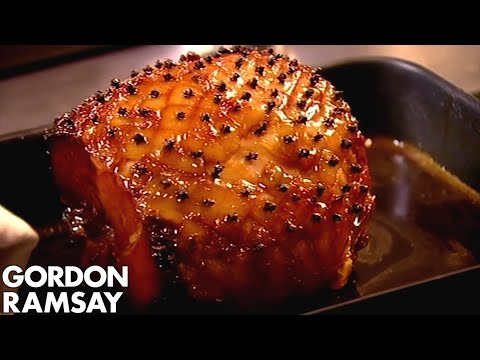
A bone-in glazed ham lacquered in honey and spiced with warm aromatics, served alongside a vivid pear and saffron chutney that cuts the richness with brightness. We broke down the technique so the glaze sets in glossy, caramelized layers instead of burning off or staying sticky.

“Most glazed hams fall into one of two camps: the glaze burns black in the oven because the heat was too high, or it stays pale and sticky because it never got hot enough to caramelize. The difference is a two-stage approach — a low, slow initial roast to build internal moisture, followed by a high-heat glaze blast in the final 30 minutes. The pear and saffron chutney is not an afterthought. It's the counterpoint that makes the ham taste like something worth remembering.”
Why This Recipe Works
Ham is one of those ingredients that hides behind its own reputation. Everyone assumes they know how to cook it — it's pre-cooked, after all, so the margin for error seems slim. In practice, glazed ham fails constantly, and it fails in exactly the same ways every time: a glaze that burns to a black crust, a glaze that never sets and slides off onto the pan, or a ham that's technically cooked but dry and aggressively salty with nothing to balance it. This recipe addresses all three with specific, deliberate technique at each stage.
The Two-Stage Heat Logic
The fundamental error most glazed ham recipes make is treating it as a one-temperature problem. You set the oven to 350°F, put the ham in, and apply the glaze from the beginning, then watch helplessly as it carbonizes over two hours. The reason this fails is chemistry: honey and brown sugar begin breaking down and burning at around 320°F. A long roast at anything above that temperature is asking the sugars to hold together longer than they're physically capable of doing.
The solution is sequencing. You roast the ham at 325°F — barely above the burn threshold, just enough to gently push the internal temperature upward — with foil protection and a small amount of water in the pan creating a humid, steam-assisted environment. This phase is purely about getting the meat to temperature without stressing the surface. Then, in the final 30 minutes, you crank the heat to 425°F and apply the glaze in rapid, thin layers. At 425°F, each coat hits the surface, caramelizes within seconds, and locks into a glossy lacquer that anchors the next coat. Three coats in 30 minutes produces depth — visually and in flavor — that a single thick glaze application never achieves.
Scoring as Flavor Architecture
The diamond score pattern across the fat cap is the most underexplained step in ham cookery. People see it on the finished product and assume it's decorative — a culinary affectation. It's actually load-bearing. Ham fat is dense and hydrophobic. A liquid glaze applied to an unscored surface will bead up and run off rather than penetrating or adhering. The scored channels create physical pathways for the glaze to flow into and contact the fat beneath the surface layer, which means the fat itself takes on flavor rather than just the outermost skin.
The depth of scoring matters: a quarter-inch into the fat, not through it into the meat. Too shallow and you've made decorative scratches with no functional channels. Too deep and you cut into the meat itself, which dries out faster than fat and creates uneven cooking around each cut. Use a sharp knife and make deliberate, confident cuts rather than tentative scratching passes.
The Pear and Saffron Chutney
This chutney exists for one reason: a well-glazed ham is intensely sweet, moderately salty, and deeply savory, and it needs something acid and aromatic to cut through that combination. A plain apple chutney would work. A mango chutney would work. But the saffron transforms a functional condiment into something that actually belongs on the plate with the ham rather than sitting beside it as an afterthought.
Saffron behaves differently in an acid environment than in a neutral one. Steeped in warm water and added to a vinegar-based chutney reduction, it releases its color more slowly and its aroma in longer waves. The result is a golden, faintly floral chutney where the saffron is present as an undercurrent rather than the dominant note — which is exactly what you want beside something as forceful in flavor as a glazed ham.
A heavy-bottomed saucepan is essential for the chutney. Pear contains roughly 10 grams of sugar per 100 grams of fruit. During the 25-30 minute reduction, those sugars concentrate significantly and will scorch on the base of any thin pan that creates hotspots. The browning you want comes from controlled Maillard reactions across the entire chutney, not from burnt patches on the bottom contaminating the whole batch.
Why the Rest Matters More Than You Think
A bone-in ham at 6-7 pounds has significant thermal mass. When you pull it from a 425°F oven, the outermost layers are sitting well above 140°F while the center is just arriving at temperature. The 15-20 minute rest under a loose foil tent allows the temperature gradient across the ham to equalize — the outer layers cool slightly while the interior finishes. More importantly, the muscle fibers, which tightened during cooking, relax and reabsorb some of the moisture they expressed. Slice into a ham that hasn't rested and you'll watch a visible tide of juice run across your cutting board. That juice is flavor, moisture, and texture that belongs in the meat — not on the board.
A meat thermometer is the only honest way to know when the ham is genuinely ready. Oven calibration varies by 25-50 degrees on most home ovens, and a bone-in ham's irregular shape means time-per-pound calculations are approximations at best. The thermometer inserts into the thickest part away from the bone, and 140°F is your number. Everything else is just watching and waiting.
Where Beginners Mess This Up
Before we start, read this. These are the 4 reasons your honey glazed ham with pear and saffron chutney (the holiday showstopper you've been missing) will fail:
- 1
Glazing too early: Honey contains simple sugars that burn at around 320°F. If you apply the glaze at the start of a long roast, those sugars incinerate before the ham is cooked through. Apply the glaze only in the final 30 minutes, brushing every 10 minutes in thin, layered coats. Each coat caramelizes and anchors the next.
- 2
Skipping the scoring: Scoring the fat cap in a diamond pattern is not decorative. It opens channels for the glaze to penetrate the fat layer instead of running off the surface. Without scoring, you get a shiny exterior and a bland, unglazed interior. Each cut should go about a quarter-inch deep — into the fat, not the meat.
- 3
Under-seasoning the chutney: Pear chutney needs a real acid base — apple cider vinegar, not white vinegar — and enough salt to round out the saffron's floral edge. Under-salted chutney tastes flat against the salty ham and fails its entire purpose. Taste aggressively and correct before jarring.
- 4
Resting the ham too briefly: A bone-in ham is dense. The internal temperature continues rising 5-8 degrees after it leaves the oven, and the juices need at least 15 minutes to redistribute. Cut too early and those juices run across the board, leaving you with dry slices. Rest under a loose foil tent, never wrapped tight — you want to hold heat, not steam the crust off.
The Video Reference Library
Want to see it in action? Here are the exact videos we analyzed and combined to build this foolproof recipe translation:
🛠️ Core Equipment
- Roasting pan with rackElevating the ham on a rack allows hot air to circulate underneath, cooking the base evenly instead of braising it in its own drippings. A rack also makes basting easier without disturbing the ham.
- Pastry brushFor layering the glaze in thin, controlled coats. A silicone pastry brush applies glaze more evenly than a spoon and handles the high-heat oven environment without shedding bristles.
- Heavy-bottomed saucepanFor the chutney. Pear chutney requires sustained, even heat to reduce without scorching the fruit sugars at the base. Thin pans create hotspots that caramelize unevenly and produce bitter patches.
- Meat thermometerThe only reliable way to know the ham is done. Target 140°F internal temperature for a pre-cooked ham, 160°F for a raw one. Guessing by time alone accounts for none of the variables — bone density, oven calibration, ham weight.
Honey Glazed Ham With Pear and Saffron Chutney (The Holiday Showstopper You've Been Missing)
🛒 Ingredients
- ✦1 bone-in smoked ham, approximately 6-7 pounds (pre-cooked)
- ✦1/2 cup raw honey
- ✦3 tablespoons Dijon mustard
- ✦2 tablespoons unsalted butter
- ✦1 tablespoon apple cider vinegar
- ✦1 teaspoon ground cinnamon
- ✦1/2 teaspoon ground allspice
- ✦1/4 teaspoon ground cloves
- ✦Freshly ground black pepper to taste
- ✦30 whole cloves, for studding (optional)
- ✦3 ripe but firm Bosc or Anjou pears, peeled, cored, and diced
- ✦1/2 cup apple cider vinegar
- ✦1/3 cup packed light brown sugar
- ✦1/4 teaspoon saffron strands, steeped in 2 tablespoons warm water
- ✦1/2 medium yellow onion, finely diced
- ✦1 teaspoon freshly grated ginger
- ✦1/2 teaspoon ground coriander
- ✦1/4 teaspoon red pepper flakes
- ✦1/2 teaspoon fine sea salt
- ✦1 tablespoon fresh lemon juice
👨🍳 Instructions
01Step 1
Remove the ham from the refrigerator 45 minutes before cooking to bring it closer to room temperature.
02Step 2
Preheat the oven to 325°F. Using a sharp knife, score the fat cap of the ham in a crosshatch diamond pattern, cutting approximately 1/4 inch deep. If desired, press one whole clove into the center of each diamond.
03Step 3
Place the ham cut-side down on a rack inside a roasting pan. Add 1 cup of water to the bottom of the pan. Cover loosely with foil and roast at 325°F, calculating approximately 15-18 minutes per pound.
04Step 4
Meanwhile, prepare the glaze. In a small saucepan over medium heat, combine honey, Dijon mustard, butter, apple cider vinegar, cinnamon, allspice, and ground cloves. Stir until the butter melts and the mixture is smooth. Reduce heat to low and keep warm.
05Step 5
Prepare the pear and saffron chutney. Steep the saffron strands in 2 tablespoons of warm water for 10 minutes. In a heavy-bottomed saucepan over medium heat, combine the diced pear, apple cider vinegar, brown sugar, diced onion, ginger, coriander, red pepper flakes, and salt. Add the bloomed saffron and its liquid.
06Step 6
Bring the chutney to a gentle boil, then reduce heat to low and simmer uncovered for 25-30 minutes, stirring occasionally, until the mixture has thickened to a jammy consistency and the pears are soft but not disintegrated. Stir in the lemon juice. Taste and adjust salt.
07Step 7
When the ham's internal temperature reaches 125°F (about 30-40 minutes before the target 140°F), remove the foil. Increase oven temperature to 425°F. Brush a generous layer of glaze over the entire surface of the ham.
08Step 8
Return the ham to the oven uncovered. Brush with another coat of glaze every 10 minutes for 30 minutes total — three coats — until the glaze is deeply caramelized, lacquered, and the internal temperature reads 140°F.
09Step 9
Remove the ham from the oven. Tent loosely with foil and rest for 15-20 minutes before carving.
10Step 10
Carve the ham and serve alongside the warm or room-temperature pear and saffron chutney.
Nutrition Per Serving
Estimates based on standard preparation. Adjustments alter macros.
🔄 Substitutions
Instead of Raw honey...
Use Maple syrup or apricot preserves
Maple syrup produces a less floral, more woodsy glaze. Apricot preserves give similar sweetness but add a slight tartness. Both caramelize at similar temperatures to honey.
Instead of Bosc pears...
Use Granny Smith apples or quince
Granny Smith adds more tartness to the chutney and holds its shape even better during cooking. Quince is more traditional in British-style chutneys and pairs beautifully with saffron — use if you can find it.
Instead of Saffron...
Use 1/4 teaspoon turmeric plus 1/2 teaspoon ground cardamom
Not a direct substitute — turmeric provides color, cardamom approximates some floral warmth. The result is less refined but still aromatic. Saffron is genuinely worth buying here if you can.
Instead of Dijon mustard...
Use Whole-grain mustard
Whole-grain mustard gives a more textured, visually interesting glaze with a slightly milder heat. Avoid yellow ballpark mustard — too sharp and one-dimensional.
🧊 Storage & Reheating
In the Fridge
Store sliced ham in an airtight container for up to 4 days. Store chutney separately in a sealed jar for up to 2 weeks.
In the Freezer
Freeze ham in portions for up to 2 months. Chutney does not freeze well — the pear texture breaks down on thawing.
Reheating Rules
Reheat ham slices in a covered skillet with a splash of water over low heat. Avoid the microwave — it dries out the meat and destroys the glaze. The chutney is best served at room temperature straight from the fridge.
❓ Frequently Asked Questions
Do I need to boil the ham before glazing?
Only if you're using a raw, unsmoked ham leg. Pre-cooked smoked hams — which is what most supermarkets sell — need only to be heated through to 140°F and glazed. Check the label. If it says 'fully cooked' or 'ready to eat,' you skip the boiling step entirely.
Why is my glaze not sticking?
Two likely causes. First, the ham surface is wet — pat it dry before applying the first glaze coat. Second, the oven isn't hot enough. The sugar in the glaze needs at least 375°F to begin caramelizing on contact. If the oven is too cool, the glaze just slides off before it sets.
Can I make this recipe with a boneless ham?
Yes, with caveats. Boneless ham cooks faster and more evenly, which makes it easier to manage. However, it doesn't have the same depth of flavor from bone-rendered collagen, and the texture is denser and more uniform. Reduce cooking time by roughly 20% and monitor the internal temperature more closely.
How do I know when the chutney is done?
Spoon a small amount onto a cold plate and tilt it. If the liquid runs away quickly and leaves the fruit behind, keep cooking. If the mixture moves slowly as a single unit, it's ready. The chutney will firm up further as it cools, so pull it off the heat when it's just slightly looser than you want the final result to be.
What cut of ham works best for this recipe?
A bone-in half ham — either the shank end or the butt end. The shank end is easier to carve with a cleaner bone shape. The butt end has more meat and more fat marbling. Either works. Avoid pre-sliced spiral hams for this recipe — the pre-cut surfaces dry out faster under high-heat glazing.
Can I prepare this entirely the day before?
You can roast and glaze the ham the day before, refrigerate it whole, and reheat covered at 300°F for 45-60 minutes. The chutney is actually better made a day ahead. The one thing you lose is the freshly caramelized glaze sheen — if presentation matters, apply one final thin glaze coat during the last 10 minutes of reheating.

The Science of
Honey Glazed Ham With Pear and Saffron Chutney (The Holiday Showstopper You've Been Missing)
We turned everything on this page into a beautiful, flour-proof PDF cheat sheet. Print it out, stick it to your fridge, and never mess up your honey glazed ham with pear and saffron chutney (the holiday showstopper you've been missing) again.
*We'll email you the high-res PDF instantly. No spam, just perfectly cooked meals.
AlmostChefs Editorial Team
We translate the internet's most popular cooking videos into foolproof, beginner-friendly written recipes. We analyze multiple methods, test them in our kitchen, and engineer a single "Master Recipe" that gives you the best possible result with the least possible stress.