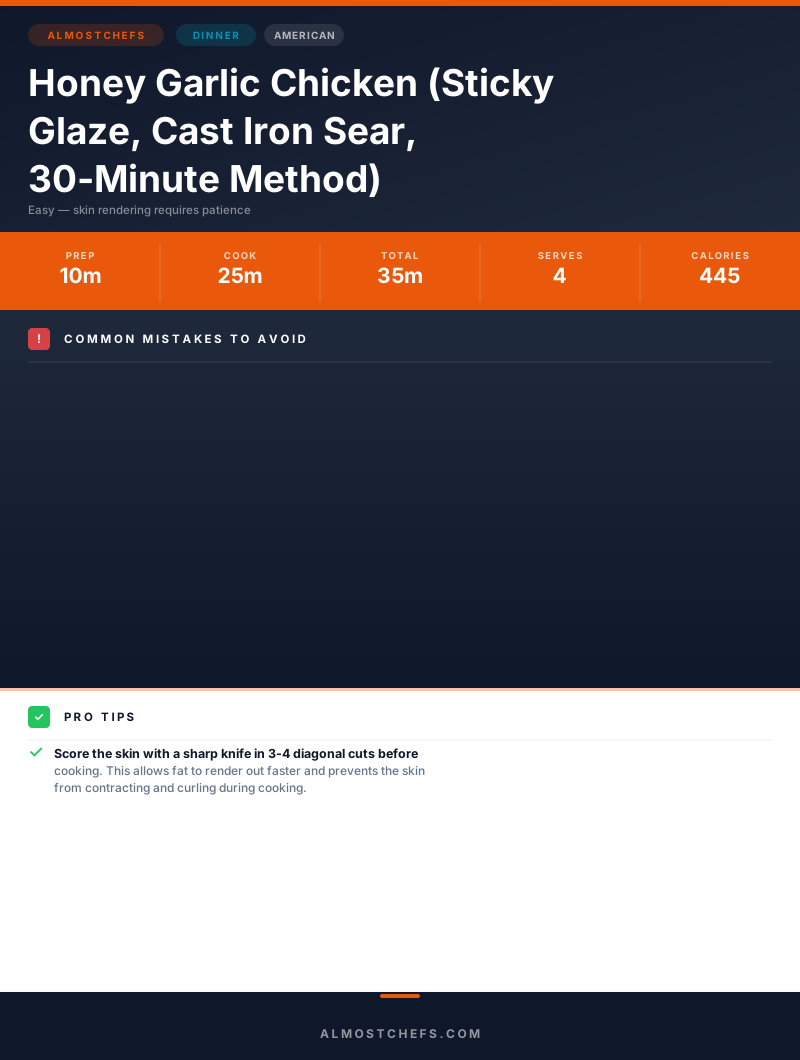
Honey Garlic Chicken (Sticky Glaze, Cast Iron Sear, 30-Minute Method)
Honey garlic chicken with a sticky, lacquered glaze that develops in the pan — chicken thighs seared skin-side down, glaze built from the rendered fat. The rendered fat is the flavor base for the sauce.

“Honey garlic chicken is a 30-minute dinner that most people overcomplicate or undercook. The whole dish comes down to one thing: rendering the chicken skin properly. Bone-in skin-on chicken thighs are the starting point because the fat in the skin, when rendered slowly, becomes the flavor base for the glaze. Move the chicken too soon, turn the heat too high, or use boneless skinless — and you're just making chicken in sweet sauce. Do it right and you get lacquered, sticky, intensely flavored thighs with skin that crackles.”
Why This Recipe Works
Honey garlic chicken is a lesson in rendered fat and heat control. The recipe is 30 minutes, four main sauce ingredients, and one skillet. The reason most people get it wrong is treating it like a quick weeknight shortcut — they move the chicken too soon, run the heat too high, and end up with soft skin and a burnt glaze instead of the lacquered, sticky result the dish is supposed to produce.
Skin rendering is a fat extraction problem. Chicken skin consists of a thin outer layer of epidermis over a substantial subcutaneous fat deposit. That fat is the key to crispiness — and it needs to be removed from under the skin for the skin to become crisp. At temperatures above 250°F, the fat molecules in the subcutaneous layer begin to melt and flow out through small pores in the skin's surface, collecting in the pan. As the fat drains away, the skin collapses onto the meat and begins to make direct contact with the hot pan surface, where the Maillard reaction browns it. This entire process requires three things: sustained heat, direct contact with the pan surface, and time. Moving the chicken breaks the contact. Too-high heat burns the skin surface before the interior fat can drain. Starting skin-side down in a cold or moderately heated pan allows the fat to begin rendering before the exterior surface is exposed to intense heat. The pressing motion with a spatula maintains contact with the pan even as the chicken wants to bow from the contracting collagen in the skin. By the time the skin releases naturally, the subcutaneous fat layer has largely rendered out and the skin is deeply golden and beginning to crisp.
Honey's sugar chemistry is different from sucrose. Standard granulated sugar is sucrose, a disaccharide — two sugar molecules bonded together. Caramelization of sucrose begins around 320°F. Honey is primarily a mixture of monosaccharides: approximately 40% fructose and 30% glucose. Fructose caramelizes at around 230°F — nearly 90°F lower than sucrose. This dramatically compresses the window between "golden, sticky glaze" and "acrid carbon." It also explains why honey-based glazes require medium heat, not high heat, when they're in the pan. At high heat, the fructose in honey can go from amber to burnt in under 60 seconds. The lower caramelization temperature of fructose is also why honey-glazed proteins appear darker than equivalent sugar-glazed proteins cooked to the same internal temperature — the fructose has been browning since much earlier in the cooking process.
Garlic cooked in rendered chicken fat is specific. Cooking garlic in rendered fat before adding the sauce liquid is not just a sequencing decision — it's an extraction decision. The aromatic compounds in garlic that produce its characteristic flavor are fat-soluble, not water-soluble. Allicin and its breakdown products — the primary flavor carriers in garlic — transfer more efficiently into fat than into water or wine. Cooking minced garlic in the rendered chicken fat for 60 seconds extracts these fat-soluble compounds into the fat, which then becomes part of the glaze. Adding garlic directly to a water-based sauce produces a harsher, more pungent result because the aromatic compounds don't fully transfer into the liquid. The 60-second cook time is important: raw garlic has a sharp, almost harsh flavor from its sulfur compounds; garlic cooked for 60 seconds at medium heat loses the harshness while retaining the aromatic depth; garlic cooked past golden-brown produces bitter compounds that won't be masked by the honey.
Apple cider vinegar is a balance mechanism, not an accent. The glaze in this recipe is built on honey (highly sweet), soy sauce (salty and savory with some sweetness from fermentation), and garlic. Without the acid component, the glaze tastes heavy and one-dimensional — the sweetness from the honey has nothing to cut against. The apple cider vinegar's acetic acid (pH around 2.5-3) provides the sharpness that makes the other flavors more distinct. This is the same principle behind adding citrus to rich dishes — the acid increases perceived brightness and prevents flavor fatigue. The tablespoon of apple cider vinegar in this glaze is not enough to taste as "vinegary" — it's below the detection threshold as a single flavor — but its absence is immediately noticeable as flatness in the finished dish.
Basting builds glaze layers. Each time the hot glaze is spooned over the chicken surface, a thin layer coats the skin and immediately begins to reduce from the residual heat of the chicken and the ambient pan heat. The volatile water content in that layer evaporates, leaving behind a concentrated, sticky layer. The next spoonful coats over it. Over 2 minutes of repeated basting, this builds up 3-4 layers of concentrated glaze that produce the lacquered, glossy appearance. A single pour without basting produces an even coating but no depth or visual gloss — it's the layering that creates the restaurant appearance.
A cast iron skillet is genuinely the correct tool for this recipe. Cast iron's high thermal mass means the pan surface temperature doesn't drop significantly when the cold chicken thighs are placed in it. Stainless steel pans lose temperature rapidly and recover slowly, which can extend the rendering time or produce uneven browning. Cast iron also transfers cleanly from stovetop to oven for the finishing step, allowing the interior to reach safe temperature without burning the glaze.
Where Beginners Mess This Up
Before we start, read this. These are the 4 reasons your honey garlic chicken (sticky glaze, cast iron sear, 30-minute method) will fail:
- 1
Pale, flabby skin that didn't render: You moved the chicken before it was ready, or the pan wasn't hot enough. Chicken skin contains a significant layer of subcutaneous fat. For the skin to crisp, that fat must render out — which requires sustained contact with a hot surface. Press each thigh down flat, don't move it for the first 8-10 minutes, and resist the urge to peek. The chicken will release naturally from the pan when the skin has properly browned.
- 2
Glaze burning rather than caramelizing: The heat was too high when the honey sauce was added. Honey contains fructose, which caramelizes (and burns) at a lower temperature than sucrose — around 230°F vs 320°F. A medium heat setting after the chicken renders is enough to produce the sticky lacquer. High heat will take the honey from golden to acrid carbon in 60 seconds.
- 3
Watery, thin glaze that doesn't coat: The sauce was added before the rendered fat was removed or incorporated, diluting it with the liquid from the pan drippings. After rendering the skin, pour off all but 1 tablespoon of fat before adding the glaze ingredients. The glaze needs to reduce in a pan with minimal excess liquid.
- 4
Undercooked interior despite browned skin: Bone-in chicken thighs require 20-25 minutes total cook time. Finishing in the oven at 400°F after the stovetop sear ensures the interior reaches 165°F without the glaze burning. Always verify with a thermometer at the thickest part, away from the bone.
The Video Reference Library
Want to see it in action? Here are the exact videos we analyzed and combined to build this foolproof recipe translation:
Weissman's full technique walkthrough with the cast iron skin-rendering method and glaze construction. Best single reference for understanding the fat-rendering stage and what properly crisped skin looks like.
A science-forward breakdown of the cold-pan skin rendering technique and why cast iron produces better results than stainless for this application. The data on skin temperature vs fat rendering rate is genuinely useful.
The Kenji Lopez-Alt cast iron chicken method — covers the cold-pan start, patience during rendering, and the visual cues for when the skin is done. Reference this for the rendering technique specifically.
🛠️ Core Equipment
- 12-inch cast iron skilletA [cast iron skillet](/kitchen-gear/review/skillet) retains heat and maintains a consistent surface temperature that's critical for even skin rendering. Stainless steel is the close second. Non-stick will not produce a proper sear and cannot go in the oven safely at high temperatures.
- Instant-read thermometerBone-in chicken thighs must reach 165°F at the thickest point, away from the bone. The bone conducts heat differently from the meat — probing near the bone gives a false high reading.
- Splatter screenRendering chicken fat produces significant splatter. A splatter screen keeps the stovetop from becoming a cleanup project while still allowing steam to escape (unlike a lid, which would trap steam and prevent crisping).
Honey Garlic Chicken (Sticky Glaze, Cast Iron Sear, 30-Minute Method)
🛒 Ingredients
- ✦2 lbs bone-in skin-on chicken thighs (about 4-5 thighs)
- ✦1 teaspoon salt
- ✦1/2 teaspoon black pepper
- ✦1/4 cup honey
- ✦3 tablespoons soy sauce
- ✦6 cloves garlic, minced
- ✦2 tablespoons unsalted butter
- ✦1 tablespoon apple cider vinegar
- ✦1 teaspoon fresh ginger, grated
- ✦Green onions, thinly sliced, for garnish
- ✦Sesame seeds for garnish
👨🍳 Instructions
01Step 1
Pat chicken thighs completely dry with paper towels. Season generously with salt and pepper on both sides.
02Step 2
Place chicken thighs skin-side down in a cold cast iron skillet. Set over medium heat. Do not move them. Cook for 10-12 minutes, pressing each thigh flat with a spatula occasionally, until the skin is deeply golden and releases cleanly from the pan.
03Step 3
Flip the chicken. Cook on the flesh side for 5-6 minutes until the interior begins cooking through.
04Step 4
Pour off all but 1 tablespoon of the rendered fat from the skillet. Leave the chicken in the pan.
05Step 5
If finishing in the oven: transfer the skillet to a 400°F oven for 8-10 minutes until the internal temperature reaches 165°F. If finishing on the stovetop: continue over medium-low heat, covered, for 8-10 minutes.
06Step 6
Remove chicken from skillet. Set aside on a plate. Drain all but 1 tablespoon of fat from the pan. Set the pan over medium heat.
07Step 7
Add minced garlic to the pan. Cook 60 seconds, stirring, until fragrant and just beginning to turn golden.
08Step 8
Add honey, soy sauce, apple cider vinegar, and grated ginger. Stir to combine. Simmer over medium heat for 2-3 minutes until the glaze thickens and becomes sticky.
09Step 9
Return chicken to the pan skin-side up. Spoon the glaze over each thigh repeatedly for 1-2 minutes, basting to build up layers of lacquer on the surface.
10Step 10
Transfer to a serving plate. Garnish with sliced green onions and sesame seeds. Serve immediately.
Nutrition Per Serving
Estimates based on standard preparation. Adjustments alter macros.
🔄 Substitutions
Instead of Honey...
Use Maple syrup or agave nectar
Maple syrup has a lower fructose content than honey and a higher water content — it produces a thinner, less glossy glaze. Use 3 tablespoons instead of 1/4 cup to compensate for the extra water. Agave is nearly identical to honey in behavior.
Instead of Soy sauce...
Use Coconut aminos
Coconut aminos is less salty and slightly sweeter than soy sauce. Reduce the honey by 1 tablespoon to compensate for the added sweetness, or the glaze will lean too sweet.
Instead of Bone-in skin-on chicken thighs...
Use Boneless skinless chicken thighs
Acceptable substitute with significantly different results. No skin rendering step — sear 3-4 minutes per side in a lightly oiled pan, then build the glaze in the same pan. The dish loses the textural contrast between crispy skin and tender meat.
Instead of Apple cider vinegar...
Use Rice vinegar or fresh lemon juice
Rice vinegar is milder and slightly sweeter. Lemon juice provides a brighter, citrus-forward acidity. Both work; the dish will have a slightly different character.
🧊 Storage & Reheating
In the Fridge
Store chicken and glaze together in an airtight container for up to 3 days. The skin will lose its crispiness overnight — this is unavoidable.
In the Freezer
Freeze cooked chicken thighs without the glaze for up to 2 months. Make fresh glaze when reheating.
Reheating Rules
Reheat in a 375°F oven on a wire rack for 12-15 minutes until heated through. The oven method partially restores the skin texture. Microwave reheating produces limp skin with no recovery.
❓ Frequently Asked Questions
Why use bone-in skin-on thighs specifically?
Three reasons: the skin is the structural component for the crispy texture, the bone slows cooking and prevents the meat from drying out, and the subcutaneous fat in the skin renders out and becomes the flavor base for the glaze. Boneless skinless thighs are acceptable but produce a fundamentally different dish — faster cooking, no crispy skin, and less flavor depth in the sauce.
Why does my skin always come out flabby?
One of three problems: the chicken wasn't dry enough before it went in the pan, you moved it before it released naturally, or the pan wasn't at the right temperature. Dry the thighs thoroughly, start in a cold or lightly preheated pan, keep the heat at medium, and don't touch the chicken for a full 10 minutes. The skin releases from the pan surface naturally when it's properly rendered — if it sticks, it's not ready.
Why does honey burn so easily?
Honey is approximately 40% fructose. Fructose caramelizes at a significantly lower temperature than sucrose (table sugar) — around 230°F vs 320°F. This means honey-based sauces approach burning temperature much faster than other sugar-based glazes. Medium heat is the correct setting when the sauce is in the pan. High heat produces a scorched, bitter glaze in under 60 seconds.
Can I make this with chicken breasts?
You can, but the result is less forgiving. Chicken breasts have no skin layer to render and dry out faster than thighs. If using breasts, pound them to even thickness, sear 4-5 minutes per side, and baste aggressively with the glaze in the final minute. Pull at 155°F — carryover will bring them to safe temperature.
How do I get a thicker, more lacquered glaze?
Two methods: reduce the glaze longer in the pan before returning the chicken (3-4 minutes instead of 2-3), or add a teaspoon of cornstarch mixed with a teaspoon of cold water to the sauce before adding the chicken. The cornstarch thickens the glaze via gelatinization above 165°F, producing a more intensely coated surface.
What should I serve with honey garlic chicken?
Steamed jasmine rice is the default — it absorbs the excess glaze effectively. Steamed or roasted broccoli provides textural contrast and the slight bitterness of the broccoli cuts through the sweetness of the glaze. Avoid starchy sides that compete with the glaze flavor.
The Science of
Honey Garlic Chicken (Sticky Glaze, Cast Iron Sear, 30-Minute Method)
We turned everything on this page into a beautiful, flour-proof PDF cheat sheet. Print it out, stick it to your fridge, and never mess up your honey garlic chicken (sticky glaze, cast iron sear, 30-minute method) again.
*We'll email you the high-res PDF instantly. No spam, just perfectly cooked meals.
AlmostChefs Editorial Team
We translate the internet's most popular cooking videos into foolproof, beginner-friendly written recipes. We analyze multiple methods, test them in our kitchen, and engineer a single "Master Recipe" that gives you the best possible result with the least possible stress.