Holiday Cake Decorations (Make Them Look Professional)
A complete guide to creating stunning holiday cake decorations from scratch — fondant figures, royal icing snowflakes, sugar flowers, and gold leaf accents. We broke down the most-watched decorating videos to build one systematic approach that works for home bakers, not just pastry chefs.
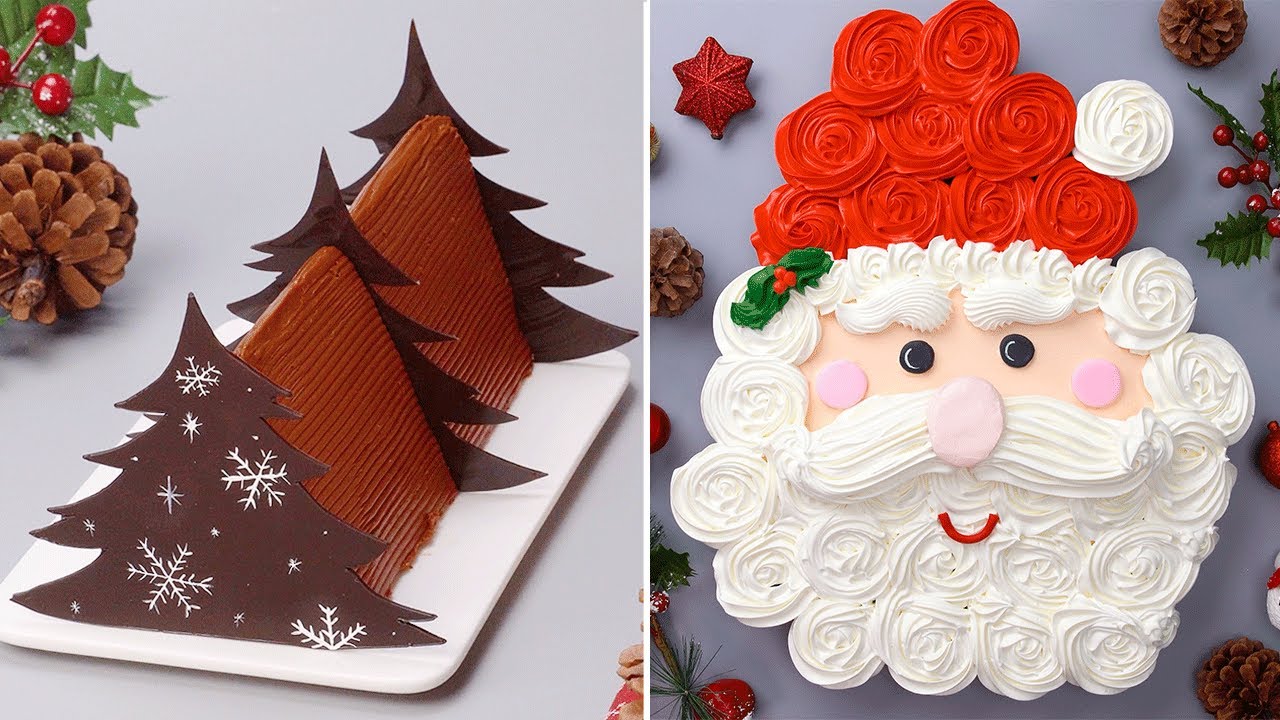
“Most holiday cake decorations fail in the same four ways: fondant that sweats and slides, royal icing that never sets properly, sugar decorations that collapse under their own weight, and color work that bleeds into the buttercream. None of these are skill problems. They are technique problems. We studied the top-performing decorating videos to isolate exactly where the process breaks down — and how to fix each failure point before it happens.”
Why This Recipe Works
Holiday cake decorating occupies a strange position in baking instruction: everyone shows you the finished product, almost no one explains why each step matters. The result is a generation of home bakers who have watched dozens of decorating videos and still end up with cakes that look like an elementary school art project. This is not a talent problem. It is a physics problem, and physics has solutions.
The Surface Science of Frosting
Before a single decoration touches your cake, the buttercream surface must be understood as a dynamic system. Freshly applied buttercream is warm, pliable, and adhesive — which sounds ideal, but is actually dangerous for decorating. Any piece pressed into warm buttercream sinks, tilts, and transfers color into the white surface around it. The solution is temperature management: chill the final coat until the buttercream is firm and cold to the touch, then work quickly in a cool room. The cold buttercream holds a slight surface tack that grips decorations without absorbing them.
The crumb coat is the infrastructure layer that makes the final coat possible. It seals loose crumbs behind a thin membrane of frosting, creating a clean adhesion surface. Skipping it is like painting a wall without primer — the final coat drags debris through itself, producing a surface that is visibly contaminated no matter how much you pile on. Twenty minutes of chilling time between crumb coat and final coat is not a suggestion. It is the mechanism that makes the system work.
Royal Icing as Precision Engineering
Royal icing is deceptively simple — powdered sugar, meringue powder, water — and deceptively easy to ruin. The entire functionality of royal icing depends on a precise water ratio. Stiff-peak consistency, used for piped borders, figurines, and three-dimensional accents, requires just enough water to create a smooth paste that holds rigid shapes under its own weight. Flood consistency, used for filling outlined cookie surfaces, is made by adding water beyond the stiff-peak threshold until the icing flows and self-levels.
The single most common mistake is treating these as interchangeable. Add one teaspoon of water too many and your beautifully piped snowflake collapses into a flat puddle before it sets. The test is blunt: turn the bowl sideways. Stiff-peak icing does not move. If it slides at all, you've crossed the threshold. This is also why gel food coloring is mandatory — it carries almost no water. A single drop of liquid food coloring can push stiff-peak icing past the boundary into flood territory. Gel coloring delivers intense color with no moisture consequence.
Fondant and the Humidity Problem
Fondant is a sugar paste with a specific enemy: moisture. It absorbs it from your hands, from the air, from the buttercream beneath it. In a humid kitchen above 70°F, fondant decorations begin sweating within minutes of placement — the surface turns tacky, colors bleed, and fine details soften into undefined shapes. The professional solution is environmental control: cool, dry workroom, cornstarch (not powdered sugar) as a dusting agent, and decorations built in short sessions to prevent body heat transfer.
A rolling pin with guide rings is the right tool for consistent fondant thickness. Inconsistent thickness means some areas dry rigid while others stay pliable, creating an uneven surface that catches and tears when you lift it. Roll to exactly 1/4 inch for structural pieces and 1/8 inch for thin decorative elements like bow loops and snowflake petals.
The Logic of Layering
Every professional cake decorator builds from the bottom up, letting each layer set before adding the next. This is not patience for its own sake — it is load management. A second fondant layer placed on a soft first layer compresses it, deforms the shapes, and creates air pockets that bubble up hours later. Chocolate shards pressed into wet buttercream tilt and sink as the frosting settles. Gold leaf applied before the buttercream is fully chilled lifts and tears when the cold surface contracts.
The sequence is: crumb coat, chill, final coat, chill, large decorations, small details, dust. Following this order means every element is placed on a stable surface that will not shift under it. The offset spatula and bench scraper are the tools that enable the smooth base for everything above — both are inexpensive and irreplaceable.
Decoration is not artistry applied to a finished cake. It is the final phase of an engineering process where every previous step was either done correctly or wasn't. When you understand that, the results stop being unpredictable.
Where Beginners Mess This Up
Before we start, read this. These are the 4 reasons your holiday cake decorations (make them look professional) will fail:
- 1
Working with warm fondant in a humid kitchen: Fondant is essentially sugar with a humidity problem. In a warm or humid environment, it absorbs moisture from the air, becomes sticky, and starts weeping condensation once placed on a cold cake. Always work in a cool, dry room — ideally below 70°F — and dust your surface with cornstarch, not powdered sugar. Powdered sugar introduces more moisture. Cornstarch does not.
- 2
Skipping the buttercream crumb coat: A crumb coat is a thin preliminary layer of frosting that seals loose crumbs and creates a smooth, even adhesion surface for fondant or final frosting. Skipping it means your final decoration layer drags crumbs, creates visible lumps, and separates from the cake surface. Chill the crumb coat for 20 minutes before the final coat. This is not optional.
- 3
Making royal icing too thin: Royal icing for piped decorations needs stiff-peak consistency — it should hold sharp ridges and not flow when the bowl is tilted. Flood-consistency icing (for filling outlined areas) is a different formula. Mixing them up produces piped lines that spread, flatten, and lose all definition before they set. The water addition that separates stiff from flood icing is measured in half-teaspoons.
- 4
Adding decorations before the frosting sets: Sugar decorations placed on soft buttercream sink, tilt, and drag color into the white frosting. The buttercream must be fully chilled and firm before anything goes on top. This applies to sprinkles, fondant pieces, edible glitter, and especially anything heavy like chocolate shards or sugar figurines. Twenty minutes in the refrigerator between the final coat and decorating is the minimum.
The Video Reference Library
Want to see it in action? Here are the exact videos we analyzed and combined to build this foolproof recipe translation:
A comprehensive decorating session covering fondant cutouts, royal icing piping, and edible glitter application. Strong close-ups of the stiff-peak royal icing consistency and how to test it before piping.
Covers the crumb coat and final coat sequence with clear before-and-after shots. Useful for understanding how chilling between layers eliminates visible seams and crumb contamination in the final frosting.
Step-by-step fondant figurine construction — Santa, snowmen, and star toppers — with advice on armature wires for pieces taller than two inches. Demonstrates the cornstarch dusting technique on a cool marble surface.
🛠️ Core Equipment
- Offset spatulaThe angled blade lets you spread frosting evenly across the cake top without your hand dragging through the surface. A straight spatula works for the sides, but for the top — especially when applying the crumb coat — the offset gives you control and a natural smoothing angle.
- TurntableRotating the cake while you hold a spatula steady is how professionals achieve perfectly smooth sides. Without a turntable, you're chasing the frosting around a stationary cake and creating drag marks with every pass. Even a cheap plastic turntable transforms your results.
- Piping bags and tipsWilton tips 1M and 2D for rosettes and ruffles, tip 3 for fine detail lines, tip 32 for star borders. Each tip produces a completely different effect. Disposable piping bags simplify cleanup when switching between colors.
- Bench scraperHeld vertically against the side of a rotating cake, a bench scraper smooths buttercream into a perfectly flat surface in one pass. This is the tool that makes home bakes look like bakery display cakes.
Holiday Cake Decorations (Make Them Look Professional)
🛒 Ingredients
- ✦2 cups powdered sugar, sifted
- ✦3 tablespoons meringue powder
- ✦6 tablespoons warm water (for royal icing)
- ✦Gel food coloring (red, green, gold, white)
- ✦1 pound white fondant, store-bought or homemade
- ✦2 tablespoons cornstarch (for dusting)
- ✦1/2 cup unsalted butter, room temperature
- ✦3 cups powdered sugar, sifted
- ✦3 tablespoons heavy cream
- ✦1 teaspoon clear vanilla extract
- ✦Edible gold leaf sheets (4-6 sheets)
- ✦Edible silver and gold luster dust
- ✦Assorted holiday sprinkles and nonpareils
- ✦Chocolate chips (for melting into shards)
- ✦White candy melts (for drip decoration)
- ✦Parchment paper and wax paper sheets
- ✦Toothpicks and cocktail skewers
- ✦1 fully baked and cooled 8-inch layer cake (any flavor)
👨🍳 Instructions
01Step 1
Make the buttercream: Beat butter on medium-high for 3 minutes until pale and fluffy. Add powdered sugar one cup at a time, alternating with heavy cream. Add clear vanilla. Beat on high for 2 minutes until light and pipeable.
02Step 2
Apply the crumb coat: Place the cooled cake on a turntable. Using an offset spatula, spread a thin, even layer of buttercream over the top and sides — just enough to seal all visible crumbs. Do not worry about perfection at this stage.
03Step 3
Refrigerate the crumb-coated cake for 20 minutes until the buttercream is firm to the touch.
04Step 4
Apply the final buttercream coat: Use the offset spatula for the top and a bench scraper for the sides while rotating the turntable steadily. Apply slightly more buttercream than you need, then scrape back to a smooth, clean finish.
05Step 5
Refrigerate again for 20 minutes. Do not place decorations on soft buttercream.
06Step 6
Make royal icing: Whisk meringue powder and sifted powdered sugar together. Add warm water one tablespoon at a time, beating on high until stiff peaks form. The icing should hold sharp ridges when a spoon is lifted out.
07Step 7
Divide royal icing into bowls. Tint with gel food coloring — never liquid food coloring, which thins the icing and destroys the stiff-peak consistency.
08Step 8
Prepare fondant decorations: Dust your work surface with cornstarch. Roll fondant to 1/4-inch thickness. Cut holiday shapes using cookie cutters — stars, snowflakes, Christmas trees, and bells all work well. Let cut pieces dry on parchment for 30 minutes before handling.
09Step 9
Pipe royal icing details onto dried fondant pieces using a tip 3 for fine lines. Add dot borders, snowflake veining, and lettering. Let set completely — minimum 1 hour at room temperature.
10Step 10
For the chocolate shard decorations: Melt chocolate chips in 30-second microwave intervals, stirring between each. Spread onto parchment paper in a thin, even layer. Refrigerate 15 minutes until set, then break into irregular shards.
11Step 11
Remove the chilled, firm-frosted cake from the refrigerator. Arrange the fondant pieces, chocolate shards, and any sprinkles on top. Press each piece gently into the buttercream to anchor it. Work from the center outward.
12Step 12
Apply gold leaf: Tear small pieces from the sheet and press onto the buttercream surface using a clean dry brush. Gold leaf adheres naturally to the slight tackiness of buttercream. Work in a draft-free area — gold leaf is weightless and moves with air currents.
13Step 13
Dust the finished cake lightly with edible luster dust using a soft brush for a final shimmer effect.
Nutrition Per Serving
Estimates based on standard preparation. Adjustments alter macros.
🔄 Substitutions
Instead of Meringue powder (for royal icing)...
Use Pasteurized egg whites
Use 3 tablespoons pasteurized egg whites per 2 cups powdered sugar. Not suitable if serving to immunocompromised guests. Meringue powder is safer and more stable.
Instead of Store-bought fondant...
Use Marshmallow fondant
Melt 16 oz mini marshmallows with 2 tablespoons water, stir in 2 lbs powdered sugar. Significantly more pliable and better-tasting than commercial fondant. Slightly stickier to work with — use more cornstarch on your surface.
Instead of Edible gold leaf...
Use Gold luster dust mixed with clear extract
Create a paint by mixing gold luster dust with a few drops of clear vanilla extract or vodka. Brush onto set fondant or chocolate. Less dramatic than genuine gold leaf but significantly easier to control.
Instead of Chocolate chips (for shards)...
Use White chocolate or ruby chocolate
White chocolate shards provide stark contrast against dark cake frosting. Ruby chocolate adds a natural pink-red hue that reads as festive without any food coloring.
🧊 Storage & Reheating
In the Fridge
Decorated cakes without fondant can be refrigerated covered for up to 3 days. Fondant decorations should be stored separately in an airtight container at room temperature for up to 1 week — refrigeration causes sweating and color bleeding.
In the Freezer
Unfrosted cake layers freeze well for up to 2 months, wrapped tightly in plastic wrap. Royal icing decorations can be made weeks ahead and stored in a single layer in an airtight container at room temperature.
Reheating Rules
Cakes are served at room temperature. Remove from refrigerator 1 hour before serving. Do not microwave decorated cakes — heat softens buttercream and melts chocolate shards.
❓ Frequently Asked Questions
Why is my fondant sweating and getting sticky on the cake?
Condensation forms when cold fondant meets a warmer surface, or when the kitchen is humid. Let fondant decorations come to room temperature before placing on a refrigerated cake. Work in a room below 70°F with low humidity if possible.
My royal icing won't set hard — it stays tacky. What went wrong?
The most common causes are too much water in the mix, high kitchen humidity, or using liquid food coloring instead of gel. Royal icing needs stiff-peak consistency and dry ambient conditions to set properly. In humid weather, place piped decorations in front of a fan to accelerate drying.
How far in advance can I make fondant decorations?
Fondant decorations can be made up to 2 weeks ahead. Store them in a single layer on parchment in an airtight container at room temperature — away from direct sunlight, which fades colors. Do not stack pieces until fully hardened.
Can I use a heat gun to smooth fondant?
Yes, briefly. A heat gun or hair dryer on low held 6 inches from the fondant surface melts tiny imperfections and fingerprints. Move constantly — holding it in one spot for more than 2 seconds causes bubbling. This is a finishing technique, not a fix for structural problems.
How do I get sharp edges on my buttercream before adding fondant?
The bench scraper method while the buttercream is slightly chilled produces the sharpest edges. Apply a generous final coat, chill for 5 minutes so it firms slightly but isn't hard, then do one final scrape pass. The slight chill means the scraper cuts cleanly without dragging.
My chocolate shards turned white and chalky. What is that?
That's fat bloom — caused by melting chocolate at too high a temperature or allowing it to cool too slowly. Melt in 30-second microwave intervals and never exceed 90°F for dark chocolate. Spread on parchment immediately and refrigerate for 15 minutes to set quickly. Properly tempered chocolate stays glossy.

The Science of
Holiday Cake Decorations (Make Them Look Professional)
We turned everything on this page into a beautiful, flour-proof PDF cheat sheet. Print it out, stick it to your fridge, and never mess up your holiday cake decorations (make them look professional) again.
*We'll email you the high-res PDF instantly. No spam, just perfectly cooked meals.
AlmostChefs Editorial Team
We translate the internet's most popular cooking videos into foolproof, beginner-friendly written recipes. We analyze multiple methods, test them in our kitchen, and engineer a single "Master Recipe" that gives you the best possible result with the least possible stress.