Hobakjuk (Korean Pumpkin Porridge)
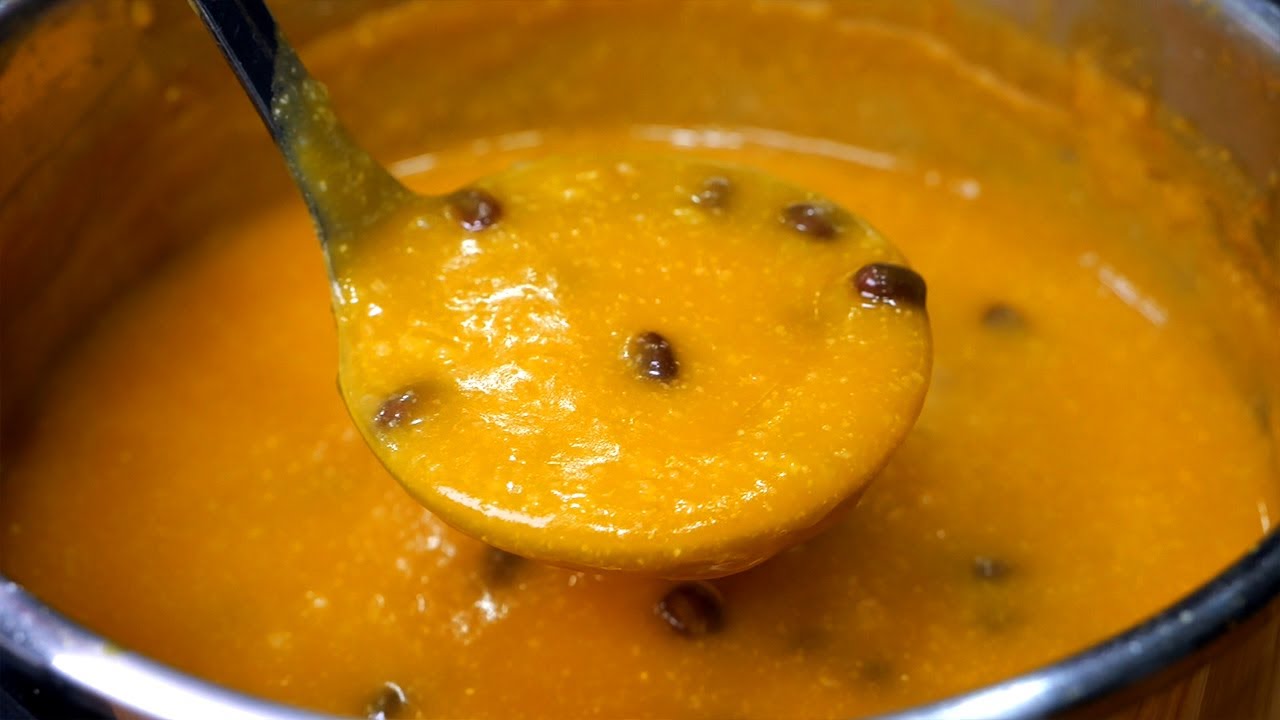
Silky sweet pumpkin porridge with chewy rice flour dumplings floating inside. Korea's golden comfort food for cold days and recovering health.
Why This Recipe Works
Most comfort food recipes survive on sentiment alone. Hobakjuk — Korea's golden pumpkin porridge — earns its reputation through actual chemistry. The texture, the sweetness, the sticky-smooth body that coats a spoon and holds its shape: none of it happens by accident. It happens because glutinous rice starch behaves differently than every other starch in your pantry, because kabocha squash carries a specific dry-sugar profile no other cucurbit can replicate, and because the sequence of steps here is exactly precise enough to matter. This is not grandmother's intuition. This is grandmother's intuition, explained.
The Squash Decision Is Non-Negotiable
Butternut squash is widely available, inoffensive, and wrong. Its water content hovers around 90%, which means blending and cooking it into a porridge produces a dilute, pallid result you have to compensate for with extra flour and extra time. Kabocha — sold in Korean markets as danhobak (단호박) — runs closer to 85% water, and more importantly, its sugar profile skews toward complex oligosaccharides rather than simple sucrose. That distinction matters: complex sugars produce a rounder, less aggressively sweet finish that integrates with the savory salt note instead of fighting it. You can use butternut. You will notice the difference. You will wish you hadn't.
Why You're Microwaving the Kabocha
Because this is not a religious ceremony — it's breakfast. The microwave achieves something the stovetop cannot: it drives internal steam outward rather than inward, effectively concentrating the squash flesh instead of waterlogging it. Ten minutes at full power, cut-side down, produces a kabocha that's dry enough to peel cleanly and dense enough to blend into a puree with genuine body. Steaming achieves roughly the same result in twice the time. Boiling ruins it entirely — you introduce water where you need concentration. If you've been boiling your pumpkin for porridge, that's why your hobakjuk tastes thin.
The Blender Step Creates the Color
Mechanical cell disruption — which is exactly what a blender does at high speed — releases carotenoids from the squash cells and distributes them evenly throughout the liquid. This is why blended hobakjuk is that specific saturated amber-gold rather than the washed-out beige you get when people mash by hand. More practically, the blender shears the fiber into particles small enough to remain suspended during cooking, giving the finished porridge its characteristic silk-on-the-palate texture. A hand masher leaves chunks. A food mill leaves graininess. Use the blender. Run it long enough to hear the pitch stabilize — that's full emulsification.
Glutinous Rice Flour: The Structural Engine
Here is where most recipes skip the explanation and just say "thicken." Glutinous rice flour — chapssal-garu — is nearly pure amylopectin starch, as opposed to the amylose-heavy starches in wheat flour or regular rice flour. Amylopectin gelatinizes at a lower temperature and, critically, produces a gel that is clear, stretchy, and extremely stable. When you make the slurry — 3 tablespoons cold water, 3 tablespoons flour — and stir it into the simmering porridge in the pot, the amylopectin granules absorb liquid and swell rapidly, creating cross-linked chains that trap the pumpkin puree in a cohesive, viscous matrix. The result is not "thick soup." It is hobakjuk: a specific textural category that holds its shape in a bowl, releases heat slowly, and coats the back of a spoon in an unbroken layer. Cornstarch can approximate this thickening effect for the porridge body — but at the cost of a slightly starchy, opaque finish and none of the chewiness the flour provides in the dumplings.
Saealsim: The Textural Argument
The tiny rice dumplings — saealsim, literally "bird egg hearts" — are not decorative. They are a deliberate textural counterargument to the porridge's homogeneity. The dough is glutinous rice flour hydrated with hot water, not cold: hot water initiates partial gelatinization immediately, making the dough pliable and allowing the balls to hold their shape before they hit the porridge. Cold water produces a crumbly, fragile dough that falls apart in cooking. The dumplings signal doneness by floating — a reliable visual cue, since floating indicates that interior moisture has converted to steam and the starch is fully set. Pull them early and the centers are raw. Pull them late and they become gummy rather than chewy. Three to four minutes from submersion to float is the window.
Heat Management Is the Difference Between Porridge and Scorched Regret
Pumpkin puree scorches at lower temperatures than water-based soups because the sugar content accelerates the Maillard reaction on any surface that stays in contact with direct heat. Medium heat, constant stirring, and a heavy-bottomed pot are not suggestions — they are the operational requirements for getting hobakjuk from liquid to table without a layer of caramel fused to your cookware. Stir from the bottom, not the top. If you smell anything toasty before the dumplings float, lower the heat immediately.
Serving Temperature and the Bowl Problem
Hobakjuk holds heat well because of its density, but it also sets up as it cools — the amylopectin gel firms at room temperature into something closer to pudding than porridge. Serve it in deep bowls that have been warmed with hot water first. This is not precious aesthetics; it's a practical delay tactic that keeps the porridge at eating temperature through the full bowl rather than the first four spoonfuls. The bowl matters. Cold ceramic steals heat from the porridge faster than you think.
Korea's Original Recovery Food
In Korean traditional medicine — hanbang — pumpkin is classified as a food that drains excess water from the body, reduces swelling, and settles the digestive system after stress or illness. Hobakjuk is prescribed in the most literal sense: after surgery, after childbirth, after stomach flu, after a winter that has been going on too long. It is 200 calories per serving, zero grams of saturated fat, and enough beta-carotene to cover more than 100% of your daily vitamin A needs. It is also, not coincidentally, the kind of food that tastes like someone decided you deserved something warm. That's the combination that makes it Korea's answer to chicken noodle soup — medically defensible and emotionally effective in equal measure.
The method is not complicated. The chemistry is not magic. Make this once and you will understand why every step is exactly what it is.
Hobakjuk (Korean Pumpkin Porridge)
🛒 Ingredients
- ✦1 small kabocha squash or butternut squash (about 2 lbs)
- ✦3 cups water
- ✦3 tablespoons glutinous rice flour (chapssal-garu)
- ✦2 tablespoons sugar (adjust to taste)
- ✦1/2 teaspoon salt
- ✦For dumplings (saealsim): 1/2 cup glutinous rice flour + 3 tablespoons hot water
👨🍳 Instructions
01Step 1
Cut kabocha in half, remove seeds. Microwave cut-side down for 10 minutes (or steam for 20 minutes) until completely soft.
02Step 2
Scoop out the soft flesh and discard the skin. You should have about 2 cups of pumpkin.
03Step 3
Blend the pumpkin flesh with 2 cups water in a blender until completely smooth.
04Step 4
Make the rice dumplings (saealsim): mix 1/2 cup glutinous rice flour with 3 tablespoons hot water. Knead into a smooth dough. Roll into small balls (about 1/2 inch diameter).
05Step 5
Pour the pumpkin puree into a pot. Add remaining 1 cup water, sugar, and salt. Bring to a gentle boil over medium heat, stirring frequently — it scorches easily.
06Step 6
Mix 3 tablespoons glutinous rice flour with 3 tablespoons cold water to make a slurry. Stir into the porridge to thicken.
07Step 7
Drop the rice dumplings into the simmering porridge. Cook for 3-4 minutes until they float to the surface and turn translucent.
08Step 8
Serve warm in deep bowls. The porridge should be thick enough to coat the back of a spoon.
Nutrition Per Serving
Estimates based on standard preparation. Adjustments alter macros.
🔄 Substitutions
Instead of Kabocha squash...
Use Butternut squash or canned pumpkin puree
Butternut is sweeter and wetter — use less water. Canned pumpkin works in a pinch (skip blending step)
Instead of Glutinous rice flour...
Use Cornstarch (for thickening only)
Won't work for dumplings — you can skip the saealsim if glutinous rice flour isn't available
🧊 Storage & Reheating
In the Fridge
Store for 2-3 days. The porridge thickens significantly in the fridge — add water when reheating.
In the Freezer
Freeze without dumplings for up to 2 months. Dumplings change texture after freezing.
Reheating Rules
Reheat in a pot over medium-low, adding water as needed and stirring constantly to prevent scorching.
❓ Frequently Asked Questions
What are saealsim?
Saealsim (새알심) are tiny glutinous rice flour dumplings — literally 'bird egg hearts' because of their small, round shape. They add a chewy textural contrast to the smooth porridge. They're made simply from glutinous rice flour and hot water, rolled into tiny balls.
Is hobakjuk sweet or savory?
It depends on the household. Traditional hobakjuk leans sweet — it's often served as a snack or breakfast rather than a main meal. Some modern versions are savory, served as a soup course. Chef Kim's version is gently sweet with a touch of salt to balance.

The Science of
Hobakjuk (Korean Pumpkin Porridge)
We turned everything on this page into a beautiful, flour-proof PDF cheat sheet. Print it out, stick it to your fridge, and never mess up your hobakjuk (korean pumpkin porridge) again.
*We'll email you the high-res PDF instantly. No spam, just perfectly cooked meals.
AlmostChefs Editorial Team
We translate the internet's most popular cooking videos into foolproof, beginner-friendly written recipes. We analyze multiple methods, test them in our kitchen, and engineer a single "Master Recipe" that gives you the best possible result with the least possible stress.