Easy Hobak Namul (The Korean Zucchini Side You'll Make Every Week)
A clean, five-ingredient Korean zucchini banchan built on quick salt-sweating and sesame oil finishing. Gut-friendly, blood-sugar stable, and done in under 20 minutes. We broke down exactly why the salt-sweat step makes or breaks the final texture.

“Hobak namul shows up at every Korean table — but most home cooks skip the salt-sweat step or undercook the garlic, and the dish ends up watery and bland. The entire technique is a seven-minute sauté, but the thirty seconds of prep before it determine whether you get silky, umami-forward zucchini or a wet mess. Here's how to do it correctly every time.”
Why This Recipe Works
Namul is one of those Korean techniques that looks deceptively simple — and is, once you understand what the salt-sweat step is actually doing. The failure rate on hobak namul at home is almost entirely explained by one skipped step. Everything else in the recipe is nearly impossible to get wrong.
The Moisture Problem
Zucchini is approximately 95% water by weight. That number sounds like a fun food fact until you drop a handful of raw slices into a hot pan and watch your sauté immediately become a boil. The pan floods, the temperature drops, the garlic turns gray and bitter, and the zucchini steams into a soft, flavorless mush. This is the namul failure most people have experienced.
The solution has been in Korean home kitchens for centuries: toss the sliced zucchini in salt and wait. Salt pulls water out of plant cells through osmosis — the same physics that makes brining work, that makes cucumbers become pickles, that makes sauerkraut release enough liquid to ferment. Ten minutes with a generous pinch draws out a startling amount of liquid. Then you squeeze. Hard. The zucchini that goes into the pan should feel almost dry.
What enters the skillet after that step behaves completely differently. It sautés instead of steams. It gets a little color on the edges. The garlic can actually brown in the brief window before the zucchini releases its remaining moisture. The result is concentrated in flavor, with a silky-firm texture that holds up across four days in the fridge.
The Garlic Window
Thirty to forty-five seconds. That's the entire cooking window for the garlic before it crosses from fragrant and golden into bitter and acrid. This is not a step you can walk away from. Have the squeezed zucchini ready before the garlic hits the pan, because the moment you smell that sharp toasted garlic aroma, the zucchini goes in — and it goes in immediately.
A wide skillet matters here for two reasons: it gives the garlic room to spread so it doesn't steam in a cluster, and it gives the zucchini enough surface area to sauté rather than crowd. Twelve inches is the minimum for a full batch. Anything smaller and you're steaming again.
The Sesame Finish
Sesame oil is the most misused ingredient in Korean cooking. It's added at the start of sautés (wrong), used as the cooking fat (wrong for high-heat applications), and drizzled on at the end in quantities large enough to make the dish taste like an oil slick. Hobak namul uses sesame oil as a finishing agent only — added after the heat is off, in a measured amount, to coat rather than saturate.
The chemistry is simple: sesame oil's signature toasted aroma comes from pyrazines and furans that form during the roasting of the seeds. These compounds are volatile and burn off quickly at cooking temperatures. Added off-heat, they perfume the zucchini without dissipating. Added to a screaming hot pan, they're gone in seconds.
One and a half teaspoons for four servings. That's the ratio. Taste, adjust minimally.
Why This Works as Weekly Banchan
Hobak namul is one of the few vegetable side dishes that genuinely improves after a night in the fridge. The sesame oil permeates the zucchini more thoroughly as it sits, the salt equalizes through the flesh, and the garlic mellows. A batch made Sunday morning works as banchan through Thursday without any degradation in quality.
Its nutritional profile fits naturally into a gut-health and blood-sugar-conscious diet — zucchini's fiber content slows digestion, its low glycemic index prevents insulin spikes, and the garlic provides prebiotics that feed beneficial gut bacteria. It's not health food in the performative sense. It's just a vegetable cooked well, which is what Korean banchan has always been.
Where Beginners Mess This Up
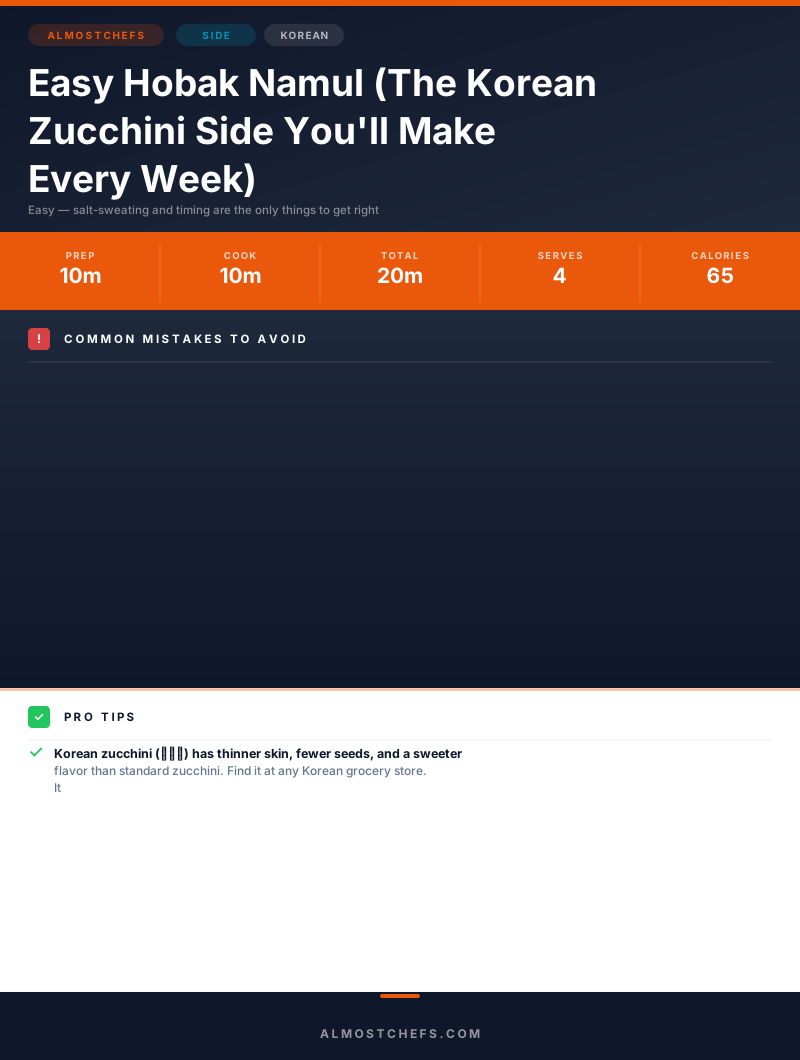
Before we start, read this. These are the 4 reasons your easy hobak namul (the korean zucchini side you'll make every week) will fail:
- 1
Skipping the salt-sweat: Korean zucchini holds enormous amounts of water. If you sauté it without first drawing out that moisture with salt, the pan floods immediately and you end up steaming the zucchini instead of sautéing it. The texture turns spongy and the garlic never browns properly. Salt the zucchini, wait ten minutes, then squeeze — this is not optional.
- 2
Overcrowding the pan: Even after squeezing, zucchini releases more liquid when heat hits it. A crowded pan drops in temperature and the liquid cannot evaporate fast enough. Use a wide skillet and work in a single layer. If you're doubling the recipe, cook in two batches.
- 3
Adding sesame oil too early: Sesame oil has a low smoke point and its delicate toasted aroma burns off quickly at high heat. Add it only after you turn off the flame. The residual heat is enough to warm it through and distribute the flavor without destroying it.
- 4
Under-salting before squeezing: Use a generous pinch — more than feels comfortable. You'll squeeze most of it out along with the water. The zucchini should taste slightly oversalted before squeezing; after, it will be seasoned perfectly.
🛠️ Core Equipment
- Wide stainless or carbon steel skilletSurface area is everything in namul. A narrow pan traps steam and prevents the zucchini from getting any color. Twelve inches minimum. A [carbon steel skillet](/kitchen-gear/review/carbon-steel-skillet) heats faster and gives better browning than nonstick.
- Colander or mesh strainerFor draining the salted zucchini. A flat-bottomed colander lets you press down evenly. After draining, squeeze the zucchini in your fists or in a clean kitchen towel to remove as much liquid as possible.
- Knife and cutting boardThe cut matters. Matchsticks or half-moons both work, but they cook differently. Half-moons (about 3mm thick) give softer, silkier results. Matchsticks hold their shape better and have more surface area for browning. Choose based on the texture you prefer.
Easy Hobak Namul (The Korean Zucchini Side You'll Make Every Week)
🛒 Ingredients
- ✦2 medium Korean zucchini (or 2 small regular zucchini, about 1.5 pounds total)
- ✦1 teaspoon kosher salt, for sweating
- ✦1 tablespoon neutral oil (avocado or grape seed)
- ✦3 cloves garlic, minced
- ✦2 scallions, thinly sliced
- ✦1.5 teaspoons sesame oil
- ✦1 teaspoon toasted sesame seeds
- ✦1/2 teaspoon sea salt, for final seasoning
- ✦Pinch of white pepper
👨🍳 Instructions
01Step 1
Cut the zucchini into half-moons or matchsticks, about 3mm thick. Place in a bowl, toss with 1 teaspoon kosher salt, and let sit for 10 minutes.
02Step 2
After 10 minutes, drain the zucchini in a colander and press firmly. Then squeeze in your hands or a clean kitchen towel until very little liquid remains. The zucchini should feel almost dry.
03Step 3
Heat a wide skillet over medium-high heat. Add the neutral oil and heat until shimmering.
04Step 4
Add the minced garlic and sauté for 30-45 seconds until fragrant but not browned.
05Step 5
Add the squeezed zucchini to the pan in a single layer. Sauté for 4-5 minutes, stirring occasionally, until tender and lightly translucent with some edges starting to color.
06Step 6
Add the sliced scallions and toss for 30 seconds.
07Step 7
Turn off the heat. Add sesame oil, sesame seeds, sea salt, and white pepper. Toss to coat evenly.
08Step 8
Transfer to a plate or small banchan bowl. Serve warm, at room temperature, or cold.
Nutrition Per Serving
Estimates based on standard preparation. Adjustments alter macros.
🔄 Substitutions
Instead of Korean zucchini...
Use Standard zucchini or yellow summer squash
Slightly more water content and less sweetness. Extend the salt-sweat to 15 minutes and squeeze aggressively. The flavor difference is real but minor.
Instead of Neutral oil...
Use Sesame oil only (no neutral oil)
Some older recipes use only sesame oil throughout. Lower heat to medium to prevent burning. Richer flavor but heavier on the palate.
Instead of Fresh garlic...
Use 1/2 teaspoon garlic powder
Acceptable in a pinch. Adds less brightness and no textural contrast. Add it with the zucchini rather than sautéing it first.
Instead of Scallions...
Use Chives or thinly sliced shallot
Chives give a milder allium note. Shallot adds sweetness but needs an extra 30 seconds in the pan to soften.
🧊 Storage & Reheating
In the Fridge
Store in an airtight container for up to 4 days. The sesame oil flavor deepens over time. Hobak namul is one of the few vegetable banchan that's arguably better on day two.
In the Freezer
Not recommended. Zucchini's high water content turns it mushy after freezing and thawing.
Reheating Rules
Eat cold or at room temperature. If you prefer it warm, 30 seconds in a pan over low heat with a tiny splash of water is enough. Microwave reheating degrades the sesame aroma.
❓ Frequently Asked Questions
Why is my hobak namul watery?
You didn't squeeze enough moisture out after the salt-sweat step, or you skipped it entirely. Zucchini is mostly water. The salt draws it out — the squeeze removes it. Do both thoroughly and the final dish will be silky rather than soupy.
Can I use a microwave to sweat the zucchini instead of salting?
You can microwave the sliced zucchini for 2 minutes to drive out moisture, but salt-sweating produces a better texture because it draws water out gently without partially cooking the cell walls. The microwaved version tends to collapse in the pan.
What is hobak namul served with?
It's banchan — a small side dish served alongside rice and other banchan at a Korean meal. It pairs well with grilled meats, doenjang jjigae, or as part of a bibimbap bowl. It works as a standalone rice topper with a fried egg too.
Is hobak namul served hot or cold?
Both are traditional. Freshly made, it's warm. At a Korean table, banchan is typically served at room temperature. Cold from the fridge is also acceptable but the sesame aroma is less pronounced when cold.
Can I make this ahead for a dinner party?
Yes — it's one of the best make-ahead banchan. Make it the morning of, store covered at room temperature if serving within 4 hours, or refrigerate and pull it out 30 minutes before the meal to take the chill off.
What makes this good for gut health and blood sugar?
Zucchini is high in water and dietary fiber with a low glycemic index, meaning it digests slowly without spiking blood sugar. The fiber also feeds beneficial gut bacteria. Garlic contains prebiotics (fructooligosaccharides) that support gut microbiome diversity.
The Science of
Easy Hobak Namul (The Korean Zucchini Side You'll Make Every Week)
We turned everything on this page into a beautiful, flour-proof PDF cheat sheet. Print it out, stick it to your fridge, and never mess up your easy hobak namul (the korean zucchini side you'll make every week) again.
*We'll email you the high-res PDF instantly. No spam, just perfectly cooked meals.
AlmostChefs Editorial Team
We translate the internet's most popular cooking videos into foolproof, beginner-friendly written recipes. We analyze multiple methods, test them in our kitchen, and engineer a single "Master Recipe" that gives you the best possible result with the least possible stress.