Crispy Hobak Jeon (The Korean Zucchini Pancake You've Been Undercooking)
Thin rounds of Korean zucchini dredged in flour and egg, pan-fried in a hot skillet until golden and crisp at the edges with a tender center. A cornerstone banchan that most home cooks rush — and ruin. We break down the exact technique for the crust you're actually after.

“Hobak jeon is one of those dishes that looks embarrassingly simple on paper — slice zucchini, dip in flour and egg, fry. And yet most versions come out pale, soggy, and flavorless. The difference between forgettable and genuinely good hobak jeon comes down to three decisions: how thick you slice, how dry you get the zucchini before dredging, and how hot you keep the pan. Get those three right and everything else follows.”
Why This Recipe Works
Hobak jeon occupies a specific place in the Korean table: it is not a showstopper, not a centerpiece, not the dish anyone describes first. It is banchan — a supporting player, one of many small dishes arranged around rice. Which is exactly why most people make it carelessly, and exactly why most versions fail.
The dish is structurally simple. Slice. Flour. Egg. Fry. Four steps. The failure points hide inside each one.
The Moisture Problem
Korean zucchini contains a surprising amount of water — roughly 94% by weight. Drop a raw round into hot oil and that water immediately begins converting to steam, which pushes outward through the coating from the inside. The flour-and-egg shell, instead of crisping up against the pan, inflates slightly and softens from within. You end up with a pale, chewy disc that tastes like it was steamed rather than fried. This is the number one hobak jeon failure and it has nothing to do with technique — it's pure chemistry.
The solution is the salt-and-drain step. Salting draws moisture out of the zucchini cells via osmosis, pooling it on the surface where you can blot it away before the oil ever sees it. Ten minutes of salting followed by thorough blotting removes enough moisture to change the entire character of the finished crust. This is not optional. It is the recipe.
The Pan Temperature Imperative
Egg sets at roughly 160°F. Oil in a stainless or cast iron skillet over medium-high heat runs 350-375°F. The moment the egg-coated round hits the pan, the proteins at the contact surface denature almost instantly, forming a cohesive shell before the interior moisture has time to migrate upward. If the pan is too cool — under 300°F — the egg sets slowly, the moisture escapes, and you're back to the same soggy result you were trying to avoid.
This is why you must let the pan recover between batches. Every round you add drops the surface temperature. A cold pan full of jeon produces pale, greasy results. A hot pan with fewer rounds produces golden, crisp ones. When in doubt, cook fewer rounds at once and cook them right.
The Coating Architecture
The two-stage dredge is not arbitrary. The flour layer does something specific: it creates a dry, slightly rough surface that gives the egg somewhere to grip. Without it, beaten egg slides off the smooth, waxy surface of zucchini like water off a car hood. With it, you get a thin, even coating that fuses into a single cohesive shell.
The key is restraint. You want a dusting of flour — barely visible — not a thick crust. Heavy flouring creates a chewy, bready exterior that competes with the delicate zucchini instead of complementing it. Tap the excess off firmly. The coating should be almost translucent before it goes into the egg.
Timing and Service
Hobak jeon is one of the few dishes where the gap between the pan and the plate genuinely matters at the minute scale. The crust starts softening the moment steam begins redistributing internally after cooking. Five minutes on a flat plate under other rounds and you've lost the whole point.
A wire rack set over a sheet pan solves this. Air circulation underneath prevents steam from trapping against the bottom surface, buying you an extra 8-10 minutes of crispness. If you're cooking in large batches, a low oven at 200°F keeps finished rounds acceptable while you work through the rest.
The dipping sauce matters more than it appears. The sesame oil and rice vinegar combination is doing real work — cutting through the richness of the egg coating and resetting your palate between bites. Hobak jeon eaten without the sauce tastes flat and one-note. With it, the same dish tastes complete.
Simple food demands more craft, not less. That's the whole lesson.
Where Beginners Mess This Up
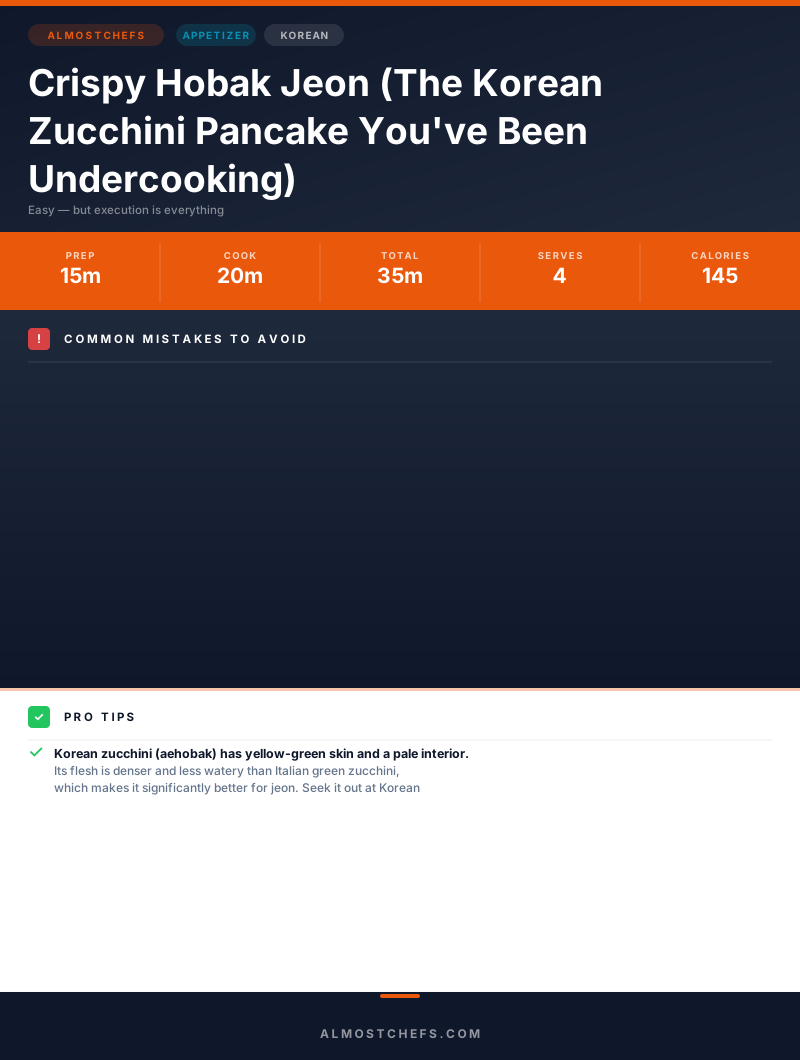
Before we start, read this. These are the 4 reasons your crispy hobak jeon (the korean zucchini pancake you've been undercooking) will fail:
- 1
Slicing too thick: Hobak jeon rounds should be exactly 5-6mm — just under a quarter inch. Thicker slices take too long to cook through, which means you keep the pan on too long, the egg coating browns unevenly, and the interior turns waterlogged. Thin rounds cook in 2-3 minutes per side and develop the edge crisp that defines the dish.
- 2
Skipping the salt-and-drain step: Korean zucchini (aehobak) has a high water content. If you dredge wet slices in flour, the moisture seeps through the coating during cooking and steams the zucchini instead of frying it. Salt the rounds, let them sit for 10 minutes, then pat completely dry. This is the non-negotiable step most recipes gloss over.
- 3
Cooking in too much oil: Hobak jeon is pan-fried, not shallow-fried. A thin film of oil — just enough to coat the bottom of the skillet — is all you need. Too much oil and the egg coating absorbs it, turning the surface greasy and heavy instead of delicate and crisp.
- 4
Flipping too early: The egg sets from the bottom up. If you flip before the underside is fully golden, the coating tears and sticks to the pan. Wait until you can see the egg going opaque up the sides of the round — that's your signal. It takes patience, but it takes about 90 seconds longer than you think.
🛠️ Core Equipment
- Wide stainless steel or cast iron skilletEven heat distribution prevents cold spots that cause uneven browning. Non-stick works but won't give you the same crust — the egg coating needs direct contact with a hot metal surface to develop proper color.
- Sharp mandoline or knifeConsistent 5-6mm slices are critical. Uneven cuts mean some rounds overcook while others are underdone in the same pan. A mandoline guarantees uniformity and makes prep significantly faster.
- Paper towels and a sheet trayFor the salt-and-drain step. Lay rounds in a single layer, salt both sides, and blot thoroughly before dredging. Don't stack — stacked rounds steam each other and won't dry properly.
- Two shallow bowlsOne for flour, one for beaten egg. The two-stage dredge — flour first, then egg — is what creates the cohesive coating. Trying to do both in one bowl creates a batter, which is a different dish entirely.
Crispy Hobak Jeon (The Korean Zucchini Pancake You've Been Undercooking)
🛒 Ingredients
- ✦2 medium Korean zucchini (aehobak), about 1.5 pounds total
- ✦1/2 cup all-purpose flour
- ✦2 large eggs, beaten
- ✦1 teaspoon fine sea salt, plus more for salting
- ✦1/4 teaspoon white pepper
- ✦3 tablespoons neutral oil (vegetable or grapeseed), divided
- ✦1 green onion, thinly sliced (for garnish)
- ✦1 red chili, thinly sliced (optional, for color)
- ✦Dipping sauce: 2 tablespoons soy sauce, 1 tablespoon rice vinegar, 1 teaspoon sesame oil, pinch of gochugaru
👨🍳 Instructions
01Step 1
Slice the zucchini into rounds, 5-6mm thick. Spread in a single layer on a paper towel-lined sheet tray and season both sides lightly with salt. Let sit for 10 minutes.
02Step 2
Blot each round thoroughly dry with paper towels. The surface should feel tacky, not wet. Discard the liquid that has pooled on the tray.
03Step 3
Set up two shallow bowls: one with flour seasoned with white pepper, one with the beaten eggs.
04Step 4
Dredge each zucchini round lightly in flour, tapping off any excess, then dip in beaten egg to coat both sides. Let any excess egg drip off.
05Step 5
Heat a wide skillet over medium-high heat. Add 1.5 tablespoons of neutral oil and swirl to coat the pan in a thin, even film.
06Step 6
Working in batches, add the coated rounds in a single layer without crowding. Cook undisturbed for 2-3 minutes until the underside is deep golden and the egg is set visibly up the sides.
07Step 7
Flip each round once and cook for another 2 minutes until the second side is evenly golden. Transfer to a wire rack or paper towel-lined plate.
08Step 8
Add remaining oil between batches and let the pan return to temperature before adding more rounds.
09Step 9
Whisk together the dipping sauce ingredients. Garnish the plated jeon with green onion and red chili slices. Serve immediately with dipping sauce on the side.
Nutrition Per Serving
Estimates based on standard preparation. Adjustments alter macros.
🔄 Substitutions
Instead of Korean zucchini (aehobak)...
Use Small Italian green zucchini
Higher water content means the salt-and-drain step becomes even more critical. Double the draining time to 20 minutes and blot more aggressively.
Instead of All-purpose flour...
Use Rice flour
Produces a slightly crispier, more delicate coating that stays crunchier for longer. Gluten-free. The texture difference is noticeable in a good way — rice flour is the traditional choice in many Korean households.
Instead of Neutral oil...
Use Sesame oil blended with neutral oil (1:3 ratio)
Pure sesame oil has too low a smoke point for frying, but a small addition adds a nutty aroma to the crust. Don't go above 25% sesame or the coating browns too quickly.
Instead of Eggs...
Use Flax egg (1 tablespoon ground flaxseed + 3 tablespoons water, rested 5 minutes)
Vegan alternative that binds adequately but produces a slightly thicker, less delicate coating. The color will be paler. Works well but is not the same dish.
🧊 Storage & Reheating
In the Fridge
Store in an airtight container for up to 2 days. The coating softens significantly after the first few hours — this is expected.
In the Freezer
Freeze in a single layer on a parchment-lined tray until solid, then transfer to a bag. Keeps up to 1 month. The texture changes after freezing but remains serviceable.
Reheating Rules
Re-crisp in a dry skillet over medium heat for 2-3 minutes per side. The oven works too — 375°F for 8-10 minutes on a wire rack over a sheet pan. Avoid the microwave entirely; it steams the coating into mush.
❓ Frequently Asked Questions
Why is my hobak jeon soggy?
Almost certainly moisture. Either you skipped the salt-and-drain step, didn't blot dry enough, used too much oil, or crowded the pan (which traps steam). Address all four and you won't have soggy jeon.
Can I use regular green zucchini instead of Korean zucchini?
Yes, but it requires more aggressive moisture removal. Regular zucchini contains significantly more water than aehobak. Salt both sides, let sit for 20 minutes, and blot very firmly before dredging. Smaller, younger zucchini perform better than large ones.
Why does my egg coating keep tearing when I flip?
You're flipping too early. The egg needs to be fully set on the underside before you can flip without tearing. Wait until you can see the egg turning opaque up the sides of the round — that visual cue tells you the bottom is ready.
Can hobak jeon be made ahead of time?
You can prep the sliced, salted, and dried zucchini rounds up to 2 hours ahead and keep them covered in the refrigerator. The actual frying should happen right before serving. Pre-fried jeon loses its crust too quickly to be worth the advance work.
What's the difference between hobak jeon and hobak namul?
Hobak namul is stir-fried or sautéed zucchini seasoned with sesame oil and garlic — no coating, soft texture, served at room temperature. Hobak jeon is pan-fried in a flour-and-egg coating, served hot and crisp. Same vegetable, fundamentally different techniques and textures.
How do I keep the oil temperature consistent between batches?
After removing each batch, let the pan sit on the heat for 30-45 seconds before adding the next batch and more oil. A pan that has cooled slightly produces pale, oil-soaked jeon instead of golden ones. A thermometer reading of 350-360°F is your target if you want to be precise.
The Science of
Crispy Hobak Jeon (The Korean Zucchini Pancake You've Been Undercooking)
We turned everything on this page into a beautiful, flour-proof PDF cheat sheet. Print it out, stick it to your fridge, and never mess up your crispy hobak jeon (the korean zucchini pancake you've been undercooking) again.
*We'll email you the high-res PDF instantly. No spam, just perfectly cooked meals.
AlmostChefs Editorial Team
We translate the internet's most popular cooking videos into foolproof, beginner-friendly written recipes. We analyze multiple methods, test them in our kitchen, and engineer a single "Master Recipe" that gives you the best possible result with the least possible stress.