High Protein Yogurt Bark (28g Per Serving, No Oven Required)
A frozen Greek yogurt bark loaded with almonds, walnuts, hemp seeds, and protein powder that delivers 28g of protein per serving. We broke down what actually makes yogurt bark a legitimate post-workout snack — and what turns it into glorified frozen sugary yogurt.
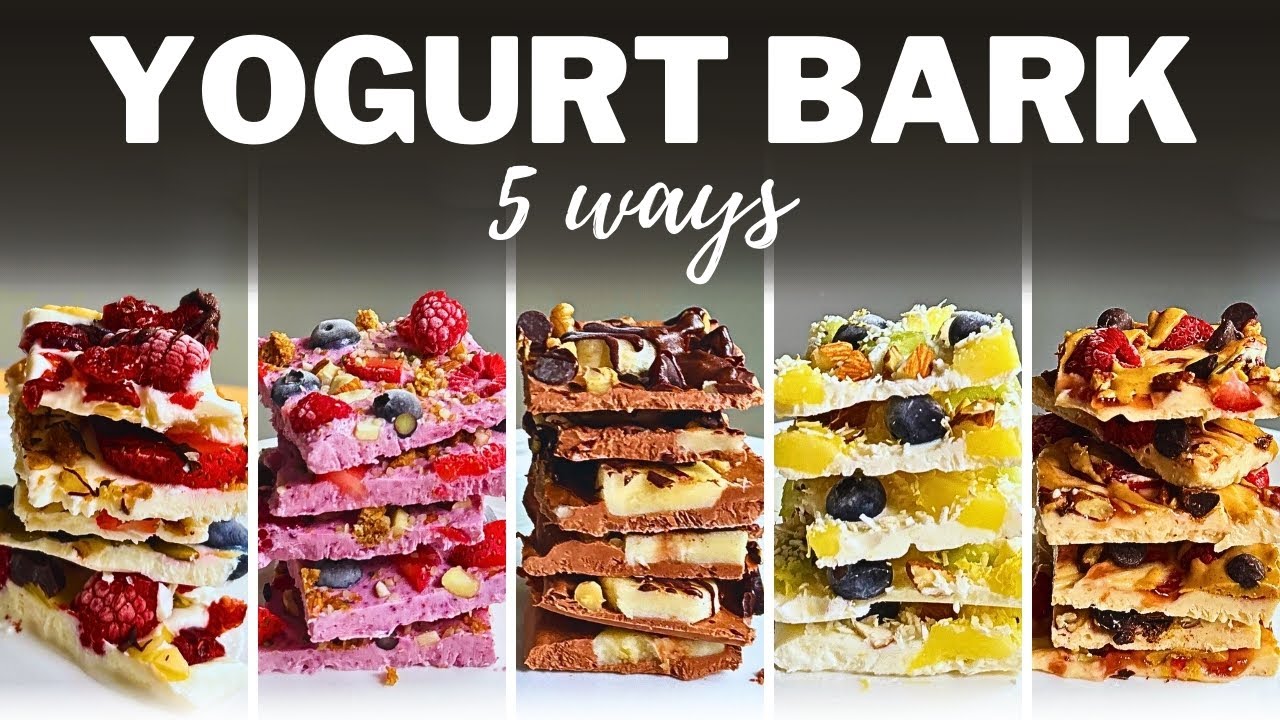
“Yogurt bark has a branding problem. Most versions floating around social media are 80% frozen yogurt with a sprinkle of granola for optics — they look like protein food and taste like frozen froyo. This version is actually built around protein density: Greek yogurt as the base, hemp seeds and chopped nuts as structural protein toppers, and vanilla protein powder folded directly into the yogurt. The result is 28g of protein per serving in something that takes 15 minutes to assemble and costs less than a protein bar.”
Why This Recipe Works
Yogurt bark is one of those foods that exists in two completely different forms depending on who makes it. Version one: a thin frozen sheet of vanilla yogurt with some granola on top, essentially a flatter, less satisfying frozen yogurt. Version two: a dense, protein-loaded frozen snack that happens to taste like dessert while delivering macro numbers that rival commercial protein bars. This recipe is the second version.
The Greek Yogurt Foundation
The entire premise of this recipe collapses if you use the wrong base. Regular yogurt — even low-fat — contains too much water. When frozen, that water crystallizes into ice, giving you a brittle, icy shard instead of a creamy, snappy piece of bark. Greek yogurt has been strained through cloth or a fine mesh to remove most of the liquid whey, concentrating both the protein and the fat in a much denser base.
The math matters here. Plain nonfat Greek yogurt contains roughly 17g of protein per 3/4-cup serving. Regular vanilla yogurt might have 5g. That foundational difference — before you add a single topping — is why this recipe reaches 28g while most yogurt bark recipes barely crack 10g. Every other ingredient builds on that base.
Icelandic skyr, if you can find it, goes even further. Skyr is technically a cheese cultured like yogurt, and it typically contains 10g of protein per 100g versus 9g for Greek yogurt. It freezes similarly, produces a slightly denser texture, and is marginally creamier. Either works; skyr is a small upgrade if available.
The Protein Architecture
The three protein contributors in this recipe work on different timelines. The Greek yogurt provides the bulk — a sustained, slow-digesting casein protein that keeps you full. The protein powder (whey or isolate, folded directly into the yogurt) adds fast-absorbing protein ideal for post-workout recovery. The nuts and hemp seeds provide a third protein source alongside healthy fats that slow the overall digestion of the whole snack.
Hemp seeds deserve special mention. Two tablespoons contain 10g of complete protein — meaning all nine essential amino acids — along with a favorable ratio of omega-3 to omega-6 fatty acids. They don't change the flavor. They don't change the texture. They just sit on the bark adding serious nutritional weight while looking decorative. Use them generously.
Why the Toppings Need to Adhere
The offset spatula step and the gentle press are not optional aesthetic moves. The toppings need to be partially embedded in the yogurt surface before freezing so they don't detach when you break the bark apart. A piece of bark where the nuts slide off every time you pick it up is not a functional snack — it's a mess.
The sequence is: spread, top, press, freeze. Any deviation from that order compromises the final product. The yogurt surface is sticky for roughly 5-10 minutes at refrigerator temperature before it begins to set. Work within that window and every topping bonds cleanly to the base.
The Freezer Physics
Four hours minimum is not a conservative estimate — it's what the physics require. The yogurt layer starts freezing from the outside edges and bottom surface inward. The center of a 1/4-inch layer takes the full time to reach a temperature where it snaps cleanly rather than bending. A thicker layer takes longer. A thinner layer freezes faster but also shatters instead of breaking into satisfying pieces.
The two-to-three minute rest before breaking is the other non-negotiable. Bone-frozen bark shatters unpredictably — you end up with one large piece and a pile of dust. A brief surface thaw allows the bark to break along natural stress lines when pressure is applied. The interior stays solid; only the very surface softens slightly. That's the texture window you want.
Store pieces in a sealed container with parchment between layers. Exposed to freezer air, the surface develops ice crystals within days and the chocolate chips turn white from fat bloom. Properly sealed, this bark stays in peak condition for two full weeks — which is the real value proposition. Fifteen minutes of active prep time, two weeks of post-workout snacks.
Where Beginners Mess This Up
Before we start, read this. These are the 4 reasons your high protein yogurt bark (28g per serving, no oven required) will fail:
- 1
Using regular yogurt instead of thick Greek yogurt: Regular yogurt has too much water content. When frozen, it turns icy and brittle rather than creamy and snappy. The whey has been strained out of Greek yogurt, which is what gives the bark its dense, satisfying texture. Anything less than 2% fat Greek yogurt or Icelandic skyr will freeze into something resembling a frozen puddle.
- 2
Spreading the layer too thick: More than 1/4-inch thickness and the bark takes forever to freeze through, creating a soft center that falls apart when you try to break it. It also makes pieces too thick to eat in a couple of bites. Thin, even, and flat — use an offset spatula if you have one.
- 3
Adding toppings after the yogurt starts freezing: You have a short window between spreading and the surface setting up. If you scatter toppings onto partially frozen yogurt, they won't adhere and will fall off every time you pick up a piece. Spread, top, freeze — in that order, without delay.
- 4
Pulling it out of the freezer too soon: Three hours is the minimum. Less than that and you get soft spots that collapse mid-break. Four hours or overnight is better. If you're impatient and try to crack it early, it bends instead of breaking and the toppings slide off.
The Video Reference Library
Want to see it in action? Here are the exact videos we analyzed and combined to build this foolproof recipe translation:
The source video for this technique. Clear breakdown of the yogurt-to-topping ratio and why Greek yogurt works where regular yogurt fails.
🛠️ Core Equipment
- Rimmed baking sheetA standard half-sheet pan gives you the right surface area for 1/4-inch thickness. A rimless sheet risks yogurt sliding off the edges before it freezes solid.
- Parchment paperFrozen yogurt bark bonds to bare metal permanently. Parchment with overhanging edges lets you lift the entire slab out cleanly before breaking. Do not skip this.
- Offset spatulaGets the yogurt layer uniformly flat in a way a regular spoon cannot. Uneven spreading creates thick spots that stay soft while thin spots get icy. An [offset spatula](/kitchen-gear/review/offset-spatula) is the difference between even texture across every piece.
- Airtight freezer containerBark pieces stored loose in the freezer absorb freezer odors within days and develop ice crystals on the surface. A sealed container with parchment between layers keeps them tasting fresh for two weeks.
High Protein Yogurt Bark (28g Per Serving, No Oven Required)
🛒 Ingredients
- ✦2 cups plain nonfat Greek yogurt
- ✦3 tablespoons honey or maple syrup
- ✦1 teaspoon vanilla extract
- ✦1 tablespoon vanilla protein powder (recommended)
- ✦1/4 cup raw almonds, roughly chopped
- ✦3 tablespoons raw walnuts, roughly chopped
- ✦2 tablespoons hemp seeds
- ✦2 tablespoons unsweetened shredded coconut
- ✦2 tablespoons dark chocolate chips (70% cacao or higher)
- ✦2 tablespoons dried cranberries or tart cherries, chopped
- ✦1/4 teaspoon sea salt
- ✦1 tablespoon ground cinnamon (optional)
👨🍳 Instructions
01Step 1
Stir together the Greek yogurt, honey, and vanilla extract in a bowl until fully combined and smooth.
02Step 2
Fold the vanilla protein powder into the yogurt mixture, stirring until no lumps remain.
03Step 3
Line a standard rimmed baking sheet with parchment paper, leaving a few inches of overhang on the long sides for easy removal.
04Step 4
Spread the yogurt mixture evenly across the parchment to about 1/4-inch thickness using an offset spatula. Work quickly and aim for a uniform layer.
05Step 5
Immediately scatter the chopped almonds, walnuts, hemp seeds, shredded coconut, chocolate chips, and dried cranberries evenly across the yogurt surface.
06Step 6
Sprinkle the sea salt and cinnamon (if using) over the toppings. Press gently across the surface so the toppings adhere into the yogurt layer.
07Step 7
Transfer the baking sheet to a flat section of your freezer and freeze until completely solid, at least 3 to 4 hours or overnight.
08Step 8
Remove from the freezer and let sit at room temperature for 2 to 3 minutes.
09Step 9
Break the bark into 8 to 12 irregular pieces by hand or score with a sharp knife while still on the parchment.
10Step 10
Transfer pieces to an airtight container, separating layers with parchment paper. Store in the freezer for up to 2 weeks.
Nutrition Per Serving
Estimates based on standard preparation. Adjustments alter macros.
🔄 Substitutions
Instead of Plain nonfat Greek yogurt...
Use Plain 2% Greek yogurt or Icelandic skyr
Skyr has even more protein per gram (around 10g per 100g) and produces a creamier, denser bark. Marginally higher in fat but the texture improvement is significant.
Instead of Vanilla protein powder...
Use Unflavored whey or plant-based protein isolate
Unflavored isolates push protein to 32g+ per serving without competing with the vanilla flavor. Avoid casein — it creates a gummy texture when frozen.
Instead of Dark chocolate chips...
Use Chopped 85% cacao dark chocolate or cacao nibs
Higher cacao percentage cuts the sugar and intensifies the chocolate flavor. Cacao nibs add antioxidants with zero added sugar — and they stay crunchy even when frozen.
Instead of Honey or maple syrup...
Use Monk fruit sweetener or allulose (1-2 tablespoons)
Saves 12-15g of carbs per serving. Neither sweetener affects the freezing properties of the yogurt. Allulose behaves most like sugar in terms of texture.
🧊 Storage & Reheating
In the Fridge
Not recommended — yogurt bark melts into a soggy sheet within an hour at fridge temperature. Freeze only.
In the Freezer
Store in an airtight container for up to 2 weeks. Separate layers with parchment to prevent pieces from fusing together.
Reheating Rules
No reheating. Remove from the freezer, let sit 2-3 minutes at room temperature, and eat immediately. It degrades fast once it starts to soften.
❓ Frequently Asked Questions
Why is my yogurt bark icy instead of creamy?
You used regular yogurt or low-fat yogurt with too much water content. Greek yogurt has been strained to remove most of the whey, which is what gives the frozen bark its dense, creamy texture instead of an icy one. Switch to full Greek yogurt or Icelandic skyr.
Can I add fresh fruit instead of dried?
You can, but fresh fruit releases water as it freezes, which creates ice pockets under and around each piece of fruit. This weakens the bark at those points and makes it break unpredictably. Freeze-dried fruit is the better option — it has the same flavor with none of the water release.
Is the protein powder actually necessary?
No, but it's the difference between 18g and 28g of protein per serving. Without it, you're making standard yogurt bark. With it, you have a legitimate post-workout snack that competes with protein bars on macros. If you use it, make sure it's fully dissolved before spreading — lumps freeze into chalky spots.
How do I get clean breaks instead of shattered pieces?
Score the bark with a knife at the 2-hour mark before it's fully frozen, then return to the freezer. The pre-scored lines guide the break. Alternatively, let the fully frozen bark rest at room temperature for exactly 2-3 minutes — not more — before breaking.
Can I make this dairy-free?
Yes. Substitute full-fat coconut yogurt for the Greek yogurt. The protein count drops significantly — coconut yogurt averages 1-2g of protein per serving versus 17g for Greek yogurt — so compensate by adding more hemp seeds and using a plant-based protein isolate.
Why do my toppings fall off when I break the bark?
You either added the toppings too late (after the surface started freezing) or skipped the gentle press step. Toppings need to be pressed slightly into the wet yogurt surface before freezing so they bond to the layer rather than just resting on top.
The Science of
High Protein Yogurt Bark (28g Per Serving, No Oven Required)
We turned everything on this page into a beautiful, flour-proof PDF cheat sheet. Print it out, stick it to your fridge, and never mess up your high protein yogurt bark (28g per serving, no oven required) again.
*We'll email you the high-res PDF instantly. No spam, just perfectly cooked meals.
AlmostChefs Editorial Team
We translate the internet's most popular cooking videos into foolproof, beginner-friendly written recipes. We analyze multiple methods, test them in our kitchen, and engineer a single "Master Recipe" that gives you the best possible result with the least possible stress.