Lean Steak & Roasted Veggie Power Bowls (38g Protein Per Container)
Grass-fed sirloin marinated in a Greek yogurt herb paste, seared hard, sliced against the grain, and loaded over caramelized sheet-pan vegetables. We broke down the technique so every container in your fridge hits 38g protein and actually tastes like something you chose to eat.
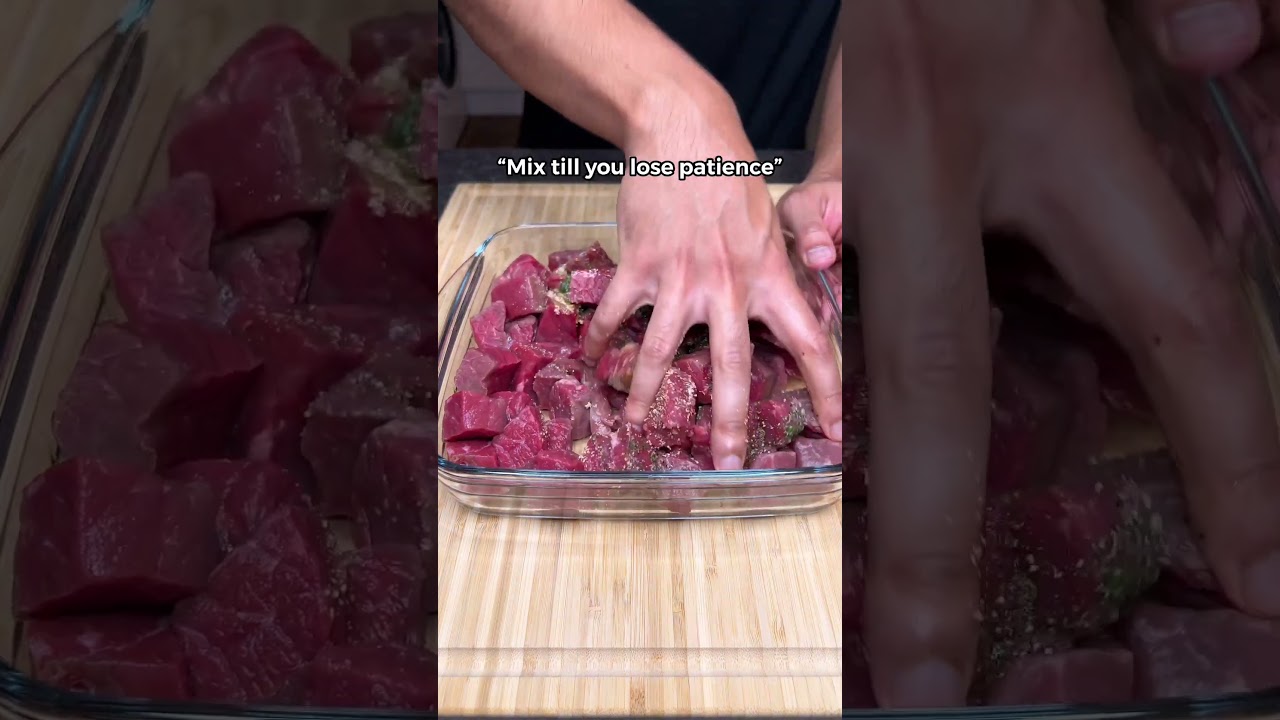
“Meal prep steak has a reputation problem. People overcook it to safe margins, slice it with the grain, and wonder why it tastes like a gym shoe by Wednesday. The fix is embarrassingly simple: a yogurt marinade that keeps the beef tender through refrigeration, a properly rested sear, and slicing against the grain. Do those three things and this becomes the meal prep you actually look forward to opening.”
Why This Recipe Works
Meal prep beef has earned its bad reputation honestly. Most people treat it like a rounding error — throw a steak in a pan, cut it up, distribute into containers, repeat for twelve weeks until the sight of a meal prep bowl produces a Pavlovian grimace. That's a technique failure, not a food failure.
The Yogurt Marinade Is Doing Real Work
Greek yogurt marinades are not a wellness trend. They're chemistry. The lactic acid in yogurt denatures surface proteins at a rate that's dramatically gentler than citrus juice or vinegar — which means after overnight marinating, the meat is tender without the mushy, acid-burned exterior that lime-heavy marinades produce. The fat in the yogurt also acts as a carrier for the fat-soluble flavor compounds in the smoked paprika and oregano, distributing them evenly across every surface of the steak.
The Dijon mustard is not for flavor alone. It contains natural emulsifiers that bind the oil-soluble spice compounds to the water-based yogurt, keeping the marinade cohesive and clinging rather than sliding off. Remove it and the marinade will pool at the bottom of the bag instead of coating the meat.
The Sear Is the Whole Thing
A cast-iron skillet preheated to smoking isn't aggressive — it's precise. Cast iron holds its surface temperature when cold meat hits the pan. Thinner pans drop 50-80°F on contact, generating steam instead of a sear. Steam cooks the exterior. Heat browns it. These are different outcomes.
The wipe-down step before cooking seems wrong but isn't. The yogurt has already penetrated the surface fibers over 2+ hours of marinating. What remains on the outside is surface moisture and dairy solids that will burn before the beef reaches Maillard temperatures. Wipe it away. The flavor you want is already inside the steak.
Four to five minutes per side, untouched. The steak will stick initially and release when the crust is structurally complete — that's the Maillard reaction cross-linking proteins at the surface. Forcing it up early tears the crust and leaves it in the pan. Trust the physics and wait for the release.
Sheet Pan Geometry
Brussels sprouts, zucchini, bell peppers, and mushrooms have wildly different moisture contents. At 425°F, they all give off steam rapidly — and if that steam has nowhere to go because they're crowded, the pan becomes a low-pressure steamer and you get pallid, soft vegetables instead of the caramelized, slightly charred edges that make roasted vegetables worth eating.
Two large rimmed sheet pans with space between each piece solves this entirely. The balsamic vinegar reduces and concentrates at high heat, forming a thin glaze on each vegetable that adds acidity and depth. At lower temperatures or in a crowded pan, it never reduces — it just makes everything wet.
The Assembly Logic
Slicing against the grain is not optional for meal prep. On day one, a with-the-grain steak is merely chewy. By day three, refrigeration has tightened those long muscle fibers into something approaching jerky. The perpendicular cut shortens those fibers to 1/4 inch or less, and a 1/4-inch fiber is tender at any temperature. Same steak. Same cook. Different knife angle, completely different eating experience by Wednesday.
The greens go in last and stay raw. Their job isn't to cook — it's to add texture contrast when you open the container cold or to wilt gently under the residual heat of reheated steak and vegetables. If you add them hot, they compress into a wet mat at the bottom of the container by the next day.
This is gym food that doesn't taste like a compromise. That's the only specification worth meeting.
Where Beginners Mess This Up
Before we start, read this. These are the 4 reasons your lean steak & roasted veggie power bowls (38g protein per container) will fail:
- 1
Skipping the resting period before slicing: Cutting into a steak immediately after it leaves the pan releases all of its accumulated juices onto the cutting board — not into your mouth. Rest for a full 5 minutes. The internal temperature equilibrates, the muscle fibers relax, and every slice stays juicy instead of gray and dry by day two.
- 2
Crowding the sheet pan: Vegetables need space to roast, not steam. If they're overlapping, the moisture they release has nowhere to go and you get soggy, pallid vegetables instead of caramelized, golden-edged ones. Use two large sheet pans and spread everything in a single layer with actual air between pieces.
- 3
Cooking the steak cold: A cold steak from the refrigerator hits a hot pan and causes uneven cooking — the exterior overcooks before the center has time to reach temperature. Pull the steak out 15 minutes before cooking. This one step is the difference between even doneness and a gray band of overcooked meat surrounding a raw center.
- 4
Moving the steak while searing: Pressing, nudging, or checking the steak breaks the Maillard reaction in progress. Put it in the pan and leave it alone for 4-5 minutes. The crust will release naturally when it's ready. If you have to force it up, it isn't done searing.
The Video Reference Library
Want to see it in action? Here are the exact videos we analyzed and combined to build this foolproof recipe translation:
The source video for this technique — covers the marinade, sear, and assembly in real time with useful close-ups of the crust development and slicing direction.
🛠️ Core Equipment
- Cast-iron skilletRetains and distributes heat better than stainless or nonstick. The mass of cast iron holds its temperature when cold steak hits the surface — other pans drop dramatically and you get steaming instead of searing.
- Two large rimmed sheet pansOne pan of this volume of vegetables will crowd immediately. Two pans give each piece of vegetable the airspace it needs to caramelize instead of steam. Rimmed edges catch the balsamic drippings.
- Meat thermometerMedium-rare is 130-135°F internal. Guessing by time alone leads to overcooked meal prep that tastes like cardboard by day three. A thermometer costs less than the steak you'll ruin without one.
- Airtight meal prep containersThe steak and vegetables hold for 4 days when properly sealed. Loose lids allow oxidation that turns sliced beef an unpleasant gray-brown and softens roasted vegetables. Glass containers reheat more evenly than plastic.
Lean Steak & Roasted Veggie Power Bowls (38g Protein Per Container)
🛒 Ingredients
- ✦1.5 lbs grass-fed sirloin steak, trimmed of excess fat
- ✦1 cup plain nonfat Greek yogurt
- ✦3 cloves garlic, minced
- ✦2 tablespoons fresh lemon juice
- ✦1 tablespoon Dijon mustard
- ✦1 teaspoon dried oregano
- ✦1 teaspoon smoked paprika
- ✦1 teaspoon kosher salt
- ✦1/2 teaspoon black pepper
- ✦2 medium bell peppers, cut into 1-inch chunks
- ✦2 medium zucchini, sliced into half-moons
- ✦1 lb Brussels sprouts, halved
- ✦8 oz cremini mushrooms, quartered
- ✦2 tablespoons extra-virgin olive oil
- ✦1 tablespoon balsamic vinegar
- ✦4 cups mixed greens or arugula
- ✦1 tablespoon fresh thyme leaves
- ✦Fleur de sel for finishing
👨🍳 Instructions
01Step 1
Combine Greek yogurt, minced garlic, lemon juice, Dijon mustard, oregano, smoked paprika, kosher salt, and black pepper in a bowl until smooth.
02Step 2
Pat the sirloin dry with paper towels, then coat both sides thoroughly with the yogurt marinade. Cover and refrigerate for at least 2 hours, or up to overnight.
03Step 3
Preheat oven to 425°F. Toss bell peppers, zucchini, Brussels sprouts, and mushrooms with olive oil, balsamic vinegar, fresh thyme, salt, and pepper until evenly coated.
04Step 4
Spread vegetables across two large rimmed sheet pans in a single layer with space between pieces. Roast for 25-30 minutes, stirring once halfway through, until edges are golden and caramelized.
05Step 5
While vegetables roast, pull the marinated steak from the refrigerator and let it sit at room temperature for 15 minutes.
06Step 6
Heat a [cast-iron skillet](/kitchen-gear/review/cast-iron-skillet) over medium-high heat for 2 full minutes until lightly smoking. Wipe excess marinade off the steak — surface moisture kills the sear.
07Step 7
Place the steak in the hot pan and sear for 4-5 minutes per side without moving it. Internal temperature should read 130-135°F for medium-rare.
08Step 8
Transfer steak to a cutting board and rest for 5 minutes uncovered.
09Step 9
Slice the rested steak against the grain into 1/2-inch strips. Look for the direction of the muscle fibers and cut perpendicular to them.
10Step 10
Divide roasted vegetables evenly among four airtight containers. Top each with sliced steak and a handful of fresh greens.
11Step 11
Finish each container with a pinch of fleur de sel and any pan juices from the cutting board. Cool completely before sealing.
Nutrition Per Serving
Estimates based on standard preparation. Adjustments alter macros.
🔄 Substitutions
Instead of Grass-fed sirloin steak...
Use Lean ground beef (93/7) formed into patties, or grass-fed ribeye
Ground beef reduces cost significantly with similar protein density but softer texture. Ribeye adds richness and 30-40 extra calories from intramuscular fat — more satisfying, higher calorie.
Instead of Plain nonfat Greek yogurt marinade...
Use Blended low-fat cottage cheese with lemon juice, or nonfat Greek yogurt with 1 tablespoon fish sauce
Cottage cheese adds creaminess and extra casein protein. Fish sauce adds umami depth that makes the steak taste notably more complex without adding calories.
Instead of Mixed greens or arugula...
Use Cooked lentils (1/2 cup per serving) or additional roasted broccoli
Lentils add 9g plant-based protein per serving, boosting totals to approximately 47g. Broccoli keeps it lighter and greener. Both work structurally as a base for the steak.
Instead of Extra-virgin olive oil...
Use Avocado oil spray plus a tahini-lemon drizzle after plating
Reduces oil needed for roasting while the tahini drizzle adds 3g plant-based protein and a Middle Eastern flavor note. Spray ensures even coating without oversaturating.
🧊 Storage & Reheating
In the Fridge
Store in airtight containers for up to 4 days. Flavors improve overnight as the steak absorbs pan juices.
In the Freezer
Freeze steak and vegetables separately for up to 2 months. The greens do not freeze — add fresh at serving. Thaw overnight in the fridge.
Reheating Rules
Reheat in a 350°F oven for 8-10 minutes, covered loosely with foil. Microwave on 60% power in 90-second intervals — full power toughens the steak. Add a tablespoon of water before sealing the container to generate steam.
❓ Frequently Asked Questions
Why is my meal prep steak tough and dry by day two?
Two causes: overcooking past medium (135°F) and slicing with the grain. Overcooked steak loses moisture rapidly in the fridge. Slicing with the grain leaves long muscle fibers intact that turn chewy when cold. Pull at 130-135°F and always cut perpendicular to the fiber direction.
Can I use a different cut of beef?
Yes. Flank steak and skirt steak both work well — they're lean, take marinades aggressively, and slice easily against the grain. Strip loin is excellent if budget allows. Avoid tenderloin for meal prep — it's too mild and the texture degrades faster than sirloin over 4 days.
Do I have to use Greek yogurt in the marinade?
Not strictly, but it's the best option. Yogurt's lactic acid tenderizes without the surface breakdown that citrus marinades cause after extended marinating. It also creates a protective coating that slows moisture loss during the sear. Buttermilk works as a direct substitute.
Why do I need to wipe the marinade off before searing?
Yogurt contains water and sugars that burn before the beef surface reaches searing temperature. The marinade has already done its job inside the meat — leaving it on the surface only produces a charred, bitter exterior rather than a clean, Maillard-browned crust.
Can I roast all the vegetables on one pan?
Only if you have a commercial-size sheet pan. A standard home oven sheet pan cannot hold this volume in a single layer. Crowded vegetables steam instead of roast — you lose the caramelization and get soft, pale results. Two pans is not optional at this volume.
How do I know which direction is against the grain?
Look at the surface of the cooked steak before cutting. You'll see faint parallel lines running in one direction — those are the muscle fibers. Your knife goes perpendicular to those lines, not parallel. On sirloin, the grain usually runs the length of the steak, so you slice across the width.
The Science of
Lean Steak & Roasted Veggie Power Bowls (38g Protein Per Container)
We turned everything on this page into a beautiful, flour-proof PDF cheat sheet. Print it out, stick it to your fridge, and never mess up your lean steak & roasted veggie power bowls (38g protein per container) again.
*We'll email you the high-res PDF instantly. No spam, just perfectly cooked meals.
AlmostChefs Editorial Team
We translate the internet's most popular cooking videos into foolproof, beginner-friendly written recipes. We analyze multiple methods, test them in our kitchen, and engineer a single "Master Recipe" that gives you the best possible result with the least possible stress.