High-Protein Shakshuka (32g Protein, No Compromises)
Eggs poached in a spiced San Marzano tomato sauce, topped with crumbled feta and cold Greek yogurt dollops — this shakshuka delivers 32g protein per serving without sacrificing the bold, rustic flavors that make the original worth eating. We rebuilt it from the ground up for muscle-building breakfasts and weekend meal prep.

“Most high-protein breakfast recipes taste like a compromise. Shakshuka doesn't have to. The base is already nutritionally dense — eggs, tomatoes, olive oil — so getting to 32g protein per serving is a matter of strategic additions, not substitutions. Greek yogurt and feta crumbled over poached eggs transforms a weekday staple into something genuinely worth eating before a workout.”
Why This Recipe Works
Shakshuka is already a protein-efficient dish. Two eggs over a tomato base gets you around 14g protein in 15 minutes with minimal effort — that's a strong foundation. The high-protein version doesn't require an overhaul. It requires three deliberate additions: Greek yogurt, extra eggs, and feta that earns its place as a protein source rather than just a garnish. Together they push the number to 32g without the dish tasting engineered.
The Sauce Is the Architecture
Everything else in shakshuka is garnish. The sauce is the building. And the sauce has two jobs: flavor delivery and structural support for the eggs while they poach.
Thin sauce means your eggs sink, whites spread out into a watery mess, and the yolks cook faster than the whites because there's nothing insulating them. Thick sauce means each egg sits in a defined well, cooking evenly from below with steam finishing them from above. The 8-10 minute simmer isn't optional. It's the difference between a composed dish and a sloppy one.
San Marzano tomatoes are worth calling out explicitly. They have a lower water-to-solid ratio than commodity crushed tomatoes, which means less reduction time and better sauce body right out of the can. If you can't find San Marzanos, add 5 minutes to your simmer and taste for acidity — you may need a pinch of sugar to balance what the generic tomatoes lack.
Spice Blooming Is Not Optional
The cumin, smoked paprika, and red pepper flakes go into hot olive oil before any liquid. This is called blooming, and it matters. Spice compounds are largely fat-soluble, not water-soluble. Adding them directly to a tomato sauce produces faint, dusty flavor. Blooming them in hot fat for 60 seconds releases their volatile aromatic compounds into the oil, which then distributes them throughout the entire sauce evenly.
The visual cue: the oil should deepen slightly in color and become intensely fragrant — almost uncomfortably fragrant, the kind where you need to step back from the pan. That's right. That's what you want. Then pour in the tomatoes immediately before anything burns.
The Yogurt Problem and Its Solution
Greek yogurt is the protein addition that most people mess up. They add it straight to the hot pan and watch it break into grainy white curds scattered through orange tomato sauce. The dish looks wrong and the texture is unpleasant.
The fix is simple: take the pan off heat before adding the yogurt. The sauce is already above 200°F — it doesn't need more heat. The residual warmth is enough to soften the yogurt from cold to room temperature, creating those signature creamy pools that sit distinct against the red sauce. Full-fat yogurt holds this shape better than low-fat because the fat content stabilizes the protein network against heat separation.
Use a cast iron skillet and you get the added benefit of retained heat that keeps the dish warm at the table while you eat — shakshuka should be served hot, and thin stainless pans cool off faster than you'd like.
Why Feta Is Doing Real Work Here
Feta is not decoration in this recipe. Three-quarters of a cup of crumbled feta over 4 servings contributes roughly 5-6g protein per serving on its own — meaningful in the context of a dish where every ingredient is pulling weight. It also contributes sodium, which means you need less added salt in the sauce. And its sharp, briny flavor cuts through the richness of runny yolk and creamy yogurt in a way that keeps the dish from becoming heavy.
The trick is adding it off-heat, same as the yogurt. Feta doesn't melt — it softens and warms. Hot sauce over cold feta produces a slightly gritty texture as the proteins tighten. Off-heat, the feta warms gently and stays in distinct crumbles with enough give to mix into a bite without dominating it.
The Egg Timing Problem
Eight eggs in one pan is a coordination challenge. The eggs closest to the edge of the pan cook faster because the edges of a skillet retain more heat. The eggs in the center cook slower. If you're not deliberate, you'll end up with rubbery outer whites and undercooked inner ones.
The solution is a tight-fitting lid and medium — not medium-high — heat. The steam trapped by the lid equalizes the temperature across the entire surface, setting all the whites from above at the same rate regardless of where each egg sits in the pan. Commit to 5 minutes for runny yolks or 7 for fully set, and do not lift the lid before the timer goes off.
Where Beginners Mess This Up
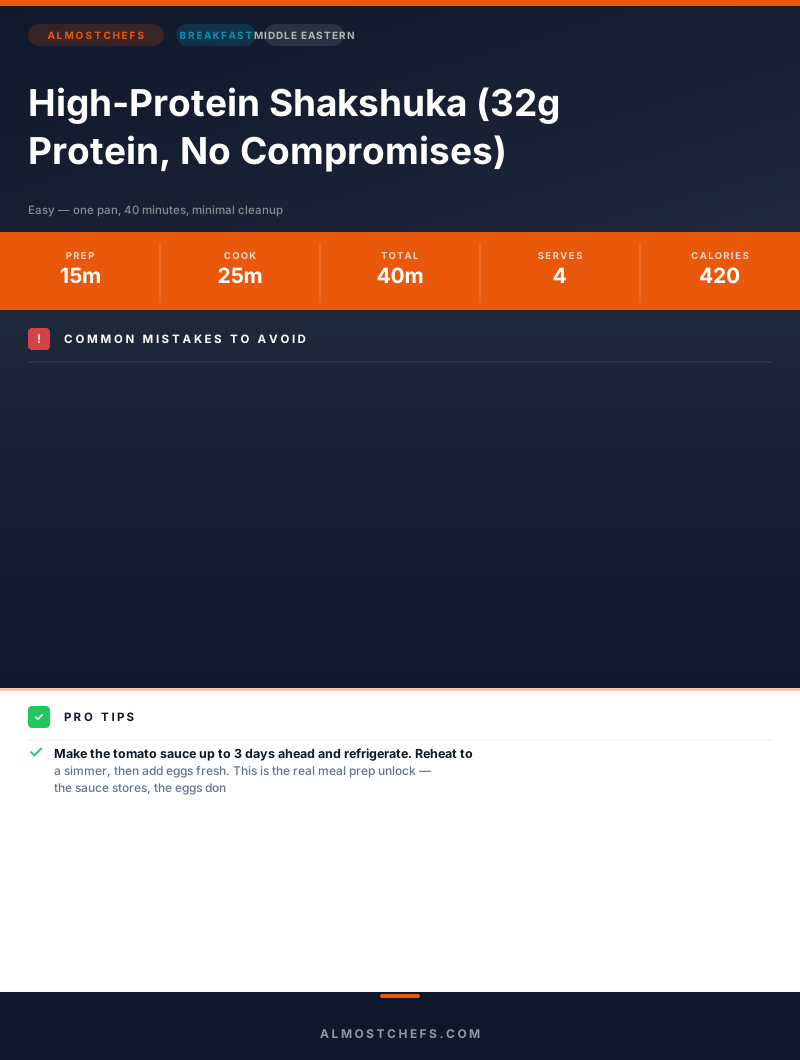
Before we start, read this. These are the 4 reasons your high-protein shakshuka (32g protein, no compromises) will fail:
- 1
Overcooking the eggs: Shakshuka lives and dies by the yolk. Cover the pan and cook on medium — not medium-high — for 5-7 minutes. The whites should be fully set and opaque while the yolk remains runny and bright. Overcooked yolks turn chalky and dry, which ruins the sauce-and-yolk combination that makes the dish worth eating.
- 2
Watery tomato sauce: If you skip the 8-10 minute simmer before adding eggs, the sauce stays thin and the eggs poach in liquid rather than sitting in a thick, spiced bed. Let the sauce reduce until it coats the back of a spoon. San Marzano tomatoes have lower water content than generic crushed tomatoes — use them if you can find them.
- 3
Not blooming the spices: Cumin, smoked paprika, and red pepper flakes need 60 seconds in hot oil before the tomatoes go in. Adding them directly to the sauce produces flat, dusty spice flavor. Blooming in fat activates fat-soluble flavor compounds that cold liquid can't release.
- 4
Adding Greek yogurt while still on heat: Cold Greek yogurt hits hot tomato sauce and seizes, turning grainy and curdled if the pan is too hot. Remove from heat before dolloping. The residual warmth of the dish is enough to soften it into those signature creamy pools without breaking it.
🛠️ Core Equipment
- Large skillet with a tight-fitting lidYou need diameter for 8 eggs to poach simultaneously without crowding, and a lid to trap steam for even white-setting without flipping. A 12-inch [cast iron skillet](/kitchen-gear/review/cast-iron-skillet) is ideal — it retains heat evenly and goes from stovetop to table.
- Wooden spoon or silicone spatulaFor making the egg wells without scraping the pan. A thin metal spoon can break the sauce surface unevenly and collapse the wells before the eggs are cracked in.
- Ladle or measuring cupCrack eggs into a small vessel first before sliding into the wells. Direct cracking over the pan risks breaking yolks or dropping shell fragments into the sauce with no easy way to recover them.
High-Protein Shakshuka (32g Protein, No Compromises)
🛒 Ingredients
- ✦3 tablespoons extra-virgin olive oil
- ✦1 large yellow onion, finely diced
- ✦4 cloves garlic, minced
- ✦1 teaspoon ground cumin
- ✦1 teaspoon smoked paprika
- ✦1/2 teaspoon red pepper flakes
- ✦1 can (28 ounces) crushed San Marzano tomatoes
- ✦1/2 cup low-sodium vegetable broth
- ✦8 large eggs
- ✦3/4 cup crumbled feta cheese
- ✦1/2 cup plain Greek yogurt (2% or full-fat)
- ✦4 whole wheat pita breads
- ✦1/4 cup fresh cilantro, chopped
- ✦2 green onions, thinly sliced
- ✦1 teaspoon kosher salt
- ✦1/2 teaspoon freshly cracked black pepper
- ✦Pinch of cayenne pepper (optional)
👨🍳 Instructions
01Step 1
Heat olive oil in a large skillet over medium-high heat until shimmering, about 1 minute.
02Step 2
Add the diced yellow onion and sauté for 4-5 minutes, stirring occasionally, until softened and translucent.
03Step 3
Stir in the minced garlic and cook for 30 seconds until fragrant.
04Step 4
Add the ground cumin, smoked paprika, and red pepper flakes, stirring constantly for 1 minute to bloom the spices.
05Step 5
Pour in the crushed tomatoes and vegetable broth. Stir well to combine.
06Step 6
Reduce heat to medium and simmer for 8-10 minutes, stirring occasionally, until the sauce thickens and the flavors meld.
07Step 7
Season with kosher salt and black pepper. Adjust heat to maintain a gentle simmer.
08Step 8
Create 8 shallow wells in the sauce using the back of a spoon, spaced evenly across the pan.
09Step 9
Crack each egg into a small cup first, then gently slide one egg into each well. Cover the skillet with a lid.
10Step 10
Cook covered for 5-7 minutes until egg whites are fully set but yolks remain runny.
11Step 11
While eggs cook, warm the whole wheat pitas in a dry skillet or directly over a gas flame for 30 seconds per side.
12Step 12
Remove skillet from heat. Dollop Greek yogurt around the eggs in small spoonfuls.
13Step 13
Sprinkle crumbled feta evenly over the dish. Garnish with fresh cilantro and sliced green onions.
14Step 14
Serve immediately with warm pita on the side for scooping.
Nutrition Per Serving
Estimates based on standard preparation. Adjustments alter macros.
🔄 Substitutions
Instead of Plain Greek yogurt...
Use Strained labneh or Greek yogurt mixed with 1/4 cup cottage cheese
Thicker dollops and an additional 5-7g protein per serving. The cottage cheese blends into the labneh invisibly — texture and flavor are nearly identical.
Instead of 8 large eggs...
Use 6 large eggs + 1/2 cup liquid egg whites
Adds 8-10g protein while reducing saturated fat and cholesterol. Egg whites set faster than whole eggs — check at 4 minutes instead of 5.
Instead of Whole wheat pita...
Use High-protein pita wraps or sprouted grain bread
Sprouted grain adds 4-6g protein per serving and a nuttier, denser texture. Works well for scooping but lacks the pocket-format utility of traditional pita.
Instead of Crumbled feta (3/4 cup)...
Use 1/2 cup feta + 1/4 cup shredded low-moisture mozzarella
Reduces sodium moderately. The mozzarella melts slightly over the hot dish, creating a creamier finish. Still salty enough — feta carries.
🧊 Storage & Reheating
In the Fridge
Store the tomato sauce base separately from the eggs — it keeps for up to 3 days in an airtight container. Already-cooked eggs do not reheat well and should not be stored.
In the Freezer
Freeze the tomato sauce base only, in portions, for up to 2 months. Thaw overnight in the fridge. Never freeze cooked eggs in sauce.
Reheating Rules
Reheat sauce in the skillet over medium heat until simmering, then crack fresh eggs directly into it. 10 minutes total. Identical result to cooking from scratch.
❓ Frequently Asked Questions
How do I get all 8 egg whites to set at the same time?
Crack them in quickly and sequentially around the pan, working clockwise so you remember the order. Lid on immediately. The steam created by the covered pan is what sets the whites from above — it's more even than bottom heat alone.
Can I make shakshuka ahead of time?
The sauce, yes. The eggs, no. Cooked eggs in tomato sauce turn rubbery within an hour. Make the sauce up to 3 days in advance, refrigerate it, then reheat and add fresh eggs when ready to serve. This is how restaurants do high-volume shakshuka service.
Why does my yogurt curdle when I add it?
The pan is still too hot. Greek yogurt's proteins denature and separate above roughly 160°F. Remove the skillet from heat, wait 30 seconds, then add the yogurt. The residual warmth softens it into creamy pools without breaking it.
Is San Marzano worth the premium over regular crushed tomatoes?
For shakshuka, yes. San Marzanos have lower acidity, thicker flesh, and less water. The sauce reaches proper consistency faster and tastes sweeter without added sugar. Generic crushed tomatoes work, but expect an extra 3-5 minutes of simmering to get to the same thickness.
Can I add more protein without changing the flavor profile?
Labneh instead of Greek yogurt is the cleanest swap — it tastes nearly identical but is higher in protein and lower in water. Adding liquid egg whites to supplement 2 of the 8 whole eggs is also invisible in the final dish. Both together can push the dish past 38g protein per serving.
What's the difference between shakshuka and eggs in purgatory?
Eggs in purgatory is the Italian southern version — simpler sauce with less spice, no cumin or paprika, often just tomatoes and chili flakes. Shakshuka draws from North African and Middle Eastern spice traditions, using cumin, paprika, and sometimes harissa or ras el hanout. The technique is identical. The flavor architecture is entirely different.
The Science of
High-Protein Shakshuka (32g Protein, No Compromises)
We turned everything on this page into a beautiful, flour-proof PDF cheat sheet. Print it out, stick it to your fridge, and never mess up your high-protein shakshuka (32g protein, no compromises) again.
*We'll email you the high-res PDF instantly. No spam, just perfectly cooked meals.
AlmostChefs Editorial Team
We translate the internet's most popular cooking videos into foolproof, beginner-friendly written recipes. We analyze multiple methods, test them in our kitchen, and engineer a single "Master Recipe" that gives you the best possible result with the least possible stress.