High-Protein Shakshuka (38g Per Serving, No Compromises)
Classic Middle Eastern eggs poached in spiced tomato sauce, upgraded with Greek yogurt and cottage cheese stirred directly into the base. Thirty-eight grams of protein per serving, one pan, forty minutes. This is what post-workout breakfast looks like when it doesn't taste like punishment.

“Traditional shakshuka is a solid breakfast. It's also 18 grams of protein, which is fine if you're not tracking anything. This version hits 38 grams by doing one thing differently: whisking Greek yogurt and cottage cheese directly into the tomato base before the eggs go in. The dairy melts into the sauce, making it richer and creamier, and nobody at the table will know you've turned breakfast into a macro-optimized recovery meal unless you tell them.”
Why This Recipe Works
Shakshuka is already a nearly perfect breakfast. Eggs, spiced tomato sauce, a pan, twenty minutes. The only thing it isn't is a high-protein meal — traditional shakshuka lands around 18 grams per serving, which is decent but not the kind of number that justifies skipping the gym. This version pushes that to 38 grams by making one structural change to the sauce, and the result is simultaneously more nutritious and better-tasting than the original. That combination almost never happens, so let's talk about why it works.
The Dairy Integration Principle
The modification is simple: Greek yogurt and cottage cheese, whisked smooth, stirred into the tomato sauce before the eggs go in. What this does to the sauce is remarkable. The proteins in both dairy products partially denature in the heat of the tomato base, creating a sauce that is thicker, creamier, and more richly textured than a straight tomato reduction. The lactic acid from the yogurt lifts the brightness of the San Marzano tomatoes. The fat from the cottage cheese creates an emulsified body that clings to the eggs and soaks into the bread.
The cottage cheese choice is deliberate. It provides a higher protein density per calorie than Greek yogurt alone — roughly 14 grams per half cup at about 80 calories. And because you blend it with the yogurt before it hits the pan, the curds dissolve completely. No one eating this dish will identify cottage cheese as an ingredient. What they'll identify is that the sauce is unusually good.
Egg Architecture
Eight eggs in a 12-inch skillet is the maximum recommended load before you start crowding. Space matters because each egg needs to be surrounded by sauce — the sauce is what conducts heat to the egg whites while the steam from the lid finishes the top. Crowded eggs share heat unevenly, which means some are overdone before others are set.
The well-creation step is not decorative. You're building insulated pockets that concentrate sauce around each egg, protecting the yolk from direct pan heat while the white cooks. A shallow well produces a flat egg sitting on top of sauce. A proper well — deep enough that the egg is partially submerged — produces a perfectly poached texture.
Temperature control in the final 6-8 minutes is everything. Medium heat, tight lid, hands off. The steam builds up inside the skillet, cooking the white from above while the sauce cooks it from below and the sides. Check at 6 minutes. Press the white gently. If it springs back, pull the lid and kill the heat. Residual heat will finish any stubborn translucent spots in under a minute.
The Spice Foundation
Cumin and smoked paprika are doing different jobs here. Cumin is earthy and warm — it's the bottom register of the spice profile, the note that makes the sauce taste Middle Eastern rather than Italian. Smoked paprika adds a subtle dry-heat complexity that amplifies the tomato without tasting smoky in a distracting way. Red pepper flakes provide heat. Cayenne, if you use it, provides intensity without the same brightness.
The order matters: spices go in with the tomatoes, not with the onions. Adding dry ground spices to raw onions risks burning them in the oil, which turns cumin bitter fast. Adding them to the wet tomato sauce blooms them at a lower temperature and distributes them evenly through the liquid. The 8-10 minute simmer is what allows those spice compounds to fully hydrate, mellow, and integrate into a cohesive sauce.
Why This Works as Meal Prep
The tomato-dairy base freezes and refrigerates better than almost any other breakfast component. Make a double batch on Sunday, portion it into containers, and every morning this week is a 10-minute breakfast — reheat the base, add eggs, cover and cook. The only thing that doesn't hold is the eggs themselves, which is fine, because fresh eggs poached into reheated sauce take less time than making toast.
Thirty-eight grams of protein. One pan. Forty minutes. This is what it looks like when breakfast takes its job seriously.
Where Beginners Mess This Up
Before we start, read this. These are the 4 reasons your high-protein shakshuka (38g per serving, no compromises) will fail:
- 1
Overcooking the eggs: Shakshuka lives and dies on egg texture. Whites should be fully set, yolks should still move when you tilt the pan. Once you cover the skillet, check at 6 minutes — not 8, not 10. Residual heat from the sauce keeps cooking the eggs even after the lid comes off. Pull them early and let the pan finish the job.
- 2
Not cooking the sauce down enough before adding dairy: The tomato sauce needs 8-10 minutes of uncovered simmering to thicken and concentrate. If you add the yogurt-cottage cheese mixture to a watery sauce, it breaks into clumps instead of incorporating smoothly. The sauce should coat the back of a spoon before the dairy goes in.
- 3
Skipping the yogurt-cottage cheese blend step: Stirring them in separately creates uneven texture. Whisk the Greek yogurt and cottage cheese together in a bowl until smooth before adding to the pan. This takes 30 seconds and is the difference between a silky sauce and a lumpy one.
- 4
Using cold eggs straight from the fridge: Cold eggs dropped into hot sauce cook unevenly — the white near the yolk stays raw while the outer white overcooks. Let your eggs sit at room temperature for 10 minutes before cracking them in.
The Video Reference Library
Want to see it in action? Here are the exact videos we analyzed and combined to build this foolproof recipe translation:
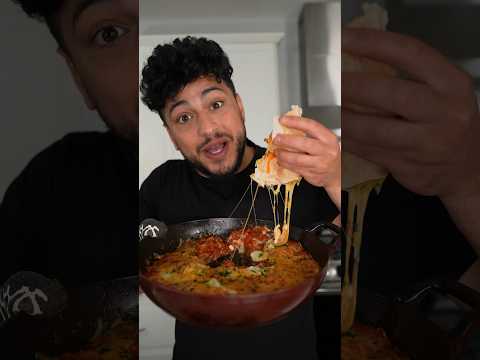
The source video for this recipe. Demonstrates the yogurt-cottage cheese integration technique and shows exactly what the sauce consistency should look like before the eggs go in.
2. Classic Shakshuka Technique Breakdown
Covers the fundamentals of spiced tomato base construction and the egg-poaching window. Useful reference for understanding the original technique this version builds on.
3. One-Pan High-Protein Breakfast IdeasContext for how high-protein dairy additions work across different egg-based breakfast formats. Helpful for understanding the substitution logic behind the cottage cheese addition.
🛠️ Core Equipment
- 12-inch skillet with a tight-fitting lid ↗You need the surface area to fit 8 eggs with enough sauce between them. Smaller pans crowd the eggs and make even cooking impossible. The lid is non-negotiable for steaming the whites.
- Wooden spoon or silicone spatula ↗For creating wells in the sauce and stirring in the dairy without scratching the pan. A metal spoon drags through the eggs and breaks the yolks.
- Small mixing bowl and whisk ↗To blend the Greek yogurt and cottage cheese into a smooth mixture before it hits the hot sauce. Whisking eliminates the cottage cheese curds so they disappear into the base.
High-Protein Shakshuka (38g Per Serving, No Compromises)
🛒 Ingredients
- ✦3 tbsp extra virgin olive oil
- ✦1 large yellow onion, finely diced
- ✦4 cloves garlic, minced
- ✦1 red bell pepper, diced into 1/2-inch pieces
- ✦1 can (28 oz) crushed San Marzano tomatoes
- ✦1 tsp ground cumin
- ✦1 tsp smoked paprika
- ✦1/2 tsp red pepper flakes
- ✦1/2 cup plain nonfat Greek yogurt
- ✦1/2 cup low-fat cottage cheese
- ✦8 large eggs, at room temperature
- ✦1/2 tsp kosher salt
- ✦1/4 tsp black pepper
- ✦2 tbsp fresh cilantro, chopped
- ✦1 tbsp fresh lemon juice
- ✦Pinch of cayenne pepper (optional)
👨🍳 Instructions
01Step 1
Heat olive oil in a 12-inch skillet over medium-high heat until shimmering, about 1 minute.
02Step 2
Add diced onion and sauté for 4-5 minutes, stirring occasionally, until softened and translucent at the edges.
03Step 3
Stir in minced garlic and cook for 30 seconds until fragrant, then add diced bell pepper and cook for another 2 minutes.
04Step 4
Pour in crushed tomatoes and add cumin, smoked paprika, and red pepper flakes, stirring to combine evenly.
05Step 5
Reduce heat to medium and simmer the sauce uncovered for 8-10 minutes, allowing flavors to meld and sauce to thicken slightly.
06Step 6
Whisk together Greek yogurt and cottage cheese in a small bowl until smooth, then gently stir this mixture into the tomato sauce until fully incorporated.
07Step 7
Season the sauce with salt and black pepper, then taste and adjust spices as needed.
08Step 8
Create 8 small wells in the sauce using the back of a spoon, spacing them evenly around the skillet.
09Step 9
Crack one egg into each well, being careful not to break the yolks, then cover the skillet with a lid.
10Step 10
Cook over medium heat for 6-8 minutes until egg whites are set but yolks remain slightly runny, checking at 6 minutes for your preferred doneness.
11Step 11
Remove skillet from heat and drizzle with fresh lemon juice, then scatter cilantro over the top.
12Step 12
Serve immediately in bowls with crusty whole grain bread or pita on the side for scooping.
Nutrition Per Serving
Estimates based on standard preparation. Adjustments alter macros.
🔄 Substitutions
Instead of Greek yogurt + cottage cheese...
Use 1 cup plain 2% Greek yogurt
Simpler ingredient list, still delivers around 20g protein from dairy alone. Sauce becomes richer and slightly less tangy. Protein per serving drops to approximately 28g.
Instead of 8 large eggs...
Use 6 large eggs + 1/2 cup liquid egg whites
Boosts protein by approximately 6g per serving while reducing saturated fat and cholesterol. Slightly less rich yolk flavor, creamier overall texture from the added whites.
Instead of Crushed San Marzano tomatoes...
Use 1 can fire-roasted crushed tomatoes + 2 tbsp tomato paste
Deeper, smokier flavor with more umami intensity. No meaningful change to macros. The tomato paste adds lycopene density and body.
Instead of Red bell pepper...
Use 1 cup diced zucchini + 1/2 cup diced red bell pepper
Slightly earthier flavor, maintains visual appeal, reduces carb density by roughly 3g per serving. Zucchini pairs well with cumin and smoked paprika.
🧊 Storage & Reheating
In the Fridge
Store the tomato base (without eggs) in an airtight container for up to 4 days. Poached eggs don't reheat well — cook fresh eggs into reheated sauce each time.
In the Freezer
Freeze the tomato-dairy base in portions for up to 2 months. Thaw overnight in the fridge, reheat gently on the stove, then add fresh eggs.
Reheating Rules
Reheat the sauce in a skillet over medium-low heat with a splash of water to loosen it. Once simmering, proceed directly to adding eggs. Do not microwave eggs poached in sauce.
❓ Frequently Asked Questions
Won't the cottage cheese make the sauce lumpy?
Only if you add it straight to the pan without blending it first. Whisk the cottage cheese and Greek yogurt together in a bowl until smooth before adding to the sauce. The curds dissolve completely and the sauce comes out silky.
Can I meal prep this?
Prep the tomato base ahead and refrigerate it for up to 4 days. The dairy can be stirred in when you reheat. Don't pre-poach the eggs — cook them fresh each morning directly into the reheated sauce. Takes about 10 minutes.
How do I get the whites fully set without overcooking the yolks?
Cover the pan and cook on medium heat for exactly 6 minutes, then check. The whites near the yolks are the last to set — gently press the white with a finger. If it springs back, it's done. If it jiggles, give it 90 more seconds.
Can I use whole milk Greek yogurt instead of nonfat?
Yes, and it makes the sauce noticeably richer. The protein content is nearly identical — whole milk Greek yogurt loses only about 1-2g protein per half cup. If satiety is the goal, the extra fat is a feature.
Is this recipe actually Middle Eastern, or is it a protein-bro mutation?
Traditional shakshuka does not contain dairy in the sauce — that's the modification. The spice profile, technique, and tomato base are authentic. The yogurt-cottage cheese addition is a deliberate macro upgrade, not a cultural claim. If you want the original, omit the dairy entirely.
Why San Marzano tomatoes specifically?
San Marzano tomatoes have lower acidity and higher sugar content than generic crushed tomatoes. They build a sweeter, more balanced sauce without added sugar. In a dish where the tomato base is 60% of the flavor, the variety matters. Fire-roasted crushed tomatoes are a worthy substitute if San Marzano aren't available.
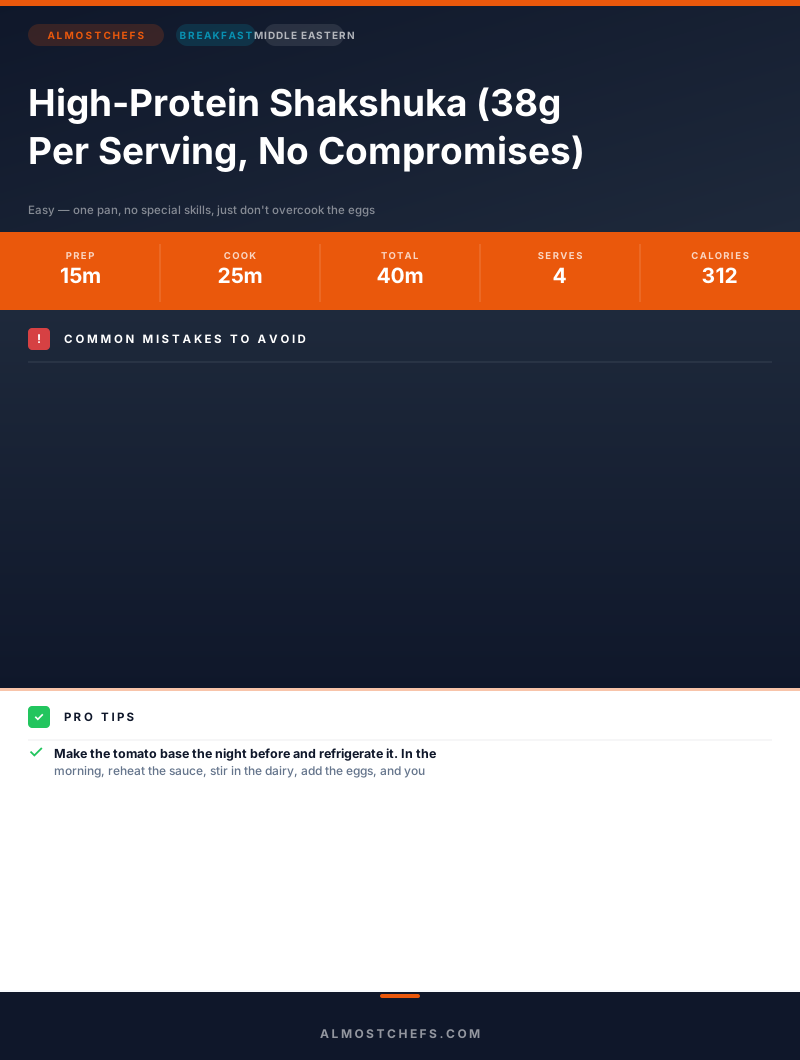
The Science of
High-Protein Shakshuka (38g Per Serving, No Compromises)
We turned everything on this page into a beautiful, flour-proof PDF cheat sheet. Print it out, stick it to your fridge, and never mess up your high-protein shakshuka (38g per serving, no compromises) again.
*We'll email you the high-res PDF instantly. No spam, just perfectly cooked meals.
AlmostChefs Editorial Team
We translate the internet's most popular cooking videos into foolproof, beginner-friendly written recipes. We analyze multiple methods, test them in our kitchen, and engineer a single "Master Recipe" that gives you the best possible result with the least possible stress.