High Protein Pasta with Chicken (42g Per Bowl, No Heavy Cream)
Creamy garlic chicken pasta built on Greek yogurt and cottage cheese instead of heavy cream — 42g of protein per serving, ready in 30 minutes, and actually craveable enough to meal prep on repeat. We broke down the sauce science so you never end up with grainy, broken yogurt coating your pasta.
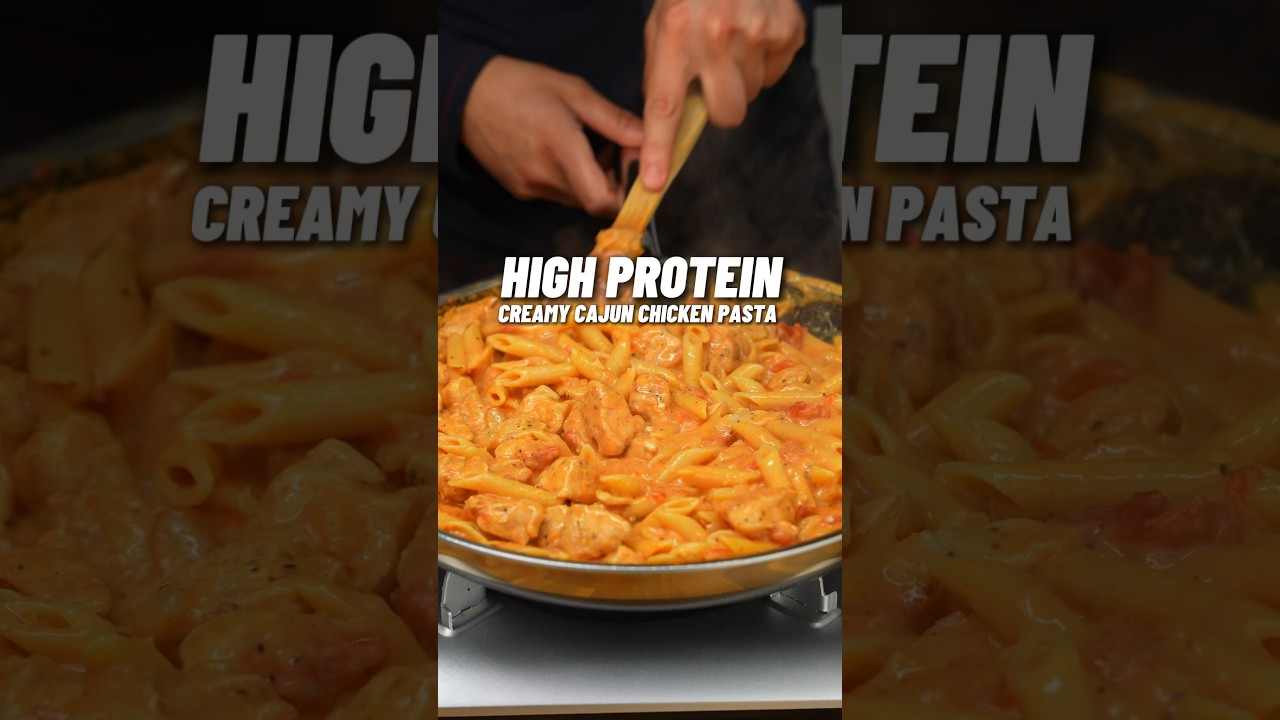
“Most high-protein pasta recipes are a lie. They claim 40g of protein and deliver 22g, or they hit the number by stacking two full chicken breasts on a plate of plain noodles and calling it a dish. This one earns 42g per bowl by engineering the sauce itself — Greek yogurt and cottage cheese replace heavy cream, adding protein at every layer instead of relying on the chicken alone to do all the nutritional work. The technique is simple. The failure points are specific. Here's how to avoid them.”
Why This Recipe Works
The problem with most high-protein pasta recipes is that they're really just regular pasta recipes with a chicken breast dropped on top. The protein number looks impressive on paper, but the dish itself is nutritionally lopsided — a pile of refined carbs carrying one lean protein that dries out if you look at it wrong. This recipe takes a different approach: it engineers the sauce to carry protein, so every component of the dish is working toward the same number.
The Sauce Architecture
Greek yogurt and cottage cheese are doing two jobs here simultaneously. The first job is structural — they replace heavy cream as the fat and emulsifier that makes the sauce cling to pasta. The second job is nutritional — together they add roughly 20g of protein to the sauce itself, before the chicken contributes anything.
The catch is heat. Both dairy proteins are relatively fragile. Greek yogurt curdles at high temperature with the kind of speed that is genuinely alarming if you've never seen it happen — one moment you have a smooth, creamy sauce, and thirty seconds later you have a grainy mess that cannot be fixed. The solution is preemptive: blend the two together until completely smooth before they hit the pan, then add them at low heat in gradual additions, letting each addition incorporate before adding the next.
The cottage cheese is the less intuitive ingredient. Raw cottage cheese looks terrible — lumpy, wet, texturally wrong for a pasta sauce. But once it's whisked smooth and heated gently in the presence of chicken broth and garlic, it melts into the sauce and disappears entirely. What it leaves behind is richness without the calories and a protein contribution that whole milk alone can't match.
The Chicken Problem
Chicken breast is the leanest protein you can put in this dish, which is why it's here. It's also the most unforgiving to cook. The window between properly cooked and dried out is approximately 90 seconds, and there's no recovering from the far side of it.
The technique is single-layer searing in a hot cast iron skillet, completely undisturbed, until a proper crust forms. The crust matters beyond texture — the Maillard reaction that creates it also generates the fond, the browned bits stuck to the pan that become the flavor base for the entire sauce when the broth deglazes them. A pale, steamed chicken chunk has no fond. It contributes nothing to the sauce. A properly seared one builds a flavor foundation that carries the whole dish.
Pull the chicken at 165°F internal temperature with an instant-read thermometer. It will carry over to safe doneness while you build the sauce. This is not optional finesse — it's the margin between juicy chicken and expensive dog food.
Whole Wheat Pasta Is Not a Punishment
The whole wheat pasta choice is deliberate and the payoff is real: 3g more protein and 4g more fiber per serving compared to white pasta, plus a lower glycemic response that matters if satiety is the goal. The earthier, nuttier flavor of whole wheat actually works in this dish's favor — it stands up to the bold garlic and lemon profile better than a neutral white pasta would.
If you want to push the protein number past 48g, swap the whole wheat for chickpea pasta. Chickpea pasta runs 12-15g protein per serving versus 7g in whole wheat, and it holds its texture in creamy sauces better than many people expect. Cook it a minute short of the package directions — it firms up as it cools in the sauce.
Why Lemon Juice at the End
The lemon juice is not optional. Dairy-based pasta sauces, especially those built on yogurt, trend toward a flat, slightly chalky flavor that needs acid to come alive. The lemon doesn't make the dish taste like lemon — it makes everything else taste more like itself. One tablespoon, added off heat at the end, is the difference between a good dish and a great one.
Where Beginners Mess This Up
Before we start, read this. These are the 4 reasons your high protein pasta with chicken (42g per bowl, no heavy cream) will fail:
- 1
Adding yogurt to a screaming-hot pan: Greek yogurt curdles instantly when it hits high heat. The proteins seize, the whey separates, and you end up with a greasy pan full of white lumps and sad pasta. Always reduce the heat to medium before adding the yogurt-cottage cheese mixture, and stir it in slowly off the direct heat.
- 2
Not blending the cottage cheese smooth first: Cottage cheese has visible curds. If you dump it in as-is, those curds don't melt into a sauce — they stay lumpy and texturally weird. Whisk it together with the Greek yogurt in a separate bowl until the mixture is completely smooth before it goes anywhere near the skillet.
- 3
Overcooking the chicken: Chicken breast cut into chunks goes from perfectly cooked to dry and chewy in about 90 seconds. Cook undisturbed on one side until golden, flip once, pull it off at 165°F internal temperature. Carryover heat will finish the job. Overcooked chicken in a creamy sauce cannot be rescued.
- 4
Skipping the pasta water or using too much broth: The chicken broth thins the sauce base, but it needs the starchy pasta cooking water to bind and emulsify. If the sauce looks too thin after adding pasta, a splash of reserved pasta water tightens it far better than more cooking time.
The Video Reference Library
Want to see it in action? Here are the exact videos we analyzed and combined to build this foolproof recipe translation:
The source video that inspired this recipe — clear technique for the yogurt sauce and a good breakdown of why cottage cheese works as a cream substitute without sacrificing texture.
🛠️ Core Equipment
- Large skillet (12-inch, stainless or cast iron)You need surface area to sear the chicken in a single layer without steaming it. A crowded pan produces grey, rubbery chicken with no crust. A [cast iron skillet](/kitchen-gear/review/cast-iron-skillet) holds heat exceptionally well for the initial sear.
- Large pot for pastaWhole wheat pasta needs plenty of water to cook evenly. Undersized pots drop temperature when you add the pasta and produce gummy, uneven results.
- Instant-read thermometerChicken breast has an almost comically small window between underdone and overdone. A [meat thermometer](/kitchen-gear/review/instant-read-thermometer) removes the guesswork — pull at 165°F and rest for two minutes.
- Small whisk and mixing bowlNon-negotiable for blending the yogurt and cottage cheese smooth before they hit the pan. No whisk means lumpy sauce.
High Protein Pasta with Chicken (42g Per Bowl, No Heavy Cream)
🛒 Ingredients
- ✦12 oz whole wheat pasta (penne or rigatoni)
- ✦1.5 lbs boneless, skinless chicken breast, cut into bite-sized chunks
- ✦1 cup plain nonfat Greek yogurt
- ✦1/2 cup low-fat cottage cheese
- ✦4 cloves garlic, minced
- ✦2 tablespoons extra-virgin olive oil
- ✦1 medium yellow onion, finely diced
- ✦1 cup low-sodium chicken broth
- ✦1/2 cup frozen peas
- ✦1/4 cup grated Parmigiano-Reggiano cheese
- ✦2 tablespoons fresh parsley, chopped
- ✦1 tablespoon fresh lemon juice
- ✦1/2 teaspoon red pepper flakes
- ✦1 teaspoon Italian seasoning
- ✦Salt and black pepper to taste
👨🍳 Instructions
01Step 1
Bring a large pot of heavily salted water to a rolling boil. Cook the whole wheat pasta according to package directions until al dente. Reserve 1/2 cup of pasta cooking water before draining.
02Step 2
Season the chicken chunks generously on all sides with salt, pepper, and Italian seasoning.
03Step 3
In a small bowl, whisk together the Greek yogurt and cottage cheese until completely smooth with no visible curds remaining. Set aside.
04Step 4
Heat olive oil in a large skillet over medium-high heat until shimmering, about 1 minute.
05Step 5
Add the chicken in a single layer. Cook undisturbed for 4-5 minutes until golden brown on one side, then stir and cook another 3-4 minutes until internal temperature reaches 165°F. Transfer to a plate.
06Step 6
Reduce heat to medium. Add the diced onion to the same skillet and sauté for 2-3 minutes until translucent, scraping up any browned bits as you go.
07Step 7
Add the minced garlic and red pepper flakes. Stir constantly for 30 seconds until fragrant.
08Step 8
Pour in the chicken broth and scrape up any remaining browned bits from the bottom of the pan. Let it simmer for 1 minute.
09Step 9
Reduce heat to low. Slowly stir in the yogurt-cottage cheese mixture, working it into the broth gradually to prevent curdling.
10Step 10
Add the frozen peas, cooked pasta, and reserved chicken back into the skillet. Fold gently until everything is evenly coated, about 2 minutes. Add a splash of reserved pasta water if the sauce is too thick.
11Step 11
Stir in the fresh lemon juice. Taste and adjust salt and pepper.
12Step 12
Divide among four bowls. Top each with fresh parsley and grated Parmigiano-Reggiano. Serve immediately.
Nutrition Per Serving
Estimates based on standard preparation. Adjustments alter macros.
🔄 Substitutions
Instead of Heavy cream or butter-based sauce...
Use Greek yogurt and cottage cheese blend (as written)
Tangier flavor with identical richness. Cuts saturated fat by approximately 60% and adds 20g+ protein per serving. Must be added off high heat or it curdles.
Instead of Whole wheat pasta...
Use Chickpea or lentil pasta
Earthier, denser flavor. Requires 1-2 minutes less cooking time — check early to avoid mushiness. Nearly doubles the protein contribution from the pasta itself.
Instead of Frozen peas...
Use Frozen edamame or fresh spinach
Edamame adds 4g protein per half-cup and holds its texture better through reheating. Spinach wilts into the sauce seamlessly but adds minimal protein — use it for micronutrients, not macros.
Instead of Chicken breast...
Use Chicken thighs
More forgiving in the pan — thighs are harder to overcook. Slightly higher fat (26g protein per 3.5 oz versus 31g in breast) but more flavorful. A reasonable trade for weeknight cooking.
🧊 Storage & Reheating
In the Fridge
Store in an airtight container for up to 4 days. The sauce thickens considerably in the fridge — this is normal.
In the Freezer
Freeze the chicken and sauce without pasta for up to 2 months. Cook fresh pasta when serving.
Reheating Rules
Add 2 tablespoons of water or broth to the portion, cover, and reheat on low heat on the stovetop. Microwave works but stir halfway through and add liquid — the sauce dries out fast.
❓ Frequently Asked Questions
Why did my yogurt sauce curdle?
The pan was too hot when you added it. Greek yogurt proteins seize and separate above 180°F. Always reduce to low heat before adding the yogurt-cottage cheese mixture, and stir it in slowly over 20-30 seconds rather than dumping it all at once.
Can I use regular pasta instead of whole wheat?
Yes. The recipe works with any pasta. You'll lose about 3g of fiber and 3g of protein per serving, but the technique is identical. Chickpea pasta is the better swap if you're protein-chasing — it adds more than whole wheat does.
Does this actually taste like a creamy pasta or does it taste like yogurt?
It tastes like a creamy pasta. The cottage cheese and chicken broth soften the tang of the Greek yogurt significantly. The garlic, lemon, and parmesan do the rest. If your finished dish tastes prominently of yogurt, you added too much or didn't season aggressively enough.
Can I make this ahead of time for meal prep?
Yes, with a caveat: store the pasta separately from the sauce and chicken. When pasta sits in yogurt sauce overnight, it absorbs all the liquid and turns gluey. Keep them apart and combine when reheating.
How do I know when the chicken is done without a thermometer?
Cut the largest piece in half. The meat should be completely white with no pink, and the juices should run clear. That said, a thermometer is a $15 investment that removes all guesswork — it's worth having one.
Can I use cottage cheese alone instead of mixing it with Greek yogurt?
Technically yes, but the result is thinner and less tangy. The Greek yogurt provides the creamy body and acidic brightness. Cottage cheese alone produces a milder, slightly watery sauce. The combination is better than either ingredient alone.
The Science of
High Protein Pasta with Chicken (42g Per Bowl, No Heavy Cream)
We turned everything on this page into a beautiful, flour-proof PDF cheat sheet. Print it out, stick it to your fridge, and never mess up your high protein pasta with chicken (42g per bowl, no heavy cream) again.
*We'll email you the high-res PDF instantly. No spam, just perfectly cooked meals.
AlmostChefs Editorial Team
We translate the internet's most popular cooking videos into foolproof, beginner-friendly written recipes. We analyze multiple methods, test them in our kitchen, and engineer a single "Master Recipe" that gives you the best possible result with the least possible stress.