High-Protein Greek Salad (38g Protein, Zero Compromise)
A Mediterranean power salad with grilled chicken breast, crumbled feta, kalamata olives, and a Greek yogurt dressing that doubles as protein delivery. We built the classic Greek salad into a complete meal that hits 38g of protein per serving without sacrificing the bright, briny flavors that make the original worth eating.
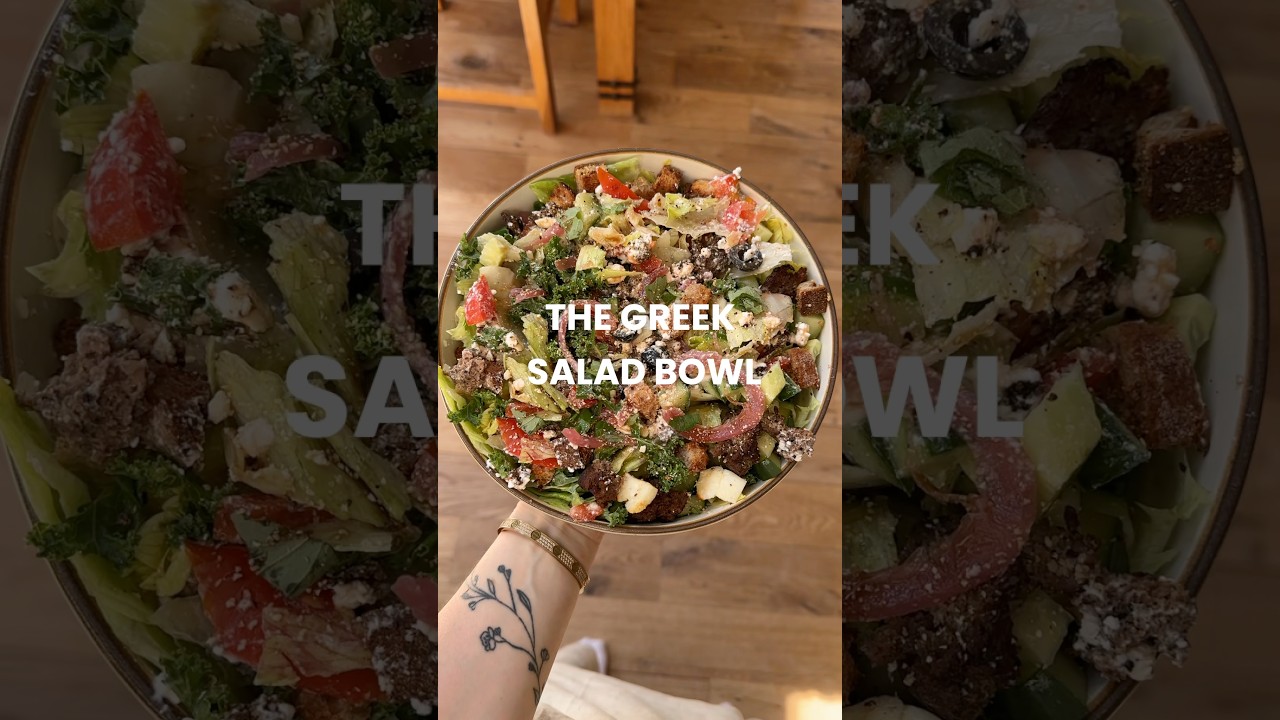
“Most Greek salads are a side dish pretending to be a meal. Cucumber, tomato, olives, feta — it's a great flavor combination that tops out around 16g of protein and leaves you hungry by 2pm. This version solves that problem without turning the salad into something unrecognizable. Grilled chicken breast and a Greek yogurt-based dressing transform the same core ingredients into a 38g protein lunch that holds for hours. The Mediterranean taste is intact. The hunger problem is not.”
Why This Recipe Works
Greek salad has a protein problem. The traditional version — cucumber, tomato, olives, feta, olive oil, oregano — is a masterpiece of flavor efficiency, but it tops out around 16g of protein per serving and roughly 280 calories. That's not a meal. That's a side dish with a convincing argument.
This recipe solves that problem without reinventing the dish. The core remains intact: kalamata olives, crumbled feta, English cucumber, cherry tomatoes, red onion. What changes is the protein architecture — grilled chicken breast replaces nothing, it sits on top — and the dressing, which swaps olive oil and red wine vinegar for a Greek yogurt base that pulls double duty as both flavor delivery and protein source.
The Protein Math
Thirty-eight grams per serving comes from three contributors working in parallel. Grilled chicken breast provides the foundation — roughly 25g depending on portion size. Crumbled feta adds another 5g, which most people dismiss as a garnish but is actually doing real work here. The Greek yogurt dressing contributes 6-8g per serving. Remove any one of those three and the number drops meaningfully. This is not a recipe where you can halve the dressing and expect the same result.
The yogurt dressing is the engineering choice that matters most. Traditional Greek salad dressing is olive oil, red wine vinegar, oregano, and salt. It's delicious. It also adds zero protein. The yogurt version — whisked with lemon juice, minced garlic, Dijon mustard, and fresh dill — delivers the same bright, herbaceous flavor profile while converting the dressing from a condiment into a macronutrient contributor. The Dijon acts as an emulsifier, binding the oil and yogurt into a creamy, cohesive sauce that coats the salad evenly instead of pooling at the bottom of the bowl.
The Chicken Question
Boneless, skinless chicken breast is the right protein here because it's neutral. Its job is to deliver lean protein — 25g per serving, roughly 130 calories — without competing with the briny olives, salty feta, and tangy dressing. Chicken thigh has more flavor on its own, but in this context that richness clashes. Breast disappears into the salad architecture in the best possible way.
The sear matters even though this is a cold-served salad. A properly developed crust — golden brown, slightly crisp at the edges — adds textural contrast to what would otherwise be an entirely soft, yielding plate. Season aggressively, heat the pan until the oil shimmers, and do not touch the chicken for the first 6-7 minutes. The Maillard reaction is doing its job. Let it work.
A cast iron skillet produces the best crust here because it holds heat evenly across the entire surface and doesn't drop temperature when cold chicken hits the pan. Non-stick surfaces inhibit browning by trapping moisture. Stainless steel works but requires more attention to heat management. Cast iron is forgiving.
The Dressing Assembly
Whisk in this order: yogurt first, then lemon juice, then olive oil, then garlic, mustard, oregano, and dill. Starting with the yogurt as the base and adding the acid second prevents the lemon from curdling the dairy on contact. The olive oil goes in gradually while whisking — not dumped all at once — so it emulsifies into the yogurt rather than floating on top. A whisk is non-negotiable; a fork leaves you with a broken, separated dressing that coats nothing evenly.
Taste before it hits the salad. The dressing should read as aggressively seasoned on its own — the vegetables, olives, and feta all dilute it on contact. If it tastes balanced in the bowl, it will taste flat on the plate.
Why This Works for Meal Prep
The components stay separate until service for a reason. The yogurt dressing begins softening greens within 20 minutes. The chicken, vegetables, and dressing can each hold 4-5 days independently in the fridge. This is a recipe engineered for Sunday-to-Thursday lunches — batch-cook the chicken, make one batch of dressing, prep the vegetables, and assemble in under 3 minutes per day. No reheating required except for the chicken, and even that is optional if you don't mind cold protein on a cold salad.
The result is a lunch that tastes like a restaurant made it, delivers 38g of protein, and takes less time to assemble than waiting in line.
Where Beginners Mess This Up
Before we start, read this. These are the 4 reasons your high-protein greek salad (38g protein, zero compromise) will fail:
- 1
Not resting the chicken before slicing: Chicken sliced immediately off the heat loses most of its internal moisture onto the cutting board. The fibers need 5 minutes to reabsorb those juices — skip the rest and you're putting dry, chalky chicken on a salad that deserves better.
- 2
Overdressing or underdressing: About 3 tablespoons of dressing per serving is the right amount. More drowns the vegetables and makes the salad soggy within minutes. Less leaves the protein-delivering dressing on the side instead of coating every bite. Measure it.
- 3
Adding the dressing too early: The yogurt-based dressing begins softening the greens immediately on contact. If you dress the salad and let it sit, you end up with wilted romaine and spinach floating in a watery pool. Dress only when ready to serve.
- 4
Using cold, straight-from-the-fridge chicken: Cold chicken breast cooks unevenly — the outside hits 165°F while the center is still climbing. Pull the chicken from the fridge 10-15 minutes before cooking to let it approach room temperature. This produces even browning and consistent doneness across the entire breast.
The Video Reference Library
Want to see it in action? Here are the exact videos we analyzed and combined to build this foolproof recipe translation:
The source video for this recipe. Demonstrates the yogurt dressing technique and proper chicken crust development. Watch the dressing assembly closely — the order of ingredients matters for texture.
🛠️ Core Equipment
- Large skillet or cast iron panA [cast iron skillet](/kitchen-gear/review/cast-iron-skillet) retains heat evenly and produces the golden-brown crust that gives the chicken flavor. Non-stick pans prevent the Maillard reaction from doing its job.
- Instant-read meat thermometerThe only reliable way to know when chicken hits 165°F without cutting it open and releasing the juices. Guessing by time is how you end up with undercooked or overcooked chicken.
- Large mixing bowlThe salad needs room to toss without vegetables flying over the sides. A bowl that's too small means uneven dressing distribution and bruised greens.
- Small whiskGreek yogurt dressing needs to be emulsified properly. A fork leaves lumps; a [whisk](/kitchen-gear/review/whisk) creates a smooth, cohesive dressing that coats the salad evenly.
High-Protein Greek Salad (38g Protein, Zero Compromise)
🛒 Ingredients
- ✦8 oz boneless, skinless chicken breast
- ✦1 tablespoon olive oil
- ✦1 teaspoon dried oregano, divided
- ✦Salt and black pepper to taste
- ✦1 large English cucumber, diced into 3/4-inch cubes
- ✦2 cups cherry tomatoes, halved
- ✦1/2 red onion, thinly sliced
- ✦1 cup kalamata olives, pitted
- ✦3/4 cup crumbled feta cheese
- ✦4 cups mixed romaine and spinach leaves
- ✦1/2 cup plain Greek yogurt
- ✦2 tablespoons fresh lemon juice
- ✦1 tablespoon extra virgin olive oil
- ✦2 cloves garlic, minced
- ✦1 teaspoon Dijon mustard
- ✦1/4 cup fresh dill, chopped
- ✦1/4 teaspoon red pepper flakes
👨🍳 Instructions
01Step 1
Pat the chicken breast dry with paper towels and season generously on both sides with salt, pepper, and 1/2 teaspoon of the dried oregano.
02Step 2
Heat 1 tablespoon olive oil in a large skillet over medium-high heat until shimmering, about 1 minute.
03Step 3
Place the seasoned chicken in the hot skillet and cook for 6-7 minutes on the first side without moving it, until golden brown and a crust forms.
04Step 4
Flip the chicken and cook for another 6-7 minutes on the second side until the internal temperature reaches 165°F on a meat thermometer.
05Step 5
Transfer the cooked chicken to a cutting board and let it rest for 5 minutes, then slice into bite-sized chunks or strips.
06Step 6
Whisk together the Greek yogurt, lemon juice, extra virgin olive oil, minced garlic, Dijon mustard, remaining 1/2 teaspoon oregano, and fresh dill in a small bowl until smooth and creamy.
07Step 7
Season the dressing with salt, pepper, and red pepper flakes to taste, adjusting lemon juice if needed for brightness.
08Step 8
Combine the diced cucumber, halved cherry tomatoes, sliced red onion, kalamata olives, and crumbled feta in a large mixing bowl.
09Step 9
Add the mixed greens to the vegetable mixture and toss gently to combine without bruising the leaves.
10Step 10
Divide the salad mixture evenly among four serving bowls or plates.
11Step 11
Top each salad with an equal portion of the sliced chicken breast.
12Step 12
Drizzle each serving with approximately 3 tablespoons of the Greek yogurt dressing and toss gently to coat all ingredients.
13Step 13
Serve immediately while the chicken is still warm, with extra dressing on the side.
Nutrition Per Serving
Estimates based on standard preparation. Adjustments alter macros.
🔄 Substitutions
Instead of Chicken breast...
Use Grilled salmon fillet (6 oz per serving)
Maintains the 38g protein target while adding omega-3 fatty acids. Richer, more buttery flavor. Cook salmon to 125-130°F for medium — it doesn't need to hit 165°F like poultry.
Instead of Plain Greek yogurt dressing...
Use Cottage cheese-based dressing (1/2 cup cottage cheese blended with lemon juice, garlic, and dill)
Tangier and more textured. Adds 3-5g extra protein per serving. Blend until fully smooth or the texture reads as lumpy rather than creamy.
Instead of Crumbled feta cheese...
Use Grilled tofu cubes (8 oz extra-firm tofu, pressed) or tempeh
For plant-based versions. Press the tofu for at least 30 minutes before cubing and grilling — unpressed tofu steams instead of sears and tastes like nothing.
Instead of Mixed romaine and spinach...
Use Chopped kale or mixed greens with 1/2 cup edamame per serving
Edamame adds 11g of plant-based protein per half cup and holds up better in meal prep than spinach. Massage the kale briefly with a drop of olive oil before tossing — it softens the texture and cuts the bitterness.
🧊 Storage & Reheating
In the Fridge
Store components separately for best results: chicken and vegetables hold for up to 4 days. Dressing keeps for 5 days in a sealed jar. Once assembled, consume within 1-2 hours before greens wilt.
In the Freezer
The cooked chicken freezes well for up to 2 months. The salad itself does not freeze — cucumber and tomato turn to mush after thawing. Freeze only the protein component.
Reheating Rules
Reheat chicken gently in a covered skillet over low heat with a splash of water for 2-3 minutes. Microwaving dries it out. Serve over freshly assembled salad — never reheat the greens.
❓ Frequently Asked Questions
Can I use rotisserie chicken instead of grilling my own?
Yes, and it's a legitimate shortcut for meal prep. Pull the white meat and slice it. The flavor profile changes slightly — rotisserie chicken has more seasoning and fat from the skin — but the protein contribution is essentially identical. Roughly 3 oz of rotisserie breast meat per serving matches the grilled version.
Why is Greek yogurt in the dressing instead of olive oil and red wine vinegar?
The traditional Greek salad dressing is excellent but delivers about 2g of protein per serving. Greek yogurt dressing delivers 8-10g. The switch is deliberate — it's how this salad crosses the threshold from side dish to complete meal. The flavor is tangy and herbaceous in the same family as the original.
How do I hit 38g of protein per serving?
The protein comes from three sources working together: grilled chicken breast (~25g per serving), crumbled feta (~5g), and the Greek yogurt in the dressing (~6-8g). All three need to be present and properly portioned. If you're skimping on the dressing or using a low-fat Greek yogurt, you'll fall short of the target.
Can this be made vegan?
Yes, with substitutions. Replace the chicken with pressed, grilled extra-firm tofu or tempeh. Replace the feta with a plant-based block alternative or skip it and add 1/2 cup of edamame. Replace the Greek yogurt dressing with a cashew cream base (soaked cashews blended with lemon juice, garlic, dill, and water). Protein count will be around 22-25g per serving rather than 38g.
Why does my dressing taste bland?
Two likely causes: not enough lemon juice, or under-seasoned yogurt. Greek yogurt is a mild base that needs assertive seasoning. After whisking, taste and adjust — more lemon for brightness, more salt for depth, more garlic if the oregano flavor is dominating. The dressing should taste almost too bold on its own; it mellows significantly when it hits the salad.
Is this good for meal prep?
It's ideal for meal prep if you store components separately. Grill and portion all four chicken servings at once, make a full batch of dressing, and prep the vegetables in a single large container. Keep the greens separate. On the day you're eating, add greens and dress. The assembled salad wilts fast — never pre-dress and refrigerate overnight.
The Science of
High-Protein Greek Salad (38g Protein, Zero Compromise)
We turned everything on this page into a beautiful, flour-proof PDF cheat sheet. Print it out, stick it to your fridge, and never mess up your high-protein greek salad (38g protein, zero compromise) again.
*We'll email you the high-res PDF instantly. No spam, just perfectly cooked meals.
AlmostChefs Editorial Team
We translate the internet's most popular cooking videos into foolproof, beginner-friendly written recipes. We analyze multiple methods, test them in our kitchen, and engineer a single "Master Recipe" that gives you the best possible result with the least possible stress.