High-Protein Grain Bowl (38g Per Serving, No Filler)
A muscle-building quinoa bowl with pan-seared chicken breast, roasted bell peppers and broccoli, shredded purple cabbage, and a tangy Greek yogurt-dill sauce. We analyzed the most popular meal prep methods to build one foolproof technique that delivers 38 grams of protein per bowl without feeling like diet food.
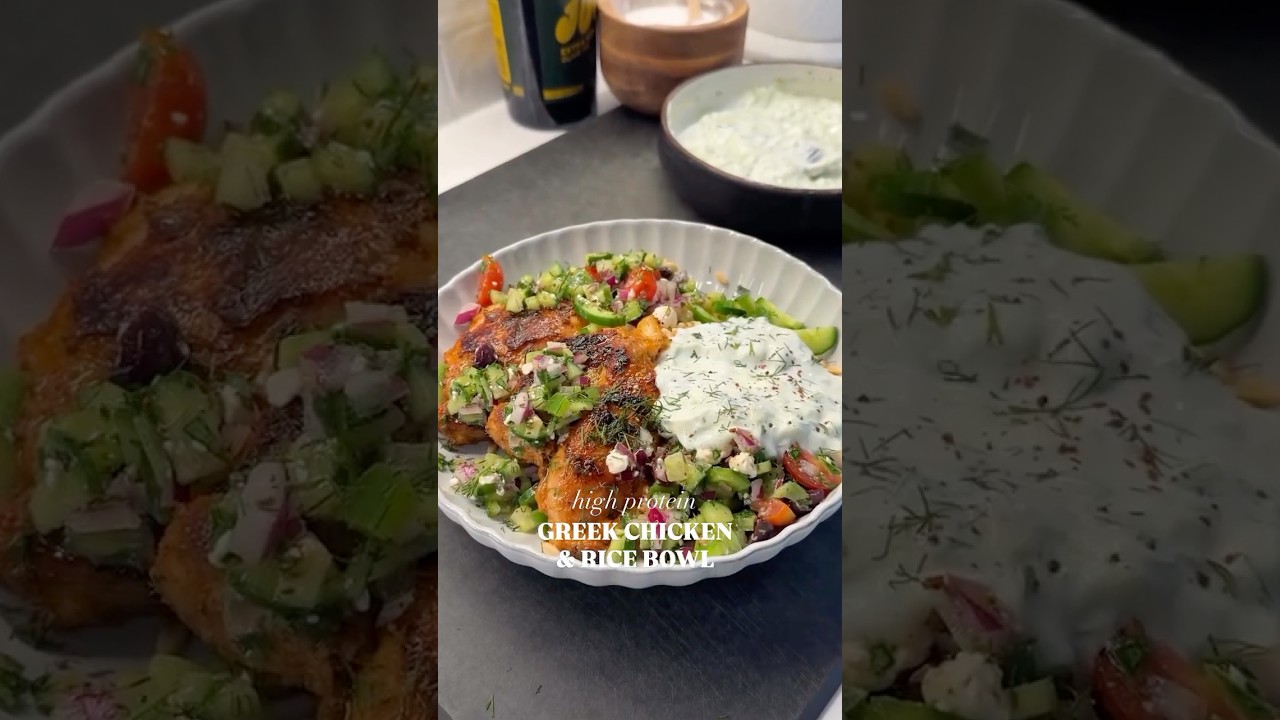
“Most grain bowls are just rice with toppings and a drizzle of tahini. They look impressive in photos and leave you hungry two hours later. This one is different: 38 grams of protein per serving through grilled chicken, Greek yogurt sauce, and hemp seeds — macros that actually support recovery. The technique is straightforward. The problem most people have isn't complexity, it's sequencing: they roast the vegetables at the wrong temperature, rush the chicken, and wonder why everything turns out flat.”
Why This Recipe Works
A grain bowl is not a salad with pretensions. It's a structured system: a carbohydrate base, a protein layer, a vegetable component, and a sauce that ties everything together without drowning it. When it works, it works because each component was treated with the same seriousness as if it were the only thing on the plate. When it fails, it fails because someone threw cold rice in a bowl, added some sad steamed chicken, and drizzled ranch dressing over it and called it meal prep.
This version is built differently. The protein math is real — 38 grams per bowl — and it comes from stacking three complementary sources: chicken breast, Greek yogurt, and hemp seeds. Each contributes something the others don't. The chicken provides the bulk and the satiety signal that tells your brain you ate a meal. The yogurt brings complete protein alongside probiotics and lactic acid that brightens the entire bowl. The hemp seeds add the final 10 grams with a nutty, subtle finish and a full amino acid profile that most seeds lack.
The Chicken Problem
Chicken breast has a reputation for being dry and bland. That reputation is earned — by people who cook it wrong. The problem is almost always one of three things: insufficient heat before the chicken hits the pan, lifting it before the crust forms, or skipping the rest.
Use a heavy-bottomed skillet preheated until the oil shimmers. The Maillard reaction — the same browning chemistry that makes seared steak taste different from boiled meat — only kicks in above 280°F. Oil that isn't shimmering isn't hot enough. Lay the chicken flat, press it down once to ensure full contact, then leave it alone. If it sticks when you try to flip it, the crust hasn't formed yet. A proper sear releases cleanly.
The five-minute rest is not optional. During cooking, heat drives moisture toward the center of the meat. Resting lets that moisture redistribute evenly so every slice stays juicy instead of running out on the cutting board.
The Roasting Temperature
Vegetables roasted at 350°F don't roast. They steam in their own moisture and turn soft, dull, and sweet in the wrong way. At 425°F, the surface moisture evaporates fast enough to trigger caramelization — the broccoli tips go slightly brown, the bell pepper edges char, and the natural sugars concentrate rather than dilute. That's the flavor. Spread them in a single layer on a sheet pan with enough space between pieces that steam can escape. Crowding is the enemy.
The Sauce Architecture
Greek yogurt sauce sounds simple, and the technique is — but the proportions matter. The lemon juice is there to brighten and cut through the richness. The Dijon acts as an emulsifier that keeps the sauce smooth and adds depth without being detectable as mustard. The dill provides a clean, herbaceous note that pairs with both the chicken and the quinoa without competing with the vegetables. Red pepper flakes add background heat that builds slowly rather than hitting up front.
Make it the night before if you can. The garlic mellows from sharp to complex, the dill flavor develops fully, and the whole thing becomes more cohesive. Freshly made sauce is good. Day-old sauce is noticeably better.
The Assembly Order
Quinoa goes in first because it's the thermal anchor — warm enough to wilt the spinach slightly, heavy enough to keep the other components stable. Spinach goes directly on the warm quinoa so it softens just enough to lose the raw bite without cooking. Protein and roasted vegetables go on last to retain their heat and texture. The purple cabbage stays raw and cold because its crunch and mild bitterness are structural — they're what prevents the bowl from collapsing into a warm, homogenous mush.
Sauce goes on at the end, drizzled, not mixed. Mixing turns the bowl into a salad. Drizzling keeps every component visible and distinct, which is partly aesthetic and partly practical: you get a different ratio of sauce in every bite depending on where you dig in.
This bowl is repeatable, scalable to four servings in one session, and genuinely satisfying as a cold lunch on day three. That combination is rarer than it should be.
Where Beginners Mess This Up
Before we start, read this. These are the 4 reasons your high-protein grain bowl (38g per serving, no filler) will fail:
- 1
Cooking the chicken on insufficient heat: The skillet must be genuinely hot before the chicken goes in — oil shimmering, not just warm. Low heat means the chicken steams instead of sears, producing a gray exterior with no crust and texture that's closer to boiled than grilled. Medium-high heat and patience for that first side are non-negotiable.
- 2
Skipping the rest after cooking the chicken: Five minutes of resting lets the muscle fibers relax and reabsorb the juices that get pushed to the center during cooking. Cut immediately and those juices run out onto the cutting board. That's flavor and moisture you can't get back.
- 3
Roasting vegetables at too low a temperature: 425°F is not aggressive — it's the minimum for caramelization. At 350°F, broccoli steams in its own moisture and turns army-green and soft. You want the edges to char slightly and the broccoli to stay bright with a tender-crisp bite. That only happens at high heat.
- 4
Building the bowl in the wrong order: Quinoa goes in first to act as a thermal base. Spinach sits on top of the warm quinoa so it wilts slightly without cooking. Protein and vegetables go on last so they stay at temperature. Sauce drizzled at the end, not mixed in, preserves the visual contrast and keeps every component distinct.
The Video Reference Library
Want to see it in action? Here are the exact videos we analyzed and combined to build this foolproof recipe translation:
The primary video reference for this recipe. Covers the sear technique, vegetable roasting timing, and yogurt sauce consistency in detail.
🛠️ Core Equipment
- Large heavy-bottomed skilletEven heat distribution is critical for a proper sear. A thin pan creates hot spots that burn edges while leaving the center undercooked. Stainless steel or cast iron are ideal — nonstick pans don't get hot enough for a real crust.
- Sheet panSpreading vegetables in a single layer on a [sheet pan](/kitchen-gear/review/sheet-pan) is what makes roasting work. Crowded vegetables steam instead of roast. One layer, high heat, caramelized edges.
- Instant-read meat thermometerChicken breast is unforgiving. Two minutes overcooked and it's dry. A [meat thermometer](/kitchen-gear/review/meat-thermometer) removes the guesswork — pull at 165°F every time.
- Small whisk or forkThe yogurt sauce needs to be completely smooth before drizzling. A fork works; a small whisk is faster and gets the Dijon fully incorporated.
High-Protein Grain Bowl (38g Per Serving, No Filler)
🛒 Ingredients
- ✦2 cups cooked quinoa
- ✦1.5 lbs boneless, skinless chicken breast
- ✦3 tablespoons extra-virgin olive oil, divided
- ✦1.5 teaspoons kosher salt, divided
- ✦1 teaspoon freshly cracked black pepper, divided
- ✦2 medium red bell peppers, cut into 1-inch chunks
- ✦2 cups fresh broccoli florets
- ✦1 cup shredded purple cabbage
- ✦1 cup plain nonfat Greek yogurt
- ✦2 tablespoons fresh lemon juice
- ✦1 clove garlic, minced
- ✦3 tablespoons shelled hemp seeds
- ✦2 tablespoons fresh dill, finely chopped
- ✦1 tablespoon Dijon mustard
- ✦4 cups fresh baby spinach
- ✦1/4 teaspoon red pepper flakes
👨🍳 Instructions
01Step 1
Pat the chicken breasts dry with paper towels and season both sides generously with 1 teaspoon salt and 1/2 teaspoon black pepper.
02Step 2
Heat 2 tablespoons olive oil in a large skillet over medium-high heat until shimmering, about 2 minutes.
03Step 3
Place the seasoned chicken breasts in the hot skillet and cook for 6-7 minutes without moving them, until the bottom develops a golden crust.
04Step 4
Flip the chicken and cook for another 6-7 minutes until the internal temperature reaches 165°F.
05Step 5
Transfer the chicken to a cutting board and let it rest for 5 minutes, then slice into bite-sized pieces.
06Step 6
Preheat the oven to 425°F. Toss the bell peppers and broccoli with the remaining 1 tablespoon olive oil, 1/2 teaspoon salt, and 1/2 teaspoon pepper.
07Step 7
Spread the vegetables in a single layer on a sheet pan. Roast for 15-18 minutes, stirring once halfway through, until edges are caramelized and broccoli is tender-crisp.
08Step 8
Whisk together the Greek yogurt, lemon juice, minced garlic, Dijon mustard, fresh dill, and red pepper flakes in a small bowl until completely smooth.
09Step 9
Divide the cooked quinoa evenly among four serving bowls.
10Step 10
Layer fresh spinach on top of the warm quinoa in each bowl. The residual heat will wilt it slightly — that's correct.
11Step 11
Distribute the sliced chicken, roasted vegetables, and shredded purple cabbage evenly among the bowls.
12Step 12
Drizzle each bowl with approximately 3 tablespoons of the Greek yogurt sauce.
13Step 13
Sprinkle 3/4 tablespoon hemp seeds over each bowl and serve immediately, or cover and refrigerate for up to 4 days.
Nutrition Per Serving
Estimates based on standard preparation. Adjustments alter macros.
🔄 Substitutions
Instead of Chicken breast...
Use Grilled salmon fillet or tempeh
Salmon adds omega-3 fatty acids and maintains complete protein. Tempeh works for vegetarians, adds probiotics, and handles the same sear technique well — just reduce heat slightly.
Instead of Plain Greek yogurt sauce...
Use Cottage cheese blended with lemon and fresh herbs
Delivers 28g protein per cup. Blend until smooth or the texture is too chunky to drizzle. Flavor is slightly tangier, which works well with the Dijon.
Instead of Quinoa...
Use Farro or lentil pasta
Farro is chewier with a nuttier taste. Lentil pasta adds 13g protein per serving versus quinoa's 8g. Both handle the layering well without going soggy.
Instead of Hemp seeds...
Use 2 tablespoons pumpkin seeds or 3 tablespoons chopped almonds
Pumpkin seeds add 9g protein per 1/4 cup with a milder flavor. Almonds provide 6g per ounce and a more pronounced crunch. Either works as a finishing texture.
🧊 Storage & Reheating
In the Fridge
Store components separately in airtight containers for up to 4 days. Combined bowls hold for 3 days — the cabbage softens after that.
In the Freezer
Cooked quinoa and chicken freeze well for up to 2 months. Roasted vegetables lose texture in the freezer. The yogurt sauce does not freeze — make fresh each week.
Reheating Rules
Reheat quinoa and chicken in a covered skillet over low heat with a tablespoon of water. Add fresh spinach, cold cabbage, and sauce after reheating — do not heat those components.
❓ Frequently Asked Questions
How do I get 38g of protein per bowl?
The protein stacks from three sources: approximately 35-40g from the chicken breast (depending on portion size), 12g from the Greek yogurt sauce split across four bowls, and 10g from the hemp seeds per bowl. The numbers are real — this isn't padded with supplements.
Can I make this vegetarian?
Yes. Swap the chicken for a grilled tempeh block or two baked tofu cutlets per bowl. The yogurt sauce and hemp seeds remain, so you're still pulling 22-26g of protein per bowl from plant and dairy sources.
Why is quinoa the base instead of brown rice?
Quinoa is a complete protein — it contains all nine essential amino acids, which brown rice does not. It also has a lighter texture that doesn't compete with the toppings. Brown rice works, but it pushes the bowl toward heavier, more starchy territory.
My yogurt sauce is too thick to drizzle. What do I do?
Thin it with cold water, one teaspoon at a time, until it reaches a consistency you can drizzle from a spoon. Different Greek yogurt brands vary significantly in thickness — this is normal.
Can I eat this cold?
Yes, and it's designed for it. This is a meal prep bowl — cold quinoa, cold chicken, cold sauce, raw cabbage. The only component that changes meaningfully when cold is the chicken, which firms up. Slicing thin helps.
How do I keep the spinach from getting slimy in meal prep containers?
Keep the spinach separate from the warm quinoa until just before eating if you're meal prepping past day two. The warm quinoa wilts it pleasantly for same-day eating, but in a sealed container over 48 hours the wilted spinach turns unpleasant.
The Science of
High-Protein Grain Bowl (38g Per Serving, No Filler)
We turned everything on this page into a beautiful, flour-proof PDF cheat sheet. Print it out, stick it to your fridge, and never mess up your high-protein grain bowl (38g per serving, no filler) again.
*We'll email you the high-res PDF instantly. No spam, just perfectly cooked meals.
AlmostChefs Editorial Team
We translate the internet's most popular cooking videos into foolproof, beginner-friendly written recipes. We analyze multiple methods, test them in our kitchen, and engineer a single "Master Recipe" that gives you the best possible result with the least possible stress.