Loaded Protein Egg Bites (30g Per Bite, No Sad Desk Breakfast)
Greek yogurt, cottage cheese, smoked salmon, and sharp cheddar packed into a muffin tin and baked until just set. We reverse-engineered the high-protein egg bite formula to hit 30g per serving without the rubbery, hollow result you get from shortcuts.

“Most egg bite recipes are just scrambled eggs in a cup. They hit 12g of protein, taste like cafeteria rubber by day three, and collapse the moment you try to freeze them. These are different. Greek yogurt and cottage cheese replace a third of the egg volume, creating a custard-dense interior that holds its structure cold, reheated, or straight from the freezer — and pushes the protein to 30g per bite without a single scoop of powder.”
Why This Recipe Works
Egg bites occupy a strange position in the breakfast landscape: everyone agrees they're a good idea, and almost every version of them is slightly disappointing. The commercial ones are overpriced and made in sous vide machines most people don't own. The homemade versions are usually just eggs baked in a muffin tin — twelve ways to make the same scrambled egg, slightly different shape. This recipe is not that.
The Protein Architecture
The base formula here is built around a custard logic, not a scrambled-egg logic. The difference is load-bearing. Standard egg bites use whole eggs plus maybe a splash of cream. This recipe replaces a significant portion of that volume with Greek yogurt and cottage cheese — and that substitution does three things simultaneously.
First, it raises the protein ceiling dramatically. Twelve eggs alone give you about 72g of protein across 12 bites — 6g each. Add a full cup of Greek yogurt (17g) and a full cup of cottage cheese (25g), and you're working with a base that approaches 114g before any add-ins. The smoked salmon brings another 40g. Divided across 12 bites, the math clears 30g per serving.
Second, the dairy creates a custard structure. Casein proteins in cottage cheese and Greek yogurt coagulate during baking at a lower temperature than egg proteins, producing a creamier, denser interior that holds together under refrigeration and reheating where a pure-egg bite would turn rubbery.
Third, the fat content drops. Removing cream and replacing it with nonfat yogurt and low-fat cottage cheese cuts saturated fat to 2g per bite while adding calcium and probiotics the cream never had.
The Jiggle Standard
Egg custard is done when it's not done — at least not by appearance. The 350°F oven temperature is deliberately conservative. Higher heat causes the egg proteins to seize and tighten, producing a tight, grainy texture that tastes like it's been reheated twice even when fresh. At 350°F, the proteins set slowly and evenly from the outside in, creating that characteristic Starbucks-style silky interior that people pay $5 to get.
The 20-24 minute window reflects real oven variation. What doesn't vary is the jiggle test: edges set, center moves. Pull on that cue and you'll nail the texture every time regardless of your oven's actual calibration.
Why the Tin Matters
A 12-cup muffin tin with proper greasing isn't just a portioning tool — it's the mold that determines the structural integrity of every bite. The metal conducts heat up the walls, creating a lightly set exterior that acts as a container for the still-custard center during the final 5 minutes of resting. Without that exterior shell, bites fall apart on removal. This is why silicone molds need additional bake time: they don't conduct that wall heat efficiently enough to set the exterior before the center overcooks.
The Parmesan sprinkled on top isn't garnish. It forms a thin, protein-dense crust that holds the surface together through reheating cycles. Skip it and the top of each bite becomes tacky and prone to tearing when stacked in a container.
Meal Prep Math
At 12 bites per batch and 30g of protein per bite, a single Sunday session produces 360g of protein ready to deploy through the week. That's the dietary equivalent of roughly 50 eggs worth of bioavailable protein, portioned, flavored, and waiting in the freezer. The carb count of 3g per bite makes these compatible with virtually every eating framework from standard macro tracking to low-carb approaches.
The spinach and bell pepper aren't filler. Spinach contributes iron and folate. Red bell pepper adds more vitamin C per ounce than citrus and helps with iron absorption from the egg yolks. The gut health score on this recipe is 7 out of 10 — the fiber from vegetables and the live cultures in the Greek yogurt before baking both contribute. Build the prep habit once and breakfast stops being a decision.
Where Beginners Mess This Up
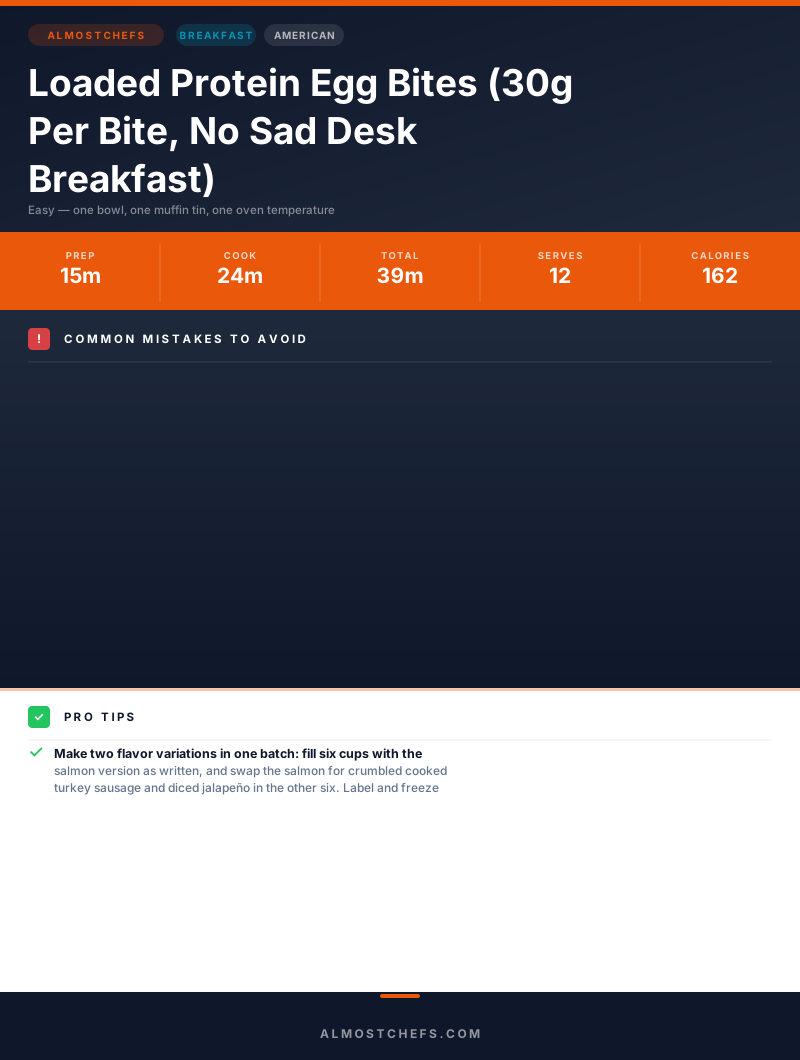
Before we start, read this. These are the 4 reasons your loaded protein egg bites (30g per bite, no sad desk breakfast) will fail:
- 1
Overfilling the muffin cups: The egg and dairy mixture puffs during baking and collapses slightly as it cools — this is normal custard behavior. Fill each cup no more than three-quarters full. Overfilled cups spill over, weld themselves to the tin, and become a structural disaster when you try to remove them.
- 2
Overbaking past the jiggle: The center of each bite should still jiggle slightly when you pull them from the oven. Fully set in the oven means overcooked by the time they cool. Internal carryover heat finishes the job in the tin. If the tops look dry and the centers don't move at all, you've gone too far — the texture will be tight and grainy.
- 3
Blending instead of folding the salmon: Smoked salmon needs to be folded in last, gently, in visible pieces. If you whisk it with the eggs, it disintegrates into an indistinct pink paste that distributes unevenly and loses all its textural contribution. Fold it. Stop when you can still see the flakes.
- 4
Skipping the resting period in the tin: Running a knife around the edges before the bites have cooled for 5 minutes pulls them apart. The egg custard needs those minutes to contract slightly from the tin walls. Skip the rest and you get torn edges and broken bites. Five minutes is not optional.
The Video Reference Library
Want to see it in action? Here are the exact videos we analyzed and combined to build this foolproof recipe translation:
The source video for this recipe — covers the full technique from mixing to storage with close-ups of the correct texture at every stage.
🛠️ Core Equipment
- 12-cup muffin tinStandard size for even portioning. Silicone tins release more easily but produce slightly less defined edges. Metal tins with a good grease job are ideal for the light golden crust on the outside.
- Large mixing bowl and whiskYou need enough volume to vigorously whisk 12 eggs plus a full cup of yogurt and cottage cheese. A bowl that's too small means egg on the counter and uneven mixing.
- Thin-bladed knife or offset spatulaFor releasing the bites after their rest. A blunt butter knife drags and tears. A thin blade slides cleanly between the egg and the tin wall without structural damage.
- Wire cooling rackLets air circulate under the bites as they cool completely. Setting them on a flat plate traps steam and softens the exterior you just worked to develop.
Loaded Protein Egg Bites (30g Per Bite, No Sad Desk Breakfast)
🛒 Ingredients
- ✦12 large eggs
- ✦1 cup nonfat Greek yogurt
- ✦1 cup low-fat cottage cheese
- ✦1 cup shredded sharp cheddar cheese
- ✦1 cup fresh spinach, roughly chopped
- ✦8 oz smoked salmon, flaked into small pieces
- ✦1 medium red bell pepper, finely diced
- ✦4 scallions, thinly sliced
- ✦2 cloves garlic, minced
- ✦1 tsp Dijon mustard
- ✦1 tsp fresh dill, chopped (or 1/2 tsp dried)
- ✦1/2 tsp sea salt
- ✦1/4 tsp black pepper
- ✦1/4 tsp smoked paprika
- ✦Cooking spray or ghee for greasing
- ✦2 tbsp grated Parmesan cheese
👨🍳 Instructions
01Step 1
Preheat your oven to 350°F and lightly grease a 12-cup muffin tin with cooking spray or ghee.
02Step 2
Crack all 12 eggs into a large mixing bowl and whisk vigorously until fully combined, about 1 minute.
03Step 3
Add the Greek yogurt, cottage cheese, and Dijon mustard to the eggs and whisk until the mixture is smooth and creamy, about 2 minutes.
04Step 4
Fold in the shredded cheddar, chopped spinach, diced bell pepper, sliced scallions, minced garlic, fresh dill, salt, pepper, and smoked paprika until evenly distributed.
05Step 5
Gently fold in the flaked smoked salmon last, using a rubber spatula, until the pieces are distributed but still visible.
06Step 6
Divide the mixture evenly among the 12 muffin cups, filling each about three-quarters full.
07Step 7
Sprinkle a small pinch of grated Parmesan on top of each cup.
08Step 8
Bake for 20-24 minutes until the tops are set and lightly golden but the very center still jiggles slightly when you shake the tin.
09Step 9
Remove from the oven and let cool in the tin for exactly 5 minutes. Then run a thin knife around the edges of each cup to loosen.
10Step 10
Pop the bites out of the tin and transfer to a wire rack to cool completely, about 10 minutes.
11Step 11
Store in an airtight container in the refrigerator for up to 5 days, or freeze in a single-layer freezer bag for up to 3 months.
12Step 12
Reheat from refrigerated: microwave for 60-90 seconds. From frozen: 2-3 minutes, flipping halfway through.
Nutrition Per Serving
Estimates based on standard preparation. Adjustments alter macros.
🔄 Substitutions
Instead of Smoked salmon...
Use Crumbled cooked bacon or diced smoked turkey breast
Shifts from seafood richness to smoky-meat depth. Protein stays at 30g per bite. Turkey is lower in fat; bacon adds crunch if added in the last fold.
Instead of Greek yogurt + cottage cheese...
Use 1.5 cups nonfat cottage cheese + 2 tbsp unflavored collagen peptides
Slightly creamier, more stable bites with protein bumped to approximately 32g per serving. Reduces moisture slightly for a firmer texture.
Instead of Sharp cheddar...
Use Crumbled feta or aged Gruyère
Feta adds tang and fewer calories. Gruyère adds nuttier depth and melts more smoothly. Both work without changing the structure.
Instead of Spinach + scallions...
Use Chopped broccoli florets + fresh chives
Earthier, more cruciferous flavor profile. Adds prebiotic fiber. Chives give milder onion presence. Blanch broccoli for 60 seconds first to prevent excess moisture.
🧊 Storage & Reheating
In the Fridge
Store in an airtight container for up to 5 days. The flavor actually sharpens by day two as the dill and smoked paprika settle in.
In the Freezer
Freeze in a single layer on a baking sheet first, then transfer to a freezer bag. This prevents them from fusing together. Good for up to 3 months.
Reheating Rules
From refrigerated: 60-90 seconds in the microwave. From frozen: 2-3 minutes, flipping once at the halfway point. Cover loosely with a damp paper towel to prevent the surface from drying out.
❓ Frequently Asked Questions
Why do my egg bites sink in the middle after cooling?
Sinking is normal for egg custard — it happens as steam escapes and the structure contracts. If the sinking is dramatic (more than a few millimeters), the bites were slightly overfilled or slightly underbaked. Neither ruins them. For a flatter top, reduce fill level to two-thirds per cup.
Can I make these without smoked salmon?
Yes — the salmon is a protein and flavor addition, not a structural component. Replace it with any cooked protein of similar weight: diced turkey, crumbled sausage, or shredded rotisserie chicken all work. The base egg and dairy mixture handles the architecture.
Do I have to use both Greek yogurt and cottage cheese?
The combination is deliberate. Greek yogurt adds tang and a smooth, creamy body. Cottage cheese adds dense protein and a slightly grainy texture that mimics the interior of a Starbucks-style egg bite. Using only one or the other shifts the result — either too tangy and loose, or too dense and dry.
Why is my protein count lower than 30g?
The 30g figure assumes the modified recipe as written, including full amounts of Greek yogurt, cottage cheese, and smoked salmon. If you reduce or substitute any of those three, protein drops. Egg white substitutions increase it. The dairy and salmon are the protein engine — treat them as non-negotiable if the macro target matters.
Can I bake these in a silicone mold instead of a metal tin?
Yes, with one adjustment: silicone insulates less efficiently than metal, so add 2-3 minutes to the bake time and check for the jiggle test rather than going by color. Silicone releases are dramatically easier — worth the slight timing adjustment.
How do I know the egg bites are done without cutting one open?
Shake the tin gently. The edges should be fully set — no rippling — while the dead center shows a slow, gelatin-like jiggle. If the whole surface ripples like water, they need more time. If nothing moves, they're overdone. The jiggle test is more reliable than color or a timer for egg custard.
The Science of
Loaded Protein Egg Bites (30g Per Bite, No Sad Desk Breakfast)
We turned everything on this page into a beautiful, flour-proof PDF cheat sheet. Print it out, stick it to your fridge, and never mess up your loaded protein egg bites (30g per bite, no sad desk breakfast) again.
*We'll email you the high-res PDF instantly. No spam, just perfectly cooked meals.
AlmostChefs Editorial Team
We translate the internet's most popular cooking videos into foolproof, beginner-friendly written recipes. We analyze multiple methods, test them in our kitchen, and engineer a single "Master Recipe" that gives you the best possible result with the least possible stress.