Greek Yogurt Power Deviled Eggs (28g Protein Per Serving)
Classic deviled eggs rebuilt from the yolk up — Greek yogurt and cottage cheese replace mayo to deliver 28g of protein per serving without sacrificing the creamy, tangy filling that makes them worth eating. We stripped the recipe down to the technique that actually matters and built it back better.

“Standard deviled eggs are a delivery vehicle for mayonnaise. That's fine at a picnic. It's not fine when you're trying to hit 30g of protein before noon. Swapping the mayo for Greek yogurt and cottage cheese isn't a compromise — it's an upgrade. The filling is tangier, creamier, and actually interesting. The protein triples. The only thing you lose is the regret.”
Why This Recipe Works
The deviled egg is a precision food masquerading as a casual one. It looks effortless on a platter. It is not effortless. Every step — how you cook the eggs, how you chill them, how smooth you get the filling, how long you wait before serving — has a direct, visible consequence on the finished product. Most people get two or three of those steps right. This recipe gets all of them.
The Protein Swap That Actually Works
Mayo is fat and emulsification. It contributes richness and cling, and it keeps the filling from tasting sharp. When people try to swap it for "healthier" alternatives, the most common result is a filling that tastes like diet food — thin, slightly tangy, missing something. Greek yogurt and cottage cheese together sidestep that problem because they bring complementary properties.
Greek yogurt provides the body and tang. Cottage cheese provides creaminess and bulk without the liquid bleed that low-fat yogurt causes. Together they produce a filling that's denser and more satisfying than mayo — not a compromise version, but a genuinely better version. The protein goes from 13g per serving to 28g. The fat drops from 11g to 6g. The flavor gets more assertive.
The critical step is blending until completely smooth. Cottage cheese curds are visible and texturally distracting in a deviled egg filling. Two full minutes of vigorous fork-mashing breaks them down. A pass through a fine-mesh sieve eliminates them entirely. Skip either step and you've done the work for a worse result.
The Steam-Sit Boiling Method
Most people boil deviled eggs too long because they're afraid of undercooked yolks. The gray-green ring that forms around an overcooked yolk isn't just cosmetic — it signals that the yolk has dried out and turned slightly sulfuric. In a deviled egg where the yolk is the entire point of the filling, that matters.
The steam-sit method solves this without any guesswork. Bring a large pot of water to a full boil, cut the heat completely, cover the pot, and walk away for exactly 12 minutes. The residual heat in the water cooks the eggs gently and evenly from outside to center. The yolks set fully but stay bright yellow and slightly creamy. There is no gray ring.
The ice bath is the second half of that equation. It stops carryover cooking the moment the 12 minutes are up and causes the egg white to contract slightly away from the shell membrane, which is why eggs cooled this way peel dramatically more easily than eggs that sit in the hot water.
The Flavor Architecture
Deviled egg filling fails in one of two ways: it's bland, or it's one-note acidic. Both are fixable. The Dijon mustard provides emulsification and sharp heat. The apple cider vinegar cuts through the richness of the yolks and dairy. The smoked paprika adds depth without making the filling taste like barbecue. The cayenne provides a clean, direct heat that finishes at the back of the palate.
The green olives and roasted red peppers are not garnish — they're structural. The olives add brine and umami. The peppers add sweetness and color variation throughout the filling, not just on top. Together they give each bite textural complexity that plain deviled eggs lack entirely.
The Thirty-Minute Rest
The filling tastes noticeably better cold. This isn't opinion — it's chemistry. The volatile acids in the vinegar and lemon juice mellow at refrigerator temperature. The mustard's sharp edges integrate. The smoked paprika blooms into the yogurt base instead of sitting on top of it. Thirty minutes is the minimum. An hour is better. Served immediately from room temperature, the filling tastes raw and unresolved. Served cold, it tastes like something someone thought about.
Where Beginners Mess This Up
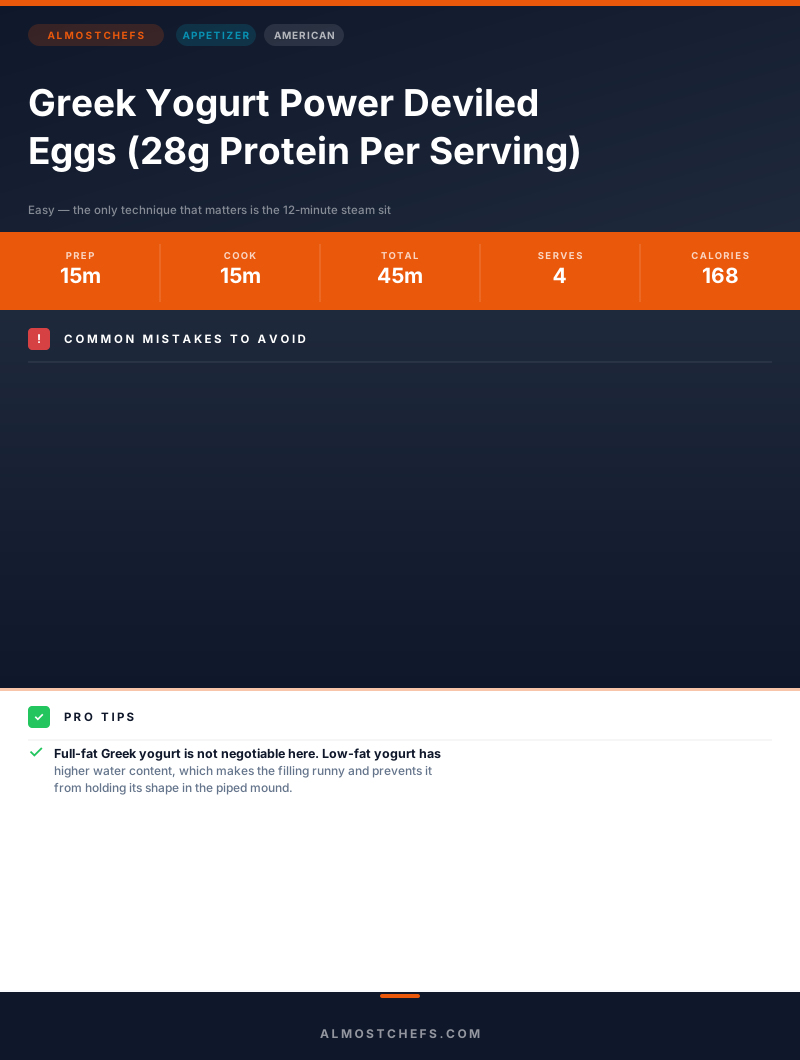
Before we start, read this. These are the 4 reasons your greek yogurt power deviled eggs (28g protein per serving) will fail:
- 1
Overcooking the eggs: The gray-green ring around a deviled egg yolk is the signature of someone who boiled their eggs too long. That ring is iron sulfide — it forms when hydrogen sulfide in the egg white reacts with iron in the yolk under sustained heat. Bring the water to a boil, pull the pot off the heat, cover it, and leave the eggs alone for exactly 12 minutes. That's the window. Longer than that and the yolks turn chalky and the gray ring appears.
- 2
Skipping the ice bath: The ice bath does two things: stops the cooking immediately and causes the egg white to contract slightly away from the shell, making peeling dramatically easier. Skip it and you're chasing ten minutes of carryover cooking and fighting with stubborn shells. The ice bath is not optional — it is the peel.
- 3
Leaving cottage cheese lumps in the filling: Cottage cheese has a natural curd texture that does not belong in a deviled egg filling. If you don't spend the full two minutes mashing and folding with a fork until smooth, you get white lumps in a filling that should be silky. Blend aggressively, or push the mixture through a fine-mesh sieve for a completely smooth result.
- 4
Serving immediately without chilling: The filling needs 30 minutes in the refrigerator before serving. This isn't about food safety — it's about texture and flavor integration. Warm filling runs. Cold filling holds its shape and tastes significantly more cohesive once the mustard, vinegar, and yogurt have had time to marry.
The Video Reference Library
Want to see it in action? Here are the exact videos we analyzed and combined to build this foolproof recipe translation:
The source video that inspired this recipe. Covers the Greek yogurt swap and explains why the filling-to-white ratio matters for texture.
🛠️ Core Equipment
- Large pot with tight-fitting lidYou need a pot large enough to hold all 12 eggs in a single layer so they cook evenly. The lid is essential for the steam-sit method — without it, the heat escapes and you lose control of the timing.
- Piping bag with large star tipA spoon produces lumpy, uneven mounds. A piping bag gives you clean, consistent swirls that look intentional. If you don't have a piping bag, a zip-lock bag with one corner snipped works. Presentation is half the reason anyone bothers with deviled eggs.
- Fine-mesh sieveOptional but decisive. If you push the filling through a fine-mesh sieve before piping, you eliminate every cottage cheese lump and get a filling texture that's genuinely restaurant-quality. Worth the extra two minutes.
- Large mixing bowl for ice bathNeeds to be big enough to submerge all 12 eggs at once. A half-full sink works in a pinch, but a bowl keeps the eggs contained and the cold water concentrated.
Greek Yogurt Power Deviled Eggs (28g Protein Per Serving)
🛒 Ingredients
- ✦12 large eggs
- ✦3/4 cup plain Greek yogurt, full-fat
- ✦1/4 cup cottage cheese, small curd
- ✦2 tablespoons Dijon mustard
- ✦1 tablespoon apple cider vinegar
- ✦1 teaspoon smoked paprika, plus more for garnish
- ✦1/2 teaspoon garlic powder
- ✦1/4 teaspoon cayenne pepper
- ✦2 tablespoons fresh chives, finely chopped
- ✦1 tablespoon diced roasted red peppers
- ✦1/2 teaspoon kosher salt
- ✦1/4 teaspoon black pepper
- ✦1 tablespoon fresh lemon juice
- ✦6 large green olives, finely minced
👨🍳 Instructions
01Step 1
Place all 12 eggs in a large pot in a single layer. Cover with cold water by about one inch.
02Step 2
Bring the water to a full rolling boil over high heat. The moment it reaches a boil, remove from heat and cover the pot immediately with a tight-fitting lid.
03Step 3
Leave the eggs undisturbed in the covered pot for exactly 12 minutes.
04Step 4
Transfer the eggs to a large bowl filled with ice and cold water. Let them chill for at least 5 minutes until completely cool to the touch.
05Step 5
Crack and peel each egg under a thin stream of cool running water, starting from the wider end of the egg where the air pocket sits.
06Step 6
Slice each peeled egg in half lengthwise. Carefully scoop the yolks into a mixing bowl. Arrange the whites on a serving platter.
07Step 7
Add the Greek yogurt, cottage cheese, Dijon mustard, apple cider vinegar, smoked paprika, garlic powder, and cayenne to the bowl with the yolks.
08Step 8
Mash and stir the filling with a fork for a full 2 minutes until completely smooth. Work out every cottage cheese lump before moving on.
09Step 9
Fold in the chives, roasted red peppers, and minced green olives until evenly distributed.
10Step 10
Taste and adjust with kosher salt, black pepper, and lemon juice. The filling should taste assertive — tangy, savory, with a clean heat from the cayenne.
11Step 11
Transfer the filling to a piping bag fitted with a large star tip. Pipe approximately 1 tablespoon of filling into each egg white cavity.
12Step 12
Dust each filled egg with additional smoked paprika and a small pinch of cayenne.
13Step 13
Refrigerate uncovered for at least 30 minutes before serving to allow the filling to firm and the flavors to meld.
Nutrition Per Serving
Estimates based on standard preparation. Adjustments alter macros.
🔄 Substitutions
Instead of Plain Greek yogurt...
Use Icelandic skyr (same quantity)
Higher protein density than Greek yogurt — roughly 20g per 7oz serving versus 17g — with a marginally creamier texture. Bumps total protein to approximately 30g per serving. Can be harder to find outside of larger grocery chains.
Instead of Dijon mustard...
Use Whole grain mustard plus 1 teaspoon sriracha
Spicier and more complex. The whole mustard seeds add textural interest to the filling. No meaningful macro changes.
Instead of Fresh chives and roasted red peppers...
Use Crispy bacon bits plus 1 tablespoon fresh dill
Bacon adds approximately 3g of protein per serving and brings smoky richness. Dill provides fresh herbaceous contrast. A significantly different flavor profile — more steakhouse than Mediterranean.
Instead of Green olives...
Use Capers (1 tablespoon) plus a pinch of Old Bay seasoning
Capers deliver the same briny punch with virtually no calories. Old Bay adds a coastal depth that works unusually well with the egg and yogurt base.
🧊 Storage & Reheating
In the Fridge
Store filled eggs in a single layer in an airtight container for up to 3 days. Place a paper towel underneath to absorb moisture from the whites.
In the Freezer
Do not freeze deviled eggs. The whites become rubbery and watery on thaw and the filling separates. The filling alone can be frozen for up to 1 month — thaw overnight in the fridge and re-whip before using.
Reheating Rules
Deviled eggs are served cold. No reheating required or recommended.
❓ Frequently Asked Questions
Why does my filling taste flat?
It needs more acid. Add lemon juice in half-teaspoon increments and taste after each addition. Greek yogurt and cottage cheese are mild — the Dijon mustard and apple cider vinegar are doing the heavy lifting on brightness. If both are fresh and you've used the correct quantities, a pinch more salt usually solves the problem.
Can I use low-fat Greek yogurt instead of full-fat?
Technically yes, but the filling will be noticeably runnier. Low-fat yogurt contains more water than full-fat, which prevents the filling from holding a piped shape. If you're spooning rather than piping, it works fine. If presentation matters, use full-fat.
How far in advance can I make these?
The filling can be made up to 24 hours in advance and stored covered in the fridge. The whites are best peeled and halved the day of serving. Fully assembled deviled eggs hold for up to 3 days but the whites start to weep and the paprika garnish fades after the first day.
Why do my eggs never peel cleanly?
Older eggs peel more easily than fresh eggs. Fresh eggs have a lower pH that causes the membrane to bond tightly to the white. If you're buying eggs specifically for deviled eggs, get them a week before you plan to cook. The ice bath also helps significantly — don't skip it.
Is 28g of protein per serving accurate?
Yes, and it comes primarily from three sources: the egg whites, the Greek yogurt, and the cottage cheese. Each whole egg contributes about 6g of protein split roughly 4g white to 2g yolk. The Greek yogurt adds approximately 12g across the full 3/4 cup. The cottage cheese contributes another 7g. The math holds.
Can I make these without a piping bag?
Yes. Use a zip-lock bag with one corner cut off at an angle for a makeshift piping bag, or simply spoon the filling in with a small teaspoon. The presentation won't be as clean but the flavor is identical. A small cookie scoop also works well for consistent portion size.
The Science of
Greek Yogurt Power Deviled Eggs (28g Protein Per Serving)
We turned everything on this page into a beautiful, flour-proof PDF cheat sheet. Print it out, stick it to your fridge, and never mess up your greek yogurt power deviled eggs (28g protein per serving) again.
*We'll email you the high-res PDF instantly. No spam, just perfectly cooked meals.
AlmostChefs Editorial Team
We translate the internet's most popular cooking videos into foolproof, beginner-friendly written recipes. We analyze multiple methods, test them in our kitchen, and engineer a single "Master Recipe" that gives you the best possible result with the least possible stress.