The Ultimate High-Protein Cobb Salad (42g Protein, No Sad Desk Lunch)
A powerhouse take on the classic Cobb salad that delivers 42g of protein per serving by combining grilled chicken breast, hard-boiled eggs, crispy bacon, and a Greek yogurt blue cheese dressing that beats the mayo-heavy original in every way. Built for muscle, designed to keep you full.
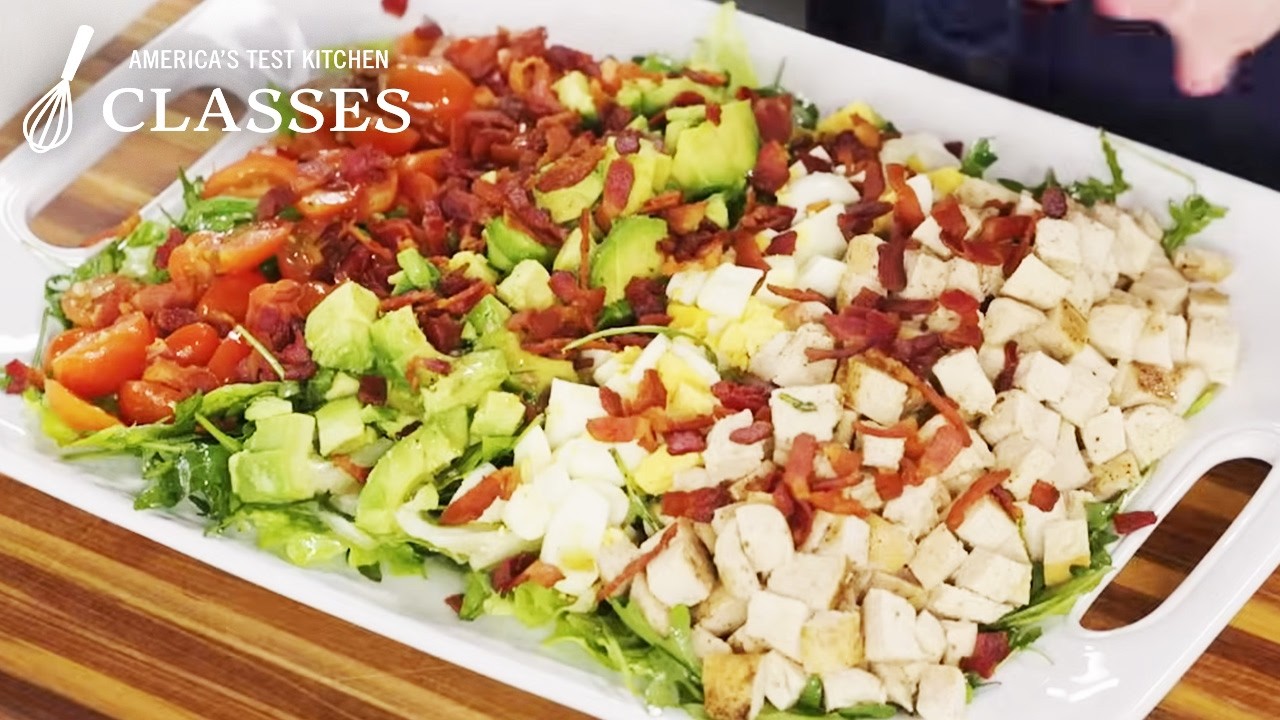
“Most Cobb salads top out at 28g of protein while delivering 520 calories mostly from mayo and saturated fat. This version flips that equation — same bold flavors, same satisfying composition, but the dressing swap alone adds 15-20g of protein per serving while cutting 35 calories. The result is a salad that eats like a meal and actually supports the reason you're eating a salad in the first place.”
Why This Recipe Works
The Cobb salad was invented in 1937 at the Hollywood Brown Derby by owner Robert Cobb, who raided his own restaurant's walk-in at midnight and threw together whatever he found. The fact that this improvised midnight snack became one of America's most recognized composed salads tells you something: the flavor architecture was accidentally perfect. Protein, fat, acid, crunch, and salt — all in one bowl, arranged in rows so you control the ratio in every bite.
The problem is what happened to it over the next 90 years. Restaurant versions buried the concept under mayonnaise-heavy dressing, limp iceberg lettuce, and token amounts of protein. A typical restaurant Cobb delivers 520 calories and 28g of protein — roughly the protein profile of two eggs. For a salad that's supposed to be the virtuous, protein-rich choice, that's a failure.
The Dressing Swap Is the Whole Game
Most Cobb improvements focus on adding more chicken or swapping bacon for turkey strips. This misses the point. The real leverage is the dressing.
Traditional blue cheese dressing is built on a mayo-and-buttermilk base. Two tablespoons of full-fat mayo contains approximately 0g of protein. Replace the mayo base with Greek yogurt and you introduce a protein source that punches above its weight: half a cup of plain Greek yogurt contains 12-15g of protein before you've added anything else. Across four servings, this single substitution adds 15-20g of protein to the entire batch for essentially zero additional calories.
The flavor tradeoff is minimal. Greek yogurt has a sharper, more pronounced tang than mayo, which actually amplifies the blue cheese flavor rather than muffling it. The dressing tastes more blue cheese than the original — which is, presumably, the point.
Why Three Proteins Beat One
Most salad recipes treat protein as an afterthought — one source, modest quantity, done. This recipe treats protein as the engineering constraint it is. Chicken breast provides lean, high-quality complete protein at roughly 31g per 100g cooked. Eggs contribute all nine essential amino acids plus fat-soluble vitamins that the lean chicken misses. Bacon adds saturated fat and sodium that — in this application — are flavor assets, not nutritional villains.
Stacking three proteins isn't excess. It's diversification. Each source brings a different amino acid emphasis, a different fat profile, and a different textural register. The result is a salad that doesn't taste like a compromise.
The Sear Matters More Than You Think
Chicken breast gets a reputation for being dry and boring, which is almost always the cook's fault, not the ingredient's. The solution is straightforward: a cast iron skillet at proper heat, a meat thermometer to hit exactly 165°F, and five minutes of resting before slicing.
The Maillard reaction requires surface temperatures above 280°F. A properly preheated skillet with shimmering oil reaches that threshold. A medium-heat non-stick pan does not. The crust that forms at high heat contains hundreds of flavor compounds that make the same chicken breast taste dramatically different from its poached or baked counterpart. In a salad where the chicken has to compete with blue cheese and bacon for flavor presence, that crust is what keeps the chicken from disappearing.
Assembly Is Architecture
The row arrangement in a Cobb salad is not a restaurant affectation. It exists so you can take a forkful that crosses every ingredient lane simultaneously — greens, chicken, egg, bacon, tomato, cheese — and hit every flavor note in one bite. Mix everything together and you lose that control. The ratios blur, the blue cheese overpowers, and the salad becomes a uniform flavor paste instead of a composed dish.
Serve on the widest platter you have. Distinct rows require space. This is not a salad you dump into a bowl.
Where Beginners Mess This Up
Before we start, read this. These are the 4 reasons your the ultimate high-protein cobb salad (42g protein, no sad desk lunch) will fail:
- 1
Overcooking the chicken breast: Chicken breast is unforgiving. Past 165°F it turns dry and chalky, and no dressing will save it. Use a meat thermometer and pull it at exactly 165°F. The 5-minute rest after cooking is not optional — it's what lets the juices redistribute so every slice stays moist.
- 2
Skipping the ice bath on the eggs: Without an ice bath, the eggs continue cooking from residual heat and the yolks turn grey-green and rubbery. Two minutes in ice water stops the cooking process cold. This is the difference between a creamy, bright yolk and a dry, chalky one.
- 3
Dressing the salad too early: Dress this salad at the table, not in the kitchen. The greens — especially spinach and arugula — wilt within minutes under an acidic dressing. If you're meal-prepping, keep the dressing in a separate container until the moment you eat.
- 4
Not seasoning the chicken aggressively enough: Chicken breast is a blank canvas. The paprika, salt, and pepper need to go on generously and on both sides. Timid seasoning means the chicken disappears into the salad instead of anchoring it. Season like you mean it.
🛠️ Core Equipment
- Meat thermometerThe only reliable way to hit 165°F without guessing. Visual cues on chicken breast are notoriously unreliable — the outside looks done long before the center is. A thermometer is the difference between juicy and dry.
- Large cast iron or stainless steel skilletYou need high, sustained heat to develop a proper golden crust on the chicken. Non-stick pans can't handle the temperature required for a good sear. A [cast iron skillet](/kitchen-gear/review/cast-iron-skillet) is ideal.
- Small mixing bowl and whiskThe Greek yogurt dressing needs to be whisked until fully emulsified. A fork works but leaves lumps. Thirty seconds with a small [whisk](/kitchen-gear/review/whisk) produces a smooth, creamy dressing.
- Large serving platterCobb salad is a composed salad — the rows are the presentation. A wide, flat platter gives you room to arrange ingredients in clean, distinct lanes. A deep bowl forces everything to mix and you lose the visual and flavor architecture.
The Ultimate High-Protein Cobb Salad (42g Protein, No Sad Desk Lunch)
🛒 Ingredients
- ✦6 cups mixed salad greens (romaine, spinach, arugula)
- ✦12 oz boneless, skinless chicken breast
- ✦4 large eggs
- ✦6 slices bacon
- ✦1 cup cherry tomatoes, halved
- ✦1 cup cucumber, diced
- ✦1/2 cup red bell pepper, diced
- ✦1/2 cup crumbled blue cheese
- ✦1/4 cup fresh green onions, thinly sliced
- ✦1/2 cup plain Greek yogurt
- ✦2 tablespoons mayonnaise
- ✦1 tablespoon fresh lemon juice
- ✦1 teaspoon Dijon mustard
- ✦1/2 teaspoon garlic powder
- ✦1 tablespoon olive oil
- ✦1/4 teaspoon paprika
- ✦Salt and black pepper to taste
👨🍳 Instructions
01Step 1
Pat the chicken breast dry with paper towels and season generously with salt, pepper, and paprika on both sides.
02Step 2
Heat olive oil in a large skillet over medium-high heat until shimmering, about 2 minutes.
03Step 3
Place the seasoned chicken breast in the hot skillet and cook for 6-7 minutes until the bottom develops a golden crust. Do not move the chicken while it's searing.
04Step 4
Flip the chicken and continue cooking for another 6-7 minutes until the internal temperature reaches 165°F.
05Step 5
Transfer the chicken to a cutting board and let it rest for 5 minutes, then slice into bite-sized pieces or strips.
06Step 6
While the chicken cooks, place eggs in a small pot and cover with cold water by 1 inch. Bring to a rolling boil over high heat, then remove from heat, cover, and let sit for exactly 10 minutes.
07Step 7
Transfer the eggs immediately to an ice bath for 2 minutes, then peel and chop into quarters.
08Step 8
Cook the bacon strips in a separate skillet over medium heat until crispy, about 8-10 minutes. Transfer to a paper towel-lined plate and crumble once cooled.
09Step 9
Whisk together the Greek yogurt, mayonnaise, lemon juice, Dijon mustard, and garlic powder in a small bowl until smooth. Season with salt and pepper.
10Step 10
Arrange the mixed greens evenly across a large serving platter or divide among 4 individual plates.
11Step 11
Arrange the chicken, eggs, bacon, tomatoes, cucumber, bell pepper, and blue cheese in neat, distinct rows across the greens.
12Step 12
Drizzle the dressing over the salad or serve on the side. Garnish with sliced green onions and cracked black pepper. Serve immediately.
Nutrition Per Serving
Estimates based on standard preparation. Adjustments alter macros.
🔄 Substitutions
Instead of Regular bacon...
Use Turkey bacon or tempeh bacon
Turkey bacon crisps faster and runs leaner, with 2-3g protein per slice versus 1g in pork bacon. Tempeh bacon adds a fermented depth and works well if you're cutting out meat entirely.
Instead of Blue cheese crumbles...
Use Crumbled feta or cottage cheese
Feta delivers a sharper, saltier punch with less saturated fat. Cottage cheese (14g protein per half cup) dramatically boosts the protein count further — blend it into the dressing for the smoothest result.
Instead of Chicken breast...
Use Grilled shrimp or white fish
Shrimp and halibut both bring complete amino acid profiles plus omega-3s. Adjust cook times — shrimp takes 2-3 minutes per side, halibut 4-5 minutes. Both work beautifully with the tangy yogurt dressing.
Instead of Mayonnaise in dressing...
Use Avocado oil mayo or omit entirely
Avocado oil mayo swaps in monounsaturated fats for a cleaner fat profile. Omitting mayo entirely and going pure Greek yogurt saves 100 calories per serving and makes the dressing noticeably tangier — which works well with the bacon's salt.
🧊 Storage & Reheating
In the Fridge
Store components separately in airtight containers for up to 4 days. Assembled salad with dressing should be eaten immediately — dressed greens do not hold.
In the Freezer
Not recommended. Greens, eggs, and tomatoes do not freeze well. The cooked chicken breast freezes for up to 2 months if needed.
Reheating Rules
Chicken can be gently warmed in a skillet over low heat with a splash of water, covered, for 3-4 minutes. Serve over freshly assembled greens rather than reheating the full salad.
❓ Frequently Asked Questions
How do I get 42g of protein from a salad?
The protein comes from three complete sources stacked together: the 12oz chicken breast contributes roughly 18-20g total, the 4 eggs add about 6g (1.5g per serving), the bacon adds 3-4g, the blue cheese adds 3g, and the Greek yogurt dressing adds 15-20g across the batch. Divide by 4 servings and you land at 42g. This is why the dressing substitution is the most important change — yogurt versus mayo is a 15g protein swing.
Can I make this salad ahead of time?
Yes, but in parts only. Cook the chicken, eggs, and bacon up to 4 days ahead and store them separately. Prep the vegetables the night before. Mix the dressing up to 5 days ahead. Assemble right before eating. A fully assembled, dressed Cobb salad deteriorates within an hour.
What if I don't like blue cheese?
Swap it for feta, goat cheese, or skip the cheese entirely. Blue cheese contributes tang and creaminess to the dressing — if you remove it, add an extra squeeze of lemon and a pinch of salt to compensate. The salad is structurally fine without it.
Is this salad actually filling?
Yes — more than most meals its size. The combination of 42g complete protein, 28g fat from eggs, bacon, and cheese, and 4g of fiber creates a satiety trifecta that suppresses appetite for 4-5 hours. This is why high-protein diets work: protein and fat slow gastric emptying, keeping hunger at bay longer than the same calories from carbohydrates.
Can I use rotisserie chicken instead of cooking chicken breast?
Absolutely, and it's a legitimate time-saver. Two cups of shredded rotisserie chicken substitutes well for the cooked breast. It adds a slightly different flavor profile (more seasoned, sometimes sweeter) but pairs well with the tangy dressing. Skip the searing steps and go straight to assembly.
Why does the recipe use both Greek yogurt and mayonnaise in the dressing?
Pure Greek yogurt dressing is very tangy and slightly thin. The 2 tablespoons of mayonnaise add richness and body that rounds out the acidity and creates a more luxurious mouthfeel. It's a small amount — the protein math still wins overwhelmingly — but it makes the dressing taste indulgent rather than virtuous.
The Science of
The Ultimate High-Protein Cobb Salad (42g Protein, No Sad Desk Lunch)
We turned everything on this page into a beautiful, flour-proof PDF cheat sheet. Print it out, stick it to your fridge, and never mess up your the ultimate high-protein cobb salad (42g protein, no sad desk lunch) again.
*We'll email you the high-res PDF instantly. No spam, just perfectly cooked meals.
AlmostChefs Editorial Team
We translate the internet's most popular cooking videos into foolproof, beginner-friendly written recipes. We analyze multiple methods, test them in our kitchen, and engineer a single "Master Recipe" that gives you the best possible result with the least possible stress.