Muscle-Building Chicken Soup (38g Protein, No Sad Broth)
A protein-engineered chicken soup with white beans, Greek yogurt, and spinach that delivers 38g of protein per bowl. We reverse-engineered the classic comfort formula to make it actually work for muscle building — without sacrificing the flavor that makes soup worth eating.
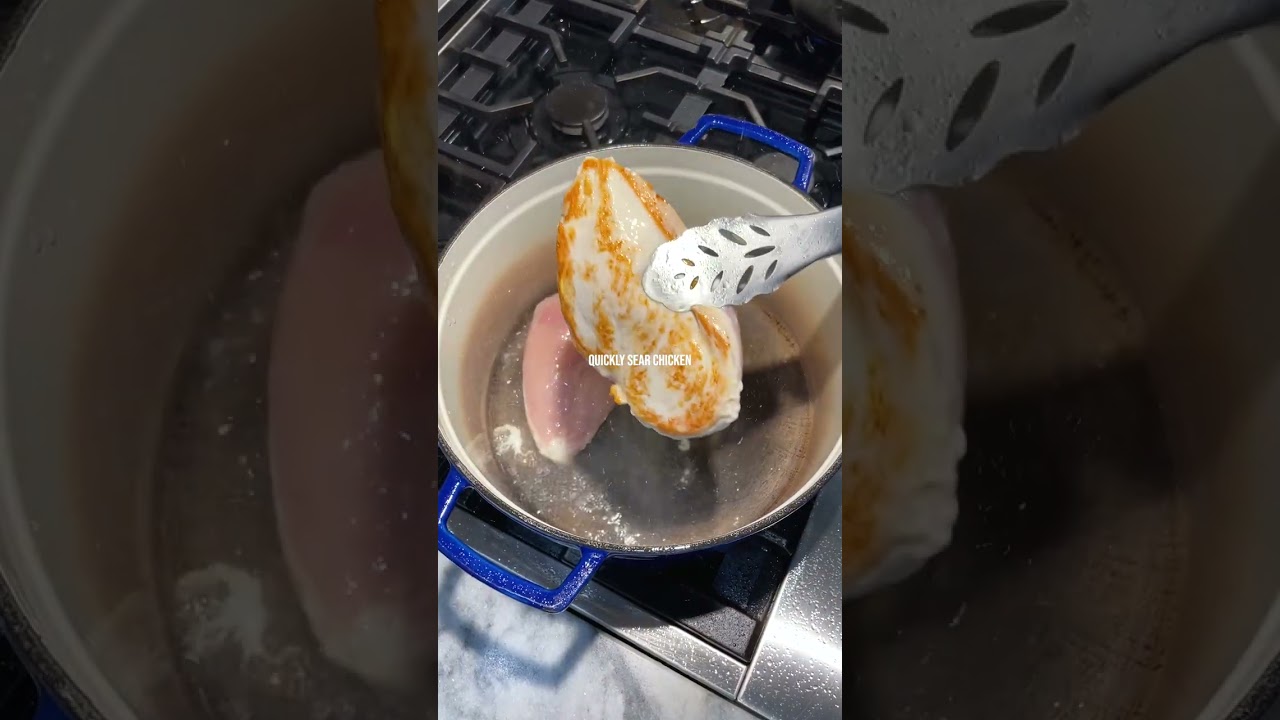
“Most chicken soup gives you 18g of protein and calls it a meal. That's a snack. This version stacks white beans, chicken breast, and Greek yogurt into a bowl that delivers 38g per serving — more than two chicken thighs — while still tasting like something you'd actually want to eat on a cold Tuesday. The Greek yogurt trick is the whole game: it replaces heavy cream, adds probiotics, and doubles down on protein without a single compromise in texture.”
Why This Recipe Works
The average chicken soup delivers around 18g of protein per bowl. That number sounds reasonable until you remember that your body needs somewhere between 0.7 and 1 gram of protein per pound of bodyweight to build muscle — and you're eating soup as part of that equation, not a protein shake. Eighteen grams is a side dish. This recipe is not a side dish.
The protein architecture here is deliberate. Three sources — chicken breast, white beans, and Greek yogurt — each contribute differently. The chicken provides dense, fast-digesting complete protein. The white beans add plant-based protein stacked with fiber, which slows digestion and keeps you full well past the meal. The Greek yogurt contributes slow-digesting casein protein alongside probiotics that support gut health. The result is 38g per serving with a glycemic profile that doesn't spike and crash, which is why this soup works as both a lunch you prep on Sunday and a dinner you eat after training.
The Yogurt Move
Replacing heavy cream with Greek yogurt is not a sacrifice. It is a straight upgrade — provided you know the one rule: temper it. Greek yogurt breaks into grainy white lumps the moment it contacts a pot of boiling soup. The fix is thirty seconds of work. Scoop two tablespoons of warm broth into a small bowl, whisk the yogurt into it until smooth, then stir that slurry slowly back into the pot after pulling it off heat. The result is a creamy, velvet broth that holds its texture through storage, reheating, and freezing.
The yogurt also adds a subtle tang that functions as brightness — similar to what lemon juice does, but integrated into the fat structure of the broth rather than sitting on top of it. Combined with the actual lemon juice added at the end, you get two layers of acid working at different depths.
Bean Strategy
White beans are doing serious structural work in this soup. Beyond the protein contribution, they release starch as they cook, which naturally thickens the broth to a body that feels substantial rather than watery. If you want more thickness, mash about a quarter of the beans against the side of the pot before adding the yogurt — the released starch does the job of a roux without any added fat or flour.
The beans are also why this soup reheats well. Their starch stabilizes the texture over days of storage in a way that pure broth-based soups cannot. A soup made with nothing but chicken and vegetables turns thin and sad by day three. The beans hold everything together.
The Simmer Discipline
Chicken breast is unforgiving. It has no fat buffer to protect it from overcooking the way thighs do. The moment the internal temperature crosses 170°F, the proteins contract and squeeze out moisture — and you get that chalky, stringy texture that makes people think they don't like chicken breast. The solution is a gentle simmer at medium-low heat and an instant-read thermometer to pull the pot the second you hit 165°F.
The carry-over heat in a heavy-bottomed pot handles the last few degrees without you doing anything. Let the pot rest off heat for 2-3 minutes before adding the yogurt — this cooling window is also when the chicken finishes to exactly the right point.
Why This Actually Tastes Good
The mirepoix base — onion, carrot, celery sautéed properly in olive oil — is what separates soup from hot water with stuff in it. Spend the full 5-7 minutes on those aromatics. The garlic goes in last and cooks for only a minute because it burns fast and turns bitter. The thyme and oregano bloom in the fat from the chicken before the broth is added, which extracts their volatile compounds into the oil instead of just dissolving them into water.
Every decision in this recipe is load-bearing. That's what makes it work.
Where Beginners Mess This Up
Before we start, read this. These are the 4 reasons your muscle-building chicken soup (38g protein, no sad broth) will fail:
- 1
Adding Greek yogurt straight to boiling soup: Hot Greek yogurt curdles violently if it hits the soup without tempering. You must whisk it with a few tablespoons of warm broth first, then stir the blended mixture slowly into the pot off heat. Skip this step and you get white lumps floating in chicken water.
- 2
Overcooking the chicken breast: Chicken breast goes from tender to chalky at around 165°F internal — and it doesn't forgive you for going past that. Cut the pieces uniformly so they finish at the same time, and pull the pot off heat the moment the pink is gone. The residual heat carries it the rest of the way.
- 3
Boiling instead of simmering: A rolling boil makes the broth cloudy and toughens the chicken. Once you add the broth, bring it to a gentle bubble and back off immediately to medium-low. You want a slow, steady simmer — occasional bubbles breaking the surface, not a churning cauldron.
- 4
Under-seasoning before the yogurt goes in: Greek yogurt is slightly tangy and will mute whatever seasoning is already in the soup. Taste aggressively before you add the yogurt mixture. The soup should taste 10-15% overseasoned at that point — the yogurt will bring it back into balance.
The Video Reference Library
Want to see it in action? Here are the exact videos we analyzed and combined to build this foolproof recipe translation:
The source video for this recipe. Covers the yogurt tempering technique and the bean-to-broth ratio that keeps the soup thick without adding flour or starch.
🛠️ Core Equipment
- Large heavy-bottomed pot or Dutch ovenEven heat distribution means the vegetables soften without scorching and the simmer stays gentle throughout. A thin pot creates hot spots that cook the chicken unevenly.
- LadleYou need to scoop a few tablespoons of warm broth to temper the Greek yogurt before adding it to the pot. A ladle makes this precise and avoids splashing.
- Small whiskFor smoothly blending the Greek yogurt with warm broth before incorporating. Stirring with a spoon leaves yogurt streaks. A whisk creates a homogenous slurry that integrates cleanly.
- Instant-read thermometerThe difference between juicy and chalky chicken breast is about 10°F. Pull at 165°F internal and carry-over heat takes care of the rest. Don't guess.
Muscle-Building Chicken Soup (38g Protein, No Sad Broth)
🛒 Ingredients
- ✦2 tablespoons olive oil
- ✦1 medium yellow onion, finely diced
- ✦3 medium carrots, cut into half-moons
- ✦3 celery stalks, diced
- ✦2 cloves garlic, minced
- ✦1.5 pounds boneless, skinless chicken breast, cut into bite-sized chunks
- ✦8 cups low-sodium chicken broth
- ✦2 cans (15 oz each) white beans, drained and rinsed
- ✦1 cup canned diced tomatoes, no sugar added
- ✦1 teaspoon dried thyme
- ✦1 teaspoon dried oregano
- ✦1 bay leaf
- ✦1 cup fresh spinach, roughly chopped
- ✦1/2 cup plain nonfat Greek yogurt
- ✦2 tablespoons fresh lemon juice
- ✦1 teaspoon sea salt
- ✦1/2 teaspoon black pepper
- ✦1/4 cup fresh parsley, chopped (for garnish)
👨🍳 Instructions
01Step 1
Heat olive oil in a large pot over medium-high heat until shimmering, about 1 minute.
02Step 2
Add the diced onion, carrots, and celery. Sauté for 5-7 minutes, stirring occasionally, until softened and the onion is translucent.
03Step 3
Stir in the minced garlic and cook for 1 minute until fragrant.
04Step 4
Add the chicken breast chunks and cook for 4-5 minutes, stirring frequently, until the outside is opaque and lightly browned.
05Step 5
Pour in the chicken broth and bring to a gentle boil, then reduce heat to medium-low.
06Step 6
Add the white beans, diced tomatoes, thyme, oregano, and bay leaf. Stir to combine.
07Step 7
Simmer uncovered for 15-18 minutes until the chicken is fully cooked through with no pink inside.
08Step 8
Remove the pot from heat and let it cool for 2-3 minutes.
09Step 9
In a small bowl, whisk the Greek yogurt with 2 tablespoons of warm broth from the pot until completely smooth.
10Step 10
Slowly stir the tempered yogurt mixture back into the soup, combining gently.
11Step 11
Add the fresh spinach and stir until wilted, about 1 minute.
12Step 12
Add lemon juice, sea salt, and black pepper. Taste and adjust seasoning.
13Step 13
Remove and discard the bay leaf.
14Step 14
Ladle into bowls and garnish with fresh chopped parsley.
Nutrition Per Serving
Estimates based on standard preparation. Adjustments alter macros.
🔄 Substitutions
Instead of Plain nonfat Greek yogurt...
Use Cottage cheese (1/2 cup, blended smooth)
Slightly tangier flavor, richer mouthfeel, and protein increases to approximately 41g per serving. Blend it completely before tempering — any curds left in will be visible in the final soup.
Instead of White beans...
Use Cannellini beans + 1/2 cup cooked lentils
Earthier flavor, denser texture, protein increases to about 40g per serving. Lentils add iron and fiber but don't need soaking if you use pre-cooked or canned.
Instead of Boneless skinless chicken breast...
Use 2 cups shredded rotisserie chicken + 1/2 lb ground turkey
Richer, more complex flavor from the rotisserie and a more interesting texture from the ground turkey. Saves prep time significantly. Protein stays around 38g per serving.
Instead of Low-sodium chicken broth...
Use Unsalted bone broth
Deeper, more savory flavor with added collagen and gelatin. Supports joint health and gut integrity. Bumps protein slightly and adds notable umami depth.
🧊 Storage & Reheating
In the Fridge
Store in an airtight container for up to 4 days. The soup thickens as it sits — this is normal. Add a splash of broth when reheating.
In the Freezer
Freeze in individual portions for up to 2 months. Leave 1 inch of headspace in the container. Thaw overnight in the fridge before reheating.
Reheating Rules
Warm gently over medium-low heat, stirring occasionally. Do not boil — the yogurt can break and the chicken goes rubbery. Add a tablespoon of broth if it's too thick. Microwave works in a pinch on 70% power.
❓ Frequently Asked Questions
Why did my Greek yogurt curdle in the soup?
You added it too fast or the soup was still at a full boil. Greek yogurt needs to be tempered — whisk it with 2 tablespoons of warm broth first, then stir the mixture slowly into the pot after removing from heat. Temperature shock is the only reason yogurt curdles.
Can I use chicken thighs instead of breast?
Yes, and the soup will taste richer. Thighs have more intramuscular fat, which means more flavor in the broth. The tradeoff is slightly higher calories and lower protein per ounce. Protein per serving will drop from 38g to roughly 34g.
How do I hit 38g of protein in each serving?
The protein comes from three sources: chicken breast (~30g for the batch divided by 4), white beans (~7g per serving), and Greek yogurt (~5g for the half cup divided by 4). As long as you use 1.5 pounds of chicken breast, two full cans of beans, and a half cup of yogurt, the math works out.
Can I make this in a slow cooker?
Yes. Sauté the aromatics first on the stovetop, then transfer everything except the yogurt and spinach to the slow cooker. Cook on low for 6-7 hours or high for 3-4. Add the tempered yogurt and spinach in the last 15 minutes with the lid off.
The soup is too thin — how do I thicken it?
Mash about a quarter of the white beans against the side of the pot before you add the yogurt. This releases starch naturally and thickens the broth without any added flour. Alternatively, blend one cup of soup and stir it back in.
Can I freeze this soup with the Greek yogurt already in it?
Technically yes, but the yogurt may separate slightly on thaw and reheat. It's still safe to eat and the flavor is fine — just stir aggressively while reheating. For best texture, freeze the soup before adding the yogurt, then add it fresh when you reheat.
The Science of
Muscle-Building Chicken Soup (38g Protein, No Sad Broth)
We turned everything on this page into a beautiful, flour-proof PDF cheat sheet. Print it out, stick it to your fridge, and never mess up your muscle-building chicken soup (38g protein, no sad broth) again.
*We'll email you the high-res PDF instantly. No spam, just perfectly cooked meals.
AlmostChefs Editorial Team
We translate the internet's most popular cooking videos into foolproof, beginner-friendly written recipes. We analyze multiple methods, test them in our kitchen, and engineer a single "Master Recipe" that gives you the best possible result with the least possible stress.