High-Protein Chicken Salad (42g Per Serving, No Mayo Required)
A Greek yogurt-based chicken salad with crispy roasted chickpeas that delivers 42g of protein per serving without the caloric weight of mayo. We broke down the technique so the chickpeas stay crunchy, the chicken stays juicy, and the whole thing actually tastes better the next day.
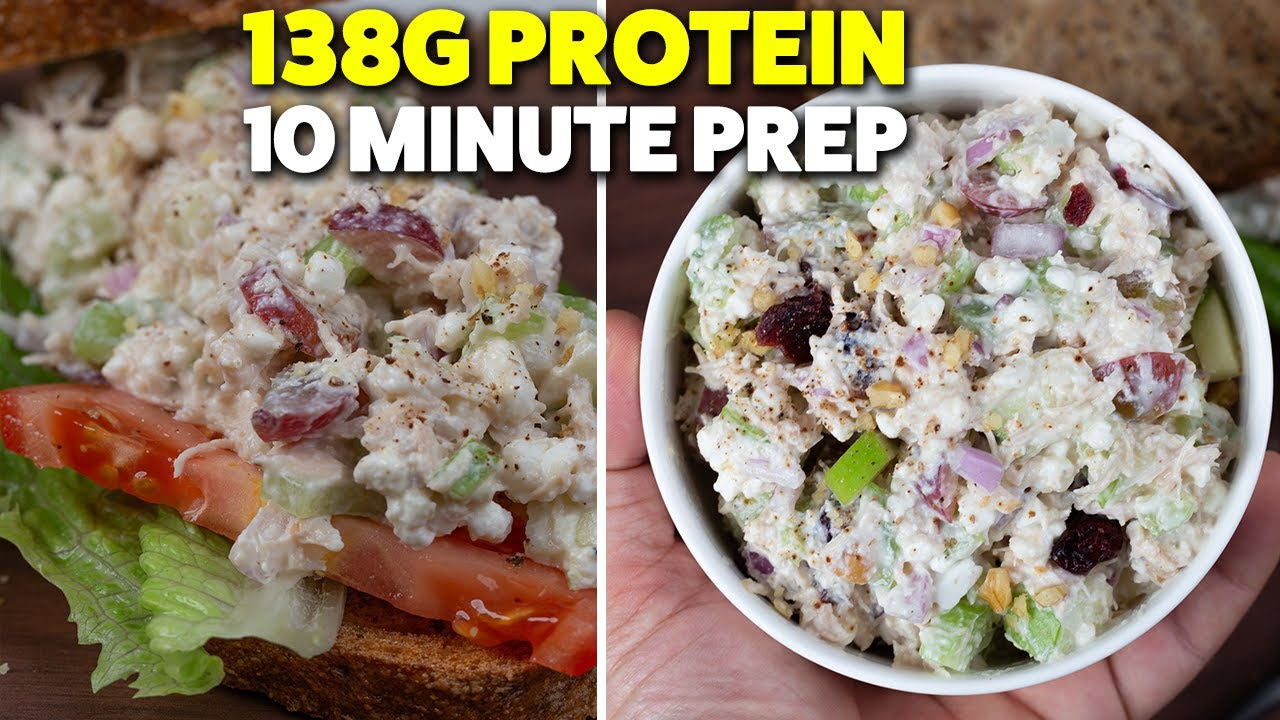
“Most high-protein chicken salads are a compromise — cardboard chicken, watery dressing, and a sad bed of greens. This one earns its 42g protein claim honestly: Greek yogurt replaces mayo without sacrificing creaminess, roasted chickpeas add crunch and a second protein source, and the dressing actually clings to the chicken instead of pooling at the bottom of the bowl. The method is simple. The result isn't.”
Why This Recipe Works
The premise behind most high-protein recipe rewrites is depressing: take something good, subtract the things that make it taste good, add protein powder, and call it a win. This recipe does not operate that way. Greek yogurt replaces mayo not because it's a health compromise but because it's genuinely better at the job — it clings to chicken without turning greasy, holds a dressing emulsion without breaking, and adds a clean tanginess that mayo never quite achieves. The roasted chickpeas aren't here for protein padding. They're here because they provide textural contrast that a salad built entirely around soft components desperately needs.
The Yogurt Question
Greek yogurt works as a mayo replacement specifically because of its protein structure. Where mayo is an oil-in-water emulsion held together by egg lecithin, Greek yogurt is a concentrated dairy protein matrix. It doesn't separate the same way, it doesn't go greasy when it hits warm chicken, and it binds to the Dijon mustard without needing emulsifiers. The result is a dressing that stays on the chicken instead of sliding to the bottom of the bowl.
The non-negotiable here is using full-fat or 2% yogurt if you want richness. Nonfat yogurt is listed in the ingredients because it technically works, but it reads slightly chalky on the palate. The calorie difference between nonfat and 2% Greek yogurt is around 40 calories per cup — almost certainly worth it for the texture upgrade.
The Chickpea Architecture
Roasted chickpeas are a texture device, and texture is the variable that separates a memorable salad from a forgettable one. A cast iron skillet on the stovetop or a 400°F oven produces chickpeas that are crunchy on the outside and slightly dense in the center — a completely different experience from soft canned chickpeas stirred into the dressing.
The critical variable is moisture. Wet chickpeas steam in the oven instead of roasting. Pat them completely dry — paper towels, thorough, patient — then spread them with enough space between them that steam can escape. Crowded chickpeas are soft chickpeas. Give them room and the oven's dry heat does the work.
They will also continue crisping as they cool on the pan. Pull them when they look almost done. A minute early produces perfectly crunchy chickpeas. A minute late produces chickpeas that shade into hard instead of crispy — a distinction you'll notice immediately.
The Chicken Technique
A meat thermometer is the single most important tool in this recipe. Chicken breast has a narrow window between safe and dry, and the only way to hit it consistently is with a probe. Sear at medium-high heat — hot enough to develop a golden crust without burning the exterior before the interior reaches temperature — and pull the breasts at exactly 165°F. Let them rest five full minutes before cutting. The resting period is not optional. It's where the juice redistribution happens.
Chunk the chicken rather than shredding it if you want the salad to hold its texture over multiple days. Shredded chicken has more surface area, which means more contact with the yogurt dressing, which means it gets softer faster in the fridge. Chunks stay intact through day four. Shreds are better for day-one eating only.
Why This Works for Meal Prep
The flavor actually improves after 24 hours in the fridge. The yogurt dressing penetrates the chicken as it sits, the dill deepens, and the lemon and Dijon mellow into a more cohesive whole. The salad you eat on Tuesday is objectively better than the salad you made on Monday. The chickpeas are the only component that degrades — keep them separate, add per serving, and every bowl stays as good as the first one.
Where Beginners Mess This Up
Before we start, read this. These are the 4 reasons your high-protein chicken salad (42g per serving, no mayo required) will fail:
- 1
Not patting the chickpeas completely dry: Surface moisture is the enemy of crispy chickpeas. Any water left on the can-drained chickpeas turns to steam in the oven, which softens rather than crisps them. Pat them thoroughly with paper towels — then let them air-dry on the towel for an extra 2 minutes before seasoning.
- 2
Pulling the chicken off heat by color instead of temperature: Chicken breast is unforgiving. At 160°F it's juicy. At 175°F it's dry. A meat thermometer is not optional here — the difference between a perfect sear and a rubbery result is a 10-degree window you cannot eyeball.
- 3
Adding chickpeas too early: Fold the roasted chickpeas in at the last possible moment before serving. Even 10 minutes of contact with the yogurt dressing and they go from crunchy to chewy. If you're meal prepping, store chickpeas separately and add per serving.
- 4
Over-mixing the dressing with the chicken: Greek yogurt breaks down chicken fibers when aggressively stirred. Fold gently — two or three passes with a spatula. You want chunks coated in dressing, not a paste.
The Video Reference Library
Want to see it in action? Here are the exact videos we analyzed and combined to build this foolproof recipe translation:
The source video for this method. Clear breakdown of the yogurt dressing ratio and the chickpea roasting timing that keeps them crunchy through the fold.
🛠️ Core Equipment
- Meat thermometerChicken breast has almost no fat to protect it from overcooking. The only reliable way to hit 165°F without guessing is a probe thermometer. It pays for itself the first time it saves a dry sear.
- Heavy-bottomed skilletThin pans create hot spots that cook the chicken unevenly — you get a scorched patch next to an underdone section. A [cast iron skillet](/kitchen-gear/review/cast-iron-skillet) or stainless clad pan distributes heat uniformly for an even golden crust across the whole breast.
- Rimmed baking sheetFor roasting the chickpeas. The rim keeps them from rolling off when you shake the pan at the halfway mark. Parchment is optional — direct contact with the hot metal surface gives a crispier bottom.
- Large mixing bowlYou need room to fold the chicken without the dressing spilling over the edge. Too-small bowl means you end up stirring instead of folding, which destroys the texture you spent 25 minutes building.
High-Protein Chicken Salad (42g Per Serving, No Mayo Required)
🛒 Ingredients
- ✦1.5 lbs boneless, skinless chicken breasts
- ✦1 cup plain nonfat Greek yogurt
- ✦1 (15 oz) can chickpeas, drained and patted dry
- ✦2 tablespoons extra virgin olive oil, divided
- ✦1 teaspoon smoked paprika
- ✦1/2 teaspoon garlic powder
- ✦1 medium red bell pepper, finely diced
- ✦1 cup diced English cucumber
- ✦3 green onions, thinly sliced
- ✦1/4 cup fresh dill, chopped
- ✦2 tablespoons fresh lemon juice
- ✦1 tablespoon Dijon mustard
- ✦1/2 teaspoon kosher salt
- ✦1/4 teaspoon black pepper
- ✦1/4 teaspoon cayenne pepper (optional)
- ✦2 cups mixed greens or spinach, for serving
👨🍳 Instructions
01Step 1
Season the chicken breasts evenly on both sides with 1/4 teaspoon salt and a pinch of black pepper.
02Step 2
Heat 1 tablespoon olive oil in a large skillet over medium-high heat until shimmering, about 2 minutes.
03Step 3
Place the chicken in the hot skillet and sear for 6-7 minutes without moving it, until the bottom develops a golden crust.
04Step 4
Flip each breast and cook for another 6-7 minutes until the internal temperature reaches 165°F at the thickest part.
05Step 5
Transfer chicken to a cutting board and rest for 5 minutes, then cut into bite-sized chunks or shred with two forks.
06Step 6
While the chicken rests, toss the patted-dry chickpeas with the remaining 1 tablespoon olive oil, smoked paprika, and garlic powder.
07Step 7
Spread chickpeas on a rimmed baking sheet and roast at 400°F for 15-18 minutes, shaking the pan halfway through, until crispy and golden.
08Step 8
Whisk together the Greek yogurt, Dijon mustard, lemon juice, and cayenne pepper in a large mixing bowl until smooth.
09Step 9
Add the cooled chicken to the yogurt dressing and fold gently until every piece is coated.
10Step 10
Fold in the diced red bell pepper, cucumber, green onions, and fresh dill until evenly distributed.
11Step 11
Taste and adjust salt and black pepper as needed.
12Step 12
Add the crispy roasted chickpeas and fold in gently just before serving.
13Step 13
Divide mixed greens among bowls or containers and top with a generous portion of chicken salad.
Nutrition Per Serving
Estimates based on standard preparation. Adjustments alter macros.
🔄 Substitutions
Instead of Plain nonfat Greek yogurt...
Use 2% Greek yogurt or plain Icelandic skyr
Richer mouthfeel with negligible calorie difference. Skyr has a slightly tangier flavor and slightly higher protein. Either works well.
Instead of Chickpeas...
Use White beans or cannellini beans
Similar protein and fiber content. Milder flavor that doesn't compete with the chicken. Roast the same way — they crisp up slightly differently but hold their texture.
Instead of Fresh dill...
Use Fresh tarragon or chives
Tarragon adds a subtle anise note that pairs well with the lemon. Chives give a gentler onion flavor and are easier to find year-round.
Instead of English cucumber...
Use Celery or radishes
Celery adds more fiber and a stronger crunch. Radishes add peppery bite and hold up better during meal prep without releasing water.
🧊 Storage & Reheating
In the Fridge
Store in an airtight container for up to 4 days. Keep chickpeas separate if prepping in advance. The flavor peaks on days 2-3.
In the Freezer
Not recommended — Greek yogurt separates when frozen and thawed, producing a grainy, watery texture that can't be recovered.
Reheating Rules
This salad is served cold. No reheating needed. If the dressing thickens in the fridge, stir in a teaspoon of lemon juice to loosen it before serving.
❓ Frequently Asked Questions
Why Greek yogurt instead of mayo?
Greek yogurt delivers approximately 3x the protein of mayo at roughly half the calories and saturated fat. It also contains live cultures, clings to the chicken well, and provides similar creaminess. The tradeoff is a slightly tangier flavor — which the Dijon and lemon juice help balance.
How do I keep the chickpeas crunchy?
Two rules: pat them completely dry before roasting, and don't add them to the salad until the moment of serving. Even 15 minutes of contact with the yogurt dressing will soften them. For meal prep, store them in a separate container and add per portion.
Can I use rotisserie chicken instead?
Yes, and it cuts prep time significantly. Shred about 3 cups of rotisserie chicken, skip the searing step, and go straight to mixing. The flavor is slightly different — less of the sear crust — but the overall result is solid, especially for weekday meal prep.
Why is my yogurt dressing watery after a day in the fridge?
The cucumber releases water as it sits, diluting the dressing. Either dice the cucumber smaller and salt it briefly before adding (which draws out moisture you then discard), or cut it into larger chunks that release less surface water over time.
Is 42g of protein per serving accurate?
Yes, based on 1.5 lbs of chicken breast split across 4 servings (approximately 35g) plus the Greek yogurt (roughly 7g per quarter cup) and chickpeas (approximately 5g per quarter of a 15oz can). The numbers stack.
Can I serve this warm?
You can serve the chicken warm and the dressing cold — fold them together immediately before serving and the temperature evens out quickly. A fully warm yogurt salad is less appealing in texture. Cold or room temperature is the intended format.
The Science of
High-Protein Chicken Salad (42g Per Serving, No Mayo Required)
We turned everything on this page into a beautiful, flour-proof PDF cheat sheet. Print it out, stick it to your fridge, and never mess up your high-protein chicken salad (42g per serving, no mayo required) again.
*We'll email you the high-res PDF instantly. No spam, just perfectly cooked meals.
AlmostChefs Editorial Team
We translate the internet's most popular cooking videos into foolproof, beginner-friendly written recipes. We analyze multiple methods, test them in our kitchen, and engineer a single "Master Recipe" that gives you the best possible result with the least possible stress.