High-Protein Chicken Fried Rice (42g Per Serving, No Sad Takeout)
A muscle-building one-wok fried rice loaded with diced chicken breast, scrambled eggs, and edamame that hits 42g of protein per serving. We reverse-engineered the takeout technique — day-old rice, screaming-hot wok, proper sequence — so you get actual wok hei at home instead of a steamed rice disaster.
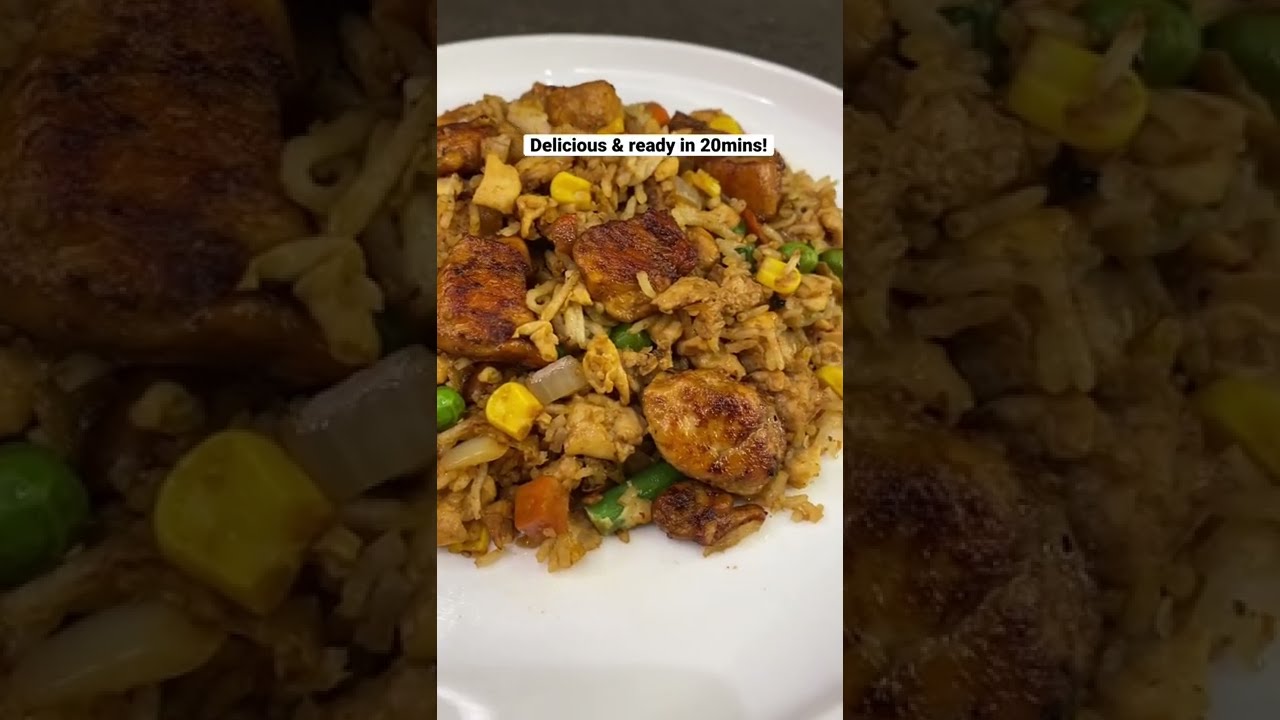
“Most homemade fried rice fails the same way: wet rice, gray chicken, and eggs that disappear into a rubbery paste. The difference between limp takeout imitation and the real thing comes down to three things: rice that's been chilled overnight, a wok that's properly preheated, and adding ingredients in the right order. This version solves all three — and adds two full protein sources so every serving actually earns its place in a training diet.”
Why This Recipe Works
Fried rice is the dish that exposes every shortcut. Cook it wrong and you get a gray, sodden pile of rice that tastes like soy sauce and regret. Cook it right and you get something with real depth — individual grains that crackle slightly in your mouth, eggs with toasty edges, chicken that's actually golden instead of pale and rubbery. The gap between those two outcomes is not technique complexity. It's sequence and temperature.
The Rice Has to Be Cold
This is the rule that overrides everything else. Hot rice is wet rice. The moment it hits a hot wok, surface steam builds between the grains, and instead of frying you're braising in a cloudy, starchy vapor. The result is the classic homemade fried rice problem: one enormous clump that breaks into smaller clumps and sticks to everything it touches.
Day-old chilled jasmine rice has had 12-plus hours to lose that surface moisture. Each grain is dry, slightly firm, and ready to pick up direct heat from the wok without sticking. The grains stay separate, they brown slightly on the surface, and they absorb the soy-sesame sauce evenly instead of soaking it up unevenly and turning mushy. If you can't plan ahead, spread freshly cooked rice on a sheet pan and refrigerate it uncovered for two hours. It's not quite as good as overnight, but it's close enough.
The Sequence Is the Recipe
Fried rice is not a dump-it-all-in dish. Every ingredient goes in at a specific moment for a specific reason, and deviating from the order produces a different (worse) result.
Chicken first, alone, in a single layer, over high heat. It needs direct contact with the cast iron skillet or wok surface to develop color. Crowding it with other ingredients drops the temperature and you get gray, steamed chicken that contributes nothing visually or texturally. Cook it fully, pull it out, and don't touch it again until the final fold.
Eggs second, in the same unwashed wok. The residual fond from the chicken seasons the eggs as they cook. The high heat from the wok surface gives you those toasty egg curds — slightly browned, with a little char on the edges — that taste completely different from soft scrambled eggs cooked in a nonstick pan on medium heat. Pull them while they're still slightly underdone.
Aromatics and vegetables third. Garlic and ginger go in briefly to bloom, then bell pepper and scallion whites to soften. Fast. Thirty seconds to a minute each. This isn't a braise.
Rice fourth. Dry. No sauce yet. The rice needs 3-4 minutes of direct wok contact before any liquid arrives. This is where the grains separate, pick up color, and develop that faint smoky character — wok hei — that you cannot replicate any other way. Adding the sauce before this step is the most common mistake in homemade fried rice.
Sauce fifth, once the rice is properly fried and hot. The soy sauce, oyster sauce, and sesame oil coat the grains evenly and evaporate almost immediately, leaving flavor behind instead of pooling as liquid.
The Protein Architecture
This isn't a fried rice with chicken thrown in. It's a dish designed around a 42g protein target, and every major ingredient is doing protein work. Chicken breast at 1.5 lbs provides the lion's share — roughly 26g per serving at this weight. The four eggs contribute another 7g. The cup of edamame adds around 9g, plus 4g of fiber and the only plant-based complete protein in the dish (all nine essential amino acids). The three sources are not redundant — they each have different textures, different fat profiles, and different amino acid distributions that collectively make this more nutritionally complete than any single-source protein approach.
The 16g of fat is almost entirely unsaturated, split between avocado oil and sesame oil. The sesame oil is there for flavor, not volume — 2 tablespoons over four servings is not a fat-heavy addition. It's a seasoning.
Why This Beats Takeout on Every Metric
Restaurant fried rice is not optimized for nutrition. It's optimized for speed, cost, and volume. Most takeout versions use 2-3 times the oil, lower-quality protein in smaller quantities, and rice that's been sitting in a steamer. What you build at home with this method is cleaner, higher in protein, lower in sodium (by about 30% versus most restaurant versions), and — if you actually get the wok hot enough — texturally comparable or better.
The wok spatula matters more than most people think. Its angled blade lets you scrape the bottom of the wok completely clean on every pass, which prevents burning and ensures every grain cycles through the hottest zone. A regular flat spatula drags and pushes. It's not the same tool.
Make it Sunday. Eat it four times. The flavors tighten up overnight, the rice dries out further in the fridge (which makes reheating cleaner), and the whole thing gets better on day two and three. Meal prep fried rice is not a compromise. It's the intended use.
Where Beginners Mess This Up
Before we start, read this. These are the 4 reasons your high-protein chicken fried rice (42g per serving, no sad takeout) will fail:
- 1
Using fresh-cooked rice: Hot rice is full of surface moisture. The moment it hits the wok, it steams instead of fries — and you get a clumpy, sticky mess that no amount of high heat will rescue. Day-old chilled rice has lost most of that moisture, so each grain stays separate and picks up color instead of sticking together. If you don't have day-old rice, spread freshly cooked rice on a sheet pan and refrigerate it uncovered for at least two hours.
- 2
Undercooking the chicken before removing it: The chicken goes back into the wok at the end over high heat with everything else — which means it gets almost no additional cooking time. If you pull it while it's still pink, the final fold won't fix it. Cook it fully the first time: golden brown, no pink in the center, internal temp at 165°F.
- 3
Adding the sauce too early: Soy sauce and oyster sauce are mostly water. Add them before the rice is fried and hot, and you're steaming the rice in salty liquid instead of stir-frying it. The rice needs 3-4 minutes of dry contact with the hot wok surface before any liquid touches it.
- 4
Scrambling the eggs in a separate pan: Cooking the eggs in the same wok directly against the hot surface — not a nonstick skillet on low — gives you those slightly browned, toasty egg curds that taste like restaurant fried rice. A separate cold pan gives you soft eggs that blend into the rice without contributing any flavor.
The Video Reference Library
Want to see it in action? Here are the exact videos we analyzed and combined to build this foolproof recipe translation:
The source video for this recipe. Strong breakdown of the protein layering strategy and wok heat management.
🛠️ Core Equipment
- 14-inch carbon steel wok or large cast iron skilletSurface area is everything in fried rice. A crowded pan drops temperature immediately and you're back to steaming. A wide wok or [cast iron skillet](/kitchen-gear/review/cast-iron-skillet) maintains heat even when cold ingredients hit it.
- Wok spatula (chuan)The angled blade lets you scrape the bottom of the wok cleanly and toss without spilling. A regular spatula drags and breaks the rice grains.
- Sheet pan for rice prepIf you're making rice the same day, spreading it on a sheet pan and chilling it uncovered is the fastest way to remove surface moisture. Essential if you don't have day-old rice on hand.
- Instant-read thermometerWith diced chicken breast, the window between perfectly cooked and dry is narrow. Pull it at exactly 165°F and it stays juicy. Guessing by color alone usually means overcooking.
High-Protein Chicken Fried Rice (42g Per Serving, No Sad Takeout)
🛒 Ingredients
- ✦1.5 lbs boneless, skinless chicken breast, cut into ½-inch dice
- ✦3 cups cooked jasmine rice, day-old and chilled
- ✦4 large eggs
- ✦1 cup frozen shelled edamame
- ✦1 medium red bell pepper, finely diced
- ✦4 green onions, white and light green parts sliced thin, dark green parts reserved
- ✦3 cloves garlic, minced
- ✦1 tablespoon fresh ginger, minced
- ✦3 tablespoons low-sodium soy sauce
- ✦1 tablespoon oyster sauce
- ✦2 tablespoons sesame oil
- ✦2 tablespoons avocado oil, divided
- ✦1 cup frozen peas and carrots
- ✦2 teaspoons rice vinegar
- ✦1 teaspoon white pepper
- ✦Sesame seeds for garnish
- ✦Fresh cilantro for garnish (optional)
👨🍳 Instructions
01Step 1
Dice the chicken breast into ½-inch cubes. Whisk the eggs together with a splash of water in a small bowl. Set both aside.
02Step 2
Heat 1 tablespoon avocado oil in a large wok or 12-inch skillet over medium-high heat until shimmering and just beginning to smoke.
03Step 3
Add the diced chicken in a single layer. Cook for 6-8 minutes, stirring occasionally, until golden brown and cooked through to 165°F with no pink remaining.
04Step 4
Push the chicken to the side. Pour the whisked eggs into the empty space. Scramble gently for 2-3 minutes until soft curds form, then fold together with the chicken. Transfer everything to a clean bowl.
05Step 5
Add the remaining 1 tablespoon avocado oil to the wok. Heat for 30 seconds, then add the minced garlic and ginger. Cook for 1 minute until fragrant.
06Step 6
Add the diced red bell pepper and the white and light green parts of the scallions. Sauté for 2-3 minutes until the pepper softens slightly.
07Step 7
Add the chilled rice, breaking up any clumps with the back of your spoon. Stir-fry for 3-4 minutes until the rice is heated through, dry, and beginning to pick up some color.
08Step 8
Add the frozen edamame and peas-and-carrots. Stir constantly for 2 minutes until everything is heated through.
09Step 9
Pour in the soy sauce, oyster sauce, sesame oil, and rice vinegar. Toss everything together for 1-2 minutes until the liquid is evenly distributed and the rice glistens.
10Step 10
Return the chicken and egg mixture to the wok. Fold in gently with a few quick tosses until combined and heated through, about 1 minute.
11Step 11
Season with white pepper. Adjust soy sauce if needed. Transfer to bowls and top with the reserved dark green scallion slices, sesame seeds, and cilantro if using.
Nutrition Per Serving
Estimates based on standard preparation. Adjustments alter macros.
🔄 Substitutions
Instead of Jasmine rice...
Use Cauliflower rice mixed 2:1 with jasmine rice
Reduces carb load while maintaining fried-rice texture. The jasmine base keeps it from going soggy — pure cauliflower rice turns to mush in a wok.
Instead of 4 large eggs...
Use 3 large eggs + ¼ cup liquid egg whites
Adds 7-8g protein per serving and reduces fat. Texture is slightly fluffier and less rich, but flavor is indistinguishable once it's mixed into the rice.
Instead of Oyster sauce...
Use 1 tablespoon fish sauce + 1 teaspoon soy sauce
Deepens the umami and adds a briny complexity. Not vegetarian, but more intensely savory than oyster sauce alone.
Instead of Frozen edamame...
Use ½ cup edamame + ½ cup pressed firm tofu, cubed
Tofu picks up the soy and sesame flavors aggressively and adds another complete protein source. Press the tofu thoroughly first or it steams instead of fries.
🧊 Storage & Reheating
In the Fridge
Store in airtight containers for up to 4 days. The rice dries out slightly, which actually makes reheating cleaner — it refries instead of steaming into a clump.
In the Freezer
Freeze in individual portions for up to 2 months. Thaw overnight in the fridge before reheating.
Reheating Rules
Best reheated in a hot skillet with 1-2 tablespoons of water. Cover for the first minute to steam, then uncover to dry out. Microwave works in a pinch — cover with a damp paper towel and heat in 60-second intervals.
❓ Frequently Asked Questions
Why does my fried rice always come out soggy?
Fresh rice. Day-old chilled rice is the non-negotiable foundation of good fried rice — the overnight chill removes surface moisture so each grain fries instead of steams. If you don't have day-old rice, spread freshly cooked rice on a sheet pan and refrigerate it uncovered for at least two hours before using.
Can I use brown rice instead of jasmine?
Yes, but brown rice has a chewier texture and more moisture than jasmine, so you'll need to stir-fry it for an extra 2-3 minutes before adding the sauce. The flavor profile is nuttier and more assertive. Macros will shift slightly — more fiber, similar calories.
How do I get the eggs to taste like restaurant fried rice eggs?
Cook them in the same screaming-hot wok, not a separate nonstick pan. The high heat gives you slightly browned, toasty curds instead of soft, pale scrambled eggs. Pull them when they're still slightly wet — they finish from residual heat and stay tender.
Is this actually 42g of protein per serving?
Yes, if you use the full 1.5 lbs of chicken breast, 4 eggs, and 1 cup of edamame across 4 servings. Chicken breast delivers roughly 26g per serving at this weight, eggs contribute about 7g, and edamame adds around 9g. The numbers check out.
Can I make this vegetarian?
Swap the chicken for pressed firm tofu (same dice, same cooking method) and replace the oyster sauce with hoisin or mushroom oyster sauce. You'll land around 22-25g of protein per serving depending on how much tofu you use.
Why add rice vinegar?
A small amount of acid brightens the entire dish and cuts through the richness of the sesame oil and eggs. You won't taste 'vinegar' — you'll taste a cleaner, more vibrant version of the soy-sesame base. Don't skip it.
The Science of
High-Protein Chicken Fried Rice (42g Per Serving, No Sad Takeout)
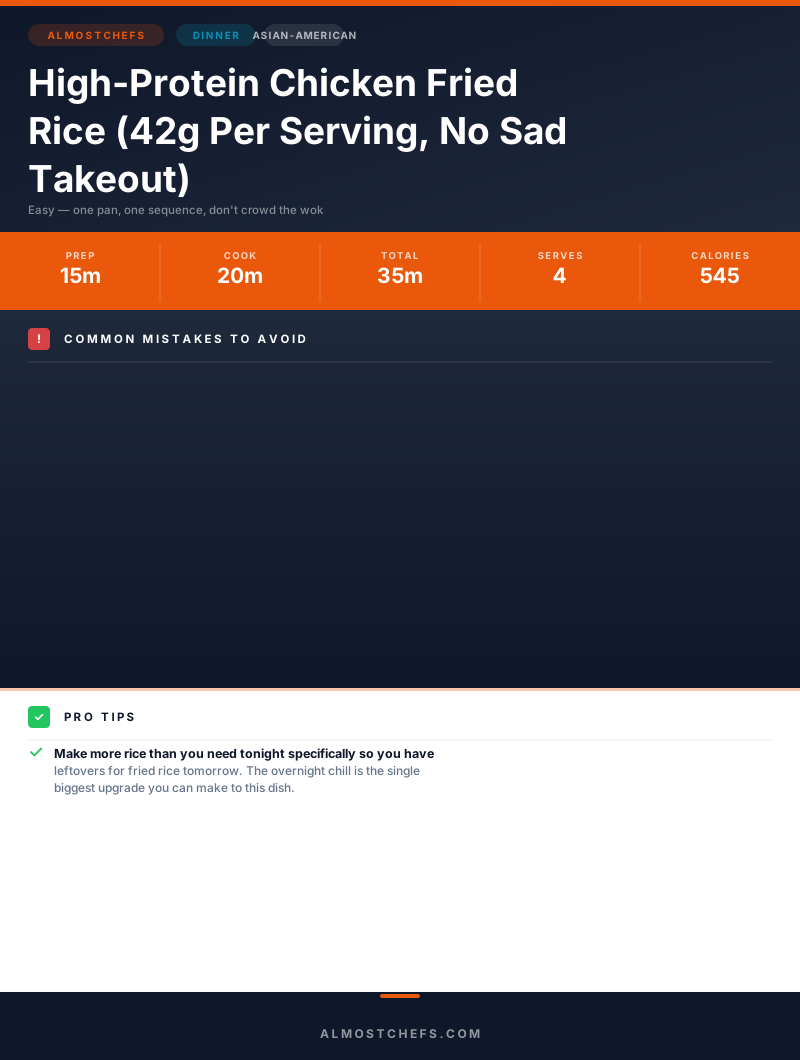
We turned everything on this page into a beautiful, flour-proof PDF cheat sheet. Print it out, stick it to your fridge, and never mess up your high-protein chicken fried rice (42g per serving, no sad takeout) again.
*We'll email you the high-res PDF instantly. No spam, just perfectly cooked meals.
AlmostChefs Editorial Team
We translate the internet's most popular cooking videos into foolproof, beginner-friendly written recipes. We analyze multiple methods, test them in our kitchen, and engineer a single "Master Recipe" that gives you the best possible result with the least possible stress.