High-Protein Chicken Alfredo (42g Per Serving, No Heavy Cream)
A muscle-building spin on the Italian-American classic that swaps heavy cream for Greek yogurt and cottage cheese, delivering 42g of protein per serving without sacrificing the silky, indulgent sauce texture you actually want. Ready in 35 minutes.
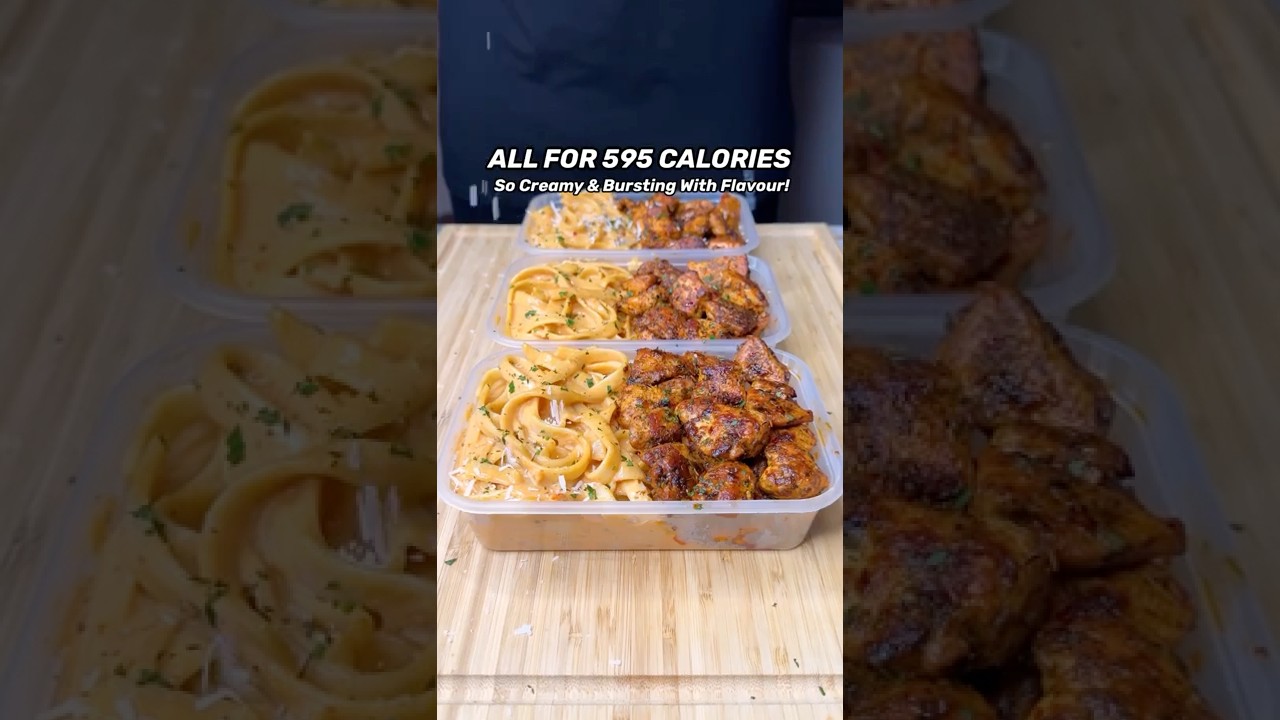
“Classic Alfredo is a butter-and-Parmesan emulsion that tastes incredible and gives you approximately nothing useful from a protein standpoint. This version breaks that trade-off. Greek yogurt and cottage cheese together recreate the silky, creamy sauce texture while tripling the protein content. The trick is knowing how to handle the dairy so the sauce stays smooth instead of curdling into scrambled eggs. Most high-protein Alfredo recipes get this wrong. This one doesn't.”
Why This Recipe Works
Alfredo is a sauce that lives and dies by its emulsion. The original Roman version — cacio e pepe's richer cousin — is nothing more than butter, pasta water, and Parmigiano-Reggiano whipped into a glossy, tight sauce through friction and heat. The Italian-American version adds heavy cream, which makes the emulsion more forgiving but also piles in saturated fat while contributing almost nothing to the protein count. At 820 calories and 28g of protein per serving, traditional chicken Alfredo is comfort food math that doesn't add up for anyone trying to build muscle or eat with intention.
This version solves that equation without performing the usual sad-healthy-food compromise. You're not eating something that vaguely reminds you of Alfredo. You're eating Alfredo — with a sauce that has the same creamy pull, the same coating behavior, the same richness — at 620 calories and 42g of protein.
The Sauce Architecture
The key insight is that heavy cream's job in Alfredo is textural, not flavorful. It provides fat and protein to suspend the Parmesan and coat the pasta. Greek yogurt and cottage cheese combined do the same job with a radically better macronutrient profile: a cup of Greek yogurt contains roughly 20g of protein versus 3g in heavy cream. Add cottage cheese for additional casein protein and improved creaminess, and you have a sauce base that outperforms the original on every metric except saturated fat — where it also wins.
The challenge is heat management. Heavy cream is forgiving because its high fat content protects the proteins from curdling. Greek yogurt has less fat and will break — separating into watery liquid and grainy solids — if it gets too hot too fast. The solution is to never let the sauce boil, period. Medium heat, constant stirring, steaming but not bubbling. This is a 60-second window of focus that determines whether the dish succeeds or fails.
The pre-blend step is equally critical. Cottage cheese contains visible curds that will not dissolve in a hot pan — they need mechanical force to break down. Whisking the entire sauce mixture together cold, before it hits the heat, is the difference between a smooth, glossy sauce and one that looks like something went wrong.
The Chicken Technique
Chicken breast is the right protein choice here because of its macro profile — 31g of protein per 3.5 oz versus 26g in thighs — but it requires more precision. The sear temperature matters: you want the skillet shimmering hot before the chicken goes in so you get a proper Maillard crust in 6-7 minutes per side rather than slowly steaming the exterior in its own moisture.
The rest period is not optional. Muscle fibers in cooked chicken contract under heat and squeeze their moisture toward the center of the breast. Five minutes of rest allows those fibers to relax and reabsorb the liquid. Skip the rest and you're slicing into a reservoir that immediately empties onto your cutting board.
Whole-Wheat Pasta and Why It Works Here
Whole-wheat fettuccine earns its place beyond the fiber and protein bump. Its rougher surface texture — a consequence of the bran remaining in the flour — creates more friction against the sauce, so every strand stays coated instead of shedding the sauce back into the bowl. Combined with the fact that it finishes cooking in the sauce itself rather than fully in the boiling water, you get pasta that's integrated into the dish rather than just coated by it.
The result is a plate of food that tastes like indulgence, delivers like performance nutrition, and takes 35 minutes on a Tuesday night. That's the whole argument.
Where Beginners Mess This Up
Before we start, read this. These are the 4 reasons your high-protein chicken alfredo (42g per serving, no heavy cream) will fail:
- 1
Boiling the yogurt sauce: Greek yogurt breaks and curdles the instant it hits a full boil. You must keep the heat at medium and stir constantly — the sauce should be steaming, never bubbling. If you see it starting to separate, immediately pull the pan off the heat and stir vigorously. You have about a 10-second window to save it.
- 2
Skipping the cottage cheese blend: If you add cottage cheese directly to the sauce without blending it first, you get visible white curds floating in your pasta. Whisk the Greek yogurt, cottage cheese, Parmesan, broth, and lemon juice together in a bowl until completely smooth before it goes anywhere near the heat.
- 3
Not resting the chicken: Chicken breast cooked to 165°F is at its juiciest — but only if you let it rest 5 minutes before slicing. Cut it immediately and every drop of accumulated moisture runs out onto the cutting board. Rest it and those juices redistribute back into the muscle fibers where they belong.
- 4
Overcooking the pasta before saucing: Whole-wheat fettuccine should be pulled from the water slightly firmer than you think you want it — it finishes cooking in the sauce during the final toss. If it's fully al dente before it hits the skillet, it'll be soft by the time it reaches the table.
The Video Reference Library
Want to see it in action? Here are the exact videos we analyzed and combined to build this foolproof recipe translation:
The source video for this recipe. Watch specifically for the sauce temperature management — the moment they lower the heat before adding the yogurt mixture is the critical technique this dish depends on.
🛠️ Core Equipment
- Large skillet or sauté panYou need enough surface area to toss the pasta without it piling up. A 12-inch skillet gives the sauce room to coat every strand. Too small and you get uneven coverage.
- Meat thermometerChicken breast has a narrow window between undercooked and dry. A thermometer removes the guesswork — pull at exactly 165°F. Every degree past that is moisture you lose.
- Whisk and mixing bowlThe sauce mixture must be completely smooth before it goes into the pan. A fork won't break down the cottage cheese curds properly. A whisk does the job in 60 seconds.
High-Protein Chicken Alfredo (42g Per Serving, No Heavy Cream)
🛒 Ingredients
- ✦12 oz whole-wheat fettuccine pasta
- ✦1.5 lbs boneless, skinless chicken breasts
- ✦2 tablespoons olive oil
- ✦1 teaspoon garlic powder
- ✦1 teaspoon salt, divided
- ✦1/2 teaspoon black pepper
- ✦3 cloves garlic, minced
- ✦1 cup plain nonfat Greek yogurt
- ✦3/4 cup low-fat cottage cheese
- ✦3/4 cup grated Parmigiano-Reggiano
- ✦1/2 cup unsalted chicken broth
- ✦2 tablespoons fresh lemon juice
- ✦1/2 teaspoon Italian seasoning
- ✦1/4 teaspoon nutmeg
- ✦2 tablespoons fresh parsley, chopped
- ✦1 tablespoon butter
👨🍳 Instructions
01Step 1
Bring a large pot of heavily salted water to a rolling boil over high heat.
02Step 2
Season the chicken breasts evenly on both sides with garlic powder, 1/2 teaspoon salt, and black pepper.
03Step 3
Heat olive oil in a large skillet over medium-high heat until shimmering, about 2 minutes.
04Step 4
Add the seasoned chicken breasts and cook 6-7 minutes per side until the internal temperature reaches 165°F and the exterior is deep golden brown.
05Step 5
Transfer the cooked chicken to a cutting board and let rest for 5 minutes, then slice into bite-sized pieces.
06Step 6
While the chicken rests, add the fettuccine to the boiling water and cook until just shy of al dente, about 9 minutes. Drain and set aside.
07Step 7
In a mixing bowl, whisk together the Greek yogurt, cottage cheese, Parmigiano-Reggiano, chicken broth, and lemon juice until completely smooth with no visible curds.
08Step 8
In the same skillet over medium heat, melt the butter, add the minced garlic, and sauté for 30 seconds until fragrant.
09Step 9
Pour the yogurt-cheese mixture into the skillet and stir constantly for 3-4 minutes until the sauce is warm and creamy. Do not let it boil.
10Step 10
Stir in the Italian seasoning, nutmeg, and remaining 1/2 teaspoon salt. Taste and adjust.
11Step 11
Add the sliced chicken and drained pasta to the sauce. Toss gently for 1-2 minutes until every strand is coated and the pasta finishes cooking in the sauce.
12Step 12
Divide among four bowls, garnish with fresh parsley and additional Parmigiano-Reggiano, and serve immediately.
Nutrition Per Serving
Estimates based on standard preparation. Adjustments alter macros.
🔄 Substitutions
Instead of Greek yogurt...
Use Full-fat plain skyr
Nearly identical protein profile with a slightly thicker texture. Behaves the same in the sauce and is arguably even less likely to curdle due to its lower acidity.
Instead of Cottage cheese...
Use Ricotta cheese
Lower protein than cottage cheese but blends smoother without whisking. The sauce will be slightly richer. Use low-fat ricotta to keep the nutrition profile close.
Instead of Whole-wheat fettuccine...
Use Chickpea or lentil pasta
Pushes protein even higher — up to 25g per serving from the pasta alone. Slightly different texture; tends to get mushy faster so watch the cook time closely.
Instead of Chicken breast...
Use Shrimp (1 lb, peeled and deveined)
Reduces cook time significantly — shrimp takes 2-3 minutes per side. Protein content drops slightly but the dish becomes lighter and faster. Season and sear in the same oil.
🧊 Storage & Reheating
In the Fridge
Store in an airtight container for up to 3 days. The sauce thickens considerably when cold — this is normal.
In the Freezer
Not recommended. Greek yogurt and cottage cheese separate when frozen and thawed, and the sauce will be grainy rather than creamy.
Reheating Rules
Add 2-3 tablespoons of chicken broth or water to the container before reheating on the stovetop over low heat, stirring gently. Microwave works but stir every 30 seconds and stop before it boils or the sauce will break.
❓ Frequently Asked Questions
Will the sauce taste tangy from the Greek yogurt?
Slightly, yes — but the lemon juice, Parmesan, and nutmeg together mask most of the yogurt's characteristic tang. Most people can't identify it as yogurt once the dish is assembled. If you're sensitive to it, reduce the Greek yogurt to 3/4 cup and increase the cottage cheese to 1 cup.
Can I use flavored or low-fat Greek yogurt?
Use plain nonfat only. Flavored yogurts contain sugar and stabilizers that will make your sauce sweet and odd-tasting. Low-fat is fine — it's what the recipe already calls for.
My sauce broke and looks grainy. Can I fix it?
Possibly. Remove the pan from heat immediately. Add 2 tablespoons of cold chicken broth and stir vigorously in a circular motion. If the sauce is only slightly broken, this can bring it back together. If it's fully curdled, you've gone too far and need to start the sauce again.
Is this actually meal-prep friendly?
Yes, with one caveat: store the chicken separately from the pasta and sauce. The pasta reheats well with a splash of broth. The chicken reheats better dry, added back in at the last minute. Combining them in storage causes the chicken to absorb the sauce unevenly and dry out.
Can I add vegetables to this?
Broccoli, spinach, sun-dried tomatoes, and peas all work well. Add broccoli florets to the pasta water for the last 3 minutes of cooking. Stir spinach directly into the hot sauce just before adding the pasta — it wilts in about 30 seconds.
Why use both olive oil and butter instead of just one?
Olive oil has a higher smoke point, which makes it better for searing the chicken at medium-high heat. Butter has a lower smoke point but contributes a richer flavor to the sauce base. Using olive oil for the sear and butter for the sauce finish is the standard technique in most professional kitchens — each fat is doing the job it's actually suited for.
The Science of
High-Protein Chicken Alfredo (42g Per Serving, No Heavy Cream)
We turned everything on this page into a beautiful, flour-proof PDF cheat sheet. Print it out, stick it to your fridge, and never mess up your high-protein chicken alfredo (42g per serving, no heavy cream) again.
*We'll email you the high-res PDF instantly. No spam, just perfectly cooked meals.
AlmostChefs Editorial Team
We translate the internet's most popular cooking videos into foolproof, beginner-friendly written recipes. We analyze multiple methods, test them in our kitchen, and engineer a single "Master Recipe" that gives you the best possible result with the least possible stress.