Power-Packed Tempeh Buddha Bowl (38g Plant Protein Per Serving)
A vibrant, meal-prep-ready grain bowl built around crispy tempeh, fluffy quinoa, and a creamy tahini drizzle. We analyzed the most common high-protein plant bowl failures to engineer a formula that hits 38g protein without supplements, powders, or compromise.
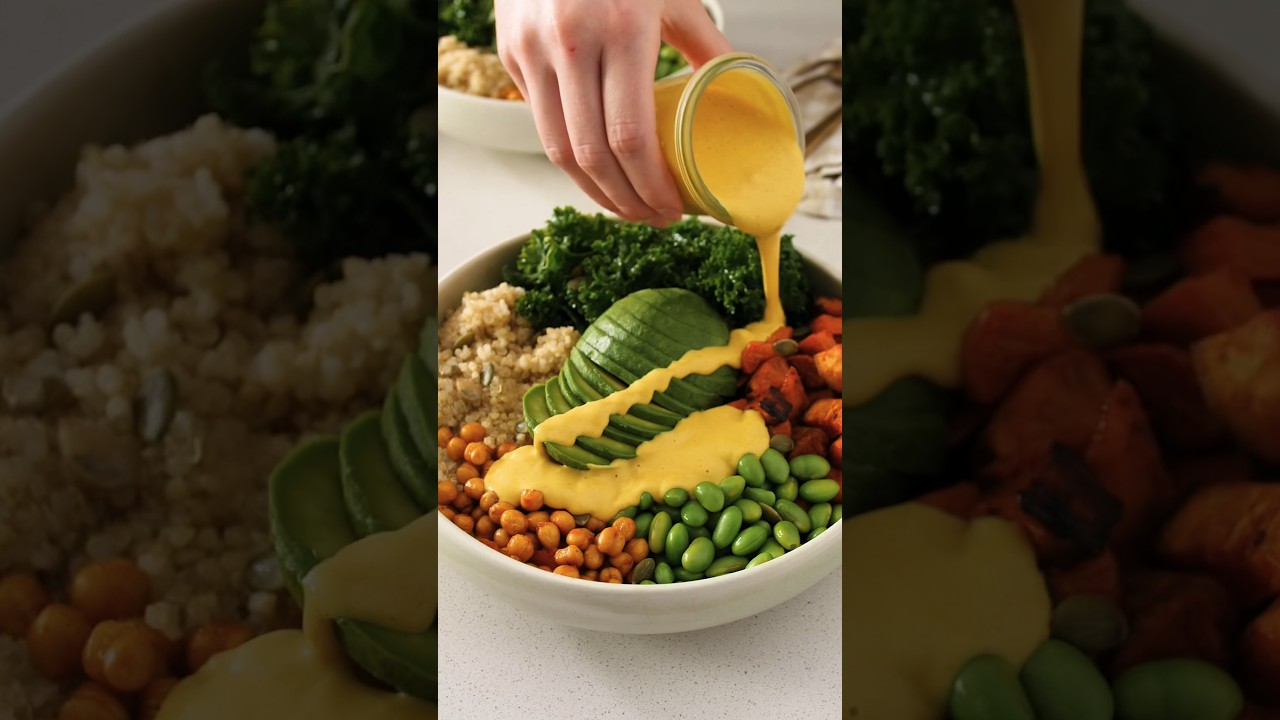
“Most plant-based bowls promise protein and deliver a pile of kale with eight grams of protein that disappears two hours later. This bowl is engineered differently. Tempeh and quinoa together hit 38g per serving through complementary amino acid profiles — no protein powder, no fake meat, no compromise on flavor. The tahini sauce binds everything together with fat-soluble nutrients that your body actually absorbs. This is what a real high-protein plant meal looks like.”
Why This Recipe Works
Most grain bowls are theater. A scoop of quinoa, some roasted vegetables, a drizzle of something vaguely sesame-flavored, and a protein claim that doesn't survive a nutrition label audit. They look like meals and function like expensive snacks. This bowl is built differently, from the protein math up.
The 38-Gram Architecture
Thirty-eight grams of plant protein per serving is not achieved by adding one impressive ingredient. It's achieved by stacking complementary protein sources across every component in the bowl. Tempeh — fermented whole soybean cake — contributes roughly 16g per serving and provides a dense, complete amino acid profile. Quinoa adds another 8g and is one of the few grains with all nine essential amino acids, which makes it a genuine protein source rather than a carb vehicle with aspirational claims. Edamame adds 6g. Chickpeas add 5g. Pumpkin seeds round out the rest.
The amino acid coverage matters as much as the raw number. Plant proteins are often incomplete — high in some essential amino acids and deficient in others. By combining tempeh (high in methionine, lower in lysine) with quinoa and legumes (high in lysine, lower in methionine), you build a complete profile in a single bowl without planning around it.
The Tempeh Problem Everyone Ignores
Tempeh's reputation for tasting bitter or spongy almost always traces back to two failures: not pressing it and not developing any crust in the pan. A cast iron skillet run at medium-high heat with enough oil to coat the bottom will crisp tempeh cubes in under 10 minutes. The science is identical to searing meat — you need full surface contact at high enough temperature to trigger the Maillard reaction. Stirring constantly prevents that. Let the cubes sit, develop color, then turn.
The fermentation also produces a mild bitter note that some people dislike on first encounter. A short marinade in soy sauce and rice vinegar before cooking eliminates it. The acid and salt penetrate the fermented matrix and round off the edge entirely. It's a 20-minute step that converts tempeh skeptics.
Tahini Is Not a Sauce Until You Make It One
Tahini paste from the jar is not pourable. It's thick, oily on top, and dense at the bottom — the oil separation is normal, the texture is not ready for drizzling. The emulsification process is simple but unforgiving: whisk paste with water first, then add acid. Adding lemon juice to unseasoned tahini causes it to seize immediately into a dense, gluey mass that no amount of whisking will recover.
Build the sauce by whisking the tahini with three tablespoons of room-temperature water until it loosens and turns smooth, then add lemon juice gradually while continuing to whisk. The texture should drizzle freely off a small whisk or spoon — not pour like water, not hold its shape like hummus. That middle state is the target. The maple syrup balances the sesame bitterness and garlic sharpness without making the sauce taste sweet.
Parallel Cooking Is the Technique
This bowl has five cooked components. Sequential cooking means 90 minutes in the kitchen and cold food by the time you plate. The design of this recipe is built around parallel execution: the quinoa goes on the stove first (15 minutes hands-off), the sweet potato hits the second burner simultaneously, and the tempeh pressing happens during that window. By the time the quinoa finishes its resting steam and the sweet potato is caramelized, the tempeh is ready to go into the pan that just cleared from the sweet potato.
Total active cooking time when properly parallelized: under 25 minutes. Total time from first step to plated bowl: 50 minutes. That's not a compromise — that's what organization buys you.
Assembly Is Not Optional Detail
Plating in sections rather than mixing everything together is not aesthetic preference — it's functional. Each component in this bowl has a distinct texture: crispy tempeh, fluffy quinoa, charred sweet potato, raw crunchy cabbage, chewy edamame. Mixed together before serving, the textures homogenize and the bowl becomes a mush. Plated in sections, each forkful can pull from different zones and the contrast stays intact through the entire meal. Build the bowl. Then drizzle the tahini. Don't toss it.
Where Beginners Mess This Up
Before we start, read this. These are the 4 reasons your power-packed tempeh buddha bowl (38g plant protein per serving) will fail:
- 1
Skipping the tempeh press: Tempeh holds moisture in its dense fermented matrix. If you skip the 10-minute press, the surface stays wet and the cubes steam in the pan instead of crisping. Wet tempeh browns unevenly, stays soft, and absorbs almost no seasoning. Press it between kitchen towels until no more water transfers out.
- 2
Not rinsing the quinoa: Quinoa's natural coating — saponin — tastes bitter and soapy. One rinse under cold water removes it entirely. Skip this step and you'll taste it in every bite, especially in a bowl where the grain is meant to be a neutral base for the tahini and vegetables.
- 3
Cooking everything sequentially instead of in parallel: This bowl has five components. If you cook them one at a time you'll spend 90 minutes in the kitchen and half the components will be cold by the time you plate. Start the quinoa, roast the sweet potato, and press the tempeh simultaneously. The sweet potato takes the longest — it should go on first.
- 4
Making the tahini sauce too thick: Tahini straight from the jar is paste, not sauce. It seizes further when it hits cold ingredients. Add water one tablespoon at a time while whisking until it drizzles freely off a spoon. The emulsion breaks if you add too much water too fast — go slow and it comes together.
The Video Reference Library
Want to see it in action? Here are the exact videos we analyzed and combined to build this foolproof recipe translation:
The source video for this recipe. Clear demonstration of the tempeh crisping technique and parallel cooking workflow that keeps the total time under 50 minutes.
🛠️ Core Equipment
- Large non-stick or cast iron skilletYou'll use this twice — first for the tempeh, then for the kale. A [cast iron skillet](/kitchen-gear/review/cast-iron-skillet) holds heat evenly and gives the tempeh cubes the crispy exterior that makes this bowl satisfying rather than soggy.
- Medium saucepan with tight-fitting lidThe quinoa needs to steam undisturbed after the boil. A lid that lets steam escape produces dry, uneven grains. A tight seal locks moisture in and finishes the cook in exactly 15 minutes.
- Kitchen towels or paper towelsFor pressing the tempeh. You're not trying to extract every drop — just enough to dry the surface so the Maillard reaction can happen in the pan. Two minutes of pressing does what 30 minutes of air-drying cannot.
- Small whisk and bowlTahini sauce requires emulsification. A fork leaves streaks. A [small whisk](/kitchen-gear/review/whisk) breaks the paste into a smooth, pourable sauce in under 60 seconds and keeps it from separating.
Power-Packed Tempeh Buddha Bowl (38g Plant Protein Per Serving)
🛒 Ingredients
- ✦8 oz tempeh block, pressed and cubed
- ✦1 cup uncooked quinoa
- ✦2 cups low-sodium vegetable broth
- ✦3 tablespoons tahini paste
- ✦2 tablespoons fresh lemon juice
- ✦1 tablespoon maple syrup
- ✦2 cloves garlic, minced
- ✦3 tablespoons olive oil, divided
- ✦2 cups chopped kale, stems removed
- ✦1 large sweet potato, cut into ½-inch cubes
- ✦1 cup shredded purple cabbage
- ✦1 cup roasted chickpeas
- ✦½ cup shelled edamame
- ✦¼ cup sliced green onions
- ✦2 tablespoons pumpkin seeds
- ✦1 teaspoon smoked paprika
- ✦Salt and black pepper to taste
- ✦Water for tahini sauce consistency
👨🍳 Instructions
01Step 1
Press the tempeh block between clean kitchen towels for 10 minutes to remove excess moisture, then cut into ¾-inch cubes.
02Step 2
Rinse the quinoa under cold water until the water runs clear, then combine with vegetable broth in a medium saucepan.
03Step 3
Bring the quinoa mixture to a boil over medium-high heat, then reduce to low and simmer covered for 15 minutes until all liquid is absorbed. Remove from heat and let sit, covered, for 5 minutes.
04Step 4
While the quinoa cooks, start the sweet potato. In a separate skillet over medium heat, roast the sweet potato cubes with a drizzle of olive oil and a pinch of salt for 12–15 minutes, stirring every few minutes until caramelized and fork-tender.
05Step 5
Whisk together tahini, lemon juice, maple syrup, minced garlic, and 3 tablespoons of water in a small bowl until smooth and pourable. Add more water one tablespoon at a time if needed for drizzling consistency.
06Step 6
Heat 2 tablespoons of olive oil in a large skillet over medium-high heat. Add the tempeh cubes and sauté for 8–10 minutes, stirring occasionally, until golden brown on multiple sides.
07Step 7
Season the cooked tempeh with smoked paprika, salt, and pepper. Transfer to a plate.
08Step 8
Add the remaining 1 tablespoon of olive oil to the same skillet and sauté the kale for 3–4 minutes until slightly wilted and tender.
09Step 9
Fluff the cooked quinoa with a fork and divide evenly among four bowls.
10Step 10
Arrange the sautéed kale, roasted sweet potato, crispy tempeh, purple cabbage, chickpeas, and edamame in sections around each bowl of quinoa.
11Step 11
Drizzle the tahini sauce generously over each bowl, then garnish with sliced green onions and pumpkin seeds.
12Step 12
Season each bowl with additional salt and pepper to taste. Serve immediately while components are still warm.
Nutrition Per Serving
Estimates based on standard preparation. Adjustments alter macros.
🔄 Substitutions
Instead of Tempeh...
Use Extra-firm tofu (14 oz block, pressed and cubed)
Press tofu for at least 30 minutes — it holds significantly more water than tempeh. Softer texture, but it absorbs the tahini drizzle more aggressively, which some people prefer. Protein drops slightly to about 20g from tofu alone.
Instead of Quinoa...
Use Cooked lentils (1½ cups cooked brown or green lentils)
Earthier, denser base. Reduces total protein by about 2g per serving but adds iron and a more budget-friendly profile. Brown lentils hold their shape better than red in a bowl context.
Instead of Tahini sauce...
Use Greek yogurt sauce (½ cup nonfat Greek yogurt + 1 tablespoon tahini + lemon juice + garlic)
Not vegan, but bumps protein to 42g per serving. Tangier and slightly thicker — thin with water to the same drizzleable consistency. The tahini tablespoon keeps the sesame flavor present.
Instead of Sweet potato...
Use Roasted broccoli florets (3 cups, tossed with olive oil and garlic)
Cuts carbs significantly and lightens the bowl's glycemic load. Broccoli adds 4g protein per serving when roasted. The bowl reads less hearty but more vegetal and bright.
🧊 Storage & Reheating
In the Fridge
Store components separately in airtight containers for up to 4 days. Quinoa and sweet potato reheat well; kale wilts but remains edible; tempeh recrisps in a dry skillet over medium heat.
In the Freezer
Quinoa freezes well for up to 2 months. Tempeh can be frozen after cooking but loses its crisp exterior on thaw. Vegetables do not freeze well — prepare fresh.
Reheating Rules
Reheat quinoa with a splash of vegetable broth in a covered saucepan over low heat. Recrisp tempeh in a dry skillet for 3-4 minutes. Assemble fresh each time with raw cabbage, chickpeas, and new tahini drizzle.
❓ Frequently Asked Questions
Where do the 38 grams of protein come from?
Tempeh contributes approximately 16g per serving, quinoa adds roughly 8g, edamame contributes 6g, chickpeas add 5g, and pumpkin seeds round out the rest. Unlike most plant proteins, this combination covers all nine essential amino acids without supplementation.
Is tempeh the same as tofu?
No. Both are made from soybeans, but tempeh is fermented whole soybeans compressed into a dense block, while tofu is pressed soy milk curds. Tempeh has a firmer texture, earthier flavor, more protein, and more fiber. It also crisps better in a pan because of its lower moisture content.
Can I make this ahead for meal prep?
Yes, with one rule: store the tahini sauce separately. It thickens overnight and if mixed in, the quinoa absorbs it entirely and the bowl turns dense. Keep everything in separate containers and assemble right before eating. The components hold for 4 days refrigerated.
Why does my tahini sauce turn thick and gluey?
Tahini seizes when it makes contact with an acid (lemon juice) before enough water is incorporated. Always whisk the tahini with water first until it loosens, then add the lemon juice gradually. If it's already seized, add warm water one tablespoon at a time and whisk from the center out.
Can I eat this cold?
Yes. The bowl is designed to work warm or cold, which is why it's suited for meal prep and lunch boxes. Cold tempeh loses its crunch but gains a chewier texture that pairs well with the cold quinoa. The tahini sauce thickens when cold — thin with a few drops of water before serving.
What if I can't find tempeh at my grocery store?
Most natural food stores, Whole Foods, and Asian grocery stores carry it. In a pinch, extra-firm tofu is the closest substitute. If you're replacing tempeh entirely, press the tofu for 30 minutes and add a tablespoon of nutritional yeast to the seasoning to approximate tempeh's umami depth.
The Science of
Power-Packed Tempeh Buddha Bowl (38g Plant Protein Per Serving)
We turned everything on this page into a beautiful, flour-proof PDF cheat sheet. Print it out, stick it to your fridge, and never mess up your power-packed tempeh buddha bowl (38g plant protein per serving) again.
*We'll email you the high-res PDF instantly. No spam, just perfectly cooked meals.
AlmostChefs Editorial Team
We translate the internet's most popular cooking videos into foolproof, beginner-friendly written recipes. We analyze multiple methods, test them in our kitchen, and engineer a single "Master Recipe" that gives you the best possible result with the least possible stress.